Top 100 PCL Nurses Loksewa and License Exam Model Question for RN and PCLN 2081

Nursing license questions PCL Nurses Loksewa and License Exam 2081 BS

PCL Nurses Loksewa and License Exam Model Question

Table of Contents(toc)


General Nursing

1. What is the primary role of a nurse?

A) To administer medications
B) To assist in surgeries
C) To provide patient care
D) To manage hospital
finances

2. Which organization regulates nursing practice in Nepal?

A) WHO
B) ICN
C) NNC
D) NMA

3. The normal range of body temperature for a healthy adult is:

A) 34.5-35.5°C
B) 36.5-37.5°C
C) 38.5-39.5°C
D) 40.5-41.5°C

4. What is the most common site for measuring the pulse rate?

A) Temporal artery
B) Brachial artery
C) Radial artery
D) Femoral artery

5. Which of the following is an example of a subjective data?

A) Blood pressure
B) Patient’s pain level
C) Respiratory rate
D) Temperature

6. The normal range of blood pressure for a healthy adult is:

A) 90/60 mmHg
B) 120/80 mmHg
C) 140/90 mmHg
D) 160/100 mmHg

7. What does PRN stand for in medical terms?

A) As needed
B) Once daily
C) Twice daily
D) Three times daily

8. Which of the following is not a vital sign?

A) Temperature
B) Pulse
C) Weight
D) Respiratory rate

9. Aseptic technique is used to:

A) Clean wounds
B) Prevent infection
C) Administer medications
D) Measure vital signs

10. The term “diuresis” refers to:

A) Increased urine output
B) Decreased urine output
C) Blood in urine
D) Painful urination

11. The most common site for intramuscular injection in adults is:

A) Deltoid muscle
B) Vastus lateralis
C) Rectus femoris
D) Dorsogluteal

12. Which of the following is a sign of hypoglycemia?

A) Increased thirst
B) Shakiness
C) Frequent urination
D) Flushed skin

13. What is the purpose of an incentive spirometer?

A) To measure blood oxygen
levels
B) To assist with
administering medication
C) To encourage deep
breathing
D) To monitor heart rate

14. The medical term for a heart attack is:

A) Myocardial infarction
B) Angina pectoris
C) Cardiac arrest
D) Stroke

15. The Glasgow Coma Scale is used to assess:

A) Pain levels
B) Consciousness
C) Cardiac function
D) Respiratory rate

16. Which of the following is a characteristic of chronic pain?

A) Sudden onset
B) Short duration
C) Easy to diagnose
D) Persistent and
long-lasting

17. What is the normal respiratory rate for a healthy adult?

A) 12-20 breaths per minute
B) 8-12 breaths per minute
C) 20-28 breaths per minute
D) 28-32 breaths per minute

18. Which of the following diseases is caused by a virus?

A) Tuberculosis
B) Malaria
C) Influenza
D) Cholera

19. The abbreviation “NPO” means:

A) As needed
B) Nothing by mouth
C) By mouth
D) After meals

20. Which vitamin is essential for blood clotting?

A) Vitamin C
B) Vitamin K
C) Vitamin D
D) Vitamin A

Pharmacology

21. Which drug is commonly used to treat hypertension?

A) Metformin
B) Amoxicillin
C) Lisinopril
D) Diazepam

22. The antidote for opioid overdose is:

A) Atropine
B) Naloxone
C) Acetylcysteine
D) Flumazenil

23. Which of the following is a side effect of aspirin?

A) Hypotension
B) Gastrointestinal
bleeding
C) Bradycardia
D) Hyperglycemia

24. The action of insulin in the body is to:

A) Lower blood glucose
levels
B) Increase blood pressure
C) Decrease heart rate
D) Stimulate digestion

25. Which medication is used to treat an acute asthma attack?

A) Loratadine
B) Montelukast
C) Albuterol
D) Fluticasone

Mental Health Nursing

26. The primary goal of therapeutic communication is to:

A) Give advice
B) Promote understanding
C) Manage patient behavior
D) Obtain information

27. Which of the following is a negative symptom of schizophrenia?

A) Hallucinations
B) Delusions
C) Anhedonia
D) Paranoia

28. Lithium is commonly used to treat:

A) Anxiety disorders
B) Bipolar disorder
C) Schizophrenia
D) Depression

29. Which of the following is considered a sign of substance dependence?

A) Stable relationships
B) Increased tolerance to the
substance
C) Consistent job
performance
D) Controlled use of the
substance

Maternal and Child Health Nursing

30. The normal duration of the human pregnancy is:

A) 38 weeks
B) 40 weeks
C) 42 weeks
D) 44 weeks

31. Preeclampsia is characterized by:

A) Hypotension and
proteinuria
B) Hypertension and
proteinuria
C) Hyperglycemia and
ketonuria
D) Hypoglycemia and
polyuria

32. The first stage of labor begins with:

A) Full cervical dilation
B) Onset of regular
contractions
C) Delivery of the baby
D) Delivery of the placenta

33. Which immunization is given to a newborn within 24 hours of birth?

A) BCG
B) DPT
C) Hepatitis B
D) OPV

34. The first milk produced by the mother after childbirth is known as:

A) Hindmilk
B) Colostrum
C) Mature milk
D) Foremilk

Medical-Surgical Nursing

35. Which of the following is a common postoperative complication?

A) Hyperglycemia
B) Deep vein thrombosis
C) Hypotension
D) Hyperkalemia

36. What is the primary cause of peptic ulcers?

A) Stress
B) Helicobacter pylori
infection
C) Spicy food
D) Alcohol consumption

37. A patient with COPD is most likely to exhibit which symptom?

A) Bradycardia
B) Cyanosis
C) Hypotension
D) Weight gain

38. The most effective method to prevent pressure ulcers in bed-ridden
patients is:

A) Using a special mattress
B) Regularly changing the
patient’s position
C) Massaging bony
prominences
D) Keeping the skin dry

39. The term “nosocomial infection” refers to an infection that is:

A) Acquired in the
community
B) Acquired in a healthcare
facility
C) Resistant to antibioticsantibiotics
D) Caused by a virus

Community Health Nursing

40. What is the primary focus of community health nursing?

A) Hospital-based care
B) Preventive care
C) Acute care
D) Long-term care

41. In which setting would a community health nurse most likely work?

A) Hospital
B) School
C) Pharmacy
D) Laboratory

42. What is the primary goal of health education in the community?

A) To diagnose diseases
B) To promote healthy
behaviors
C) To dispense medications
D) To perform surgeries

43. The term “epidemiology” refers to the study of:

A) Human behavior
B) Disease patterns in
populations
C) Medication effects
D) Healthcare economics

Leadership and Management

44. What is the primary role of a nurse manager?

A) Direct patient care
B) Budget management
C) Staff scheduling
D) Policy development

45. Which leadership style encourages participation from all team
members?

A) Autocratic
B) Democratic
C) Laissez-faire
D) Transactional

46. The process of evaluating employee performance is called:

A) Coaching
B) Mentoring
C) Performance appraisal
D) Conflict resolution

Ethical and Legal Issues

47. Which principle emphasizes the importance of telling the truth?

A) Autonomy
B) Nonmaleficence
C) Veracity
D) Justice

48. What is the legal doctrine that protects healthcare professionals
from liability for rendering emergency care?

A) Informed consent
B) Res ipsa loquitur
C) Good Samaritan law
D) Negligence

49. Which ethical principle guides healthcare professionals to do good?

A) Autonomy
B) Beneficence
C) Nonmaleficence
D) Justice

50. What is the legal age of consent for medical treatment in Nepal?

A) 16 years
B) 18 years
C) 21 years
D) 25 years

Research in Nursing

51. What is the purpose of a literature review in nursing research?

A) To summarize the findings
of the study
B) To identify gaps in
existing knowledge
C) To recruit participants for
the study
D) To analyze the data
collected

52. Which type of research design involves manipulating variables to
establish cause-and-effect relationships?

A) Descriptive research
B) Correlational research
C) Experimental research
D) Qualitative research

53. What is a hypothesis in nursing research?

A) A tentative prediction
about the relationship between variables
B) A summary of existing
literature on the topic
C) A statement of the study’s
objectives
D) A description of the study
population

Nursing Informatics

54. What is the primary purpose of electronic health records (EHRs) in
nursing practice?

A) To bill insurance companies
for services provided
B) To document patient care in
a digital format
C) To communicate with other
healthcare providers
D) To order medications and
treatments for patients

55. What is the role of a nurse informaticist?

A) To provide direct patient
care
B) To develop software for
healthcare applications
C) To analyze and manage
healthcare data
D) To conduct nursing
research

Gerontological Nursing

56. What is a common health issue faced by older adults?

A) Autism
B) Scoliosis
C) Hypertension
D) Cleft lip

57. Which intervention is helpful in preventing falls in older adults?

A) Encouraging high-risk
activities
B) Limiting physical
activity
C) Ensuring adequate
lighting
D) Encouraging use of scatter
rugs

Pediatric Nursing

58. What is a common immunization given to infants at birth?

A) MMR
B) DTaP
C) Hepatitis B
D) Varicella

59. Which milestone typically occurs in infants at around 6 months of
age?

A) Walking independently
B) Crawling
C) Babbling
D) Smiling

Pediatric Nursing

58. What is a common immunization given to infants at birth?

A) MMR
B) DTaP
C) Hepatitis B
D) Varicella

59. Which milestone typically occurs in infants at around 6 months of
age?

A) Walking independently
B) Crawling
C) Babbling
D) Smiling

Nutrition and Diet Therapy

60. What is the recommended daily intake of water for adults?

A) 1 liter
B) 2 liters
C) 3 liters
D) 4 liters

61. Which nutrient is the body’s primary source of energy?

A) Protein
B) Fat
C) Carbohydrate
D) Vitamin

Emergency Nursing

62. What is the first step in the nursing process during an emergency
situation?

A) Diagnosis
B) Assessment
C) Planning
D) Evaluation

63. What is the primary goal of triage in the emergency department?

A) Provide definitive care
B) Determine the severity of
injuries/illnesses
C) Administer pain relief
D) Document patient
complaints

Surgical Nursing

64. What is the purpose of preoperative teaching for surgical patients?

A) To administer anesthesia
B) To reduce anxiety and
promote recovery
C) To monitor vital signs
during surgery
D) To perform postoperative
care

65. Which complication is common after abdominal surgery?

A) Urinary tract infection
B) Pneumonia
C) Deep vein thrombosis
D) Migraine headache

Obstetric Nursing

66. What is the role of a doula during childbirth?

A) Perform medical
interventions
B) Provide emotional and
physical support
C) Administer anesthesia
D) Assist with surgical
procedures

67. Which position is often recommended for a woman in labor to ease
pain?

A) Supine
B) Prone
C) Sitting upright
D) Lateral

Rehabilitation Nursing

68. What is the primary goal of rehabilitation nursing?

A) To provide acute care
B) To promote independence and
improve function
C) To prevent readmissions
D) To administer medication

69. Which healthcare professional typically leads a rehabilitation team?

A) Physician
B) Nurse
C) Physical therapist
D) Social worker

Palliative Care Nursing

70. What is the primary goal of palliative care?

A) Cure the underlying
disease
B) Provide comfort and improve
quality of life
C) Administer aggressive
treatment
D) Extend life expectancy

71. Which symptom is commonly managed in palliative care?

A) Pain
B) Fever
C) Hypertension
D) Insomnia

Holistic Nursing

72. What is the focus of holistic nursing?

A) Treating only physical
symptoms
B) Addressing the whole
person: body, mind, and spirit
C) Prescribing medication
D) Performing surgeries

73. Which complementary therapy is commonly used in holistic nursing to
promote relaxation?

A) Acupuncture
B) Aromatherapy
C) Radiation therapy
D) Chemotherapy

Mental Health Nursing

74. What is the primary focus of psychiatric nursing?

A) Physical health
B) Emotional and mental
well-being
C) Social interactions
D) Cognitive function

75. Which therapeutic communication technique involves restating the
client’s message in the nurse’s own words?

A) Reflection
B) Clarification
C) Validation
D) Paraphrasing

Infectious Disease Nursing

76. Which precaution is recommended when caring for a patient with
tuberculosis (TB)?

A) Airborne precautions
B) Droplet precautions
C) Contact precautions
D) Standard precautions

77. What is a common symptom of influenza?

A) Rash
B) Cough
C) Jaundice
D) Diarrhea

Substance Abuse Nursing

78. What is the first step in the nursing process when caring for a
client with substance abuse?

A) Diagnosis
B) Assessment
C) Planning
D) Evaluation

79. Which medication is commonly used in the treatment of opioid
addiction?

A) Methadone
B) Antibiotics
C) Antidepressants
D) Insulin

Wound Care Nursing

80. What is the first step in wound healing?

A) Maturation
B) Inflammation
C) Proliferation
D) Hemostasis

81. Which type of wound dressing promotes a moist wound environment?

A) Dry gauze
B) Hydrocolloid
C) Alginate
D) Transparent film

Oncology Nursing

82. Which type of cancer affects the blood and bone marrow?

A) Leukemia
B) Melanoma
C) Lung cancer
D) Breast cancer

83. What is the primary treatment modality for cancer?

A) Surgery
B) Radiation therapy
C) Chemotherapy
D) Immunotherapy

Cardiovascular Nursing

84. What is the primary nursing intervention for a patient with chest
pain?

A) Administer pain
medication
B) Perform CPR
C) Assess vital signs
D) Activate emergency
response

85. Which condition is characterized by irregular heart rhythms?

A) Bradycardia
B) Tachycardia
C) Arrhythmia
D) Hypertension

Renal Nursing

86. Which laboratory test is used to assess kidney function?

A) Complete blood count
(CBC)
B) Liver function tests
(LFTs)
C) Urinalysis
D) Serum creatinine

87. What is the primary goal of treatment for acute kidney injury?

A) Prevent further kidney
damage
B) Reverse kidney failure
C) Improve urine output
D) Normalize electrolyte
levels

Endocrine Nursing

88. Which hormone regulates blood sugar levels?

A) Insulin
B) Thyroid hormone
C) Cortisol
D) Growth hormone

89. Which condition is characterized by excess production of cortisol?

A) Addison’s disease
B) Cushing’s syndrome
C) Hypothyroidism
D) Hyperthyroidism

Gastrointestinal Nursing

90. Which condition is characterized by inflammation of the stomach
lining?

A) Gastritis
B) Hepatitis
C) Pancreatitis
D) Cholecystitis

91. What is the primary treatment for peptic ulcer disease?

A) Antibiotics
B) Antiviral medication
C) Proton pump inhibitors
D) Blood transfusion

Intensive Care Nursing

92. What is the primary goal of mechanical ventilation?

A) Provide oxygenation
B) Prevent infection
C) Promote circulation
D) Control pain

93. Which complication is associated with prolonged immobility in
critically ill patients?

A) Pressure ulcers
B) Hypertension
C) Hypoglycemia
D) Osteoporosis

Perioperative Nursing

94. What is the primary role of the circulating nurse in the operating
room?

A) Assist with surgical
procedures
B) Provide anesthesia
C) Manage the sterile field
D) Coordinate activities and
ensure safety

95. Which phase of surgery involves preparing the patient for the
procedure?

A) Preoperative phase
B) Intraoperative phase
C) Postoperative phase
D) Recovery phase

Community Health Nursing

96. What is the focus of community health nursing?

A) Individual patient care
B) Promoting health and
preventing disease in populations
C) Administering
vaccinations
D) Conducting research in
healthcare facilities

97. Which intervention is commonly performed by community health nurses?

A) Prescribing medications
B) Conducting home visits
C) Performing surgeries
D) Providing inpatient care

Leadership and Management in Nursing

98. What is the primary role of a nurse manager?

A) Providing direct patient
care
B) Managing nursing staff and
resources
C) Conducting research
studies
D) Teaching nursing
students

99. Which leadership style involves a leader who encourages
participation and input from team members?

A) Autocratic
B) Democratic
C) Laissez-faire
D) Transactional

Legal and Ethical Issues in Nursing

100. What is the primary purpose of the Nurse Practice Act?

A) To establish educational
requirements for nursing programs
B) To regulate the practice
of nursing and protect public health
C) To provide financial
assistance to nursing students
D) To certify nursing
assistants

Click to Reveal Answers

.answers {
display: none;
}


Answers

table {
width: 100%;
border-collapse: collapse;
}
th, td {
border: 1px solid #ddd;
padding: 8px;
text-align: left;
}
th {
background-color: #f2f2f2;
}
tr:nth-child(even) {
background-color: #f9f9f9;
}

Question Answer
Q1 C
Q2 D
Q3 B
Q4 C
Q5 B
Q6 B
Q7 A
Q8 C
Q9 B
Q10 A
Q11 A
Q12 B
Q13 C
Q14 A
Q15 B
Q16 D
Q17 A
Q18 C
Q19 B
Q20 B
Q21 C
Q22 B
Q23 B
Q24 A
Q25 C
Q26 B
Q27 A
Q28 B
Q29 C
Q30 B
Q31 B
Q32 B
Q33 C
Q34 B
Q35 B
Q36 B
Q37 B
Q38 B
Q39 C
Q40 B
Q41 B
Q42 B
Q43 B
Q44 B
Q45 B
Q46 B
Q47 B
Q48 C
Q49 B
Q50 A
Q51 B
Q52 C
Q53 A
Q54 B
Q55 C
Q56 A
Q57 B
Q58 C
Q59 A
Q60 B
Q61 C
Q62 A
Q63 B
Q64 C
Q65 A
Q66 B
Q67 C
Q68 A
Q69 B
Q70 C
Q71 A
Q72 B
Q73 C
Q74 A
Q75 B
Q76 C
Q77 A
Q78 B
Q79 C
Q80 A
Q81 B
Q82 A
Q83 B
Q84 C
Q85 C
Q86 D
Q87 A
Q88 A
Q89 B
Q90 A
Q91 C
Q92 A
Q93 A
Q94 D
Q95 A
Q96 B
Q97 B
Q98 B
Q99 D
Q100 B

function revealAnswers() {
var answersDiv = document.getElementById(‘answers’);
if (answersDiv.style.display === ‘none’) {
answersDiv.style.display = ‘block’;
} else {
answersDiv.style.display = ‘none’;
}
}


Nepal Nursing Council (NNC) License Examination with keys and explanation

Nepal Nursing Council (NNC) License Examination-New Set

Table of Contents(Toc)

Here are 10 multiple-choice questions (MCQs) with answers and explanations for the Nepal Nursing Council (NNC) License Examination:

1. Which of the following is the normal range of hemoglobin (Hb) for an adult female?

a) 8-10 g/dL

b) 10-12 g/dL

c) 12-16 g/dL

d) 16-18 g/dL

Answer: c) 12-16 g/dL

Explanation: The normal hemoglobin level for an adult female is 12-16 g/dL. Levels below this indicate anemia, while higher levels may be seen in conditions like polycythemia.

2. A nurse is monitoring a patient who has received spinal anesthesia. Which of the following complications should be monitored closely?

a) Hypertension

b) Hypotension

c) Tachycardia

d) Hyperkalemia

Answer: b) Hypotension

Explanation: Spinal anesthesia can cause vasodilation and pooling of blood in the lower extremities, leading to hypotension due to decreased venous return to the heart.

3. What is the primary mode of transmission for hepatitis B virus (HBV)?

a) Airborne droplets

b) Contaminated food and water

c) Blood and body fluids

d) Fecal-oral route

Answer: c) Blood and body fluids

Explanation: Hepatitis B is transmitted through contact with infected blood, semen, vaginal fluids, or other body fluids. Healthcare workers are at higher risk due to needle-stick injuries.

4. Which vitamin deficiency is most commonly associated with night blindness?

a) Vitamin A

b) Vitamin B1

c) Vitamin C

d) Vitamin D

Answer: a) Vitamin A

Explanation: Vitamin A is essential for maintaining healthy vision. Its deficiency leads to night blindness (nyctalopia) and, in severe cases, complete blindness.

5. Which of the following medications is classified as a loop diuretic?

a) Hydrochlorothiazide

b) Spironolactone

c) Furosemide

d) Mannitol

Answer: c) Furosemide

Explanation: Furosemide is a loop diuretic that works on the loop of Henle in the kidney to inhibit sodium and water reabsorption, leading to increased urine output.

6. A patient with chronic obstructive pulmonary disease (COPD) is experiencing difficulty breathing. What is the best position to help improve their breathing?

a) Supine

b) High Fowler’s

c) Prone

d) Trendelenburg

Answer: b) High Fowler’s

Explanation: High Fowler’s position (sitting upright at 90 degrees) helps patients with COPD by allowing better lung expansion and improving oxygenation.

7. Which of the following is the primary function of insulin?

a) Increase blood glucose levels

b) Stimulate glycogenolysis

c) Transport glucose into cells

d) Inhibit protein synthesis

Answer: c) Transport glucose into cells

Explanation: Insulin is a hormone produced by the pancreas that facilitates the uptake of glucose into cells, helping to lower blood sugar levels.

8. A nurse is assessing a patient with dehydration. Which clinical sign is expected?

a) Hypertension

b) Decreased skin turgor

c) Bradycardia

d) Increased urine output

Answer: b) Decreased skin turgor

Explanation: Decreased skin turgor (poor skin elasticity) is a classic sign of dehydration. Other symptoms include dry mucous membranes, tachycardia, and low urine output.

9. What is the normal range of respiratory rate for an adult?

a) 8-12 breaths per minute

b) 12-20 breaths per minute

c) 20-28 breaths per minute

d) 28-36 breaths per minute

Answer: b) 12-20 breaths per minute

Explanation: The normal respiratory rate for a healthy adult is 12-20 breaths per minute. A rate below 12 may indicate respiratory depression, while above 20 suggests distress.

10. Which of the following is the correct sequence of steps in the nursing process?

a) Planning, Diagnosis, Assessment, Implementation, Evaluation

b) Assessment, Diagnosis, Planning, Implementation, Evaluation

c) Implementation, Diagnosis, Planning, Assessment, Evaluation

d) Assessment, Planning, Diagnosis, Evaluation, Implementation

Answer: b) Assessment, Diagnosis, Planning, Implementation, Evaluation

Explanation: The nursing process follows five steps:

1. Assessment – Collecting patient data

2. Diagnosis – Identifying health problems

3. Planning – Setting goals and outcomes

4. Implementation – Carrying out interventions

5. Evaluation – Checking the effectiveness of interventions

10 Top health sites of Nepal 2024

What are the 10 top health sites of nepal in 2024?

Table of Contenta(toc)

Background of Top 10 health sites of Nepal

Online health seeking has been a new trends now. After acess of internet in the whole nation many of the tradionation methods of service and sales have shifted into online modality.
In the same context, seeking medical help is also slowly transitioning into online modality in the recent years in nepal as well. 

In this article we are trying write some review of the top health realted websites of Nepal that provide health information, online counseling and consultation on paid or free form.

This list is entirely a personal opinion and is neither sponsred nor endorsed by anyone. This review neither reflects anyinformation from third party.  Continue reading 10 Top health sites of Nepal 2024

People with red hair need more anesthesia: Research review

People with red hair need more anesthesia: Research review

girl with red hair

Do redheads need more anesthesia than others?

What does the biology and medical science say?
Recently I was going through an online social network and I saw a post saying redheads need more aneshthesia and here’s review on the topic based on multiple researches and publications.
Hope youll enjoy reading it. 

The Science Behind Why Redheads Need More Anesthesia

Have you ever wondered why redheads may require more anesthesia than people with other hair colors? It turns out that there is a scientific explanation for this phenomenon. Redheads have a genetic variation that affects the way their bodies process pain and anesthesia.

The mutation in melanocortin-1 receptor has been attributed to the red hair of theose people and same for the difference in the sensivity to the pain and depth of anesthesia as well. 

This variation causes their bodies to be more resistant to pain medication, requiring higher doses to achieve the same level of pain relief. In addition, redheads also have a higher likelihood of experiencing anxiety and nervousness before surgery, which can also affect their response to anesthesia. This unique attribute of redheads has been studied extensively by medical professionals, and understanding this genetic variation can help anesthesiologists provide more effective care for their redheaded patients. So, if you’re a redhead or know someone who is, read on to discover the fascinating science behind this phenomenon.

What is anesthesia and how does it work?

There are three types of anesthesia: general, regional, and local. The anesthesia described here may refer to local or regional anesthesia, sedation and general anesthesia. 

General anesthesia is a state of induced unconsciousness that is used to provide pain relief and muscle relaxation during medical procedures. General anesthesia is the most common and involves the use of drugs that put the patient to sleep and block pain signals to the brain. Regional anesthesia involves numbing a specific area of the body, while local anesthesia involves numbing a small area, such as a tooth or skin patch.

The mutation in melanocortin-1 receptor has been attributed to the red hair of theose people and same for the difference in the sensivity to the pain and depth of anesthesia as well. 

The drugs used in anesthesia work by blocking the transmission of nerve signals that communicate pain and other sensations to the brain. This allows the patient to undergo medical procedures without feeling any pain or discomfort. The mechanism of general enesthesia like propofol may not be completely understood r explained. The amount of anesthesia required depends on various factors, including the patient’s weight, age, and medical history.

The genetic mutation responsible for red hair

(ads)

Red hair is caused by a genetic mutation in the MC1R gene, which is responsible for producing the pigment that gives hair its color. This mutation causes the gene to produce a protein that is less effective at producing the pigment, resulting in red hair. The MC1R gene is also responsible for producing melanin, which is the pigment that gives skin its color. People with the red hair gene mutation have less melanin in their skin, which makes them more susceptible to sunburn and skin cancer.

The MC1R gene mutation is inherited in an autosomal recessive pattern, meaning that a person must inherit two copies of the mutated gene (one from each parent) to have red hair. However, even people with just one copy of the mutated gene may exhibit some of the traits associated with red hair, such as fair skin and freckles.

The link between red hair and anesthesia

Research has shown that people with red hair require more anesthesia than people with other hair colors. This is because the MC1R gene mutation affects the way the body responds to certain drugs, including pain medication and anesthesia. The mutation causes the body to produce less of a protein called POMC, which is involved in the production of endorphins, the body’s natural painkillers. This results in redheads being less sensitive to certain types of pain medication and requiring higher doses to achieve the same level of pain relief.

In addition to being less sensitive to pain medication, redheads also have a higher likelihood of experiencing anxiety and nervousness before surgery. This can be attributed to the fact that the same genetic mutation that causes red hair also affects the production of the stress hormone cortisol. People with the mutation produce less cortisol, which can lead to increased anxiety and stress.

Studies on redheads and anesthesia

Several studies have been conducted to investigate the link between red hair and anesthesia. One study published in the British Journal of Anaesthesia found that redheads required 20% more anesthesia than people with other hair colors. Another study published in the journal Anesthesiology found that redheads required 19% more anesthesia than people with dark hair and 16% more than people with blonde hair.

These studies also found that redheads were more likely to experience side effects from anesthesia, such as nausea and vomiting. This may be due to the fact that the drugs used in anesthesia are metabolized differently in people with the MC1R gene mutation, leading to a longer recovery time and increased risk of side effects.

Differences in anesthesia dosage for redheads

The fact that redheads require more anesthesia than people with other hair colors has important implications for healthcare providers. Anesthesiologists must take this into account when administering anesthesia to redheaded patients, as failing to do so can result in inadequate pain relief and increased risk of side effects.

To ensure that redheads receive the appropriate amount of anesthesia, anesthesiologists may need to adjust the dosage based on the patient’s hair color and genetic makeup. This can be done by conducting a genetic test to determine whether the patient has the MC1R gene mutation and adjusting the anesthesia dosage accordingly.

Other medical considerations for redheads

In addition to requiring more anesthesia, redheads may also be more susceptible to certain medical conditions. For example, research has shown that redheads have a higher risk of developing skin cancer due to their fair skin and reduced ability to produce melanin. They may also be more susceptible to certain types of pain, such as chronic pain and migraine headaches.

Redheads may also require different dosages of other types of medication, such as painkillers and antidepressants. This is because the MC1R gene mutation affects the way the body processes these drugs, just as it affects the way the body processes anesthesia.

Challenges for healthcare providers

The fact that redheads require more anesthesia and may be more susceptible to certain medical conditions can present challenges for healthcare providers. Anesthesiologists must be aware of the unique needs of redheaded patients and take steps to ensure that they receive the appropriate care.

This may involve conducting genetic testing to determine whether the patient has the MC1R gene mutation and adjusting the anesthesia dosage accordingly. It may also involve providing additional support to redheaded patients who may be more anxious or stressed before surgery.

Coping mechanisms for redheads undergoing anesthesia

If you’re a redhead who is scheduled to undergo anesthesia, there are steps you can take to help ensure a successful outcome. First, make sure to inform your healthcare provider that you have red hair and discuss any concerns you may have about anesthesia. Your provider can work with you to develop a plan that addresses your unique needs and concerns.

You may also want to consider relaxation techniques such as deep breathing, meditation, or visualization to help reduce anxiety and stress before surgery. These techniques can help you feel more relaxed and may even reduce the amount of anesthesia you require.

Conclusion and future research directions

The science behind why redheads require more anesthesia is a fascinating area of research that has important implications for healthcare providers. By understanding the link between red hair and anesthesia, anesthesiologists can provide more effective care to redheaded patients and reduce the risk of side effects.

However, there is still much to learn about the unique needs of redheaded patients. Future research in this area may focus on developing new anesthesia drugs that are more effective for redheads or identifying other medical conditions that may be more prevalent in this population.

Overall, the science behind why redheads require more anesthesia is just one example of how genetic variations can affect the way our bodies respond to medication and medical procedures. By understanding these variations, healthcare providers can provide more personalized care that takes into account each patient’s unique needs and genetic makeup.

References:

  1. Edwin B. Liem, Chun-Ming Lin, Mohammad-Irfan Suleman, Anthony G. Doufas, Ronald G. Gregg, Jacqueline M. Veauthier, Gary Loyd, Daniel I. Sessler; Anesthetic Requirement Is Increased in Redheads. Anesthesiology 2004; 101:279–283 doi: https://doi.org/10.1097/00000542-200408000-00006
  2. Chua, M.V., Tsueda, K. & Doufas, A.G. Midazolam causes less sedation in volunteers with red hair. Can J Anesth 51, 25–30 (2004). https://doi.org/10.1007/BF03018542
  3. Edwin B. Liem, Teresa V. Joiner, Kentaro Tsueda, Daniel I. Sessler; Increased Sensitivity to Thermal Pain and Reduced Subcutaneous Lidocaine Efficacy in Redheads. Anesthesiology 2005; 102:509–514 doi: https://doi.org/10.1097/00000542-200503000-00006
  4. Robinson KC, Kemény LV, Fell GL, Hermann AL, Allouche J, Ding W, Yekkirala A, Hsiao JJ, Su MY, Theodosakis N, Kozak G, Takeuchi Y, Shen S, Berenyi A, Mao J, Woolf CJ, Fisher DE. Reduced MC4R signaling alters nociceptive thresholds associated with red hair. Sci Adv. 2021 Apr 2;7(14):eabd1310. doi: 10.1126/sciadv.abd1310. PMID: 33811065.
  5. McGoldrick, Kathryn E. MD. Anesthetic Requirement Is Increased in Redheads. Survey of Anesthesiology 49(1):p 3, February 2005. | DOI: 10.1097/01.sa.0000151196.69484.b6 
  6. Xing Y, Sonner JM, Eger EI 2nd, Cascio M, Sessler DI. Mice with a melanocortin 1 receptor mutation have a slightly greater minimum alveolar concentration than control mice. Anesthesiology. 2004;101:544-546
  7. https://hdl.handle.net/2286/R.I.37906
  8. Brock Droll, Melissa Drum, John Nusstein, Al Reader, Mike Beck, Anesthetic Efficacy of the Inferior Alveolar Nerve Block in Red-haired Women, Journal of Endodontics, Volume 38, Issue 12, 2012, Pages 1564-1569, ISSN 0099-2399, https://doi.org/10.1016/j.joen.2012.08.014. (https://www.sciencedirect.com/science/article/pii/S0099239912008059)
  9. https://www.bastenpsychology.com.au/wp-content/uploads/2013/10/Dental-phobia-screening-tool.pdf
  10. Liem EB, Joiner TV, Tsueda K, Sessler DI. Increased sensitivity to thermal pain and reduced subcutaneous lidocaine efficacy in redheads. Anesthesiology. 2005 Mar;102(3):509-14. doi: 10.1097/00000542-200503000-00006. PMID: 15731586; PMCID: PMC1692342.

Mechanical Ventilation: Definition, Settings, benefits of invasive mechanical ventilation

Introduction to Mechanical Ventilation

The mechanical ventilation is basically a replaement of assistance to the spontaneous ventilation/ breathing. 
The concept of mechanical ventilation was first introduced by a scientist “Andreas Vesalius in 1555
He said that : “an opening must be attempted in the trunk of the trachea, into which a tube of reed
or cane should be put; you will then blow into this, so that the lung may rise again . . .
and the heart becomes strong”
This was the fundamental of development of mechanical ventilation and intubation but it took 400 years to apply this and actually use it in medical field. 
Now a days mechanical ventilation has been the very vital part of medical sciece and has been used for many purposed in daily basis for saving millions of the lives worldwide.
Mecahnical ventilation and mechanicala ventilators have been used to save lives in emergency situations as well as in elective and emergency surgeries. They are the majr part of modern day ICU care.
The first use of assisted ventilation (nt mechanical ventilations) was done in Europe during Polio outbreak (Read more about polio here). 
Back then even human were used to a rtificailly ventilate the lung of sick people making them the human ventilators, and they even worked upto 8 hours a day and the medical schools were shut down for same purpose. 
Later a company named “Ëmerson company” made a prototype positive pressure ventilator which was used in the Massachusetts General Hospital and it became instant succcess and started the era of Modern day intennsive care medicine. 

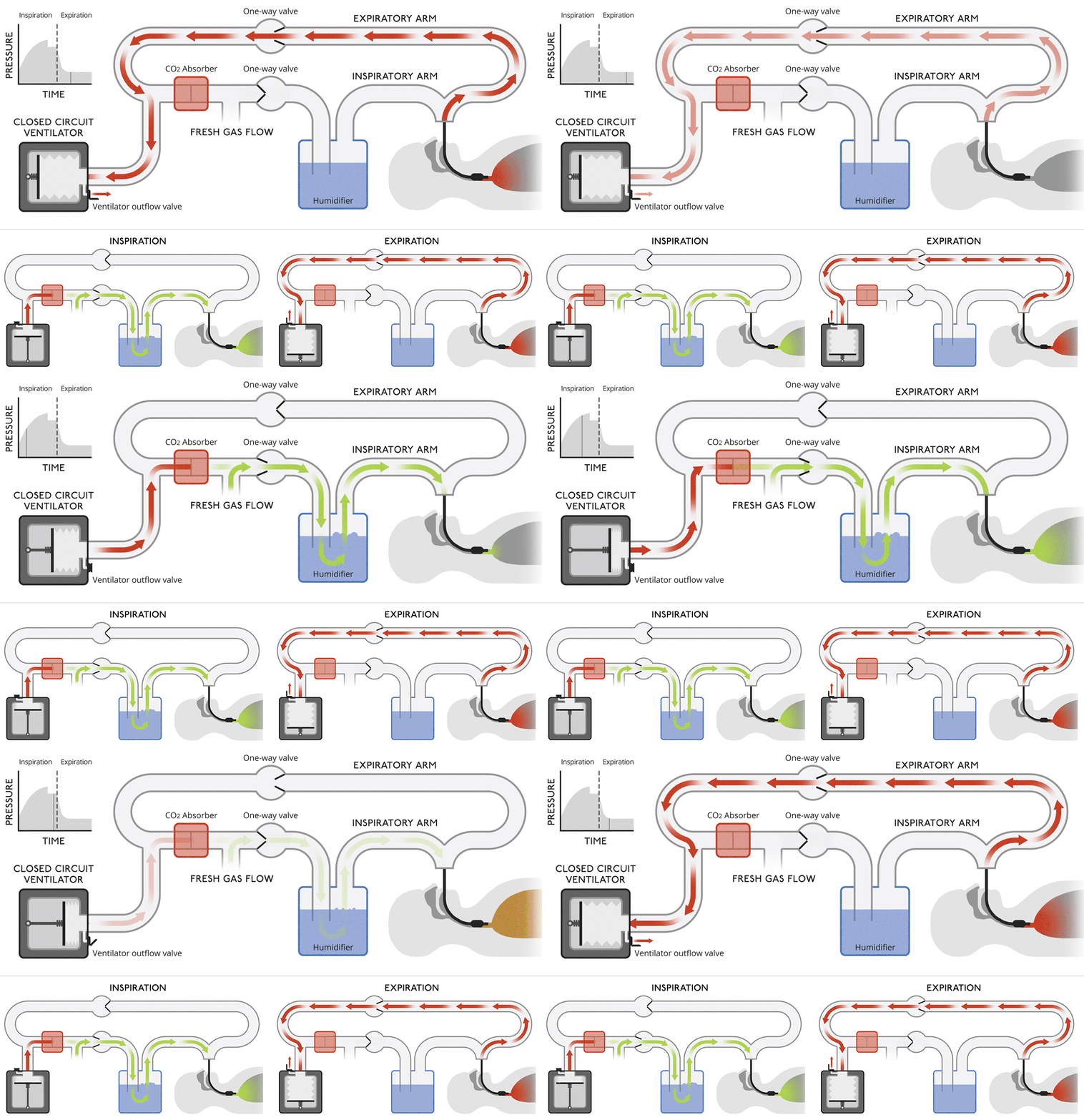
What is Mechanical Ventilation? What happens when youre on a ventilator?

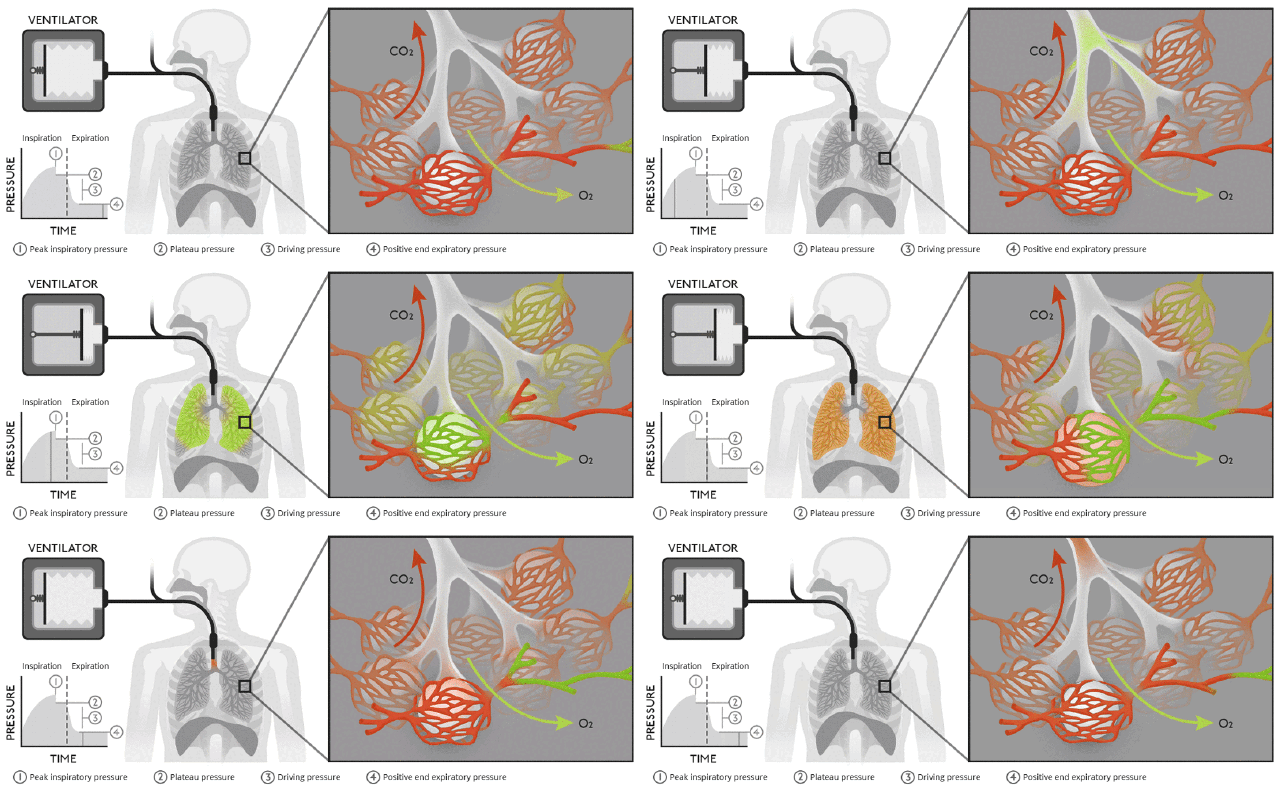
The basic concept of mechanical ventilation or positive pressure ventilation is to create a positive pressure the moves air/oxygen into the lungs. DUring breathing the pressure in our alveoli keeps on changing and during inspiration it becomes subatmospheric which drags air into the lungs and aveoli.
But if a person is not able to breathe by themselves in that condition positive pressure more than that of alveoli and lungs needs to be created by using artificial means and air or oxygen is pushed into the lungs.
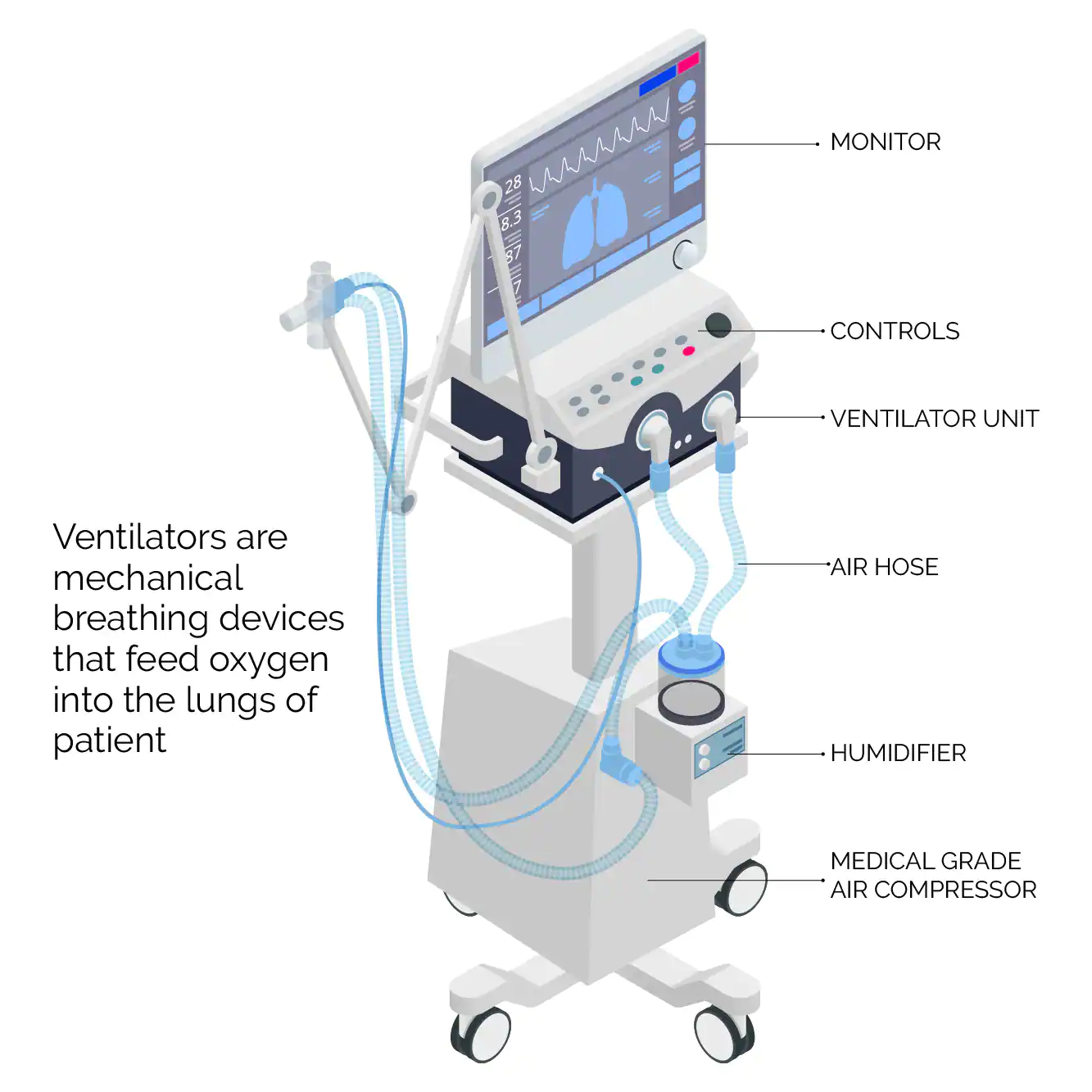
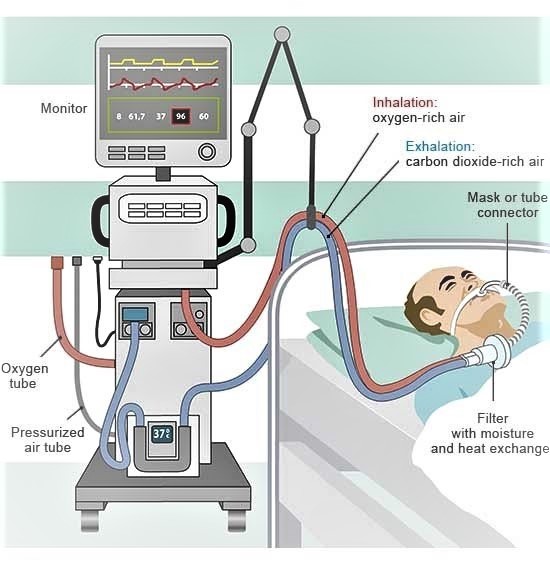
A ventilator machine labelled different parts

Mechanical Ventilation Definition

By undertanding above concept, mechanical ventilation  can be difined as a process in which the lungs of a person who is not able to breath by oneself are inflated using external force, person or machine in order to push air into them and pull it back, in order to complete gaseous exchange, or for purpose of delivering medicine (in case of anesthesia or other critical care). 

Understanding Mechanical Ventilation Settings

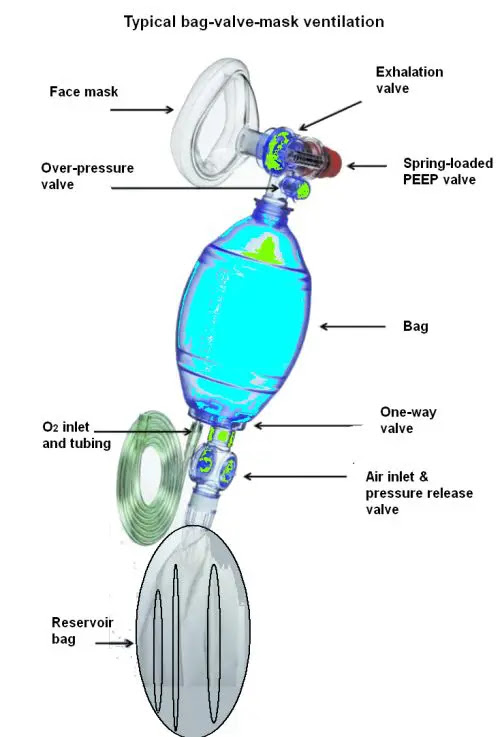
a bag-valve-mask

In general there are two methods of positive pressure ventilation:

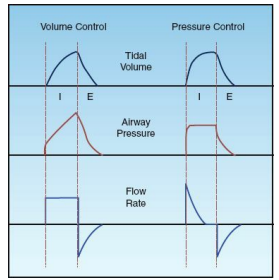
Volume controlled ventilation VC mode:

In this mode the initially the volume of air that is needed to be pushed into the ungs  is selectd and ventilator selects the pressure needed to push that much volume into lungs by itself. Depending on that the rate of lung inflation, that if respiratory rate can be kept constant ot adjusted. 

Pressure control ventilation PC mode:

In this mode the pressure at which the air/oxygen is pushed into lungs is preselected and duration and rate of lung inflation can be adjusted on the basis of need by the operator or doctor. by this desired tidal volume and sufficient oxygenation can be achieved.
The rate of lung inflation is initially high then is reduced so that presssure is same throughout(constant).
In other classification it can be classified as invasive and noninvasive ventilation:

Invasive ventilation

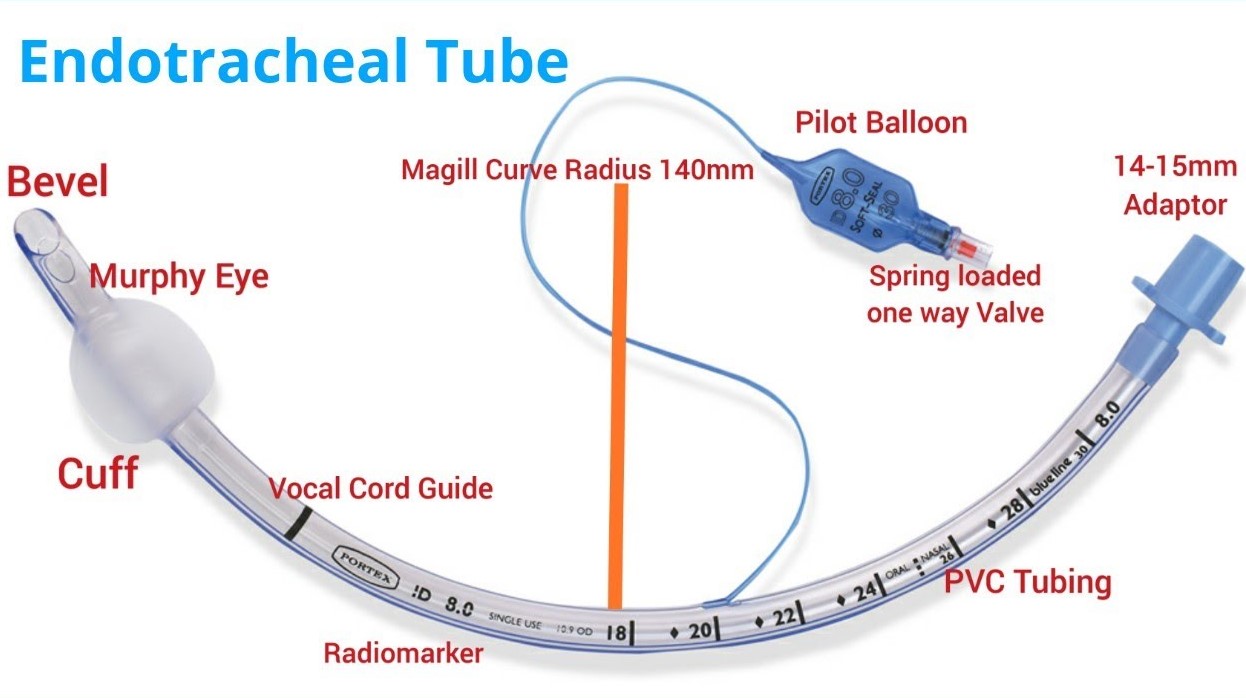
Invasive ventilation means ventilation with intubation in which a person a person has Endotrachea tube (ET Tube) placed in his trachea and through this air is supplied or his lungs are ventilated.
Endotracheal tube

Non-inasive ventilation

Non invasive ventilation consists of CPAP and BiPAP. CPAP standa for continuous positive pressure ventilation and BiPAP mean bilevel positive pressure ventilation.
These both are achieved through a fitting mask kept covering nose and mouth of the patient.
Though these types of ventilation can also be achieved in invasive ventilation as well, unless not necessary a person is not intubated but CPAP / BiPAP mas is used for this purpose.
Volume control Vs Pressure control technique in mechanical ventilation

Invasive Mechanical Ventilation: Benefits and Risks

Indication of mechanical ventilation

  • Respiratory failure
    • Hypoxemic respiratory failure : low oxygen saturation (sa02 or sp02)
    • Hypercarbic respiratory failure: High carbondioxide content in blood (paCO2)
    • Acute respiratory failure
  • Ventilatory failure
  • To reduce cerebral blood flow in case of raise ICP
  • Prevent aspiration of gastric content or other foreign body
  • Protect airway in seerely ill patient
  • In intoxicated, poisoned patients
  • To delever medicine and artificially breathe in case of general anesthesia
  • Hemodynamic instability
  • Heart attack
  • Head, face and neck surgery
  • Unstable or risky airway
  • Cardiac arrest
  • Encephalopathy
  • Coma or deterirating GCS
Ventilated patient depiction drawing

Befefits of mechanical ventilation:

  1. Proper and adequate oxygenation
  2. Accurate measurement of pressure and volumes
  3. Decreases work of breathing
  4. Improves gas exhange
  5. Reduces mortality
  6. Low failure rate than noninvasive ventilation
  7. Improves general pulmonary function
  8. Multiple modes available and settings can be changed according to need
  9. Stabilize and protects the airwat from collapse or obstruction
  10. Prevents aspiration
  11. Prevents atelectasis
  12. No airleaks

Risks associated with mechcanical ventilation:

  1. High pressure related lung injury : Barotrauma
  2. Volume trauma
  3. Oxygen toxicity
  4. Ventilator dependence
  5. Infection of airway
  6. Pneumonia, also called VAP : Ventilator associated pneumonia
  7. Mucus plug and lung collapse
  8. Airway trauma, mediastinal perforation
  9. Cuff presure injury to trachea and fistula formation, tracheal necrosis
  10. Hemodynamic collapse
  11. Tube malposition
  12. Electrolyte and aid base imbalance
  13. Mouth, teeth and lip trauma
  14. Infection of sinuses
  15. Muscle weakness and wasting and difficulty breathing after intubation later
  16. Position related complication
  17. Deep venous thrombosis and Pulmonary embolism (PE)
  18. Presure sores, ulcers
  19. Psychaitric problems
  20. Vocal cord injury and difficulty prducing speech

Mechanical Ventilation Systems: Types and Components

  1. Invasive ventilator with modern mamchine
  2. Bag-valve-mask ventilator (manual)
                Though bag valve mask can also be connected to endotracheal tube.
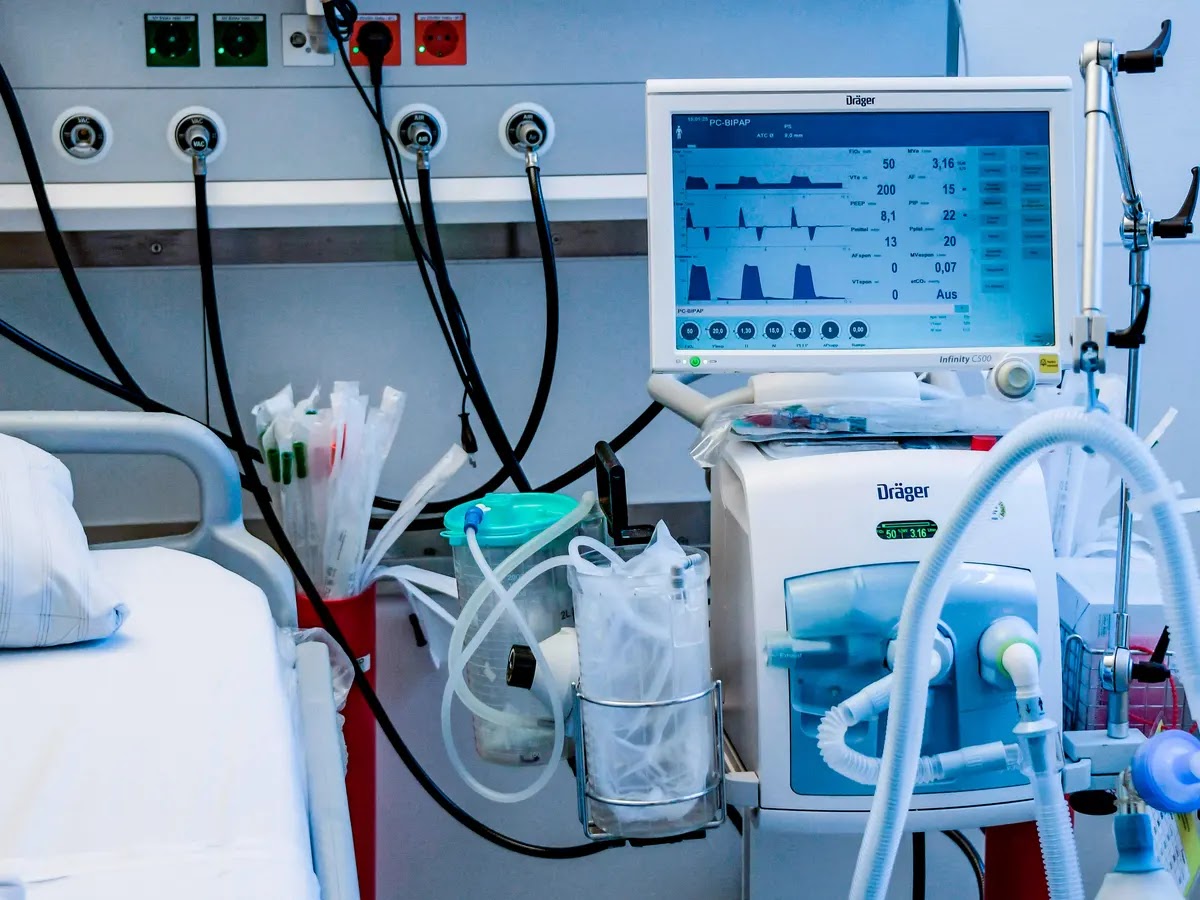
ventilator


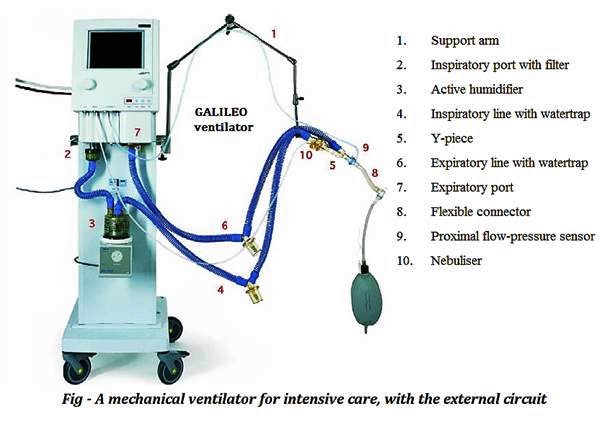
Components of mechanical ventilator:

  • Connector tube
  • circuits
  • t-piece
  • HME filter
  • monitor
  • air and oxygen ports and supply
  • ventilator machine
  • power supply
  • control knobs and butttons
ventilator parts

Instruments needed for mechanical ventilation

  1. Ventilator machine
  2. Connecting tubes for oxygen deivery
  3. Endotracheal ET tube
  4. Syringes
  5. Stethoscope
  6. Direct laryngoscope
  7. Bag-Valve-Mask
  8. Suction machine
  9. Suction tube
  10. Source of oxygen
  11. Fixating tapes/dresings
  12. Medications for anesthesia and muscle relaxation
  13. Monitor for vitals monitering
  14. Trained manpower

Process of putting one into mechanical ventilator or starting mechnical ventilation

  • The patient is decided for mechanical ventilation on basis of above mentioned criteria
  • Patient is preoxygenatied
  • Rapid sequence intubation is done using anesthetic agent and muscle relaxants
  • Once intubation is done then patient is connected to ventilator machine with appropriate setttings
  • The  settings of the ventilator can be changed as need and patiend is intensively monitored
  • Regularly check ABG to maintain arterial blood ga and electrolyte in limits
  • Keep arterial blood pH 7.35-7.45
  • Reularly check patient efforts, improvements, and treat the condition and cause of patiet’s need of intubation
  • Follow strict precaution for infection prevention
  • Prevent other complication
    How does a ventilator work

Method of ventilation-Lung Protective ventilatory strategy

  • Set tidal volume to 6ml/kg
    • calculate ideal body weight
    • use VC and set initial tidal volume Vt to 8 ml/kg
    • set RR to match baseline minute ventilation but not >35 bpm
    • set PEEP to 5 cm of H2O
    • reduce Vt by 1 ml/kg every 1-2 hr till its 6ml/kg
    • adjust PEEP and FiO2 to maintain SpO2 88-95% 
  • Prevent plateau pressure exceedig 30 cm of water
    • if plateau pressure .30 cm of water and Vt 6 ml/kg decrease vt 1 ml/kg until plateau pressure falls below 30 cm of water or Vt reached minimum of 4ml/kg
  • use least possible concentreation of oxygent (fraction of inspired oxygen or FiO2) to maintain saturation more than 90%
  • Adjust PEEP to maintain alveolar potency while preventing overdistention and closure reopening
  • Ph goal to 7.30 to 7.45
    • if pH 7.15-7.30 increase RR until ph >7.3, paco2 <25 or RR = 35
    • if pH <7.15, increase RR=35. if still remains <7.15, increase Vt in 1ml/kg until pH>7.15
    • if pH>7.45 decrease RR if possible
Read Normal ABG finding of a health person here: 

Care during mechanical ventilation:

  • Sedation and muscle relaxants or paralysis
  • Analgesia
  • Intensive monitoring
  • Chest physiotherapy
  • Suctioning and secretion clearing
  • Nutrition
  • Humidification
  • Prevention of infection: common site of infections include lungs, urine, oral cavity, skin, and blood 
  • Mobilization
  • Pressure prevention
  • Thromboembolic prophylaxis
  • Skincare
  • Oralcare
  • Eye care
  • Other general care
ventilator in action

Indication for discntinuation mechanical ventilation or indication of extubation

  • Patients recovery
  • Weaning
  • Completion of indication
  • Death

Technique of weaning:

    SIMV wean
    PS wean
    T-piece trial

Some terminlogies related to mechanical ventilation:

Respiratory rate RR

Number of breathes  (insiration and expiration = one breathe) per minute

Tidal volume Vt

The volume of air inhaled or exhaled in each breath / respiration by the person

Minute ventilation MV

Total volume inhald or exhaled by the person in a minute

FiO2

Fraction of the inhaled oxygen i.e percentage of oxygen in inhaled air

Peak pressure

The maximum pressure during inspiration generated by machine to push air into the lungs.

PEEP

Positive end expiratory pressure. It is the pressure at aveoli at the end of the expiration cycle before beginning of inspiration.

ACMV

Assist controlled mechanical ventilation

IMV

Intermittent mandatory ventilation

SIMV

Synchronized intermittent mandatory ventialtion

PSV

Pressure Support Ventilation

A/C, PCV

Assisted/Controlled, Pressure Controlled Ventilation (time cycled)

A/C, VCV

Assisted/Controlled, Volume Cycled Ventilation.

IRV

Inverse ratio ventilation

TCV

TIme controlled ventilation

ZEEP

Zero end expiratory pressure

NEEP

Negative end expiratry pressure

I:E ratio

Ratio of inspiratory time to expiratory time

SIMV + pressure support

Synchronized Intermittent Mandatory Ventilation with PEEP

CPAP

Continuous positive airway presssure

BiPAP

Bilevel positive aiway pressure

If you want to read more about above termnologie write us at mail@chaitanya.com.np

Some non-convetional ventilation strategies

  • HFOV- high frequency oscillatory ventillation
  • APRV- airway pressure release ventilation
  • PLV- partial liquid ventilation
  • ECMO- extracorporeal membrane oxygenation
  • PAV- proportional assist ventilation
  • NAV- neurally adjusted ventillatory-assist ventilation
  • PAV-NAV : proportional assist ventilation-neurally adjusted ventillatory-assist ventilation

Read my friend’s blog at doctorhealthrx.com

Conclusion: Importance of Mechanical Ventilation

Mechanical ventilation is a medical technique that replaces or assists spontaneous breathing. The concept was first introduced in 1555 by Andreas Vesalius, but it took 400 years to develop mechanical ventilation into a medical practice.
Today, mechanical ventilation and ventilators are widely used for various purposes in medical care, including elective and emergency surgeries and emergency situations. There are two main methods of positive pressure ventilation, volume-controlled and pressure-controlled ventilation, which can be invasive or noninvasive.
Mechanical ventilation has many benefits, such as improving gas exchange, reducing the work of breathing, and improving general pulmonary function, but there are also risks, such as high pressure or lung damage. Overall, mechanical ventilation has been a crucial part of modern-day intensive care medicine and has saved millions of lives worldwide.

Exit mobile version