


Fingerprinting (Dactylography, Galton System, Dermatoglyphics)
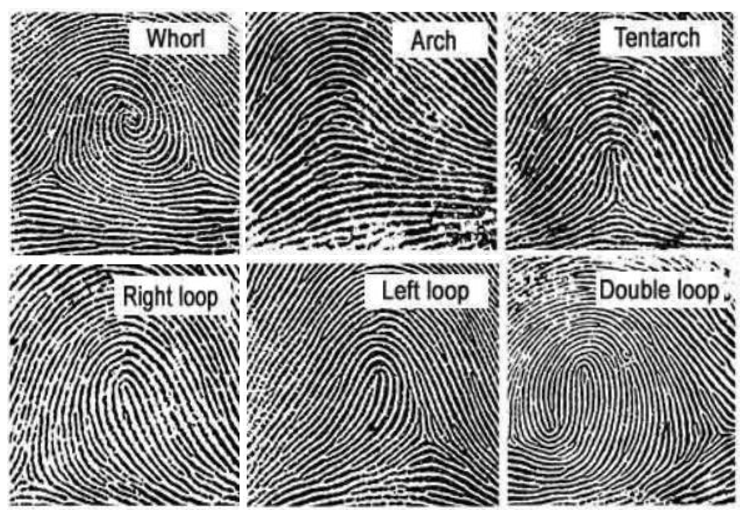
1. Basics of Fingerprint Patterns
✅ The most common fingerprint pattern: Loops (67%) > Whorls > Arches > Composite.
✅ Loops are the most frequent, followed by whorls, arches, and composite patterns.
2. Historical Milestones
📍 First Fingerprinting Bureau in the World: Established in Kolkata, India (1897).
3. Fingerprints as an Identification Tool
🔹 Best identification system to date (with dental status being the second best).
🔹 Quetelet’s Rule of Biological Variation:
- Even identical twins have different fingerprints.
4. Scientific Aspects of Fingerprinting
🔬 Points of Comparison: Generally, 16-20 points are accepted as proof of identity.
🔬 Poroscopy: Advanced fingerprint study described by Locard (focuses on sweat pore patterns).
5. Thumb Impression Rule
🖐 Which thumb impression is taken?
- Left thumb for males
- Right thumb for females
- (“If you are married/have a girlfriend, you will know this—females are always right!!” 😉)
6. Technological Advancements
🖥 FINDER (Fingerprint Reader)
- A computerized fingerprint maintenance system used by the FBI.
- Scans 8 fingers (excluding little fingers).
📌 Pigeonhole Method:
- All 10 fingers are recorded.