Scientists Develop Gene-Edited Lettuce to Combat Micronutrient Deficiencies

Scientists Develop Gene-Edited Lettuce to Combat Micronutrient Deficiencies

Table of Contents(toc)


Jerusalem, March 7, 2025 – A team of researchers from the Hebrew University of Jerusalem has successfully developed a gene-edited lettuce variety with significantly enhanced nutritional value. Using CRISPR gene-editing technology, the scientists increased levels of essential micronutrients, including β-carotene (provitamin A), zeaxanthin, and ascorbic acid (vitamin C), making this modified lettuce a potential tool in the fight against global micronutrient deficiencies.

The study, published in Plant Biotechnology Journal, was led by Prof. Alexander Vainstein from the university’s Robert H. Smith Faculty of Agriculture, Food, and Environment. The researchers demonstrated that targeted genetic modifications could significantly boost the nutritional content of lettuce without negatively affecting its growth, appearance, or yield.

Key findings from the study include:

  • A 2.7-fold increase in β-carotene, which is essential for vision, immune function, and skin health.
  • A significant boost in zeaxanthin, an antioxidant that protects against age-related macular degeneration.
  • A 6.9-fold increase in vitamin C, which strengthens the immune system and aids iron absorption.

The breakthrough highlights the potential of CRISPR technology in enhancing food nutrition without introducing foreign DNA, unlike traditional GMO methods. “This study is an important step toward developing healthier food options that can help address widespread nutrient deficiencies in modern diets,” said Prof. Vainstein.

Micronutrient deficiencies, often referred to as “hidden hunger,” affect millions worldwide, particularly in developing regions where access to diverse diets is limited. The development of nutrient-rich crops through gene editing could play a crucial role in tackling this global health issue.

As researchers continue refining gene-editing techniques, this innovative approach could pave the way for future biofortified crops, offering a sustainable and efficient solution to malnutrition.

The implications of this breakthrough extend beyond just improving individual health. Nutrient-rich crops like gene-edited lettuce could help reduce dependence on dietary supplements and fortified foods, making essential vitamins more naturally available through daily consumption.

Moreover, the ability to enhance multiple nutrients simultaneously without affecting crop yield is a major advancement in agricultural biotechnology. Traditional breeding methods often require years to achieve similar results, whereas CRISPR allows for precise and efficient modifications in a much shorter time frame.

Potential for Wider Agricultural Applications

The success of this study could inspire further applications of gene-editing technology in other staple crops, such as rice, wheat, and maize, which are primary food sources for millions. Scientists are already exploring similar approaches to enhance the nutritional profiles of various vegetables and grains to combat global malnutrition.

Additionally, gene-edited crops could be developed to have increased resistance to environmental stressors such as drought, pests, and soil deficiencies, making them more sustainable and suitable for cultivation in regions facing harsh agricultural conditions.

Regulatory and Public Perception Challenges

Despite the promising benefits of CRISPR-edited foods, regulatory hurdles and public perception remain key challenges. While gene-edited crops do not contain foreign DNA like traditional genetically modified organisms (GMOs), some countries still regulate them similarly. Public education on the safety and advantages of gene editing will be crucial for widespread acceptance.

Prof. Vainstein and his team hope that their research will contribute to changing the narrative around gene-edited foods by demonstrating their potential to improve public health without compromising food safety or environmental sustainability.

Future Prospects

Looking ahead, the research team plans to further optimize the gene-editing process to fine-tune nutrient levels and explore potential commercial applications. If regulatory approvals are granted, consumers could see nutrient-enhanced lettuce and other biofortified vegetables in supermarkets within the next few years.

As global food security challenges continue to grow, innovations like this gene-edited lettuce offer a promising step toward a future where healthier, more nutritious food is accessible to all.

Global Health Impact

The development of gene-edited lettuce could play a pivotal role in addressing micronutrient deficiencies, particularly in regions where malnutrition is a significant public health challenge. According to the World Health Organization (WHO), deficiencies in vitamin A, vitamin C, and other essential micronutrients affect over 2 billion people globally, contributing to weakened immune systems, impaired vision, and increased mortality rates.

By offering a naturally nutrient-rich alternative, gene-edited crops could help vulnerable populations gain better access to essential vitamins without relying heavily on expensive supplements or fortified foods. This innovation aligns with global efforts like the United Nations Sustainable Development Goals (SDGs), which aim to end hunger and improve nutrition by 2030.

Scientific Milestone in Precision Agriculture

The study highlights how CRISPR technology is revolutionizing agriculture by making precise genetic changes without altering the plant’s natural characteristics. This advancement opens the door for “precision agriculture”, where crops are tailored not only for higher yields but also for improved health benefits.

Prof. Vainstein emphasized the broader implications of this technology, stating:

“Our approach demonstrates that gene editing can improve food quality without sacrificing agricultural performance. This could pave the way for a new generation of crops that directly address the nutritional needs of populations worldwide.”

Next Steps and Commercialization

The research team is now collaborating with agricultural partners to conduct field trials and assess the performance of gene-edited lettuce under real-world farming conditions. If successful, they plan to seek regulatory approvals in various countries to introduce this biofortified lettuce to the market.

Additionally, the scientists are exploring similar gene-editing techniques in other leafy vegetables, such as spinach and kale, which are widely consumed and could benefit from enhanced nutrient profiles.

Conclusion

The gene-edited lettuce developed by the Hebrew University of Jerusalem represents a significant step forward in the fight against hidden hunger. By combining cutting-edge biotechnology with a commitment to global health, this breakthrough has the potential to reshape the future of agriculture and nutrition.

As regulatory frameworks evolve and public awareness grows, gene-edited crops could become a powerful tool in building a more sustainable and equitable food system, bringing healthier diets within reach for millions around the world.

Credits: New, More Nutritional Lettuce Plant Developed by Hebrew University Researchers Using CRISPR Gene Editing, https://www.afhu.org/2025/03/07/new-more-nutritional-lettuce-plant-developed-by-hebrew-university-researchers-using-crispr-gene-editing/

Article at: Yarin Livneh, Ehud Leor-Librach, Dor Agmon et al, Combined enhancement of ascorbic acid, β-carotene and zeaxanthin in gene-edited lettuce,  https://onlinelibrary.wiley.com/doi/10.1111/pbi.70018,  doi: https://doi.org/10.1111/pbi.70018

(please contact me for any copyright infringement action before reporting, i will happily remove it if reported)

(for educational purpose only)

Fingerprinting Forensics (medical student notes)

Fingerprinting (Dactylography, Galton System, Dermatoglyphics)

Table of Contents(toc)


1. Basics of Fingerprint Patterns

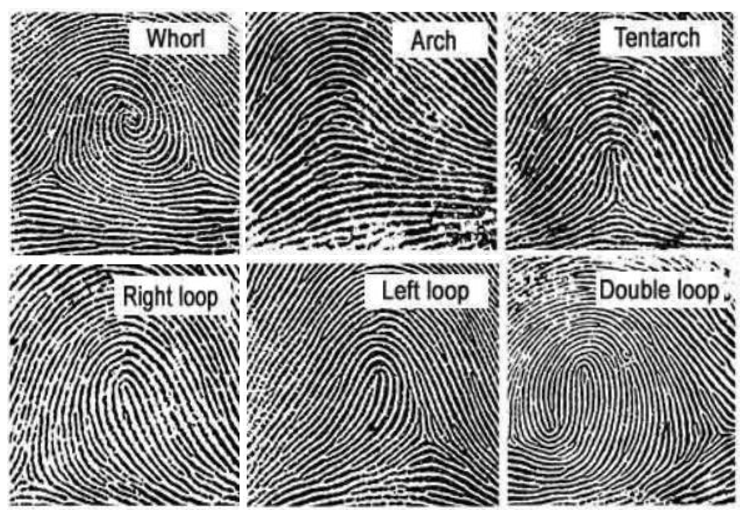
✅ The most common fingerprint pattern: Loops (67%) > Whorls > Arches > Composite.

Loops are the most frequent, followed by whorls, arches, and composite patterns.

2. Historical Milestones

📍 First Fingerprinting Bureau in the World: Established in Kolkata, India (1897).

3. Fingerprints as an Identification Tool

🔹 Best identification system to date (with dental status being the second best).

🔹 Quetelet’s Rule of Biological Variation:

  • Even identical twins have different fingerprints.

4. Scientific Aspects of Fingerprinting

🔬 Points of Comparison: Generally, 16-20 points are accepted as proof of identity.

🔬 Poroscopy: Advanced fingerprint study described by Locard (focuses on sweat pore patterns).

5. Thumb Impression Rule

🖐 Which thumb impression is taken?

  • Left thumb for males
  • Right thumb for females
  • (“If you are married/have a girlfriend, you will know this—females are always right!!” 😉)

6. Technological Advancements

🖥 FINDER (Fingerprint Reader)

  • A computerized fingerprint maintenance system used by the FBI.
  • Scans 8 fingers (excluding little fingers).

📌 Pigeonhole Method:

  • All 10 fingers are recorded.

Abnormal Pulse Patterns & Clinical Significance

Abnormal Pulse Patterns and Their Clinical Significance

Table of Contents(toc)


1. Pulsus Paradoxus

Definition: An exaggerated decrease (>10 mmHg) in systolic blood pressure during inspiration.

🔍 Seen in:

  • Pericardial tamponade (classic association)
  • Superior vena cava (SVC) obstruction
  • Chronic obstructive pulmonary disease (COPD) / Acute severe asthma
  • Constrictive pericarditis
  • Pulmonary embolism
  • Hypovolemic shock
  • Tension pneumothorax
  • Large pleural effusion

📝 Exam Tip: Pulsus paradoxus is best detected using a sphygmomanometer rather than palpation. It is a key feature of cardiac tamponade.


2. Pulsus Alternans

Definition: Regular alteration of pulse pressure with a normal rhythm (single peak per beat). Indicates left ventricular systolic dysfunction.

🔍 Seen in:

  • Left ventricular failure (LVF) (hallmark sign)
  • Dilated cardiomyopathy
  • Severe aortic stenosis
  • Advanced hypertension

📝 Exam Tip: Pulsus alternans suggests poor left ventricular function and can be confirmed using sphygmomanometry or echocardiography.


3. Bisferiens Pulse

Definition: A pulse with two distinct systolic peaks per cardiac cycle. Best felt in the carotid artery.

🔍 Seen in:

  • Aortic regurgitation + Aortic stenosis (AR + AS) (combined lesion)
  • Hypertrophic obstructive cardiomyopathy (HOCM)
  • Severe mitral regurgitation

📝 Exam Tip: Bisferiens pulse is classically associated with HOCM and can be differentiated from other pulses using Doppler echocardiography.


4. Dicrotic Pulse

Definition: A pulse with two palpable waves: one during systole and one during diastole.

🔍 Seen in:

  • Dilated cardiomyopathy (DCM)
  • Septic shock (low cardiac output states)
  • Hypovolemia
  • Conditions with reduced systemic vascular resistance

📝 Exam Tip: Dicrotic pulse occurs due to an exaggerated dicrotic notch. It is often a sign of severe myocardial dysfunction.


Additional High-Yield Exam Points:

  • Collapsing (Water hammer) pulse: Seen in Aortic regurgitation (Corrigan’s sign).
  • Anacrotic pulse: Seen in Aortic stenosis (slow-rising pulse with a delayed peak).
  • Bounding pulse: Seen in sepsis, fever, anemia, and thyrotoxicosis.
  • Paradoxical pulse vs Pulsus alternans: Pulsus paradoxus is linked to pericardial conditions, whereas Pulsus alternans suggests ventricular failure.

Drugs contraindicated in pregnancy

Drugs contraindicated in pregnancy:

  • Lithium
  • ACE inhibitors
  • Beta blockers
  • Immunosuppressive drugs except azathioprine and cyclosporine(which are relatively safer)
  • Atropine
  • Diazepam
  • Phenytoin
  • Valproate
  • Isotretinoin
  • Progestins
  • Aminoglycosides (streptomycin)
  • Allopurinol
  • Live vaccines
  • Metronidazole (1st trimester)
  • Warfarin (1st and 3rd trimester)

Question

Which one of the following drugs is absolutely contraindicated in pregnancy?

a. Chloroquine

c. Methotrexate

b. Cyclosporine

d. Pyrazinamide

_____________

Ans: ‘c’

Explanation

Methotrexate is contraindicated in pregnancy.

{

“@context”: “https://schema.org”,

“@type”: “FAQPage”,

“mainEntity”: {

“@type”: “Question”,

“name”: “Can we give metatrexate in pregnancy?”,

“acceptedAnswer”: {

“@type”: “Answer”,

“text”: “No. Methotrexate is contraindicated in pregnancy.”

}

}

}

Benign rolandic epilepsy

Benign rolandic epilepsy

Table of contents (toc)


Introduction:

Benign rolandic epilepsy, also known as benign epilepsy with centrotemporal spikes (BECTS), is an epilepsy syndrome affecting children, characterized by twitching, numbness, or tingling of the child’s face or tongue, and may interfere with speech and cause drooling.

Features:

Involves twitching, numbness, or tingling of the child’s face or tongue (called a focal or partial seizure).
Seizures last no more than 2 minutes.
Child remains fully conscious.
The syndrome represents about 15% of all epilepsies in children.
Because the seizures may be infrequent and usually occur at night, many children do not take medication.
In almost every case, seizures stop on their own by age 15.

Treatment:

The drug of choice for benign rolandic epilepsy: Carbamazepine
Alternative agents include gabapentin, valproate, phenytoin or levetiracetam.

Probable MCQ

Which one of the following is the drug of choice for benign rolandic epilepsy?
a. Gabapentin
c. Phenytoin
b. Barbiturates
d. Sodium valporate
Ans:’a’

What is primary health care

What is primary health care

Table of contents (toc)

Introduction

Primary health care is essential health care made universally accessible to individuals and acceptable to them, through their full participation and at a cost the community and country can afford.

Elements of primary health care:

1. Education concerning prevailing health problems and the methods of preventing and controlling them;
2. Promotion of food supply and proper nutrition;
3. An adequate supply of safe water and basic sanitation;
4. Maternal and child health care, including family planning;
5. Immunization against major infectious diseases;
6. Prevention and control of locally endemic diseases;
7. Appropriate treatment of common diseases and injuries; and
8. Provision of essential drugs.

{

“@context”: “https://schema.org”,

“@type”: “FAQPage”,

“mainEntity”: {

“@type”: “Question”,

“name”: “What is the mnemonic for remembering elements of primary health care?”,

“acceptedAnswer”: {

“@type”: “Answer”,

“text”: “ELEMENTS itself is the mnemonic to remember elements of primary health care.”

}

}

}

Human Herpes Viruses: Clinical Manifestations

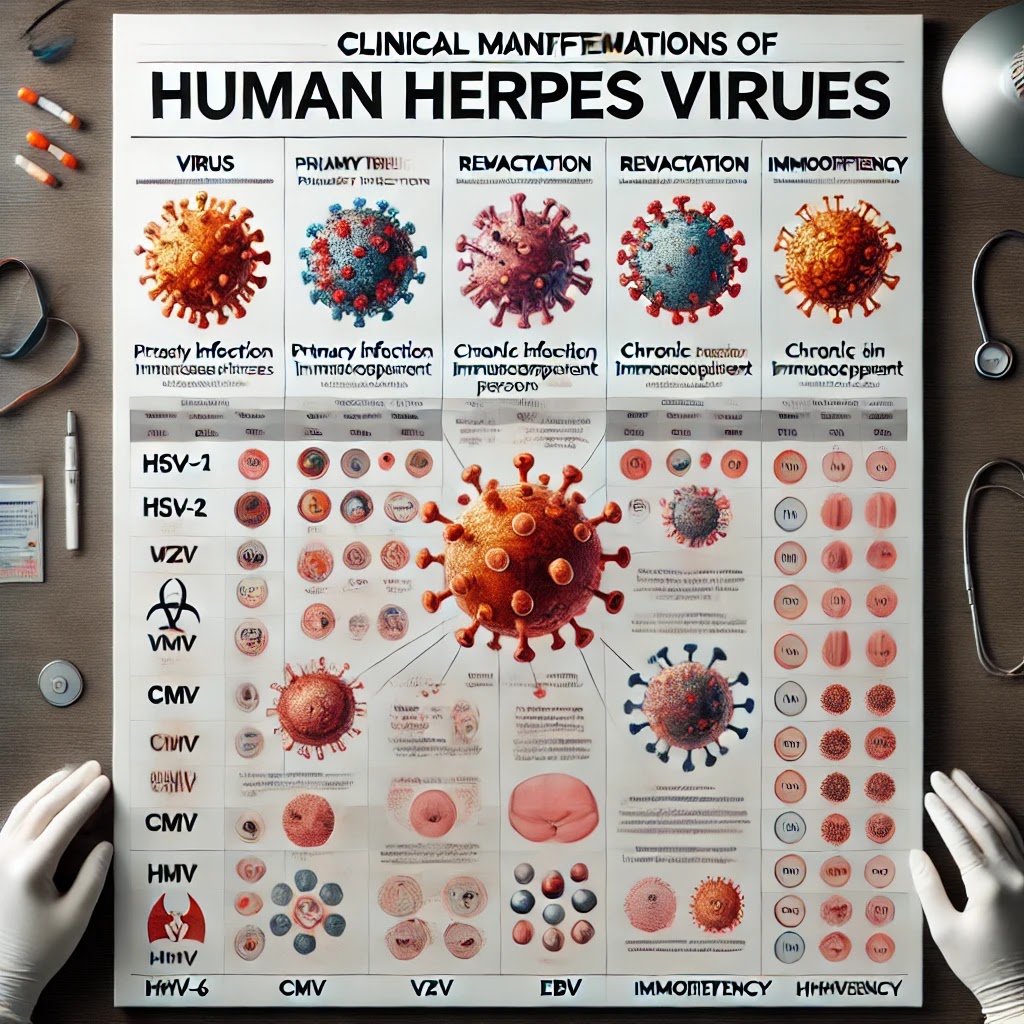
Clinical Manifestations of Human Herpes Viruses

Table of Contents(toc)

Clinical Manifestations of Human Herpes Viruses

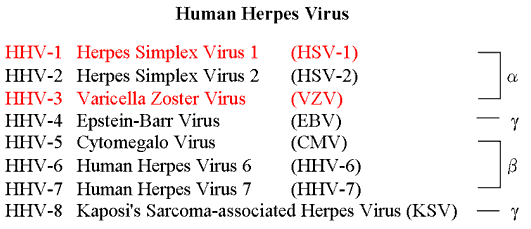
Virus Primary Infection Reactivation Chronic Infection in Immunocompetent Persons Immunodeficiency
Herpes simplex virus 1 (HSV-1) Frequently subclinical (80–90%), Oral lesions (10–20%), Congenital infection Oral lesions, Encephalitis None Large mucocutaneous lesions
Herpes simplex virus 2 (HSV-2) Frequently subclinical (80–90%), Genital lesions (10–20%) Genital ulcers, Encephalitis None Large mucocutaneous lesions
Varicella-zoster virus (VZV) Chickenpox Shingles None Multisegmental shingles or severe disseminated infection
Cytomegalovirus (CMV) Mononucleosis-like disease ? Cofactor in atherosclerosis (?) Retinitis, Colitis, Pneumonitis, Encephalitis
Epstein–Barr virus (EBV) Mononucleosis ? Nasopharyngeal carcinoma, Burkitt lymphoma B-cell lymphoma, Oral hairy leukoplakia
Human herpes virus 6 (HHV-6) Exanthema subitum (Roseola) ? Multiple sclerosis (?) Pneumonia, Disseminated infection
Human herpes virus 7 (HHV-7) Fever, Exanthema-subitum-like illness ? None ?
Human herpes virus 8 (HHV-8) Febrile illness ? ? Multicentric Castleman disease, Kaposi sarcoma, Primary body cavity lymphoma

Note: (?) = Not proven

Source: Differential Diagnosis in Internal Medicine – From Symptom to Diagnosis, 2007

table {
width: 100%;
border-collapse: collapse;
}
th, td {
border: 1px solid black;
padding: 10px;
text-align: left;
}
th {
background-color: #f2f2f2;
}

Effects of Common Food Adulterations

Common Food Adulterations &Their Harmful Effects

Table of Contents(toc)
Food

Food adulteration is a major health concern, as it involves the addition of
harmful substances to food products, reducing their quality and making them
unsafe for consumption. Below is a table listing common food adulterations,
their sources, and their health effects.

Food Item Common Adulterant Health Hazards
Milk Detergent, starch, urea, synthetic milk Digestive issues, kidney damage, food poisoning
Tea & Coffee Used tea leaves colored with iron fillings Stomach disorders, liver damage
Wheat & Flour Starch, chalk powder Indigestion, nutritional deficiency
Sugar Washing soda, chalk powder Stomach disorders, irritation in the digestive tract
Honey Glucose, molasses, sugar syrup Weight gain, diabetes risk
Vegetables Malachite green (to enhance color) Carcinogenic effects, liver damage
Fruits Wax coating, carbide for ripening Cancer risk, digestive issues
Pulses Artificially polished with lead chromate Kidney failure, cancer risk
Soft Drinks Excess carbon dioxide, artificial sweeteners Obesity, metabolic disorders
Ice Cream Washing powder, synthetic milk Gastrointestinal diseases
Ghee & Butter Vanaspati, starch Cardiovascular diseases, digestive issues
Pickles Excessive salt and non-edible mineral oil High blood pressure, digestive problems
Chocolates & Sweets Non-edible synthetic dyes, aluminum foil Liver and kidney damage, allergies
Meat & Fish Formalin (used for preservation) Highly toxic, can cause cancer

How to Detect Food Adulteration at Home

  • Milk: Add a drop of
    iodine solution; if it turns blue, starch is present.
  • Tea Leaves: Rub on a wet
    paper; if it leaves a color, artificial coloring is used.
  • Honey: Mix with water;
    pure honey settles at the bottom, while adulterated honey dissolves.
  • Fruits & Vegetables:
    Wash thoroughly; if color comes off, synthetic dyes are used.

Conclusion

Food adulteration can have serious health consequences. Always buy food from
trusted sources, check labels for certifications, and use simple home tests to
ensure food safety.

body {
font-family: Arial, sans-serif;
margin: 20px;
background-color: #f9f9f9;
}
table {
width: 100%;
border-collapse: collapse;
background-color: white;
box-shadow: 2px 2px 10px rgba(0, 0, 0, 0.1);
}
th, td {
border: 1px solid #ddd;
text-align: left;
padding: 10px;
}
th {
background-color: #4CAF50;
color: white;
}
tr:nth-child(even) {
background-color: #f2f2f2;
}
caption {
font-size: 1.5em;
margin-bottom: 10px;
font-weight: bold;
}

Exit mobile version