TU Staff Nurse Syllabus: Complete Guide to Exam Topics and Preparation 2081

TU Staff Nurse Syllabus: Complete Guide to Exam Topics and Preparation 2081

Table of Contents(toc)


1. Fundamentals of Nursing

1.1 Nursing: Definition, Role of Nurse
1.2 Basic needs of clients (Maslow’s Hierarchy of needs)
1.3 The nursing process – Definition, Components, Advantages
1.4 Stress and coping mechanism
1.5 First aid treatment
1.6 Administration of drugs – action, side effects, nursing implications, routes, dose, function, patient rights, Nursing responsibilities
1.7 Infection prevention and control (cleaning, disinfection, and sterilization)
1.8 Methods of collecting different specimens for routine and culture tests

2. Applied Science

2.1 Anatomy and Physiology of all body systems
2.2 Body mechanisms, Ways of Transfer of heat
2.3 Fluid and electrolyte balance, Osmosis, Diffusion, Acid-base balance
2.4 Common investigations and their significance
2.5 Microbiology

3. Medical-Surgical Nursing

3.1 Developmental tasks of different age groups
3.2 Common diagnostic procedures (CT Scan, MRI, Endoscopy, ERCP, FNAC)
3.3 Nursing management of common disease conditions:

  • Head Injuries, Spinal cord injuries, Meningitis, Encephalitis, Epilepsy
  • Bronchitis, Asthma, Pulmonary diseases, TB, Pleurisy
  • Intestinal Obstruction, Appendicitis, Peritonitis, Cirrhosis, Hepatitis
  • Hernias, Bladder stones, UTIs, Renal failure, Uremia
  • CHF, Angina, Cardiac Arrest, Anemia, Leukemia, Myocardial infarction
  • Gangrene, Diabetes Mellitus, Hypertension, Fracture, Osteomyelitis
    3.4 Nursing management of common sensory diseases (Otitis Media, Mastoiditis, Burns)

4. Community Health Nursing

4.1 Primary health care: Concept, Principle, Components
4.2 Epidemiology: Definition, Approaches
4.3 Immunization (National Immunization Program)
4.4 Community Diagnosis: Definition, Process/Steps
4.5 Nutrition: Definition, Deficiency, disease, and community management
4.6 Communicable diseases: Definition, Preventive act, and management
4.7 Family planning: Definition, Methods, Advantages, Side effects, Counseling
4.8 Health Indicators

5. Midwifery

5.1 Antenatal, natal, and post-natal care of a mother
5.2 Minor and major problems of mothers and their management
5.3 Diseases associated with pregnancy
5.4 Immediate newborn care during delivery

6. Nursing Care of Gynecological Problems

6.1 Disorders of Uterine Bleeding
6.2 Cystocele and Rectocele
6.3 Uterine Prolapse
6.4 Vesico Vaginal Fistula
6.5 STI (Sexually Transmitted Infections)
6.6 HIV/AIDS
6.7 Infertility

7. Pediatric Nursing Care

7.1 Characteristics of Newborn
7.2 Care of Newborn after 24 hours
7.3 Developmental milestones and tasks of different age groups (Infant, Toddler, Preschool, School age, Adolescent)
7.4 Health and promotional activities for different age groups of children
7.5 Adolescent changes and problems
7.6 CBIMNCI (Community-Based Integrated Management of Neonatal and Childhood Illness)
7.7 Common health problems of different age groups and their management
7.8 Congenital disorders
7.9 Prevention of common health hazards in children

8. Mental Health Nursing

8.1 Common major and minor mental disorders:

  • Depression, Psychosis, Mood disorders, Anxiety Disorder, Mania, Schizophrenia, Convulsion Disorder
  • Nursing management of these disorders

9. Leadership and Management

9.1 Management: Definition, Process/Function, Principles
9.2 Planning, Organizing, Directing, and Controlling (Supervision, Motivation, Delegation)
9.3 Leadership: Definition and Styles
9.4 Organogram of Different Governmental Health Services (Federal, Provincial, and Local Government)
9.5 Communication Process: Definition, Types, and Process

Topodiagnostic Tests of the Facial Nerve

Topodiagnostic Tests of the Facial Nerve

Table of Contents(toc)

The facial nerve (cranial nerve VII) is responsible for motor control of facial muscles, taste sensation from the anterior two-thirds of the tongue, and certain autonomic functions. When a facial nerve lesion occurs, it is crucial to determine the exact site of involvement to guide treatment. This process is called topodiagnosis, and it relies on various specialized tests.

Anatomy and Importance of Topodiagnosis


The facial nerve has multiple segments: intracranial, intratemporal (labyrinthine, tympanic, and mastoid segments), and extracranial portions. Different functions of the nerve are affected depending on the lesion site, which is why specific topodiagnostic tests are essential for localization.

Topodiagnostic Tests of the Facial Nerve

  1. Schirmer’s Test

    • Evaluates lacrimal gland function by measuring tear production.
    • A filter paper strip is placed under the lower eyelid, and tear absorption is measured after 5 minutes.
    • Reduced tear production suggests a lesion proximal to the greater petrosal nerve (near the geniculate ganglion).
  2. Stapedial Reflex Test (Acoustic Reflex Test)

    • The stapedius muscle, innervated by the facial nerve, contracts in response to loud sounds.
    • Absence of the reflex suggests a lesion proximal to the nerve to stapedius, typically in the tympanic segment of the facial nerve.
  3. Taste Testing (Chorda Tympani Function)

    • Assesses taste perception on the anterior two-thirds of the tongue.
    • Impaired taste indicates a lesion proximal to the chorda tympani.
  4. Salivary Flow Test

    • Measures submandibular and sublingual gland function.
    • Reduced salivation suggests a lesion above the origin of the chorda tympani.
  5. Electroneurography (ENoG)

    • Evaluates facial nerve degeneration by measuring electrical response of facial muscles.
    • Useful in predicting prognosis, especially in Bell’s palsy.
  6. Electromyography (EMG)

    • Assesses voluntary muscle activity and nerve regeneration.
    • Helps differentiate complete from partial nerve lesions.
  7. Blink Reflex Test

    • Evaluates brainstem reflex pathways.
    • Delayed or absent response suggests brainstem involvement or a high-level nerve lesion.
  8. Nerve Excitability Test (NET)

    • Determines the minimal electrical stimulus required to elicit a facial muscle response.
    • Increased threshold suggests nerve degeneration.
  9. Magnetic Resonance Imaging (MRI) and Computed Tomography (CT)

    • Used to identify structural causes such as tumors, fractures, or inflammation along the nerve pathway.

Here’s a mnemonic to help remember the topodiagnostic tests of the facial nerve in order:

Mnemonic:

“Some Strange Tests Show Every Nerve’s Blink & Motion”

Breakdown:

  • SSchirmer’s Test (Tear production)
  • SStapedial Reflex Test (Stapedius muscle function)
  • TTaste Testing (Chorda tympani function)
  • SSalivary Flow Test (Saliva production)
  • EElectroneurography (ENoG) (Facial nerve degeneration)
  • NNerve Excitability Test (NET) (Electrical threshold for muscle response)
  • BBlink Reflex Test (Brainstem reflex evaluation)
  • MMRI/CT Imaging (Structural assessment)

This phrase makes it easier to recall the major diagnostic tests in order. Hope this helps! Let me know if you’d like an alternative version.

Conclusion

Topodiagnostic tests play a critical role in localizing facial nerve lesions, guiding further management, and predicting recovery. By correlating clinical findings with these tests, healthcare professionals can determine whether the lesion is intracranial, intratemporal, or extracranial, ensuring accurate diagnosis and appropriate treatment.

Physiotherapy – Model Question Set NHPC 13th License Exam

Model Question Set – 13th License Exam for Physiotherapy

Table of Contents(toc)


Section A: Multiple Choice Questions (MCQs) (20 x 1 = 20 marks)

(Choose the correct answer from the given options.)

  1. Which plane divides the body into left and right halves?
    a) Frontal plane
    b) Sagittal plane
    c) Transverse plane
    d) Coronal plane

  2. The primary function of the quadriceps muscle is:
    a) Knee flexion
    b) Knee extension
    c) Hip abduction
    d) Hip extension

  3. The functional unit of a muscle is called:
    a) Myosin
    b) Actin
    c) Sarcomere
    d) Motor unit

  4. Which of the following is a closed-chain exercise?
    a) Bicep curl
    b) Leg press
    c) Seated knee extension
    d) Dumbbell shoulder press

  5. The normal range of motion (ROM) for shoulder flexion is:
    a) 90°
    b) 120°
    c) 180°
    d) 220°

  6. The Glasgow Coma Scale (GCS) is used to assess:
    a) Muscle strength
    b) Joint range of motion
    c) Level of consciousness
    d) Respiratory function

  7. Which modality is most appropriate for acute inflammation?
    a) Ultrasound therapy
    b) Cryotherapy
    c) Shortwave diathermy
    d) Heat therapy

  8. The Berg Balance Scale is used to assess:
    a) Endurance
    b) Coordination
    c) Postural stability
    d) Strength

  9. Which nerve is commonly affected in Carpal Tunnel Syndrome?
    a) Ulnar nerve
    b) Radial nerve
    c) Median nerve
    d) Sciatic nerve

  10. The McKenzie method is primarily used in the treatment of:
    a) Stroke
    b) Lower back pain
    c) Frozen shoulder
    d) ACL injury

Model Question Set – 13th License Exam for CMLT

Model Question Set – 13th License Exam for CMLT (model Question)

Table of Contents(toc)

(Choose the correct answer from the given options.)

  1. The normal range of hemoglobin in adult males is:
    a) 10-12 g/dL
    b) 12-16 g/dL
    c) 14-18 g/dL
    d) 18-22 g/dL

  2. Which stain is commonly used for peripheral blood smear examination?
    a) Gram stain
    b) Giemsa stain
    c) Ziehl-Neelsen stain
    d) Wright stain

  3. The causative agent of tuberculosis is:
    a) Staphylococcus aureus
    b) Mycobacterium tuberculosis
    c) Escherichia coli
    d) Klebsiella pneumoniae

  4. Which blood group is known as the universal recipient?
    a) O-
    b) AB+
    c) B+
    d) A-

  5. The enzyme amylase is mainly responsible for the digestion of:
    a) Proteins
    b) Carbohydrates
    c) Lipids
    d) Nucleic acids

  6. The normal fasting blood glucose level is:
    a) 70-99 mg/dL
    b) 100-140 mg/dL
    c) 150-200 mg/dL
    d) 50-60 mg/dL

  7. Which method is used for sterilization of culture media?
    a) Autoclaving
    b) Filtration
    c) Radiation
    d) Boiling

  8. The reagent used for Widal test is:
    a) Coomb’s reagent
    b) Agglutination reagent
    c) Antigen reagent
    d) Hemolysin

  9. Which of the following is a gram-negative bacteria?
    a) Streptococcus pneumoniae
    b) Staphylococcus aureus
    c) Escherichia coli
    d) Clostridium tetani

  10. The anticoagulant used in complete blood count (CBC) is:
    a) EDTA
    b) Heparin
    c) Sodium citrate
    d) Potassium oxalate

13th License Exam for Health Assistant (Model Question Set)

Model Question Set – 13th License Exam for Health Assistant


Table of Contents(toc)

(Choose the correct answer from the given options.)

  1. What is the normal range of body temperature in Celsius?
    a) 35°C – 36°C
    b) 36.1°C – 37.2°C
    c) 37.5°C – 39°C
    d) 34°C – 35°C

  2. Which of the following is a water-soluble vitamin?
    a) Vitamin A
    b) Vitamin D
    c) Vitamin C
    d) Vitamin K

  3. The universal blood donor type is:
    a) A+
    b) O-
    c) B+
    d) AB+

  4. The incubation period of Hepatitis B is:
    a) 10-15 days
    b) 30-180 days
    c) 5-7 days
    d) 1-2 years

  5. The expanded form of ORS is:
    a) Oral Rehydration Solution
    b) Oral Remedy System
    c) Oral Recovery Solution
    d) Oral Rehydration Salt

  6. The normal respiratory rate in adults is:
    a) 8-12 breaths per minute
    b) 12-20 breaths per minute
    c) 20-30 breaths per minute
    d) 30-40 breaths per minute

  7. The vaccine given at birth as part of the National Immunization Program is:
    a) DPT
    b) BCG
    c) OPV
    d) Hepatitis B

  8. Which of the following diseases is caused by a virus?
    a) Tuberculosis
    b) Malaria
    c) Measles
    d) Typhoid

  9. The main function of Red Blood Cells (RBCs) is to:
    a) Fight infections
    b) Transport oxygen
    c) Produce antibodies
    d) Maintain blood pressure

  10. Universal precautions in infection control include:
    a) Handwashing
    b) Wearing gloves
    c) Proper disposal of needles
    d) All of the above

VBD vector-borne diseases (MCQs) Multiple-choice questions

Multiple-choice questions (MCQs) on vector-borne diseases

Table of Contents(toc)


Multiple Choice Questions on Vector-Borne Diseases

Question 1

Which of the following is a vector-borne disease transmitted by mosquitoes?

(A) Tuberculosis
(B) Malaria
(C) Cholera
(D) Measles

Answer: (B) Malaria
Explanation: Malaria is caused by parasites transmitted to humans through the bites of infected Anopheles mosquitoes.


Question 2

The vector for Dengue fever is:

(A) Anopheles mosquito
(B) Culex mosquito
(C) Aedes mosquito
(D) Tsetse fly

Answer: (C) Aedes mosquito
Explanation: Dengue fever is primarily transmitted by the Aedes aegypti mosquito.


Question 3

Which of the following diseases is transmitted by the bite of an infected sandfly?

(A) Lyme disease
(B) West Nile Virus
(C) Leishmaniasis
(D) River Blindness

Answer: (C) Leishmaniasis
Explanation: Leishmaniasis is a parasitic disease transmitted through the bite of infected female phlebotomine sandflies.


Question 4

The causative agent of Lyme disease is:

(A) A virus
(B) A bacterium
(C) A parasite
(D) A fungus

Answer: (B) A bacterium
Explanation: Lyme disease is caused by the bacterium Borrelia burgdorferi, transmitted to humans through the bite of infected blacklegged ticks.


Question 5

Which of the following is a control measure for vector-borne diseases?

(A) Vaccination of the human population
(B) Use of insecticides to control vector populations
(C) Improved sanitation and waste management
(D) All of the above

Answer: (D) All of the above
Explanation: A comprehensive approach to controlling vector-borne diseases includes targeting the pathogen, the vector, and the environment.


Question 6

What type of disease is Zika?

(A) Bacterial
(B) Viral
(C) Parasitic
(D) Fungal

Answer: (B) Viral
Explanation: Zika is caused by the Zika virus.


Question 7

Which of the following diseases is NOT typically considered a vector-borne disease?

(A) Plague
(B) Rabies
(C) Yellow Fever
(D) Chikungunya

Answer: (B) Rabies
Explanation: Rabies is typically transmitted through the saliva of infected mammals (e.g., dogs, bats), not through an arthropod vector. While bats can be vectors, the transmission is direct (bite), not vector-borne in the classic sense.


Question 8

What is the primary target of insecticide-treated nets (ITNs) used to prevent malaria?

(A) Mosquito larvae
(B) Adult mosquitoes
(C) The malaria parasite
(D) Human hosts

Answer: (B) Adult mosquitoes
Explanation: ITNs are designed to kill or repel adult mosquitoes, preventing them from biting and transmitting the malaria parasite.


Question 9

Which of the following is a characteristic symptom of malaria?

(A) Joint pain
(B) High fever and chills
(C) Skin rash
(D) Severe headache only

Answer: (B) High fever and chills
Explanation: Malaria is typically characterized by cyclical high fevers, chills, and sweating.


Question 10

Which of the following vectors transmits West Nile Virus?

(A) Tsetse Fly
(B) Mosquito
(C) Tick
(D) Sandfly

Answer: (B) Mosquito
Explanation: West Nile Virus is transmitted by mosquitoes, primarily Culex species.


Question 11

Which of the following diseases is transmitted by the deer tick?

(A) Malaria
(B) Dengue Fever
(C) Lyme disease
(D) Zika Virus

Answer: (C) Lyme disease
Explanation: Lyme disease is transmitted by the deer tick (also known as the black-legged tick).


Question 12

Which of the following is a neglected tropical disease (NTD) transmitted by insects?

(A) Influenza
(B) Tuberculosis
(C) Onchocerciasis (River Blindness)
(D) Pneumonia

Answer: (C) Onchocerciasis (River Blindness)
Explanation: Onchocerciasis, or River Blindness, is caused by a parasitic worm and transmitted by blackflies. It is classified as a Neglected Tropical Disease.


Question 13

What is the main strategy for preventing the spread of Zika virus?

(A) Vaccination
(B) Vector control (mosquito control)
(C) Antibiotics
(D) Antiviral medications

Answer: (B) Vector control (mosquito control)
Explanation: Currently, there is no vaccine or specific antiviral treatment for Zika virus. The primary prevention strategy focuses on controlling mosquito populations and preventing mosquito bites.


Question 14

Chagas disease is transmitted by which vector?

(A) Mosquitoes
(B) Ticks
(C) Kissing bugs (Reduviid bugs)
(D) Sandflies

Answer: (C) Kissing bugs (Reduviid bugs)
Explanation: Chagas disease is transmitted by triatomine bugs, also known as “kissing bugs.”


Question 15

Which of the following is a symptom of Chikungunya?

(A) Severe joint pain
(B) Vomiting
(C) Diarrhea
(D) Runny nose

Answer: (A) Severe joint pain
Explanation: Chikungunya is known for causing fever and severe joint pain (arthralgia).


I hope these MCQs are helpful! Let me know if you have any questions.

NNC Nursing licenses result published 2081 falgun : how to check?

Falgun 2081 : Today NNC had published  Nursing licenses result of nursing license examination

Table of contents(toc)

Nepal Nursing Council (NNC) is established under Nepal Nursing Council Act 2052 (1996).it came into force on 2053-03-02(16June 1996).first amendment of the act was done on 2058/10/14 (17th January, 2002 A.D.) However, initially the office of council was located within the premises of Ministry of Health at present it is located in Bansbari, Kathmandu.


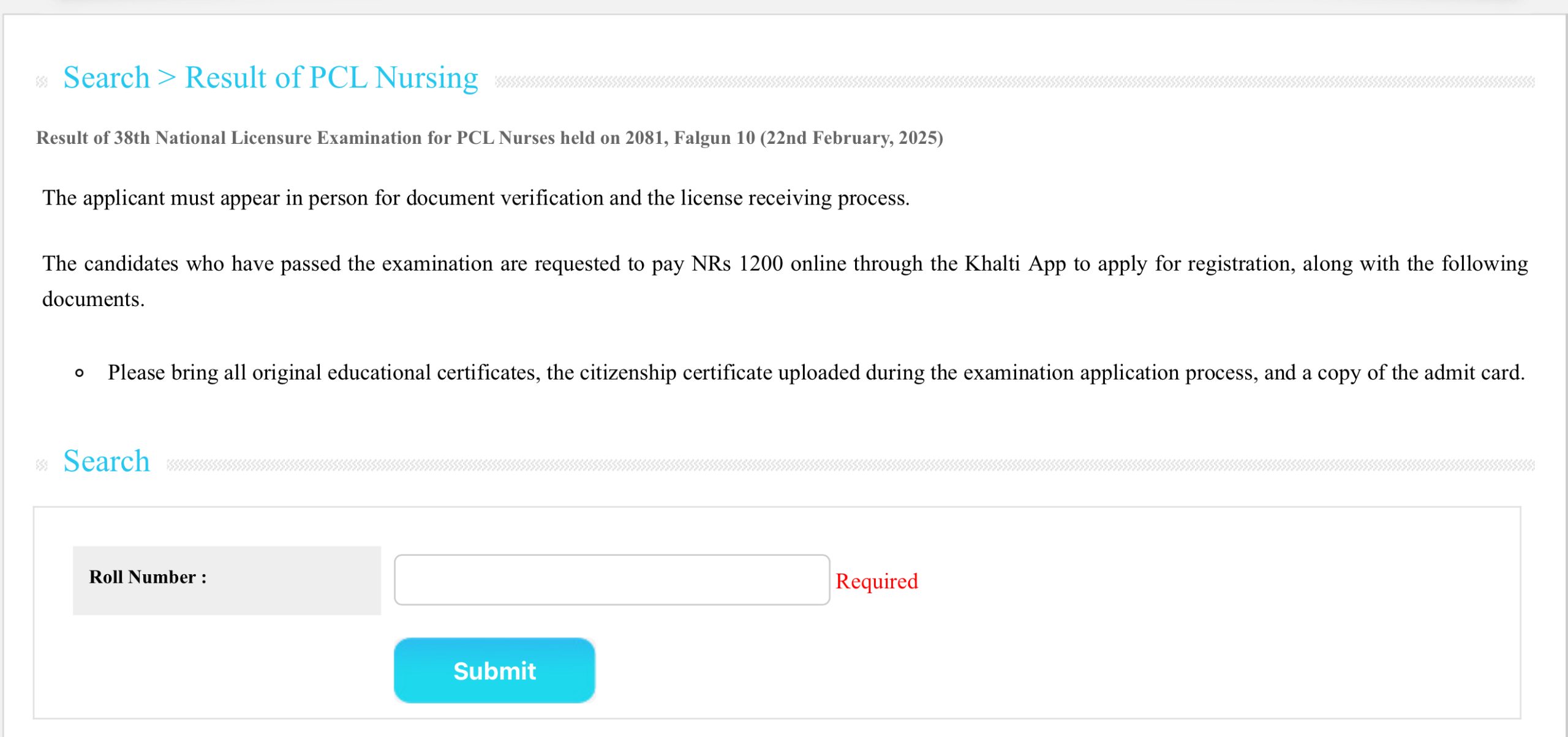
How to check NNC nursing result 2081 falgun?

1. Please folow the following link or click here.
2. Click on desired link on right side: as shown in image below:

3. Enter roll number and view result.

Comment your result below.
Congratulations.
Congratulations Everyone for Passing Nursing License Examination.
Now it’s time to Get your Nursing License Registration Certificate 
Documents Required and Schedule for the License Certificate of NNC Examination !

Documents Required to get NNC License certificate:

  • All Original Educational Documents Including from SEE to PCL or BSC Majorly Needed SEE Marksheet and Character, PCL or BSC Transcript or Character Certificate
  • Pay Rs 1200 Through your NNC ID By logging into that.
  • Original Citizenship
  • Admit Card
  • 2 PP Size Photo same as uploaded.
Students are requested to go as per Schedule to get their NNC Certificate.

Schedule to get NNC License 

Please visit on time. 
Thank you. 

Why Texas is a Promising Destination for Nepali Nurses After Passing the NCLEX in 2025

Critical analysis: Why Texas is a Promising Destination for Nepali Nurses After Passing the NCLEX in 2025

Table of Contents(toc)


The United States has long been a sought-after destination for internationally educated nurses (IENs), and among the states welcoming foreign-trained healthcare professionals, Texas stands out. For Nepali nurses passing the NCLEX-RN in 2025, Texas presents a compelling opportunity. However, it is essential to critically analyze both the advantages and challenges of choosing Texas as a professional destination.

High Demand for Nurses

One of the primary reasons Texas is an attractive option is its critical nursing shortage. The Texas Department of State Health Services (DSHS) has projected a significant shortfall of registered nurses (RNs) by 2032, making the state highly reliant on foreign-trained nurses to fill staffing gaps. Major healthcare systems such as Texas Health Resources, HCA Healthcare, and Baylor Scott & White frequently recruit international nurses, including those from Nepal.

Competitive Salary and Cost of Living Balance

Texas offers competitive salaries for registered nurses. According to the U.S. Bureau of Labor Statistics, the average annual salary for RNs in Texas is around $79,000, which is higher in metropolitan areas like Dallas, Houston, and Austin. Unlike states such as California or New York, Texas has no state income tax, allowing Nepali nurses to retain more of their earnings. Additionally, the cost of living in many Texan cities is relatively lower compared to other major U.S. states, making it financially advantageous.

Immigration-Friendly Policies and Visa Sponsorships

Many healthcare employers in Texas actively sponsor employment-based visas, such as the H-1B and EB-3 visas, which are crucial for Nepali nurses aiming to work in the U.S. The state’s high demand for healthcare workers means that institutions are more likely to facilitate the immigration process, including green card sponsorships.

Cultural Diversity and Nepali Community Support

Texas has a growing Nepali community, especially in cities like Dallas, Houston, and Austin. This offers a support network that can ease the transition for newly arrived nurses. Community organizations and Nepali-owned businesses provide social and cultural support, making adaptation easier for new immigrants.

Licensing and Credentialing Process

Texas is a member of the Nurse Licensure Compact (NLC), allowing RNs licensed in Texas to practice in other NLC states without additional licensure. This flexibility can be beneficial for Nepali nurses considering long-term career mobility within the U.S.

Workplace Challenges and Adaptation Issues

Despite the advantages, there are challenges that Nepali nurses may face in Texas. The workload in high-demand healthcare facilities can be overwhelming, particularly in understaffed hospitals and nursing homes. Cultural and professional adaptation can also be a struggle, especially in rural areas where diversity is limited. Furthermore, workplace discrimination and language barriers, although improving, still exist in some settings.

Before finals

For Nepali nurses passing the NCLEX in 2025, Texas presents a promising destination due to its nursing shortage, competitive salaries, visa sponsorship opportunities, and a growing Nepali community. However, challenges such as workload intensity and cultural adaptation should not be overlooked. Thorough research and proper preparation are essential for nurses considering this pathway. By leveraging professional networks and employer support, Nepali nurses can find rewarding careers in Texas, contributing to the state’s healthcare system while achieving personal and professional growth.

Pros and Cons of Becoming a Nurse in Texas After Passing the NCLEX

Pros

  1. High Demand for Nurses
    Texas has a significant shortage of registered nurses, leading to abundant job opportunities in various healthcare settings.

  2. Competitive Salary and No State Income Tax
    Nurses in Texas earn competitive salaries, with an average annual pay of around $79,000. Additionally, Texas has no state income tax, allowing nurses to retain more of their earnings.

  3. Diverse Work Environments
    Texas offers a variety of work settings, from large urban hospitals in cities like Houston and Dallas to rural healthcare facilities.

  4. Visa Sponsorship Opportunities
    Many healthcare institutions in Texas sponsor employment-based visas, making it easier for international nurses to secure jobs and residency.

  5. Cost of Living Advantages
    Compared to other major U.S. states like California and New York, Texas has a relatively lower cost of living, making it easier for nurses to afford housing and other essentials.

  6. Strong Nepali Community
    Cities like Dallas and Houston have a growing Nepali community, providing a support network for newly arrived nurses adjusting to life in the U.S.

  7. Nurse Licensure Compact (NLC) Membership
    Texas is a part of the Nurse Licensure Compact, allowing nurses licensed in Texas to work in other NLC states without needing additional licensure.

Cons

  1. High Patient-to-Nurse Ratios
    Due to staffing shortages, nurses in Texas often face high patient loads, leading to increased stress and burnout.

  2. Challenging Workplace Conditions
    Some hospitals and long-term care facilities may have demanding work environments with limited support, affecting work-life balance.

  3. Extreme Weather Conditions
    Texas experiences extreme weather events, including hurricanes, tornadoes, and heat waves, which can impact daily commuting and work conditions.

  4. Limited Public Transportation
    Many areas in Texas have limited public transportation, making it necessary for nurses to own a vehicle for commuting.

  5. Cultural and Language Barriers
    International nurses may initially face challenges in adjusting to cultural differences and communication styles in Texas healthcare settings.

  6. Costly Relocation and Licensing Process
    The process of relocating and obtaining a Texas nursing license can be expensive, including fees for the NCLEX, credential verification, and living expenses before securing a job.

  7. Workplace Discrimination Concerns
    While improving, instances of workplace discrimination and biases against foreign-trained nurses still exist in certain facilities.

Conclusion

Becoming a nurse in Texas after passing the NCLEX offers numerous advantages, including job security, financial benefits, and a diverse healthcare landscape. However, challenges such as high patient loads, workplace adaptation, and relocation expenses should be carefully considered. Prospective nurses should weigh these factors to make an informed decision about pursuing their careers in Texas.

Demographics MCQs COmmonly asked questions

body {
font-family: Arial, sans-serif;
line-height: 1.6;
}
.question {
margin-bottom: 15px;
}
.options label {
display: block;
}
.explanation {
display: none;
color: green;
margin-top: 5px;
}

Demographics MCQs

Table of Contents(toc)


Questions

1. What does demographics study?


Demographics is the study of population characteristics such as age, gender, and income.

2. Which age group is typically considered part of the working-age population?


The working-age population typically includes individuals aged 15-64 years.

3. What is the birth rate?


The birth rate is measured as the number of births per 1,000 people per year.

4. Which of the following is NOT a reason for population growth?


A decreased fertility rate slows population growth rather than contributing to it.

5. What does the dependency ratio measure?


The dependency ratio measures the proportion of people not in the workforce compared to those who are.

11. What is the main purpose of a population census?


A population census collects data on the number of people and their characteristics, such as age and occupation.

12. What does the term “life expectancy” refer to?


Life expectancy is the average number of years a person is expected to live based on demographic factors.

13. What is the term for the number of deaths per 1,000 people in a year?


Mortality rate is the number of deaths per 1,000 people in a given year.

14. Which factor primarily contributes to population aging?


Population aging occurs due to lower birth rates and increased life expectancy.

15. Which term describes the percentage of people living in urban areas compared to rural areas?


The urbanization rate measures the proportion of people living in urban areas compared to rural areas.

16. What does the fertility rate measure?


Fertility rate measures the average number of children born per woman in a given population.

17. Which region is likely to have a high dependency ratio?


A high dependency ratio occurs in populations with many dependents (children and elderly) relative to the working-age population.

18. Which factor influences migration the most?


Economic opportunities are a primary driver of migration as people seek better jobs and living conditions.

19. What is the total fertility rate?


Total fertility rate refers to the average number of children a woman is expected to have during her lifetime.

20. What is population density?


Population density measures the number of people living per unit of land area.

21. What is the main cause of rapid population growth?


Rapid population growth occurs when birth rates are high and death rates are low.

22. Which country has the highest population in the world?


China has the highest population in the world, followed closely by India.

23. What is the term for people moving from rural areas to urban areas?


Urbanization is the process of people moving from rural to urban areas.

24. Which factor is NOT considered a demographic characteristic?


Climate is not a demographic factor, as it pertains to the environment rather than population characteristics.

25. What is the definition of an aging population?


An aging population occurs when the proportion of elderly individuals increases due to lower birth rates and longer life expectancy.

26. What does the dependency ratio measure?


The dependency ratio compares the non-working population (children and elderly) to the working-age population.

27. What is the primary reason for a declining birth rate in developed countries?


Increased education and career opportunities for women contribute to lower birth rates in developed countries.

28. Which age group is considered part of the working-age population?


The working-age population is typically defined as those aged 15-64 years.

29. What is the primary reason for population decline in some countries?


Population decline occurs due to low birth rates and high levels of emigration.

30. What is the meaning of a demographic transition?


Demographic transition describes the shift from high birth and death rates to low birth and death rates as a country develops.

function checkAnswers() {
document.querySelectorAll(‘.question’).forEach(question => {
let selected = question.querySelector(‘input[type=radio]:checked’);
let explanation = question.querySelector(‘.explanation’);

if (selected) {
explanation.style.display = ‘block’;
if (selected.value === “correct”) {
explanation.style.color = “green”;
} else {
explanation.style.color = “red”;
}
}
});
}

Tirzepatide vs Semaglutide: 5 side effects, pharmacology and Uses

Tirzepatide vs. Semaglutide: Pharmacology, Uses, and Side Effects

Table of Contents(toc)

Incretin-based therapies have transformed the management of type 2 diabetes
and obesity. Among them,
Tirzepatide and
Semaglutide are two widely
used medications. Both are injectable drugs that enhance insulin release,
slow digestion, and promote satiety. However, their mechanisms of action,
effectiveness, and side effects differ.

This article explores the pharmacology, clinical uses, and five common side
effects of these medications while providing a comparative analysis.

Pharmacology of Tirzepatide and Semaglutide

Tirzepatide (Zepbound, Mounjaro)

Tirzepatide is a
dual-acting incretin-based therapy
that targets both:

  • Glucagon-like peptide-1 (GLP-1) receptor
  • Glucose-dependent insulinotropic polypeptide (GIP) receptor

By stimulating these receptors, Tirzepatide enhances insulin secretion,
suppresses glucagon production, slows gastric emptying, and promotes weight
loss. This dual action may contribute to its superior weight-loss efficacy
compared to other GLP-1 receptor agonists.

Semaglutide (Ozempic, Wegovy, Rybelsus)

Semaglutide is a
GLP-1 receptor agonist
that mimics the body’s natural incretin hormones to:

  • Stimulate insulin secretion in response to meals
  • Reduce glucagon levels
  • Slow gastric emptying
  • Decrease appetite and promote weight loss

Semaglutide is available in both injectable (Ozempic, Wegovy) and oral
(Rybelsus) formulations.

Clinical Uses of Tirzepatide and Semaglutide

1. Type 2 Diabetes Management

  • Both Tirzepatide and Semaglutide improve glycemic control by increasing
    insulin release and reducing glucagon levels.
  • Semaglutide has cardiovascular benefits
    for people with diabetes, reducing the risk of heart disease.

2. Obesity and Weight Loss

  • Tirzepatide and Semaglutide are
    FDA-approved for weight loss
    in individuals with or without diabetes.
  • Tirzepatide leads to greater weight loss
    (average of 21% body weight reduction) compared to Semaglutide (average of
    15%).

3. Cardiovascular Benefits

  • Semaglutide is proven to reduce major cardiovascular events (heart attack,
    stroke) in people with and without diabetes.
  • Tirzepatide’s cardiovascular effects are still being studied.

4. Other Potential Uses

  • Both drugs may benefit metabolic disorders
    such as fatty liver disease (NAFLD/NASH).
  • Semaglutide is being investigated for neuroprotection
    in conditions like Alzheimer’s disease.

Five Common Side Effects

Both medications share similar gastrointestinal side effects due to their
effects on gastric emptying and appetite regulation.

  1. Nausea and Vomiting

    • Most common side effects, especially when starting treatment.
    • Can be managed by gradual dose escalation and dietary changes.
  2. Diarrhea or Constipation

    • Some patients experience altered bowel habits, which often improve
      over time.
  3. Abdominal Pain

    • Can occur due to slowed digestion and increased fullness.
  4. Hypoglycemia (Low Blood Sugar)

    • More likely when combined with insulin or sulfonylureas.
  5. Potential Risk of Pancreatitis

    • Rare but serious side effect, leading to severe abdominal pain and
      hospitalization.

Tirzepatide vs. Semaglutide Comparison

body {
font-family: Arial, sans-serif;
background-color: #f4f4f4;
padding: 20px;
}
.table-container {
max-width: 900px;
margin: auto;
background: white;
padding: 20px;
border-radius: 10px;
box-shadow: 0px 0px 10px rgba(0, 0, 0, 0.1);
overflow-x: auto;
}
h2 {
text-align: center;
color: #333;
}
table {
width: 100%;
border-collapse: collapse;
margin-top: 20px;
}
th, td {
padding: 12px;
text-align: left;
border-bottom: 1px solid #ddd;
}
th {
background-color: #0073e6;
color: white;
text-transform: uppercase;
}
tr:hover {
background-color: #f1f1f1;
}
@media (max-width: 600px) {
th, td {
padding: 10px;
font-size: 14px;
}
}

Tirzepatide vs. Semaglutide: A Comparison

Feature Tirzepatide (Zepbound, Mounjaro) Semaglutide (Ozempic, Wegovy, Rybelsus)
Mechanism of Action GLP-1 and GIP receptor agonist GLP-1 receptor agonist
Administration Weekly injection Weekly injection (Ozempic, Wegovy); Oral option (Rybelsus)
FDA-Approved Uses Type 2 diabetes, obesity Type 2 diabetes, obesity, cardiovascular protection
Weight Loss (%) ~21% body weight reduction ~15% body weight reduction
Cardiovascular Benefits Under investigation Proven cardiovascular protection
Common Side Effects Nausea, vomiting, diarrhea, constipation, abdominal pain Nausea, vomiting, diarrhea, constipation, abdominal pain
Serious Risks Pancreatitis, medullary thyroid cancer risk Pancreatitis, medullary thyroid cancer risk
Hypoglycemia Risk Low (higher if combined with insulin/sulfonylureas) Low (higher if combined with insulin/sulfonylureas)

Conclusion

Tirzepatide and Semaglutide are powerful incretin-based therapies for
diabetes and weight management. Tirzepatide offers
superior weight loss due
to its dual-acting mechanism, while Semaglutide has
established cardiovascular benefits. Both medications have similar side effect profiles, with gastrointestinal
symptoms being the most common.

Choosing between them depends on individual needs, including weight loss goals, cardiovascular risk, and personal tolerance
to side effects. Always consult a healthcare provider to determine the best
treatment option.

Tirzepatide vs. Semaglutide Quiz

1. What is the main difference in the mechanism of action between
Tirzepatide and Semaglutide?


2. Which medication has shown the highest percentage of weight loss
in clinical trials?


3. Which of the following is a potential risk for both Tirzepatide
and Semaglutide?


4. How are Tirzepatide and Semaglutide administered?


5. Which medication has proven cardiovascular benefits in people
without diabetes?


function submitQuiz() {
let correctAnswers = {
q1: “b”,
q2: “b”,
q3: “b”,
q4: “b”,
q5: “b”
};

let totalCorrect = 0;
let form = document.getElementById(“quizForm”);
let userAnswers = new FormData(form);

for (let key in correctAnswers) {
if (userAnswers.get(key) === correctAnswers[key]) {
totalCorrect++;
}
}

document.getElementById(“result”).innerHTML = “You got ” + totalCorrect + ” out of 5 correct!”;
}

Exit mobile version