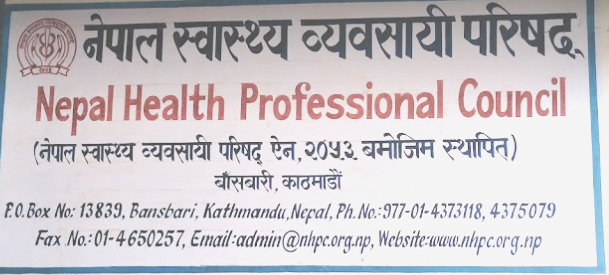
Nepal Health Professional Council- NHPC Brief Introduction

Nepal Health Professional Council NHPC:  Ensuring Quality Healthcare Standards

Table of Contents(toc)

Introduction of NHPC

In Nepal, ensuring quality healthcare services and maintaining professional standards in the medical field are crucial for the well-being of the population. To achieve these objectives, the Nepal Health Professional Council (NHPC) plays a pivotal role. In this article, we will explore the significance of NHPC and its efforts in regulating and promoting healthcare professionalism in Nepal.

What is the NHPC?

NHPC website screenshot

The Nepal Health Professional Council (NHPC) is a statutory body established under the Nepal Health Professional Council Act 2053 (1997 AD). It serves as a regulatory authority responsible for the registration, licensing, and oversight of health professionals in Nepal. NHPC aims to maintain high standards of professionalism, ethics, and competency among healthcare practitioners.

Functions and Responsibilities

1. Registration and Licensing: 

NHPC ensures the registration and licensing of health professionals, including doctors, dentists, nurses, pharmacists, physiotherapists, and other allied health professionals. This process helps maintain a reliable database of qualified practitioners and enables better monitoring of the healthcare workforce.

2. Accreditation of Educational Institutions: 

NHPC is responsible for accrediting educational institutions that offer healthcare-related courses. This ensures that the institutions meet the necessary standards in terms of infrastructure, faculty qualifications, curriculum, and practical training, thereby producing competent healthcare professionals.

3. Code of Conduct and Ethics: 

NHPC establishes a code of conduct and ethics for health professionals to uphold professionalism, integrity, and patient care. It defines the rights and responsibilities of healthcare practitioners, emphasizing ethical practices, confidentiality, and respect for patient autonomy.

NHPC Board

(Picture source: Unknown, mail us for removal with page link and proof of ownership)

4. Continuing Professional Development: 

NHPC encourages continuous professional development among healthcare professionals. It promotes lifelong learning, research, and skill enhancement to keep up with evolving medical knowledge and technological advancements. This helps ensure that practitioners stay updated and deliver the best possible care to patients.

5. Complaints and Disciplinary Actions: 

NHPC investigates complaints against healthcare professionals regarding professional misconduct or negligence. If found guilty, disciplinary actions may be taken, ranging from warnings and fines to suspension or cancellation of licenses. This mechanism protects patients’ rights and helps maintain the integrity of the healthcare system.

Benefits and Impact of NHPC Nepal

The establishment of NHPC has several positive impacts on the healthcare sector in Nepal:

1. Improved Patient Safety: 

NHPC’s stringent registration and licensing processes ensure that only qualified and competent professionals are allowed to practice. This significantly enhances patient safety and reduces the risk of substandard healthcare services.

2. Enhanced Professionalism: 

NHPC’s emphasis on ethics, continuing education, and professional development fosters a culture of professionalism among healthcare practitioners. This, in turn, leads to better healthcare outcomes and patient satisfaction.

3. Standardization of Education: 

NHPC’s accreditation process ensures that healthcare education institutions adhere to predetermined quality standards. This helps produce well-trained professionals who are equipped to meet the healthcare demands of the population.

4. Accountability and Quality Assurance: 

NHPC’s oversight and monitoring mechanisms hold healthcare professionals accountable for their actions. This ensures that patients receive care from practitioners who follow ethical standards and provide high-quality services.

Conclusion

The Nepal Health Professional Council (NHPC) plays a vital role in promoting and regulating healthcare professionalism in Nepal. Through its registration, licensing, accreditation, and oversight functions, NHPC ensures that healthcare professionals adhere to high standards of competency, ethics, and patient care. By upholding these standards, NHPC contributes to the improvement of the healthcare sector in Nepal and the well-being of its citizens.

NHPC result check

NHPC login

http://103.175.192.52/login

NHPC contact number NHPC Nepal

NHPC Nepal contact number

NHPC login at NHPCwebsite:

 NHPC website 

NHPC Address:

977-1-4373118, 1-4375079, admin@nhpc.gov.np, Nepal Health Professional Council (NHPC) Bansbari, Kathmandu, Nepal

NHPC result checking method and certificate distribution schedule check method update

How to check NHPC licensing examination results

Here is how to check result os NHPC licensing examination 
Follow these steps step by step.
  1. Go to NHPC website. (click here: https://nhpc.gov.np/ ) or copy paste this or type it in address bar of your browser chrome, firefox or safari.
  2. Close any notice if shown there by using cross button as shown in image.
  3. Click on the news and updates button just below the banner of NHPC as shown in image below:
  4. Click on appropriate option there which says results or admit card or lcense distribution:
  5. To view your results click on licensing exam and click on the result option from there as shown in the image:
  6. Alternatively you can dorectly go to the result website link by clicking here : https://nhpc.gov.np/result . You can also copy paste this in your address bar or type it manually.
  7. In the result site please imput your symbol number and date of birth as asked.

    Please make sure you enter your date of birth in Nepali BS date not English or AD date otherwise you will get error.

    To use nepali date converter click here.

  8. Then click search button and you will see your result there.
  9. Congratulations! If you didn’t succeed contact us. We are taking class with 100% guaranteed passing. We will give you heavy discount upto completely free untill you pass.

What is a Urine Test? Urine Routine and Microscopy Explained

Table of Contents(toc)

Background

This is high yeild summary on “What is a Urine Test: Urine Routine and Microscopy”which is very very important for SEO, exam preparation (MBBS, NEET-PG, USMLE, etc.).

(Urine test, urine routine, urine microscopy, urine analysis, urinalysis, high yield, medical exams, NEET PG, USMLE, MBBS.)


🧪 Introduction to Urine Test

A urine test (urinalysis) is a simple, non-invasive diagnostic tool used to assess the health of the kidneys, urinary tract, and detect systemic diseases like diabetes or hypertension. It is among the first-line investigations in most clinical scenarios.

One of the most commonly ordered tests is the Urine Routine and Microscopy Test.


🧫 What is a Urine Routine and Microscopy Test?

This test includes two parts:

1. Urine Routine (Physical and Chemical Examination)

  • Color: Normal – pale yellow (urochrome pigment)

  • Clarity: Clear, turbid indicates possible infection

  • pH: 4.5–8.0 (acidic in starvation, alkaline in UTI)

  • Specific Gravity: 1.005–1.030 (indicates concentrating ability)

  • Protein: Negative (positive in nephrotic syndrome)

  • Glucose: Negative (positive in diabetes mellitus)

  • Ketones: Negative (positive in diabetic ketoacidosis, starvation)

  • Bilirubin/Urobilinogen: Detected in liver disease

  • Blood: Hematuria (stones, infections, malignancy)

  • Nitrites and Leukocyte Esterase: Indicate UTI

2. Microscopy Examination

Microscopic analysis of urine sediment after centrifugation:

  • RBCs: Hematuria (glomerulonephritis, trauma)

  • WBCs: Pyuria (UTI, inflammation)

  • Casts:

    • Hyaline Casts: Normal or dehydration

    • RBC Casts: Glomerulonephritis

    • WBC Casts: Pyelonephritis

    • Granular/Broad Casts: Chronic kidney disease

  • Crystals:

    • Calcium oxalate (common), uric acid, cystine, struvite

  • Bacteria, Yeasts, Parasites: Indicate infection


📘 High-Yield Revision Notes (Exam-Focused)

Parameter Normal Findings Clinical Significance
Color Pale yellow Dark = concentrated urine or bilirubin
Specific Gravity 1.005–1.030 ↑ in dehydration, ↓ in renal failure
Protein Negative +++ = Nephrotic syndrome
Glucose Negative Positive in diabetes mellitus
Ketones Negative DKA, starvation
RBC Casts Abnormal Glomerulonephritis
WBC Casts Abnormal Pyelonephritis
Nitrites Negative Positive in gram-negative UTI (E. coli)

🧠 Quick Revision Points

RBC casts = glomerulonephritis
WBC casts = pyelonephritis
Fatty casts = nephrotic syndrome
Broad casts = chronic kidney disease
Nitrites + leukocyte esterase = bacterial UTI


❓ MCQs on Urine Routine and Microscopy (Exam-Oriented)

Q1. Which of the following findings in urine microscopy is most specific for glomerulonephritis?

A. WBC casts
B. Hyaline casts
C. RBC casts
D. Epithelial cells
Answer: C. RBC casts


Q2. Which urine crystal is envelope-shaped and commonly seen in kidney stones?

A. Uric acid
B. Calcium oxalate
C. Cystine
D. Struvite
Answer: B. Calcium oxalate


Q3. Ketone bodies in urine are seen in all EXCEPT:

A. Diabetic ketoacidosis
B. Starvation
C. Carbohydrate-rich diet
D. Prolonged vomiting
Answer: C. Carbohydrate-rich diet


Q4. Which parameter is used to assess the concentrating ability of kidneys?

A. pH
B. Protein
C. Specific gravity
D. Urobilinogen
Answer: C. Specific gravity


Q5. What is the significance of nitrites in urine?

A. Viral infection
B. Fungal infection
C. Gram-negative bacterial infection
D. Autoimmune nephritis
Answer: C. Gram-negative bacterial infection


🏁 Summary

The urine routine and microscopy test is a low-cost, high-yield diagnostic tool. Mastering this test is crucial for clinical practice and exam success. Focus on interpreting key findings like casts, crystals, chemical abnormalities, and correlate them with clinical syndromes.


Would you like a downloadable PDF version of this post for offline revision?

How to improve sleep quality?

Do You Struggle to Sleep Well at Night? If yes you’re in Right Place

Table of Contents(toc)


Do you have trouble falling asleep, staying asleep, or waking up feeling tired even after a full night’s rest? If yes, you’re not alone. Millions of people suffer from poor sleep quality, which can significantly impact their physical and mental well-being.

In this article, we’ll explore the importance of sleep, common causes of sleep problems, and provide evidence-based tips to improve sleep naturally. Whether you’re battling insomnia, stress-induced wakefulness, or inconsistent sleep schedules, these strategies will help you reclaim restful nights.


Why Is Sleep So Important for Your Health?

Sleep is not just “rest”—it’s a biological necessity. During deep sleep, your body:

  • Repairs muscles and tissues

  • Regulates hormones

  • Boosts immune function

  • Consolidates memory and learning

Poor sleep is linked to increased risk of heart disease, diabetes, obesity, depression, and anxiety. That’s why improving your sleep is crucial for long-term health and quality of life.


12 Proven Tips to Improve Sleep Quality

1. Stick to a Consistent Sleep Schedule

Your internal clock—or circadian rhythm—functions best with regularity. Go to bed and wake up at the same time every day, even on weekends. This helps your body develop a healthy sleep-wake cycle.

2. Develop a Relaxing Bedtime Routine

Establish a calming pre-sleep ritual, such as:

  • Reading a book

  • Listening to soothing music

  • Practicing deep breathing or meditation

  • Taking a warm bath

Avoid stimulating activities like checking emails or watching intense shows before bed.

3. Create a Sleep-Friendly Environment

Your bedroom should promote rest. Tips include:

  • Keeping the room dark and cool (16–20°C is ideal)

  • Using blackout curtains or a sleep mask

  • Minimizing noise with earplugs or white noise machines

  • Investing in a quality mattress and supportive pillows

4. Limit Screen Time Before Bed

Blue light from phones, tablets, and TVs suppresses melatonin, the hormone that helps you fall asleep. Avoid screens at least one hour before bedtime.

5. Avoid Caffeine and Alcohol in the Evening

Caffeine is a stimulant, and alcohol disrupts deep sleep. Avoid coffee, tea, energy drinks, and alcohol at least 6 hours before going to bed.

6. Get Regular Physical Activity (But Not Late at Night)

Exercise improves sleep—just don’t work out too close to bedtime. Aim for 30–60 minutes of moderate activity during the day, ideally in the morning or early evening.

7. Manage Stress Effectively

Chronic stress and anxiety can severely disrupt sleep. Practice:

  • Mindfulness or yoga

  • Journaling

  • Counseling or therapy

Stress management is as important for sleep as your bedtime itself.

8. Limit Daytime Naps

While short naps can be beneficial, long or late-afternoon naps can interfere with nighttime sleep. If you nap, keep it under 30 minutes and before 3 PM.

9. Try Natural Sleep Aids Wisely

Some people benefit from natural sleep supplements like:

  • Melatonin (short-term use for jet lag or insomnia)

  • Valerian root or magnesium

Always consult your healthcare provider before starting any supplement, especially if you’re on medications.

10. Eat a Balanced, Light Evening Meal

Heavy meals, spicy foods, and late-night snacking can interfere with digestion and sleep. Opt for a light, nutritious dinner and consider a small sleep-promoting snack like:

  • A banana

  • Warm milk

  • A small bowl of oats

11. Address Sleep Disorders Promptly

If you regularly struggle to fall asleep, snore loudly, or feel extremely tired during the day, you might have a sleep disorder like insomnia, sleep apnea, or restless legs syndrome. Seek medical advice to get a proper diagnosis and treatment.

12. Practice Good Sleep Hygiene Daily

Sleep hygiene refers to consistent habits that help you sleep well, such as:

  • Keeping your sleep space clean and quiet

  • Avoiding stimulants in the evening

  • Going to bed only when sleepy

  • Avoiding screens and bright lights after dark


Common Sleep Disruptors to Avoid

Here are some things that may sabotage your sleep:

  • Caffeine (coffee, tea, energy drinks)

  • Smartphones and gadgets late at night

  • Stress and mental overactivity

  • Late-night heavy meals

  • Vigorous workouts close to bedtime

  • Poor posture or an uncomfortable mattress

  • Unresolved digestion or bowel issues

  • Loud or unnecessary conversations before bed


Final Thoughts: Invest in Better Sleep Today

Improving your sleep doesn’t require expensive gadgets—it takes consistent effort and simple lifestyle changes. By following the strategies above, you can:

  • Fall asleep faster

  • Sleep more deeply

  • Wake up refreshed and energized

  • Improve mood, focus, and productivity

Remember, sleep is not a luxury—it’s a foundation of health. Make it a priority starting tonight.


Quick Summary: How to Improve Sleep Naturally

Action Benefit
Regular sleep schedule Supports circadian rhythm
Relaxing bedtime routine Calms your mind
Sleep-friendly environment Reduces interruptions
Limit screens and stimulants Enhances melatonin production
Exercise & stress management Promotes deeper sleep
Balanced evening diet Avoids indigestion and night awakenings

If this guide helped you, consider sharing it or bookmarking it for reference. Sweet dreams!

Chronic meningitis- tubercular maningitis definition, diagnosis and management For NHPC, NNC and MEC

What is chronic meningitis? What is treatment of tubercular meningitis?

(toc)Table of Contents

Introduction

Chronic meningitis is the meningitis that lasts at least four weeks and is usually caused by mixed type of infection and noninfectious inflammations. 

Tuberculous Meningitis signs and symptoms:

  1. Headache, malaise, mental confusion, and vomiting. 
  2. Moderate increase in CSF cellularity, with mononuclear cells
  3. Protein level is elevated, 
  4. Glucose content reduced or normal. 
  5. Well circumscribed intraparenchymal mass – tuberculoma.
  6. Chronic tuberculous meningitis is a cause of arachnoid fibrosis, which may produce hydrocephalus.

Spirochetal infection of meninges:

Meningitis can Also be caused by different type of spirochetes Through the brain and the meninges.

Spirochetal Infections:

Neurosyphilis:

It can produce chronic meningitis (meningovascular neurosyphilis), usually involving the base of the brain, often with an obliterative endarteritis rich in plasma cells and lymphocytes.
Insidious progressive loss of mental and physical functions, mood alterations (including delusions of grandeur), severe dementia.  
Types of meningitis and their fingdings

Viral encephalitis causes, symptoms and management

Viral encephalitis is a parenchymal infection of the brain that is almost invariably associated with meningeal inflammation (better termed meningoencephalitis).

Causes of viral encephalitis:

  1. Arbo virus
  2. Herpes virus 
  3. Rabies virus
  4. Poliovirus
  5. Cytomegalo virus
  6. HIV virus

Cerebrospinal fluid (CSF) findings in different types of meningitis

Here’s a comparison table summarizing the cerebrospinal fluid (CSF) findings in different types of meningitis:

CSF Parameter Bacterial Meningitis Viral Meningitis Tuberculous Meningitis Fungal Meningitis
Opening Pressure ↑↑ (elevated) Normal or slightly ↑ ↑↑ (elevated) ↑ (elevated)
Appearance Turbid or purulent Clear Clear or slightly cloudy Clear or slightly cloudy
WBC Count ↑↑ (100–10000/mm³) ↑ (10–500/mm³) ↑ (100–500/mm³) ↑ (20–500/mm³)
Cell Type Predominantly neutrophils Predominantly lymphocytes Lymphocytes Lymphocytes
Protein ↑↑ (100–500 mg/dL) Normal or mild ↑ (50–100 mg/dL) ↑↑ (100–500 mg/dL) ↑ (100–200 mg/dL)
Glucose ↓↓ (<40 mg/dL or <40% of serum) Normal (>50% of serum) ↓ (<45 mg/dL) ↓ (low to normal)
Gram Stain Positive in most cases Negative Negative May show fungal elements (e.g. India ink for Cryptococcus)
Culture Often positive Usually negative May be positive (Low yield) May be positive
Other Tests AFB stain, PCR, ADA ↑, TB culture India ink, Cryptococcal antigen

Notes:

  • In bacterial meningitis, neutrophilic predominance and very low glucose are classic.

  • In viral meningitis, lymphocytic predominance with normal glucose helps differentiate it.

  • TB meningitis and fungal meningitis often resemble each other, but TB typically has more pronounced protein elevation and low glucose.

  • Always correlate CSF findings with clinical context and other investigations like imaging and cultures.

Differences between subarachnoid hemorrhage (SAH) and meningitis

Here’s a comparison table highlighting the differences between subarachnoid hemorrhage (SAH) and meningitis:

Feature Subarachnoid Hemorrhage (SAH) Meningitis
Cause Ruptured cerebral aneurysm, AVM, trauma Infection (bacterial, viral, fungal, TB)
Onset Sudden (“thunderclap headache”) Gradual or acute over hours to days
Headache Severe, sudden, worst-ever headache Gradual, diffuse headache
Fever Usually absent or mild Prominent feature, especially in bacterial meningitis
Neck Stiffness Present Present
Photophobia Common Common
Altered Consciousness Common, especially with large bleed or raised ICP May occur in severe cases
Seizures May occur May occur
Focal Neurological Deficits May be present (due to vasospasm, infarct) Less common; usually in complicated cases
CSF Appearance Xanthochromia (after 12 hrs), bloody initially Turbid in bacterial, clear in viral
CSF Opening Pressure ↑ (variable) ↑ in bacterial, TB, fungal; normal/mild ↑ in viral
CSF WBC Mild ↑ or normal ↑↑ in infection (type depends on etiology)
CSF RBC High in all tubes if SAH; clears if traumatic tap Usually absent
CSF Protein ↑↑ in bacterial/TB; mild ↑ in viral
CSF Glucose Normal ↓ in bacterial/TB/fungal; normal in viral
Imaging CT head: hyperdensity in subarachnoid space CT/MRI may show meningeal enhancement
Treatment Neurosurgical (clipping/coiling), supportive Antibiotics/antivirals/antifungals depending on cause

Key Clinical Pearl:

  • Both may present with headache and neck stiffness, but sudden onset without fever suggests SAH, while gradual onset with fever suggests meningitis.

Comparison of Subjective vs. Objective Tinnitus (ENT Guide)

Comparison of the Subjective vs. Objective Tinnitus for ENT

Table of Contents(toc)


Definitions of Tinnitus Types

  • Subjective Tinnitus (S-Tinnitus):
    A perception of sound (e.g., ringing, buzzing, hissing) heard only by the patient, with no actual external or internal sound source detectable by others. It is the most common form of tinnitus.

  • Objective Tinnitus (O-Tinnitus):
    A rare form of tinnitus where a real sound is generated within the body (e.g., by vascular or muscular activity) and can sometimes be heard by an examiner using a stethoscope.


Comparison Table: Subjective vs. Objective Tinnitus

Feature Subjective Tinnitus Objective Tinnitus
Perception Heard only by the patient Can be heard by examiner (with tools)
Cause Often neurological or auditory Usually mechanical or vascular
Common Examples Noise-induced hearing loss, ototoxic drugs Vascular bruits, palatal myoclonus
Prevalence Very common (>95% of cases) Very rare (<5% of cases)
Audibility to Others Not audible to others Audible to others (e.g., with stethoscope)
Sound Characteristics Ringing, buzzing, hissing Pulsatile or clicking
Associated Disorders Cochlear damage, Meniere’s disease AV malformations, muscle spasms
Diagnostic Approach Audiometry, MRI, ENT exam Stethoscope exam, Doppler, imaging
Treatment Focus Symptom management, sound therapy Treat underlying physical cause

Let me know if you’d like this in a downloadable format or visual chart.

Objective tinnitus is a rare form of tinnitus where the sound can actually be heard by an examiner, often through a stethoscope placed near the ear. It is usually caused by internal bodily sounds, and often has a physical/mechanical source. Here’s a list of common causes of objective tinnitus:

Vascular Causes (Pulsatile Tinnitus)

  1. Arteriovenous malformations (AVMs)

  2. Carotid artery stenosis or dissection

  3. Glomus tumors (paragangliomas)

  4. Dural arteriovenous fistulas

  5. Aberrant carotid artery

  6. Persistent stapedial artery

  7. Increased intracranial pressure (e.g., idiopathic intracranial hypertension)

  8. Venous hums (especially in high-flow states like anemia or pregnancy)

Muscular Causes (Myoclonic Tinnitus)

  1. Tensor tympani muscle spasms

  2. Stapedius muscle spasms

  3. Palatal myoclonus (rhythmic contractions of the soft palate)

  4. Middle ear myoclonus (can involve both tensor tympani and stapedius)

Patulous Eustachian Tube

  1. Abnormally open Eustachian tube – allows internal sounds (like breathing or voice) to be heard more clearly.

Other Causes

  1. Vascular tumors near the ear (e.g., hemangiomas)

  2. High cardiac output states (e.g., hyperthyroidism, anemia)

Would you like a diagram showing where these conditions occur in the head and ear?

Most Repeated & Controversial MCQs in FCPS Part 1 – Breast Milk Edition

📘 Most Repeated & Controversial MCQs in FCPS Part 1 – Breast Milk Edition

Table of Contents(toc)

MCQs on Breastfeeding For FCPS, NMC, MEC and FMGE

Understanding the biochemical and nutritional composition of breast milk is essential for taking the FCPS Part 1 exam, especially in Pediatrics and Physiology.

This post highlights some of the most frequently asked and controversial MCQs, along with explanations to help clear the concepts.

The post also highlights controversial and frequently repeated multiple-choice questions (MCQs) related to breast milk composition.


📌 1. Breast Milk is Deficient in Which of the Following?

Question:

Mother’s milk is deficient in?

Options:
A. Vitamin C ✓
B. Vitamin A
C. Casein
D. Lactalbumin
E. Pantothenic acid

Correct Answer: A. Vitamin C

Explanation:
While breast milk contains some amount of Vitamin C, it is generally lower compared to what is required for rapid growth in infants and also compared to certain formula or cow’s milk. Supplementation may be needed in some cases, especially if the mother is deficient herself.


📌 2. Comparison with Cow’s Milk – What’s Less in Mother’s Milk?

Question:

Mother’s milk is deficient in which of the following when compared to cow’s milk?

Options:
A. Vitamin C
B. Vitamin A
C. Casein ✓
D. Lactalbumin
E. Pantothenic acid

Correct Answer: C. Casein

Explanation:
Casein is a major protein in cow’s milk, making it harder to digest. Mother’s milk contains less casein and more whey proteins like lactalbumin, making it gentler on an infant’s stomach. This is actually a benefit, not a deficiency, in terms of digestibility.


📌 3. What is Higher in Human Milk Compared to Cow’s Milk?

Question:

Mother’s milk has more of which of the following compared to cow’s milk?

Options:
A. Lactose ✓
B. Protein
C. Iron
D. Calcium

Correct Answer: A. Lactose

Explanation:
Human milk is rich in lactose, which aids in brain development and helps with calcium absorption. Cow’s milk, although higher in protein and calcium, contains less lactose.


📌 4. Which Immunoglobulin is Most Abundant in Breast Milk?

Question:

Which of the following immunoglobulins is more abundant in mother’s milk?

Options:

  • IgG

  • IgM

  • IgA ✓

  • IgE

Correct Answer: IgA

Explanation:
Secretory IgA is the dominant antibody in breast milk. It provides mucosal immunity, helping protect the baby’s gut and respiratory tract from pathogens.


📌 5. Which of the Following is Absent in Mother’s Milk?

Question:

Mother’s milk doesn’t contain:

Options:
A. Iron ✓
B. Casein
C. Lactalbumin

Correct Answer: A. Iron

Explanation:
Though mother’s milk contains iron, the quantity is low. However, its bioavailability is high (50–70%), which compensates somewhat for the low quantity. After 6 months, infants often require dietary iron supplementation.


📌 6. What is Milk Notoriously Deficient In?

Question:

Milk is notoriously deficient in:

Options:
A. Vitamin C
B. Iron
C. Pantothenic acid ✓

Correct Answer: C. Pantothenic acid

Explanation:
Pantothenic acid (Vitamin B5) is low in some milk sources, although this can vary. Iron and Vitamin C are also low, but the term “notoriously deficient” typically refers to Pantothenic acid in this context based on older literature and regional MCQ trends.


🧠 Summary Table: Key Points

Component Human Milk Cow’s Milk Notes
Lactose Higher Lower Aids brain development
Protein Lower Higher More digestible
Casein Lower ✓ Higher Harder to digest in cow’s milk
Iron Low ✓ Moderate High bioavailability in breast milk
IgA High ✓ Low Provides mucosal immunity
Pantothenic Acid Low ✓ Varies Sometimes deficient
Vitamin C Lower ✓ Higher Supplement may be needed

✅ Final Tip for FCPS-1 Aspirants:

Don’t just memorize answers—understand the concepts. This helps tackle tricky or reworded questions effectively. Pay special attention to comparisons between human milk vs. cow’s milk, as they are favorite exam topics.

Exit mobile version