Amino Acid Mnemonics

 20 Amino Acid Mnemonics (amino acids mnemonics)

(toc)Table of Content

What are amino acids?

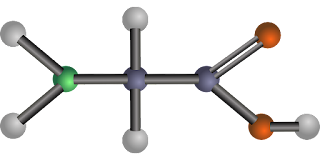
Amino acids are group of chemical coumponds that are used to make protein. Hence they are also called building blocks of the protein. In other words proteins are the polymes of amino acids. 
There are 20 different types of amino acids that are found in our body .
Basically these 20 aminoa cids in different combinations make all the proteins and lipoproteins in oour body.
Mnemonic to remember Essential Amino Acids: PVT TIM HALL
(Read as “Private Team Hall”)
  • P    Phenylalanine

  • V    Valine

  • T   Threonine

  • T   Tryptophan

  • I    Isoleucine

  • M    Methionine

  • H    Histidine

  • A    Arginine

  • L    Leucine

  • L    Lycine
Basic amino acids
  • Histidine
  • Arginine
  • Lysine

NHPC seventh License examination Notice 2080

NHPC seventh License examination Notice

NHPC seventh License examination Notice: Name registration

NHPC has published notice of seventh licensing examination for different courses.
You can check the notice in their website as we.. 

 नेपाल स्वास्थ्य व्यवसायी परिषद्

बाँसबारी, काठमाडौंको सातौं (Licensing Examination)
प्रकाशित मिति :- २०८०/०४/३०
 
यस परिषदको परीक्षा समितिको मिति २०८०/०४/२९ गतेको निर्णय अनुसार परिषदबाट संचालन हुने स्नातकोत्तर, स्नातक र प्रमाणपत्र तहको नाम दर्ता प्रमाणपत्र परीक्षा मिति २०८० साल भाद्र महिनाको १४ देखि २० गते सम्म संचालन हुने व्यहोरा सम्बन्धित सबैमा जानकारीको लागी यो सूचना प्रकाशित गरिएको छ | 
साथै परीक्षा तालिका, प्रवेश-पत्र, परीक्षा केन्द्र र थप अन्य जानकारीको लागि परिषदको आधिकारिक Website www.nhpc.gov.np, Facebook Page Nepal Health Professional Council मा सूचनाहरु प्रकाशन गरि जानकारी गराईनेछ ।
संयोजक परीक्षा समिति, नेपाल स्वास्थ्य व्यवसायी परिषद 

 NHPC नेपाल स्वास्थ्य व्यवसायी परिषद् 7th exam date

मिति २०८० साल भाद्र महिनाको १४ देखि २० गते सम्म
Contact me for commando class

Treatment of Diabetes (Sugar)

 How to do best Treatment of Diabetes (Sugar)

What is diabetes?

Diabetes is a chronic medical condition characterized by high levels of blood sugar (glucose). This occurs either because the body doesn’t produce enough insulin (a hormone that regulates blood sugar) or because the cells don’t respond properly to the insulin that is produced. Insulin is necessary for the body to effectively use glucose as a source of energy.

There are three main types of diabetes:

Type 1 Diabetes: T

his is an autoimmune condition where the body’s immune system attacks and destroys the insulin-producing cells in the pancreas. People with type 1 diabetes need to take insulin injections or use an insulin pump to manage their blood sugar levels.

Type 2 Diabetes: 

This is the most common form of diabetes and is often associated with lifestyle factors like obesity, sedentary behavior, and poor diet. In type 2 diabetes, the body becomes resistant to the effects of insulin, and the pancreas might not produce enough insulin to keep blood sugar levels in check. It can often be managed through lifestyle changes, oral medications, and sometimes insulin injections.

Gestational Diabetes: 

This type of diabetes occurs during pregnancy and usually resolves after the baby is born. However, women who have had gestational diabetes are at an increased risk of developing type 2 diabetes later in life.

Treatment of Diabetes Options

  1. Exercise
  2. Diet
  3. Medicines
  1. Insulin
  2. Oral medicines Continue reading Treatment of Diabetes (Sugar)

Diabetic Diet: Cutting Carbs in Diabetic Diet?

Nutrition in diabetes: Diabetic Diet and Carbs?

Introduction to Diabetes

Diabetes is a chronic medical condition characterized by high levels of blood sugar (glucose). This occurs either because the body doesn’t produce enough insulin (a hormone that regulates blood sugar) or because the cells don’t respond properly to the insulin that is produced. Insulin is necessary for the body to effectively use glucose as a source of energy.
Green Salad

Balanced diabetic diet: Low in sugar, rich in fiber. Prioritize veggies, lean proteins. Control portions for stable blood sugar. Stay healthy

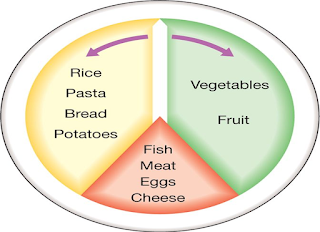
Carbohydrate 

  • (40-60% of total energy intake)
  • Glycemic index (GI) of a carbohydrate-containing food measure of the change in blood glucose following its ingestion
  • Consumption of foods with a low GI Produce a slow, gradual rise in blood glucose 
  • basmati rice, spaghetti
  • porridge, noodles 
  • granary bread, beans & lentils

Fat

  • <35% of the total energy intake
  • Minimal trans fat consumption 

Protein

  • 10-15% (do not exceed 1 g/kg body weight)
  • High protein diet deteriotes renal function
  • Low-calorie and sugar-free drinks are useful for patients with diabetes
  • Sucrose-containing foods may be consumed with adjustments in insulin dose 

Please contact us for more on diaetes. 

Role of exercise on diabetes is described here. 

Diabetes treatment.


10 Diabetes MCQs for competitive exams

10 Diabetes MCQs for competitive exams

Diabetes is a chronic medical condition characterized by high levels of blood sugar (glucose). This occurs either because the body doesn’t produce enough insulin (a hormone that regulates blood sugar) or because the cells don’t respond properly to the insulin that is produced. Insulin is necessary for the body to effectively use glucose as a source of energy.

Here is list of top 10 MCQs in diabetes and its managements.

(Source:nursing.com)

  1. The doctor is educating a patient with type II diabetes about medications that can be taken to control blood sugar levels. Which of the following medications is best to use as an example?
    1. Meperidine
    2. Metformin
    3. Methylprednisone
    4. Mannitol

  2. A 31-year-old patient with type 1 diabetes uses about 25 units of Humalog insulin in a typical day. Using the 500 Rule, the approximate insulin-to-carbohydrate ratio for this patient would be:
    1. 1:20
    2. 1:25
    3. 1:10
    4. 1:15
  3. The doctor is providing education to a client who is newly diagnosed with diabetes mellitus. Which of the following should the doctor emphasize on ? Select all that may apply.
    1. Cut toenails with rounded corners
    2. Don’t walk barefoot
    3. Wear proper fitting shoes
    4. Inspect feet daily
    5. Use a heating pad to keep feet warm

  4. A nurse is working with a patient who has been diagnosed with type 2 diabetes and who demonstrates poor blood glucose control. The nurse is providing information to the client about how best to prevent foot and lower the leg ulcers. Which information should the nurse include as part of the teaching? Select all that may apply.
    1. Elevate the legs at night while sleeping
    2. Apply compression stockings as ordered
    3. Restrict fluids during the day
    4. Administer prophylactic antibiotics
    5. Remain in bed with the head of the bed elevated
  5. A nurse is taking  care for a patient who has diabetes  mellitus and has developed hypoglycemia. Which vital signs would be most consistent with this condition?
    1. Low oxygen saturation
    2. Hypotension
    3. Tachycardia
    4. Hyperthermia
  6. Which of the following are the complications of diabetes mellitus? Select all that may apply.
    1. Insulin reaction
    2. Diabetic retinopathy
    3. Fibromyalgia
    4. Coronary artery disease
    5. Cerebrovascular disease

      MORE DIABETES MCQs HERE

  7. A client has been newly diagnosed with type 2 diabetes mellitus. Educating the patient information about signs or symptoms to monitor for acute uncontrolled blood glucose levels will include the following:
    1. Inability to concentrate
    2. Blurred vision
    3. Numbness in the feet
    4. Diaphoresis
    5. Confusion
  8. A diabetic client is hospitalized after developing problems with swallowing process. The client is unable to take anything orally and the doctor has ordered for placement of a nasogastric tube for feedings. The nurse notes that the client takes metformin for control of type 2 diabetes. Which intervention of the nurse would be correct in this situation?
    1. Contact the pharmacy to ask if there is another form of metformin to give through the tube
    2. Crush the metformin and administer it through the feeding tube
    3. Give the metformin floated in applesauce by mouth
    4. Hold the metformin until the provider makes rounds and ask for an insulin order
  9. A nurse is caring for a client with type 2 diabetes who has been prescribed an incretin mimetic drug for blood glucose control. Which drug is an example of an incretin mimetic class?
    1. Chlorpropamide (Diabinese)
    2. Metformin (Glucophage)
    3. Rosiglitazone (Avandia)
    4. Exenatide (Byetta)
  10. A nurse works in a busy healthcare unit of the hospital which includes care of clients with so  many different types of chronic illnesses including diabetes. Which of the following actions should the nurse try to  implement to help prevent the spread of infection among clients who have diabetes mellitus?
    1. Maintain tight control of client blood glucose levels
    2. Avoid touching items in the client rooms
    3. Set aside syringes that are only used for diabetic clients
    4. Cover all food trays with cling wrap before passing out meals
COMMENT YOUR ANSWERS BELOW.

How to Applyy for : PCL nursing entrance exam 2081

PCL nursing entrance exam 2081: How to Apply for License- A step by step Guide

Table of Contents (toc)

Introduction

CTEVT has postponed exam of PCL level scholarship entrance. Please see the detailed Ntice below.

CTEVT PCL exam postponed notice

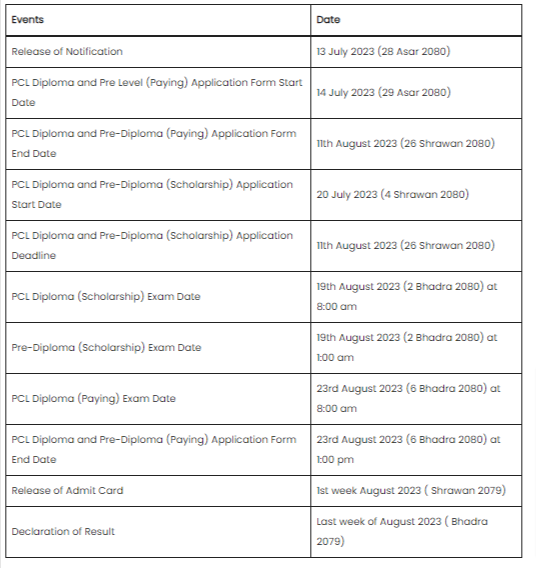
CTEVT Entrance 2080 PCL Nursing Diploma And Pre-Diploma Exam Date, Application Form

Steps to apply for PCL Nursing Diploma And Pre Diploma Level Exam (Scholarship) on ctevtexam.org.np?

Following are the complete step-by-step process for filling CTEVT PCL Diploma And Pre-Diploma Level Exam (Scholarship) 2080 Application Form:

Creating account

  • Visit the official website of CTEVT at ctevtexam.org.np.
  • Click on the “Scholarship Entrance Online Form 2080” option.
  • Choose the level you wish to study, whether Diploma or Pre-Diploma and click on “New User.”
  • Enter the candidate’s name, surname, and mobile number, then click on “Proceed.”
  • Select “Pay Now” to submit the required fee and choose the company from which you prefer to make the payment. Then click on “Proceed.”

After Verification of Form

  • After the verification of the fee deposit, create a password for your account.
  • Once the password is created, the Classified Scholarship Online Application Form will appear. Fill in all the necessary details as mentioned in the Online Application Form.
  • Ensure that you have scanned and uploaded the required documents in JPG format.
  • Review all the entered information to ensure accuracy and completeness.
  • Finally, click on the “Submit” button to complete the online application process.

Top 5 MCQs on Obstetrics

Multiple-choice questions (MCQs) on obstetrics You Must Know Now

Here are 5 multiple-choice questions (MCQs) on obstetrics for midwives and nursing students.

Answer and explanation to obstetrics MCQs is here

1. Which hormone is primarily responsible for the initiation of uterine contractions during labor?

   A) Estrogen

   B) Progesterone

   C) Oxytocin

   D) Prolactin

Continue reading Top 5 MCQs on Obstetrics

Answer-Top 5 MCQs on Obstetrics

Answer-Top 5 MCQs on Obstetrics You Must Know Today

Here are the answers along with explanations and additional points for each question:

Questions on Obstetrics are here in this link.

Table of Contents (toc)


1. Answer: 

C) Oxytocin

   Explanation: 

  • Oxytocin is the hormone responsible for stimulating uterine contractions during labor.
  • Produced by the hypothalamus and released by the posterior pituitary gland, oxytocin plays a crucial role in initiating and regulating the rhythmic contractions of the uterus. 
  • These contractions are essential for the progression of labor and the eventual birth of the baby. 
  • Oxytocin also plays a significant role in promoting bonding between the mother and her baby, as it is released during breastfeeding and skin-to-skin contact.

Continue reading Answer-Top 5 MCQs on Obstetrics

Congenital Heart Diseases

Congenital Heart Disease: A brief summary

Introduction

  • Congenital heart disease is the structural malformation of the heart, or great vessels, present at birth.
  • Major cause of death in the first year of life.
  • Common type of heart anomalies are ventricular septal defect, pulmonary valve atresia/stenosis, tricuspid atresia, artrial septal defects, transposition of great artery, tetralogy of fallot etc.

Concept

  • Incidence in children 6-8/1000 live birth
  • About 2/3 of these manifests in neonatal period.
  • Manifested in newborn period are severe.
  • 1/3 dies in neonatal period, especially during the first week of life.

General scenario

  • CHD is the most frequently occurring congenital disorder, responsible for 28% of all congenital birth defects.

  • The birth prevalence of CHD is reported to be 8-12/1000 live birth.

  • Children with CHD are also more likely to have extra-cardiac defects such as tracheoesophageal fistula, renal agenesis and diaphragmatic hernia.

Etiology of CHD

  • 85 to 90 % of cases, unknown
  • Heredity and consanguineous marriage most important etiology

Maternal Factors:

  • Anti-seizure medications Eg:- benzodiazepines and lithium
  • Drug abuse:- cocaine. Alcohol, thalidamide
  • Maternal phenylketonuria
  • uncontrolled IDDM: high levels of the hormone insulin
  • rubella – 1st trimester of pregnancy/ first 8 to 10 weeks of pregnancy
  • Exposure to radiation during first trimester
  • Chromosome diorder:

5 to 8 % of all babies with CHD have a chromosomal abnormality

  • Down syndrome,
  • Trisomy 18(Edwards syndrome)
  • Trisomy 13(Patau syndrome)
  • Turner’s syndrome
  • Cri-du-chat syndrome (a piece of chromsome 5 is missing which is characterized by intellectual disability and delayed development, small head, low birth weight and weak muscle tone in infant

Fetal Factors:- 

  • Birth asphyxia (Reduced myocontractility), fetal hypoxia

Fetal circulation: Before birth

  1. Blood flows from the placenta
  2. IVC
  3. RA
  4. Through the FO
  5. LA
  6. LV
  7. Ascending aorta
  8. Head & upper extremities
  9. Returns via the SVC

Types if Congenital Heart diseases

Acynotic

  1. Ventricular Septal Defect (VSD)
  2. Atrial Septal Defect (ASD)
  3. Patent Ductus Arteriosus (PDA)
  4. Coarction of aorta
  5. Aortic stenosis
  6. Pulmonic stenosis

Cynotic

Decrease pulmonry blood flow

  1. Tetralogy of Fallot (TOF)
  2. Tricuspid Atresia

Mixed

  1. Transposition of the Great Arteries (TGA)
  2. Truncus Arteriosus (TA)

Congenital Heart Defects

• Acyanotic

  • • Pink Baby (L à R shunt)
  • • cause CHF and pulmonary hypertension.
  • • S/S:- RV enlargement, RV failure, respiratory distress.

They are not typically cyanotic

 
Examples:
  • Ø Ventricular Septal Defect (VSD)
  • Ø Atrial Septal Defect (ASD)
  • Ø Patent Ductus Arteriosus (PDA)
  • Ø Coarctation of aorta

Cyanotic

  • Blue Baby (R à L shunt)
  • Cause hypoxia and central cyanosis.

• S/S:- Cynosis

• Unoxygenated blood circulates in arteries Ú cyanosis
Examples:

  • Tetralogy of Fallot (TOF)
  • Transposition of the Great Arteries (TGA)
  • Truncus Arteriosus (TA)
  • Tricuspid Atresia

Eye Flu Treatment Top 7 Tips नेपालीमा

Eye Flu Home Treatment – Prevention of Pink Eye?

Table of Contents (toc)


यसलाई नेपालीमा पढ्न पेजको अन्त्यसम्म स्क्रोल गर्नुहोस।


Introduction

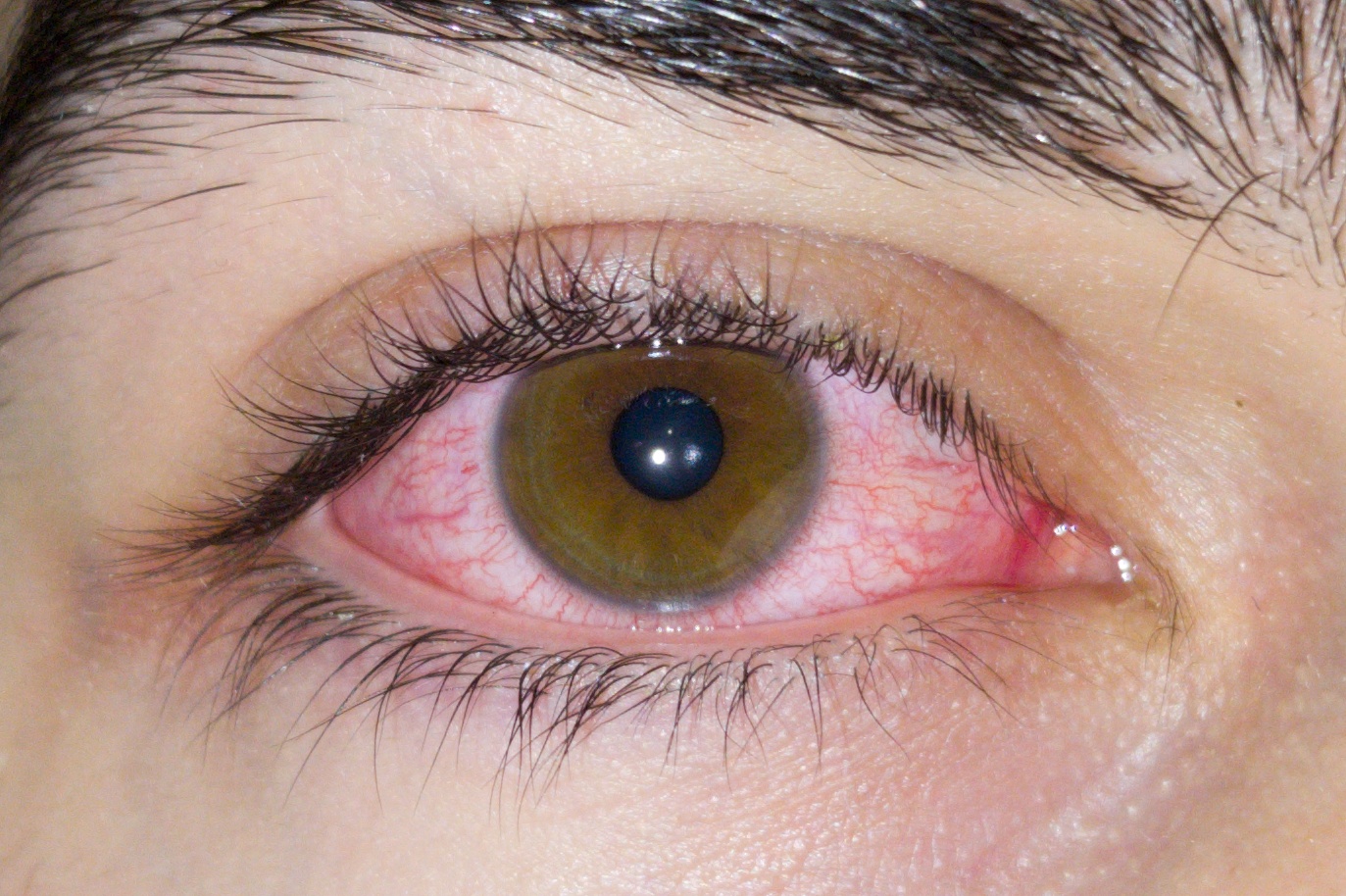
Eye flu or conjunctivitis is a conjunctival inflammation characterized by
hyperemia associated with discharge that may be watery, mucoid, mucopurulent
or purulent.

Read more on Eye Flu here. 

Prevention of eye flu or pink eye:

Conjunctivitis, also known as pink eye, is a common eye condition that can
cause irritation, redness, and discomfort; in rare cases loss of vision and
permanent blindness as well.
Here are seven tips to help prevent conjunctivitis:

1. Practice Good Hygiene:

Wash your hands regularly with soap and water, especially after touching
your face, eyes, or any potentially contaminated surfaces. Avoid touching
your eyes with unwashed hands, as this can introduce harmful bacteria or
viruses.

2. Avoid Sharing Personal Items:

   Do not share items like towels, pillowcases, cosmetics, and
contact lenses with others, as these can harbor bacteria or viruses that
might lead to conjunctivitis.

3. Practice Contact Lens Hygiene:

   If you wear contact lenses, follow proper hygiene guidelines.
Wash your hands before handling lenses, disinfect them regularly, and
replace them as recommended by your eye care professional. Avoid wearing
lenses while your eyes are irritated or infected.

4. Protect Your Eyes:

   When swimming in pools or using hot tubs, wear goggles to
prevent exposure to potentially harmful bacteria and chemicals that could
cause conjunctivitis.
You can also wash and clean yoou eyes with clean water around two to three
times a day. But remember overwashing or frequent washing is not that good
either. 

Over the counter artificial tears (Carboxymethylcellose drops) as
needed or every two to three hours to help with irritation and
difficulty

5. Avoid Close Contact with Infected Individuals:

   If someone around you has conjunctivitis, avoid close contact,
such as touching or hugging, to reduce the risk of transmitting the
infection.

6. Maintain Clean Surroundings:

   Regularly clean and disinfect commonly touched surfaces, such
as doorknobs, countertops, and electronic devices, to minimize the spread of
germs that could cause conjunctivitis.

7. Stay Away from Irritants:

Protect your eyes from irritants like smoke, dust, and allergens, which can
exacerbate or trigger conjunctivitis. Consider using air purifiers and
keeping windows closed during high pollen seasons.
These tips can help reduce the risk of conjunctivitis, it’s not always
possible to prevent it entirely.
If you experience symptoms like redness, itching, discharge, or blurred
vision, consult a healthcare professional or an eye doctor for proper
diagnosis and treatment.

Bonus Tip:

You can use over the counter artificial tears (Carboxymethylcellose drops)
as needed or every two to three hours to help with irritation and
difficulty. 
Treatment of EYE FLU
is discussed in this link .

आँखाको फ्लू वा पिंक आँखाको रोकथाम:

कन्जक्टिभाइटिस, जसलाई पिंकआँखा पनि भनिन्छ, आँखाको सामान्य रोग हो जसले
पोल्ने, रातोपन र गाह्रो गर्न सक्छ; कुनै विरल अवस्थामा दृष्टि गुम्ने र स्थायी
अन्धोपन पनि गराऊन सक्छ।
कन्जन्क्टिवाइटिस रोक्न मद्दत गर्ने सात सुझावहरू:

1. राम्रो सरसफाइ गर्नुहोस्:

आफ्नो हात नियमित रूपमा साबुन र पानीले धुनुहोस्, विशेष गरी आफ्नो अनुहार,
आँखा, वा कुनै पनि सम्भावित दूषित सतहहरू छोएपछि हात सफा गर्नुहोस। नधोइएकन
हातले आँखा नछुनुहोस्, किनकि यसले हानिकारक ब्याक्टेरिया वा भाइरसहरू
आखासम्म  पुर्याउन सक्छ।

2. अर्काको व्यक्तिगत वस्तुहरू प्नयोग नगर्नुहोस्:

    तौलिया, तकिया, सौन्दर्य सामाग्रि, र कन्ट्याक्ट लेन्स जस्ता
वस्तुहरू अरूसँग बाड्ने, साट्ने नगर्नुहोस्, किनकि यसले ब्याक्टेरिया वा
भाइरसहरूलाई सार्न सक्छ जसले कन्जक्टिभाइटिस रोग निम्त्याउन सक्छ।

३. कन्ट्याक्ट लेन्स हाइजिन अभ्यास गर्नुहोस्:

    यदि तपाइँ कन्ट्याक्ट लेन्स लगाउनुहुन्छ भने, उचित
सफाइदिशानिर्देशहरू पालना गर्नुहोस्। लेन्सहरू ह्यान्डल गर्नु अघि आफ्नो हातहरू
धुनुहोस्, तिनीहरूलाई नियमित रूपमा कीटाणुरहित गर्नुहोस्, र तपाईंको आँखा
हेरचाह चिकित्सकले वा व्यवसायीले सिफारिस गरे अनुसार तिनीहरूलाई प्रतिस्थापन
गर्ने गर्नुहोस्।
तपाईंको आँखा जलिरहेको वा संक्रमित हुँदा लेन्स नलगाउनुहोस्।

४. आफ्नो आँखाको सुरक्षा गर्नुहोस्:

    पोखरीमा पौडी खेल्दा वा हट टबहरू प्रयोग गर्दा, सम्भावित
हानिकारक ब्याक्टेरिया र रसायनहरू जो कन्जन्क्टिवाइटिस निम्त्याउन सक्छ त्यसलाई
रोक्न गगल- चश्मा लगाउनुहोस्।
तपाईं दिनको दुई वा तीन पटक सफा पानीले आफ्नो आँखा धुनुहोस् र सफा गर्न
सक्नुहुन्छ। तर याद गर्नुहोस् कि धेरै पटक धुनु वा बारम्बार धुनु पनि राम्रो
हैन।

5. संक्रमित व्यक्तिहरूसँग नजिकको सम्पर्कबाट टाढा रहनुहोस्:

    यदि तपाईंको वरपर कसैलाई नेत्रश्लेष्म रोग लागेको छ भने, संक्रमण
सर्ने जोखिमलाई कम गर्नको लागि नजिकको सम्पर्कबाट टाढा रहनुहोस्, जस्तै छुने वा
अँगालो हाल्ने।

6. वरपर सफा राख्नुहोस्:

   ढोका , काउन्टरटपहरू र इलेक्ट्रोनिक उपकरणहरू जस्ता सामान्य रूपमा
छोइएका सतहहरू नियमित रूपमा सफा र कीटाणुरहित बनाऊनुहोस, जसले कन्जन्क्टिवाइटिस
निम्त्याउन सक्छ।

७. धुलो-धुवाँबाट टाढा रहनुहोस्:

तपाईंको आँखालाई धुवाँ, धुलो र एलर्जीहरूबाट जोगाउनुहोस्, जसले
कन्जन्क्टिवाइटिसलाई बढावा दिन वा ट्रिगर गर्न सक्छ। हावा प्युरिफायरहरू प्रयोग
गर्ने र फुल फुल्ने मौसमहरूमा झ्यालहरू बन्द राख्नुहोस्।

बोनस टिप

दुखाइ-इरिटेसन र अफ्ठेरो कम गर्न आर्टिफिसियल टियर प्रयोग गर्न सकिन्छ। 
केहि प्रश्न भए हामीलाई सोध्नुहोस।

Exit mobile version