



Table of Contents
Rett Syndrome

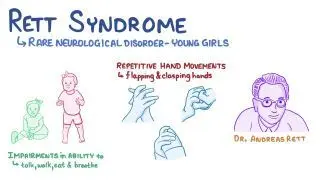
Definition
Rett syndrome is a neurodevelopmental disorder that primarily affects girls, characterized by normal early development followed by regression of acquired skills, especially speech and purposeful hand movements, with onset typically between 6–18 months of age.
Etiology
Genetic cause: Mutation in MECP2 gene (methyl-CpG-binding protein 2) on the X chromosome (Xq28)
Inheritance: Usually sporadic (de novo); rarely familial
Pathophysiology: Dysfunction of MECP2 protein → abnormal brain maturation and synaptic development
Epidemiology
Affects 1 in 10,000–15,000 female births
Lethal in males (most do not survive infancy unless mosaic or XXY)
Clinical Features
Phases of Disease
Early Onset (6–18 months)
Normal development initially
Gradual loss of interest in surroundings
Loss of purposeful hand skills
Deceleration of head growth (acquired microcephaly)
Rapid Destructive Phase (1–4 years)
Loss of speech and purposeful hand use
Stereotyped hand movements: hand-wringing, washing, clapping, or mouthing
Gait ataxia, truncal apraxia
Autistic-like behavior
Plateau Phase (2–10 years)
Some improvement in social interaction and eye contact
Persistent motor problems and seizures
Late Motor Deterioration (>10 years)
Progressive scoliosis, muscle wasting, rigidity, dystonia
Loss of ambulation in many cases
Other Features
Breathing abnormalities: hyperventilation, apnea during wakefulness
Seizures: common (up to 90%)
Bruxism, cold/purple extremities (autonomic dysfunction)
Sleep disturbances
Growth retardation
Investigations
Genetic testing: MECP2 mutation analysis (diagnostic)
EEG: slowing with epileptiform activity
MRI brain: may show nonspecific atrophy
Metabolic tests: normal (to rule out other causes)
Diagnosis
Clinical + confirmed MECP2 mutation
Diagnostic criteria include:
Regression after normal early development
Loss of purposeful hand skills and spoken language
Gait abnormalities
Stereotypic hand movements
Differential Diagnosis
Autism spectrum disorder
Angelman syndrome
Cerebral palsy (especially ataxic type)
Childhood disintegrative disorder
Management
No cure – supportive and multidisciplinary care
Physiotherapy & occupational therapy: maintain mobility
Speech therapy: communication support (eye-tracking devices)
Antiepileptics: for seizures
Nutritional support: adequate calories, manage feeding difficulties
Behavioral therapy: improve interaction
Orthopedic care: for scoliosis, contractures
Prognosis
Progressive but non-degenerative
Life expectancy: many survive into adulthood (40–50 years)
Main causes of death: sudden unexplained death, pneumonia, cardiac arrhythmias
Mnemonic (Key features) — “RETT”
R = Regression (speech, hand skills)
E = Episodic breathing abnormalities
T = Typical hand movements (wringing, washing)
T = Tiny head (acquired microcephaly)