


Radiography (X-Ray Technology) MCQs for NHPC Nepal – Diploma in X-Ray Technology License Exam
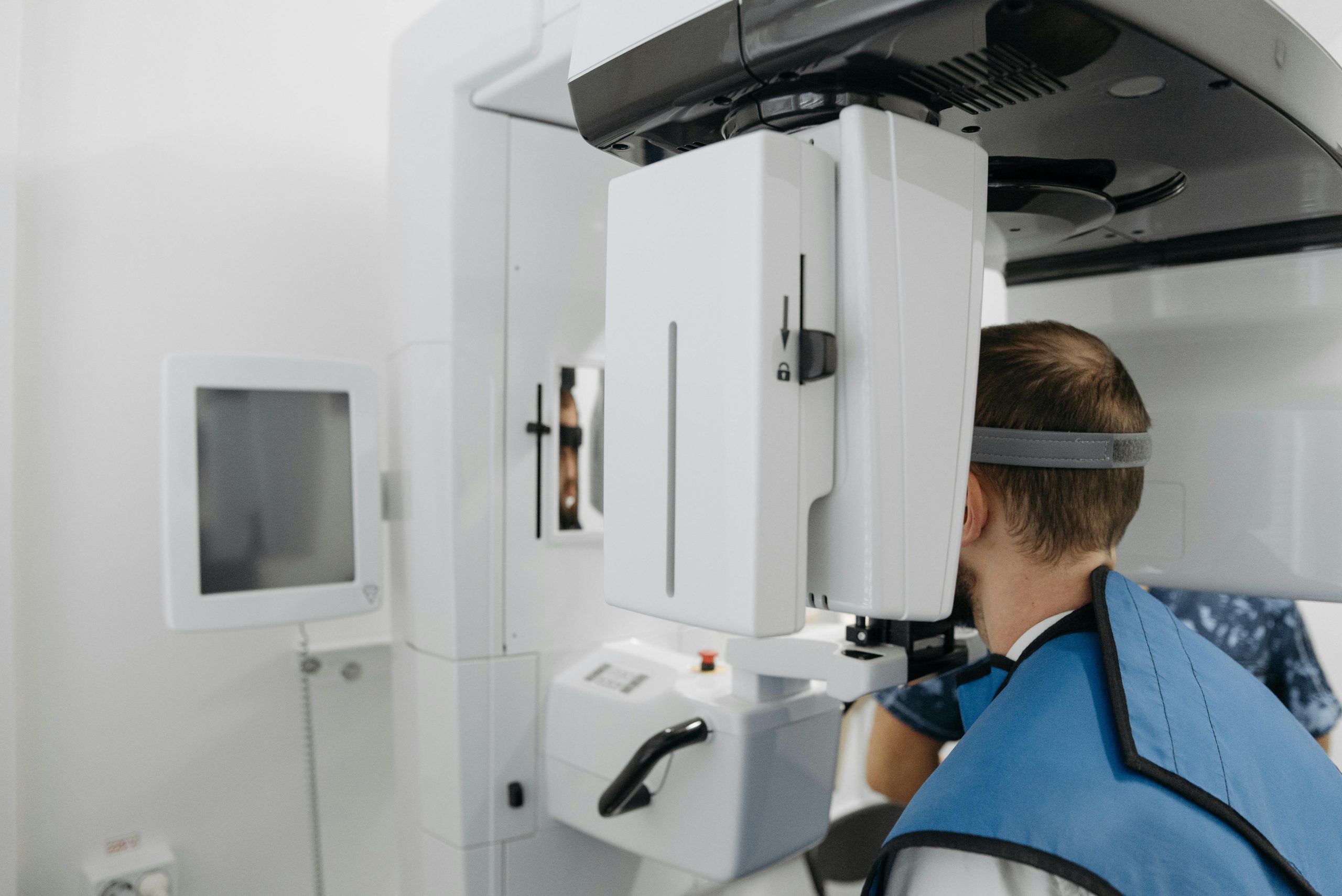
1. The primary function of an X-ray machine is to:
a) Create an image of the body’s internal structures
b) Provide electrical impulses for the body
c) Assist in surgery
d) Clean surgical instruments
2. Which of the following best describes an X-ray?
a) Radioactive rays
b) High-frequency electromagnetic radiation
c) Low-frequency radiation
d) Sound waves
3. The X-ray tube contains two primary components: the anode and the:
a) Cathode
b) Generator
c) Detector
d) Collimator
4. Which of the following is a common application of X-rays in medical imaging?
a) Detecting bone fractures
b) Monitoring blood flow
c) Measuring body temperature
d) Treating infections
5. The main purpose of a radiographic image is to:
a) Diagnose disease and injury
b) Treat infections
c) Administer anesthesia
d) Monitor heart rate
6. The ability of X-rays to penetrate the body depends on the:
a) Type of tissue
b) Age of the patient
c) Color of the tissue
d) Time of day
7. Which of the following materials is most commonly used as the anode in an X-ray tube?
a) Tungsten
b) Lead
c) Silver
d) Copper
8. The process by which X-rays are absorbed or blocked by tissues of different densities is called:
a) Reflection
b) Refraction
c) Attenuation
d) Diffusion
9. What is the primary purpose of the X-ray collimator?
a) To control the size and shape of the X-ray beam
b) To detect the X-ray radiation
c) To focus the X-ray on a specific area
d) To provide protection from radiation
10. The unit of measurement for radiation exposure is the:
a) Gray (Gy)
b) Hertz (Hz)
c) Ampere (A)
d) Meter (m)
11. The process by which a radiograph is converted into a visible image is called:
a) Scanning
b) Exposure
c) Development
d) Calibration
12. The correct term for a radiograph taken of the chest is:
a) Chest X-ray
b) Mammogram
c) Bone scan
d) CT scan
13. The primary purpose of a lead apron during an X-ray examination is to:
a) Prevent radiation exposure to sensitive areas
b) Provide warmth to the patient
c) Help in positioning the patient
d) Ensure proper imaging
14. The X-ray film is sensitive to:
a) Ultraviolet light
b) X-ray radiation
c) Infrared light
d) Sound waves
15. What does the radiographic term “contrast” refer to?
a) The intensity of the radiation used
b) The difference in the density of the tissues
c) The duration of the X-ray exposure
d) The color of the image
16. Which of the following is a type of X-ray imaging that provides cross-sectional images of the body?
a) Fluoroscopy
b) Mammography
c) Computed Tomography (CT)
d) Bone Densitometry
17. The X-ray beam intensity is controlled by the:
a) Exposure time
b) Kilovolt peak (kVp)
c) Milliampere (mA)
d) All of the above
18. Which of the following factors influences the quality of the X-ray image?
a) Exposure time
b) Patient positioning
c) Type of tissue
d) All of the above
19. In radiographic imaging, the term “resolution” refers to:
a) The brightness of the image
b) The sharpness of the image details
c) The contrast in the image
d) The color of the image
20. Which of the following is a potential risk of excessive X-ray exposure?
a) Radiation burns
b) Increased risk of cancer
c) Bone fractures
d) Blood pressure increase
21. Which of the following is a method to protect patients from unnecessary radiation during X-ray examinations?
a) Use of lead shields
b) Minimizing exposure time
c) Using the lowest possible X-ray dose
d) All of the above
22. What is the most common imaging technique used for imaging bones and joints?
a) Magnetic Resonance Imaging (MRI)
b) X-ray
c) Ultrasound
d) CT scan
23. The radiographic position where the patient lies on their back with their head and chest tilted upward is called:
a) Supine
b) Prone
c) Lateral
d) Fowler’s
24. The image receptor used in digital radiography is known as:
a) X-ray film
b) Flat-panel detector
c) Phosphor plate
d) All of the above
25. In fluoroscopy, the image is displayed on a:
a) Static film
b) Moving screen
c) Digital monitor
d) TV screen
26. What is the primary role of a radiographer during an X-ray procedure?
a) Administer anesthesia
b) Operate the X-ray equipment
c) Monitor the patient’s vital signs
d) Interpret the X-ray results
27. Which of the following structures is most likely to show up as a dark area on an X-ray image?
a) Bone
b) Air-filled spaces (lungs)
c) Metal implants
d) Soft tissues
28. The amount of radiation absorbed by the body is measured in:
a) Millisieverts (mSv)
b) Hertz (Hz)
c) Kilowatts (kW)
d) Amperes (A)
29. Which of the following is an advantage of digital radiography over traditional X-ray film?
a) Faster image processing
b) Higher resolution
c) Increased radiation dose
d) Limited storage capability
30. What does the term “radiographic exposure” refer to?
a) The amount of radiation passing through the body
b) The amount of light used in an image
c) The amount of time the patient spends in the scanner
d) The quality of the final image
31. Which of the following factors is controlled by the radiographer to adjust the contrast in an X-ray image?
a) Exposure time
b) Kilovolt peak (kVp)
c) Milliamperage (mA)
d) All of the above
32. The process by which X-rays are converted into visible light is called:
a) Fluorescence
b) Transmission
c) Attenuation
d) Scintillation
33. The maximum safe dose of radiation exposure is determined by the:
a) Patient’s age
b) Type of X-ray procedure
c) National and international radiation protection standards
d) Radiographer’s experience
34. The term “grids” in radiography refers to devices used to:
a) Focus the X-ray beam
b) Improve image contrast by reducing scatter radiation
c) Measure radiation exposure
d) Position the patient correctly
35. Which of the following is true about mammography?
a) It is used primarily for imaging the abdomen
b) It uses lower doses of radiation compared to general X-rays
c) It requires the use of a contrast agent
d) It is not useful in detecting breast cancer
36. What is the primary reason for using a contrast medium in certain X-ray exams?
a) To enhance the clarity of the image
b) To reduce the radiation dose
c) To make the internal organs more visible
d) To prevent radiation burns
37. The digital radiography system that uses a CCD (Charge-Coupled Device) or CMOS (Complementary Metal-Oxide-Semiconductor) detector is known as:
a) Computed Radiography (CR)
b) Direct Radiography (DR)
c) Film-screen radiography
d) Analog radiography
38. The process of converting digital images into hard copies is called:
a) Transmission
b) Hard copy printing
c) Image processing
d) Image inversion
39. The function of a dosimeter in radiology is to:
a) Measure the radiation dose received by the patient
b) Monitor the radiation exposure of the radiographer
c) Improve image quality
d) Protect the X-ray machine
40. The chest X-ray view where the patient stands upright with their back to the film and takes a deep breath is called the:
a) Anteroposterior (AP) view
b) Lateral view
c) Posteroanterior (PA) view
d) Oblique view
41. The amount of radiation the body absorbs during a radiographic examination is referred to as the:
a) Radiographic contrast
b) Radiation dose
c) Scattered radiation
d) Image resolution
42. The first step in performing a radiographic procedure is:
a) Positioning the patient
b) Selecting the appropriate exposure settings
c) Ensuring the X-ray machine is calibrated
d) Instructing the patient on how to hold their breath
43. The area of the body most likely to show up as a light area on an X-ray image is:
a) Air-filled spaces (lungs)
b) Bone
c) Soft tissues
d) Metal implants
44. What does the term “grid ratio” refer to in radiography?
a) The contrast between tissues
b) The distance between the X-ray tube and the film
c) The height of the lead strips in a grid
d) The time it takes to process the image
45. The use of a contrast medium is typically necessary in which of the following procedures?
a) Bone X-rays
b) Mammography
c) Abdominal X-rays
d) CT scans
46. What is the primary purpose of an X-ray film holder?
a) To ensure proper patient positioning
b) To hold the film during exposure
c) To protect the patient from radiation
d) To enhance the image quality
47. The radiographic procedure most commonly used to diagnose broken bones is:
a) CT scan
b) X-ray
c) MRI
d) Ultrasound
48. A radiographic procedure used to examine the gastrointestinal tract is called:
a) Fluoroscopy
b) Angiography
c) Barium swallow
d) MRI
49. What does the acronym “CT” stand for in medical imaging?
a) Chemical Therapy
b) Computed Tomography
c) Cytological Testing
d) Contrast Therapy
50. The purpose of an X-ray contrast medium is to:
a) Enhance the clarity of the image
b) Protect the patient from radiation
c) Prevent image artifacts
d) Reduce the amount of radiation used
Answer Key
- a
- b
- a
- a
- a
- a
- a
- c
- a
- a
- c
- a
- a
- b
- b
- c
- d
- d
- b
- b
- d
- b
- a
- b
- c
- b
- b
- a
- a
- a
- b
- a
- c
- b
- b
- c
- b
- b
- b
- c
- b
- a
- b
- c
- c
- b
- b
- c
- b
- a
These MCQs cover essential concepts in radiography, suitable for the Diploma in X-ray Technology license exam.