


Casoni’s Test : Notes for Doctors
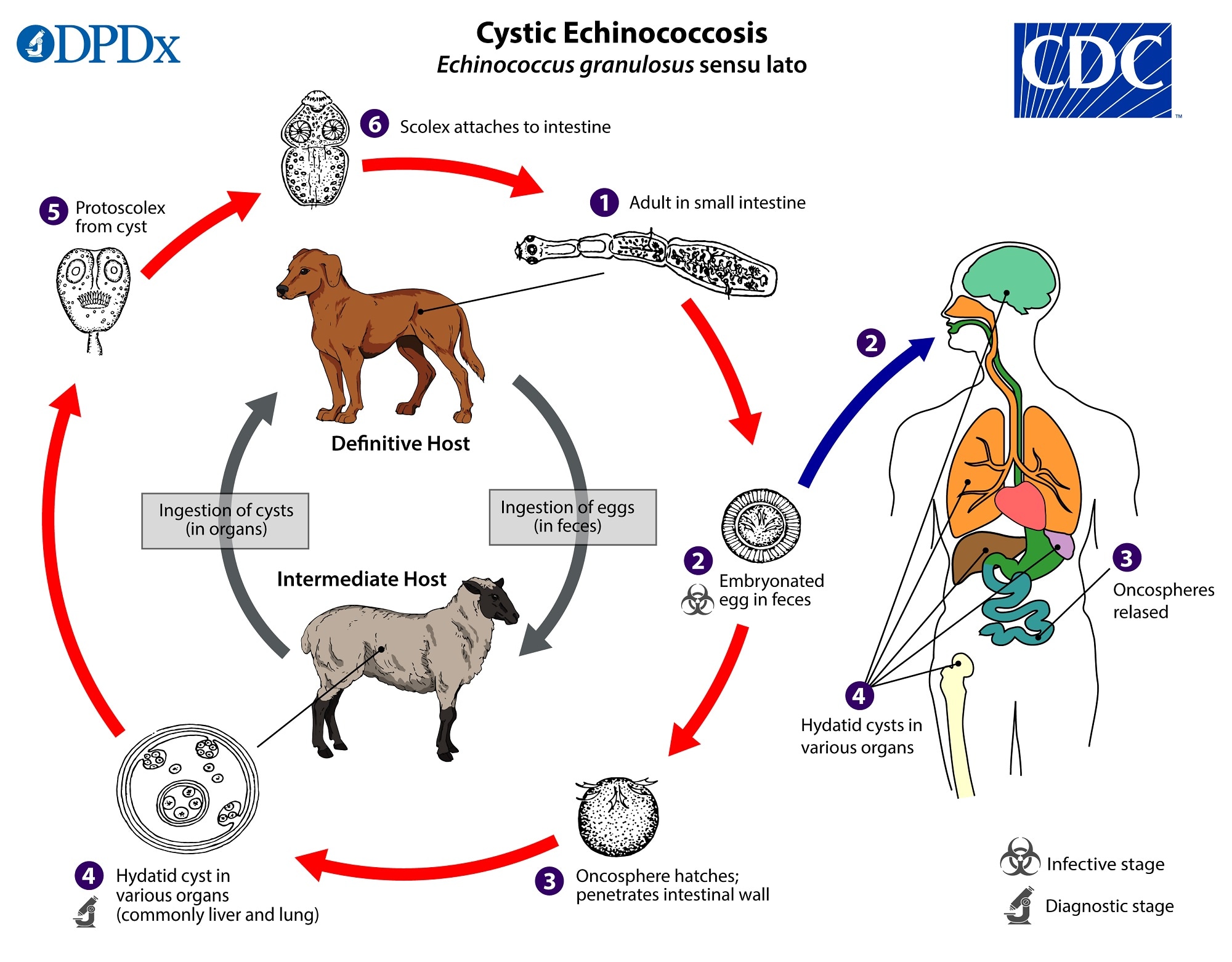 |
| E granulosus lifecycle Souce and Copyright: CDC |
Lets atart with a questin
Casoni’s test is done to diagnose …

a. Fascioliasis
c. Hookworm
b. Hydatid cyst
d. Schistoomiasis
Solution
.reveal-box {
display: none;
margin-top: 10px;
padding: 10px;
border: 1px solid #ccc;
background-color: #f9f9f9;
}
.reveal-btn {
cursor: pointer;
display: inline-block;
padding: 8px 12px;
background-color: #007bff;
color: white;
border: none;
border-radius: 5px;
}
Ans: ‘b’
Casoni’s test (intradermal skin test) is an immediate hypersensitivity skin
test used in the diagnosis of hydatid cyst.
Casoni’s test (intradermal skin test) is an immediate hypersensitivity skin
test used in the diagnosis of hydatid cyst.
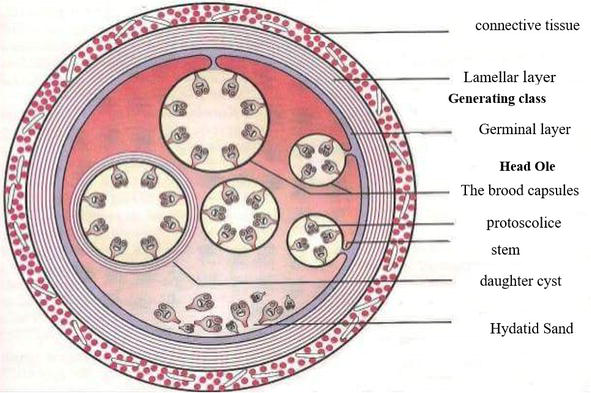 |
| Echinococcus cyst cross section |
Hydatid cyst
USG Finding in Hydatid Cyst
- USG is diagnostic (multiloculated cyst)
PAIR procedure for Hydatid cyst:
Percutaneous puncture (P) of cyst under USG guidance, aspiration (A) of its
content, injection (I) of scolicidal agent & reaspiration (R). (for
small size < 5-6 cm).
content, injection (I) of scolicidal agent & reaspiration (R). (for
small size < 5-6 cm).
Scolicidal agents for Hydatid Cyst
hypertonic 2% saline, sodium hypochloride, cetrimide, chlorhexidine