Explanation: Diarrhea is primarily caused by viral or bacterial infections that lead to inflammation and irritation of the intestines, resulting in increased fluid secretion and frequent bowel movements.
**Question 2: Which of the following is a common symptom of dehydration?**
Answer: C) Muscle cramps
Explanation: Muscle cramps are a common symptom of dehydration. When the body lacks sufficient fluids, electrolyte imbalances can occur, leading to muscle spasms and cramps.
**Question 3: How does diarrhea contribute to dehydration?**
Answer: C) It leads to frequent and fluid-rich stools
Explanation: Diarrhea leads to frequent and fluid-rich stools, causing a significant loss of water and electrolytes from the body, which can result in dehydration if not adequately replenished.
**Question 4: What is the recommended first-aid treatment for a person experiencing dehydration due to diarrhea?**
Answer: C) Drinking oral rehydration solutions (ORS)
Explanation: Oral rehydration solutions (ORS) contain the right balance of electrolytes and fluids to help replace the lost fluids due to diarrhea and prevent dehydration.
**Question 5: In severe cases of dehydration, which of the following medical interventions might be necessary?**
Answer: D) Intravenous (IV) fluid therapy
Explanation: In severe cases of dehydration, when oral rehydration is not sufficient, intravenous (IV) fluid therapy might be necessary to rapidly restore fluid and electrolyte balance.
LFT- Liver function test: Indication, Interpretatin, Normal Range
LFT- Liver function test: Indication, Interpretatin, Normal Range
Table of Contents(toc)
🧾 Introduction
Liver Function Tests (LFTs) are a panel of blood tests used to evaluate the overall health and function of the liver. These tests help detect liver inflammation (hepatitis), infection, damage, obstruction, and synthetic dysfunction. They are crucial in diagnosing liver diseases such as hepatitis, cirrhosis, alcoholic liver disease, drug-induced liver injury, and biliary obstruction.
📊 Normal Values of Key Liver Function Tests
Test
Normal Range
Clinical Significance
ALT (Alanine Aminotransferase)
10–40 U/L
Sensitive marker of hepatocellular injury
AST (Aspartate Aminotransferase)
12–38 U/L
In liver and other tissues (heart, muscle)
ALP (Alkaline Phosphatase)
25–100 U/L
Elevated in cholestasis and bone disorders
Amylase
25–125 U/L
Mainly a pancreatic marker (not a core LFT)
Bilirubin (Total / Direct)
0.1–1.0 mg/dL / 0.0–0.3 mg/dL
Reflects hepatic conjugation and excretion
GGT (Gamma-Glutamyl Transferase)
0–30 U/L (varies)
Elevated in alcohol use and biliary obstruction
Albumin
3.5–5.0 g/dL
Reflects liver’s synthetic function
Prothrombin Time (PT/INR)
PT: 11–13.5 sec
Liver’s synthesis of clotting factors
🔬 Interpreting Abnormal Liver Function Tests
1. Hepatocellular Pattern (↑ALT, ↑AST)
Causes:
Viral Hepatitis (A, B, C)
Drug-induced liver injury (e.g., acetaminophen)
Autoimmune hepatitis
Ischemic hepatitis
AST/ALT Ratio:
2:1 → suggestive of alcoholic hepatitis
ALT > AST → typical of viral hepatitis
2. Cholestatic Pattern (↑ALP, ↑GGT)
Causes:
Biliary obstruction (e.g., gallstones, tumors)
Primary biliary cholangitis
Primary sclerosing cholangitis
Drug-induced cholestasis
GGT is often used to confirm hepatic origin of ALP elevation.
3. Mixed Pattern (↑ALT, ↑ALP)
Seen in:
Drug-induced liver injury
Viral hepatitis
Autoimmune disorders
4. Synthetic Dysfunction (↓Albumin, ↑PT/INR)
Seen in:
Chronic liver disease (cirrhosis)
Acute liver failure
🧠 Clinical Clues from Patterns
Pattern
Key Indicators
Common Conditions
Hepatocellular
↑ALT, ↑AST
Hepatitis (viral, toxic, autoimmune)
Cholestatic
↑ALP, ↑GGT, ↑Bilirubin
Obstruction, PBC, PSC
Synthetic failure
↓Albumin, ↑PT/INR
Cirrhosis, liver failure
Isolated ↑ALP
If GGT normal → think bone disease
⚠️ Special Notes for Exams
ALT is more liver-specific than AST.
AST is also found in muscle, RBCs, and heart → check CK if muscle injury is suspected.
Bilirubin types:
Unconjugated ↑ in hemolysis and Gilbert’s syndrome
Conjugated ↑ in cholestasis and hepatocellular disease
GGT is elevated in alcoholic liver disease, but not bone disease.
Prothrombin time is often the first to derange in acute liver failure.
📚 High-Yield MCQs for Licensing Exams (USMLE, NCLEX, FMGE)
1. A 45-year-old male with a history of alcohol use presents with fatigue and jaundice. LFTs show AST 145 U/L and ALT 60 U/L. What is the most likely diagnosis?
A. Viral hepatitis
B. Alcoholic hepatitis ✅
C. Hemochromatosis
D. Primary biliary cholangitis
Explanation: AST:ALT > 2 is characteristic of alcoholic hepatitis.
2. A patient presents with jaundice, dark urine, and pale stools. Labs show ALP 320 U/L, GGT elevated, and direct bilirubin 4.5 mg/dL. What is the likely diagnosis?
A. Viral hepatitis
B. Hemolytic anemia
C. Obstructive jaundice ✅
D. Gilbert syndrome
Explanation: Cholestatic pattern with elevated ALP, GGT, and direct bilirubin → biliary obstruction.
3. Which LFT abnormality is most indicative of impaired liver synthetic function?
A. Elevated ALT
B. Elevated AST
C. Low albumin and elevated PT/INR ✅
D. High GGT
Explanation: PT and albumin reflect liver synthesis of proteins and clotting factors.
4. In acute viral hepatitis, which of the following is the most likely pattern?
A. ALT > AST ✅
B. AST > ALT
C. Isolated ALP elevation
D. Normal LFTs
Explanation: Viral hepatitis typically shows a hepatocellular pattern, with ALT > AST.
5. A young woman presents with fatigue and pruritus. Labs show elevated ALP and positive anti-mitochondrial antibodies (AMA). What is the most likely diagnosis?
A. Primary sclerosing cholangitis
B. Autoimmune hepatitis
C. Primary biliary cholangitis ✅
D. Gallstones
Explanation: Female + pruritus + ↑ALP + AMA → PBC.
🧷 Conclusion
Understanding the interpretation of liver function tests is essential for diagnosing and managing hepatic disorders. Focus on recognizing patterns, correlating with clinical history, and knowing high-yield associations—especially for exams like USMLE, NCLEX, and FMGE. Mastery of this topic is not only vital for exams but also for real-world clinical reasoning.
Methods of Collecting Different Specimens for Routine and Culture Tests
Here are 30 Multiple Choice Questions (MCQs) on the Methods of Collecting Different Specimens for Routine and Culture Tests suitable for nursing examination of TU IOM.
Methods of Collecting Different Specimens for Routine and Culture Tests
Multiple Choice Questions
1. What is the most appropriate time to collect a sputum specimen for culture?
A. Before bedtime
B. Immediately after meals
C. Early morning
D. At any convenient time
2. Which of the following is essential before collecting a midstream urine specimen?
A. Provide a full meal
B. Clean the perineal area
C. Drink coffee
D. Take antibiotics
3. For a throat swab culture, the swab should be taken from:
A. The cheeks
B. The uvula
C. The tonsillar area and any inflamed site
D. The lips
4. The best container for stool culture collection is:
A. A sterile glass bottle
B. A covered dish
C. A clean paper towel
D. A sterile, screw-capped container
5. Which of the following would compromise a blood culture?
A. Drawing from peripheral vein
B. Using aseptic technique
C. Collecting after starting antibiotics
D. Collecting multiple samples
6. When collecting a urine sample for culture and sensitivity, the container must be:
A. Washed with soap and water
B. Clean but not sterile
C. Sterile
D. Made of paper
7. How should a specimen for cerebrospinal fluid (CSF) analysis be handled?
A. Refrigerate immediately
B. Keep at room temperature
C. Transport on ice
D. Send immediately to lab without delay
8. Which of the following techniques is critical during blood specimen collection for culture?
A. Using an alcohol swab only
B. Using antiseptic such as chlorhexidine
C. Warming the sample
D. Shaking the tube vigorously
9. Which is not recommended when collecting a wound swab for culture?
A. Clean around the wound first
B. Swab the necrotic tissue
C. Use a sterile swab
D. Label the container correctly
10. For accurate tuberculosis diagnosis, sputum samples should be collected:
A. Once only
B. Over three consecutive days
C. Before meals only
D. After brushing teeth
11. A urine culture should be sent to the lab within:
A. 24 hours
B. 2 hours
C. 6 hours
D. 12 hours
12. When collecting a blood culture, how many sets are generally recommended?
A. One
B. Two to three from different sites
C. Four from same vein
D. Three from capillaries
13. Before collecting a throat swab, instruct the patient to:
A. Gargle with antiseptic
B. Brush teeth
C. Avoid eating or drinking for 1 hour
D. Swallow hard
14. A clean-catch midstream urine sample helps reduce:
A. The time taken for the test
B. Contamination from urethra
C. Kidney stone detection
D. Risk of infection during collection
15. What is the main reason for using a sterile container in specimen collection?
A. Prevent spillage
B. Avoid contamination
C. Make it easy to carry
D. Reduce weight
16. When collecting a sample for AFB (Acid-Fast Bacilli), what is the recommended number of specimens?
A. One
B. Two
C. Three
D. Four
17. Which step comes first when collecting a stool specimen for culture?
A. Add preservatives
B. Label the container
C. Explain the procedure to the patient
D. Send to lab
18. When is the best time to collect a vaginal swab?
A. During menstruation
B. Post intercourse
C. 24 hours after intercourse and not during menstruation
D. Immediately after urination
19. The most important precaution while collecting blood samples is to:
A. Talk to the patient
B. Check label after collection
C. Use a clean cotton
D. Avoid needlestick injuries
20. Which of the following would invalidate a urine specimen for culture?
A. Clear appearance
B. Collected in non-sterile container
C. Labeled properly
D. Sent within 1 hour
21. Which of these is not required when collecting specimens for culture?
A. Proper labeling
B. Sterile technique
C. Patient fasting
D. Prompt transportation
22. Why is early morning sputum preferred for TB testing?
A. Easier for patient
B. Contains higher number of bacteria
C. Less contaminated
D. It’s tradition
23. When collecting cerebrospinal fluid (CSF), the procedure should be:
A. Done by nursing staff
B. Done without gloves
C. Done by trained professional under aseptic technique
D. Done at bedside by anyone
24. What is the purpose of collecting two blood culture sets from different sites?
A. Save time
B. Check for consistency and reduce contamination
C. Reduce cost
D. Prevent clotting
25. What must be documented after collecting any specimen?
A. Patient’s age
B. Collector’s name and time of collection
C. Nurse’s shift
D. Date of admission
26. To collect an ear swab, the health worker must avoid:
A. Using sterile swab
B. Touching the outer ear
C. Labeling the container
D. Contacting the swab tip with fingers
27. If a specimen container has no label, the specimen should be:
A. Sent to lab with note
B. Discarded and recollected
C. Labeled later
D. Tested anyway
28. Which part of the stool is best for culture?
A. Liquid part
B. Blood-tinged or mucus area
C. Random middle section
D. Top layer only
29. If a patient is unable to expectorate sputum, you should:
A. Skip collection
B. Give mouthwash
C. Perform chest physiotherapy or nebulization
D. Collect saliva
30. A specimen for culture and sensitivity testing must be:
A. Sent without delay
B. Refrigerated overnight
C. Mixed with preservatives
D. Kept in sunlight
Intrauterine fetal death (IUFD) is defined as the death of the fetus after the age of viability (commonly >28 weeks gestation in many guidelines, though in some systems it’s >20 or >24 weeks) while still retained within the uterus.
⚠️ Clinical Features of IUFD:
Decreased or absent fetal movements (subjective and nonspecific)
Cessation of uterine growth
Absence of fetal heart sounds on auscultation or Doppler
Softening of the uterus and regression in fundal height
Loss of maternal pregnancy symptoms (e.g., breast tenderness, nausea)
✅ Most Reliable (Sure) Sign of IUFD:
Spalding Sign ✅
→ Overlapping of fetal skull bones, due to loss of brain tissue and collapse of calvarium from intrauterine maceration.
→ Appears 5–7 days after fetal death on radiologic imaging (X-ray or ultrasound).
🧪 Key Radiological & Pathological Signs of IUFD:
Sign
Description
Time of Appearance Post-IUFD
Spalding Sign
Overlapping of cranial bones
5–7 days
Robert’s Sign
Gas in great vessels (aorta, heart chambers) due to tissue decomposition
As early as 12–24 hrs
Deuel’s Halo Sign
Halo of fluid around fetal skull due to subcutaneous scalp edema
~7 days
Ball Sign
Rigid, flexed fetal posture (“rolled-up” fetus) due to softening of muscles and ligaments
3–4 days
Skin Slippage Sign
Peeling/sloughing of fetal skin due to maceration
Earliest pathological sign (~12 hrs)
🔬 Forensic/Autopsy-Based Diagnostic Tests:
Test
Finding
Use
Wredin’s Test
Gelatinous middle ear tissue in stillbirth; aerated middle ear in neonate
Differentiates live birth vs. stillbirth
Foder’s Test
Lung weight: <30g in stillborn vs. >60g in live-born
Lung maturation and aeration status
Ploucquet’s Test
Lung-to-body weight ratio: 1:70 (non-respired) vs. 1:35 (respired)
Nepal Health Professional Council NHPC: Ensuring Quality Healthcare Standards
Table of Contents(toc)
Introduction of NHPC
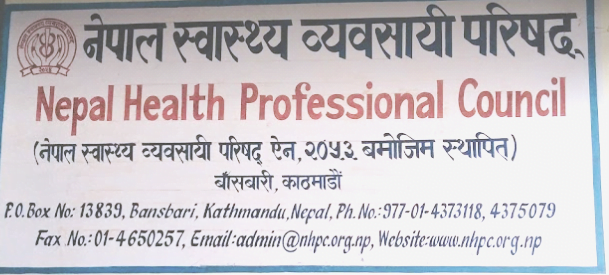
In Nepal, ensuring quality healthcare services and maintaining professional standards in the medical field are crucial for the well-being of the population. To achieve these objectives, the Nepal Health Professional Council (NHPC) plays a pivotal role. In this article, we will explore the significance of NHPC and its efforts in regulating and promoting healthcare professionalism in Nepal.
What is the NHPC?
NHPC website screenshot
The Nepal Health Professional Council (NHPC) is a statutory body established under the Nepal Health Professional Council Act 2053 (1997 AD). It serves as a regulatory authority responsible for the registration, licensing, and oversight of health professionals in Nepal. NHPC aims to maintain high standards of professionalism, ethics, and competency among healthcare practitioners.
Functions and Responsibilities
1. Registration and Licensing:
NHPC ensures the registration and licensing of health professionals, including doctors, dentists, nurses, pharmacists, physiotherapists, and other allied health professionals. This process helps maintain a reliable database of qualified practitioners and enables better monitoring of the healthcare workforce.
2. Accreditation of Educational Institutions:
NHPC is responsible for accrediting educational institutions that offer healthcare-related courses. This ensures that the institutions meet the necessary standards in terms of infrastructure, faculty qualifications, curriculum, and practical training, thereby producing competent healthcare professionals.
3. Code of Conduct and Ethics:
NHPC establishes a code of conduct and ethics for health professionals to uphold professionalism, integrity, and patient care. It defines the rights and responsibilities of healthcare practitioners, emphasizing ethical practices, confidentiality, and respect for patient autonomy.
NHPC Board
(Picture source: Unknown, mail us for removal with page link and proof of ownership)
4. Continuing Professional Development:
NHPC encourages continuous professional development among healthcare professionals. It promotes lifelong learning, research, and skill enhancement to keep up with evolving medical knowledge and technological advancements. This helps ensure that practitioners stay updated and deliver the best possible care to patients.
5. Complaints and Disciplinary Actions:
NHPC investigates complaints against healthcare professionals regarding professional misconduct or negligence. If found guilty, disciplinary actions may be taken, ranging from warnings and fines to suspension or cancellation of licenses. This mechanism protects patients’ rights and helps maintain the integrity of the healthcare system.
Benefits and Impact of NHPC Nepal
The establishment of NHPC has several positive impacts on the healthcare sector in Nepal:
1. Improved Patient Safety:
NHPC’s stringent registration and licensing processes ensure that only qualified and competent professionals are allowed to practice. This significantly enhances patient safety and reduces the risk of substandard healthcare services.
2. Enhanced Professionalism:
NHPC’s emphasis on ethics, continuing education, and professional development fosters a culture of professionalism among healthcare practitioners. This, in turn, leads to better healthcare outcomes and patient satisfaction.
3. Standardization of Education:
NHPC’s accreditation process ensures that healthcare education institutions adhere to predetermined quality standards. This helps produce well-trained professionals who are equipped to meet the healthcare demands of the population.
4. Accountability and Quality Assurance:
NHPC’s oversight and monitoring mechanisms hold healthcare professionals accountable for their actions. This ensures that patients receive care from practitioners who follow ethical standards and provide high-quality services.
Conclusion
The Nepal Health Professional Council (NHPC) plays a vital role in promoting and regulating healthcare professionalism in Nepal. Through its registration, licensing, accreditation, and oversight functions, NHPC ensures that healthcare professionals adhere to high standards of competency, ethics, and patient care. By upholding these standards, NHPC contributes to the improvement of the healthcare sector in Nepal and the well-being of its citizens.