List of Fundamental Rights in Constitution of Nepal

List of Fundamental Rights in Constitution of Nepal

These rights are important and frequently asked in Loksewa and PSC exams of Nepal.

S.N. Right Article
1 Right to Live with Dignity Article 16
2 Right to Freedom Article 17
3 Right to Equality Article 18
4 Right to Communication Article 19
5 Rights relating to Justice Article 20
6 Right of Victim of Crime Article 21
7 Right against Torture Article 22
8 Right against Preventive Detention Article 23
9 Right against Untouchability and Discrimination Article 24
10 Right relating to Property Article 25
11 Right to Freedom of Religion Article 26
12 Right to Information Article 27
13 Right to Privacy Article 28
14 Right against Exploitation Article 29
15 Right to Clean Environment Article 30
16 Right relating to Education Article 31
17 Right to Language and Culture Article 32
18 Right to Employment Article 33
19 Right to Labour Article 34
20 Right relating to Health Article 35
21 Right relating to Food Article 36
22 Right to Housing Article 37
23 Rights of Women Article 38
24 Rights of the Child Article 39
25 Rights of Dalit Article 40
26 Rights of Senior Citizens Article 41
27 Right to Social Justice Article 42
28 Right to Social Security Article 43
29 Right of the Consumer Article 44
30 Right against Exile Article 45
31 Right to Constitutional Remedies Article 46
  • Right to Live with Dignity (Article 16)
  • Right to Freedom (Article 17)
  • Right to Equality (Article 18)
  • Right to Communication (Article 19)
  • Rights relating to Justice (Article 20)
  • Right of Victim of Crime (Article 21)
  • Right against Torture (Article 22)
  • Right against Preventive Detention (Article 23)
  • Right against Untouchability and Discrimination (Article 24)
  • Right relating to Property (Article 25)
  • Right to Freedom of Religion (Article 26)
  • Right to Information (Article 27)
  • Right to Privacy (Article 28)
  • Right against Exploitation (Article 29)
  • Right to Clean Environment (Article 30)
  • Right relating to Education (Article 31)
  • Right to Language and Culture (Article 32)
  • Right to Employment (Article 33)
  • Right to Labour (Article 34)
  • Right relating to Health (Article 35)
  • Right relating to Food (Article 36)
  • Right to Housing (Article 37)
  • Rights of Women (Article 38)
  • Rights of the Child (Article 39)
  • Rights of Dalit (Article 40)
  • Rights of Senior Citizens (Article 41)
  • Right to Social Justice (Article 42)
  • Right to Social Security (Article 43)
  • Right of the Consumer (Article 44)
  • Right against Exile (Article 45)
  • Right to Constitutional Remedies (Article 46)

Cerebral and Cerebellar circulation (circle of willis mnemonics?)

Cerebral and Cerebellar Circulation: Understanding the Lifeline of the Brain (+ Circle of Willis Mnemonics!)

Table of Contents(toc)

Introduction

The human brain is incredibly dependent on a constant, uninterrupted blood supply. Without oxygen and nutrients delivered by the bloodstream, neurons begin to die within minutes. The brain has evolved an elaborate system of vessels to safeguard this supply, including the Circle of Willis — a crucial arterial network.

In this blog, we’ll cover:

  • The basics of Cerebral and Cerebellar circulation.

  • The components of the Circle of Willis.

  • Easy mnemonics to remember it all!


Cerebral Circulation: The Main Highways of the Brain

The cerebral circulation mainly involves blood flow through two pairs of arteries:

1. Internal Carotid Arteries (ICA)

  • Supplies most of the anterior brain (frontal, parietal, parts of temporal lobes).

  • Major branches include:

    • Anterior Cerebral Artery (ACA)

    • Middle Cerebral Artery (MCA)

    • Ophthalmic Artery

2. Vertebral Arteries

  • Travel up the cervical spine and unite to form the Basilar Artery.

  • Supply the posterior part of the brain (brainstem, cerebellum, occipital lobes).

  • Major branches include:

    • Posterior Inferior Cerebellar Artery (PICA)

    • Anterior Spinal Artery

Together, these arteries connect and form a protective loop at the base of the brain called the Circle of Willis.


Cerebellar Circulation: Keeping Balance and Coordination Alive

The cerebellum (responsible for balance and fine motor coordination) receives blood from three main paired arteries:

  1. Superior Cerebellar Artery (SCA)

  2. Anterior Inferior Cerebellar Artery (AICA)

  3. Posterior Inferior Cerebellar Artery (PICA)

These branches arise from:

  • The Basilar artery (for SCA and AICA).

  • The Vertebral arteries (for PICA).

Damage to these vessels can cause severe symptoms like ataxia, vertigo, dysarthria, and nystagmus.


Circle of Willis: The Brain’s Safety Net

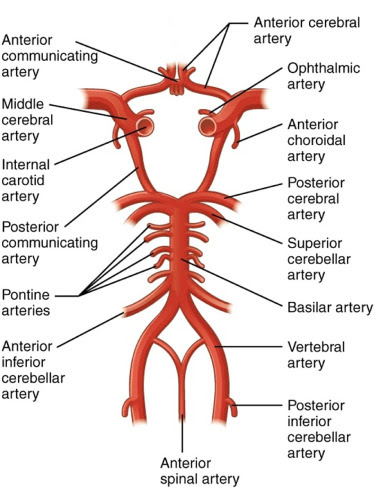
The Circle of Willis is an important circular network of arteries located at the base of the brain, connecting the anterior and posterior circulations.

Components of the Circle of Willis:

  • Anterior Cerebral Arteries (ACA) (left and right)

  • Anterior Communicating Artery (AComm)

  • Internal Carotid Arteries (ICA) (left and right)

  • Posterior Cerebral Arteries (PCA) (left and right)

  • Posterior Communicating Arteries (PComm) (left and right)

This structure allows for collateral blood flow — meaning if one part gets blocked, other vessels can compensate.


Mnemonics to Remember the Circle of Willis

Here’s a very simple and memorable mnemonic:

Aunt Alice Is Picking Apples

Each word corresponds to a part of the Circle:

Word Artery
Aunt Anterior Cerebral Artery (ACA)
Alice Anterior Communicating Artery (AComm)
Is Internal Carotid Artery (ICA)
Picking Posterior Communicating Artery (PComm)
Apples Posterior Cerebral Artery (PCA)

Another Detailed Mnemonic:

All Adults In Paris Appreciate Painting

Where:

  • All = Anterior Cerebral Artery (ACA)

  • Adults = Anterior Communicating Artery (AComm)

  • In = Internal Carotid Artery (ICA)

  • Paris = Posterior Communicating Artery (PComm)

  • Appreciate = Posterior Cerebral Artery (PCA)

  • Painting = (memory hint for cerebellar arteries connected at lower level)


Clinical Relevance

Problems in cerebral circulation can lead to:

  • Ischemic strokes (blockage)

  • Hemorrhagic strokes (rupture)

  • Transient Ischemic Attacks (TIAs)

Common pathology in the Circle of Willis:

  • Berry aneurysms, especially at the junctions of arteries, leading to subarachnoid hemorrhage if ruptured.

Early recognition of symptoms like sudden weakness, confusion, trouble speaking, or loss of balance is crucial.


Conclusion

The cerebral and cerebellar circulation ensures that every tiny neuron gets the nutrients and oxygen it needs. The Circle of Willis stands as a beautiful example of nature’s built-in backup system to preserve brain function even under threat.

By mastering the major arteries and using simple mnemonics like “Aunt Alice Is Picking Apples,” you can easily remember this critical system — whether you’re a student, a healthcare professional, or just curious about the marvels of the human body!


Would you also like me to create a diagram of the Circle of Willis with labeled parts to go with this blog? 🎨🧠
(Visuals make it even easier to understand!)

Auxiliary nurse midwife in Nepal (Past, Present and Future)

Auxiliary Nurse Midwife (ANM) in Nepal: Past, Present, and Future

Introduction

The health system of Nepal has gone through massive transformations over the past few decades. One of the pivotal roles in improving healthcare delivery, especially in rural and underserved areas, has been played by Auxiliary Nurse Midwives (ANMs). These healthcare workers serve as the first point of contact for maternal and child health services in many parts of the country.

In this blog, we explore the past, present, and future of the ANM profession in Nepal and provide insights into courses and colleges that offer ANM programs.


The Past: Laying the Foundation

The Auxiliary Nurse Midwife profession in Nepal dates back to the 1960s and 70s, when maternal and child health (MCH) became a national priority. At that time:

  • Nepal faced alarming rates of maternal and infant mortality.

  • Health services were extremely limited in remote areas.

  • The government, with support from international agencies, launched training programs to create a workforce of mid-level health professionals who could deliver basic services.

ANMs were primarily trained to:

  • Conduct safe deliveries.

  • Provide antenatal and postnatal care.

  • Treat minor ailments.

  • Offer family planning and immunization services.

These professionals were crucial, especially because doctors and nurses were rare in rural villages.


The Present: Expanding Roles and Responsibilities

Today, ANMs in Nepal are a cornerstone of the community health system. Their responsibilities have expanded significantly, including:

  • Maternal, neonatal, and child health care.

  • Family planning services and counseling.

  • Immunization programs (especially EPI – Expanded Programme on Immunization).

  • Nutrition education and health promotion.

  • Basic emergency obstetric care in primary health care centers.

  • Disease surveillance and health reporting at the community level.

  • Community outreach and home visits.

ANMs now work in:

  • Health Posts

  • Primary Health Care Centers

  • NGOs and INGOs

  • Community Health Clinics

  • Hospitals (in supportive roles)

The government’s National Health Policy recognizes ANMs as key players in achieving Universal Health Coverage (UHC) and Sustainable Development Goals (SDGs).


The Future: Challenges and Opportunities

The future of ANMs in Nepal looks promising, but it comes with challenges:

Opportunities:

  • Advanced Training Programs: Upgrading from ANM to Staff Nurse (PCL Nursing) or Bachelor’s level nursing education.

  • Greater Scope: Involvement in mental health, elderly care, and non-communicable diseases.

  • Leadership Roles: Some ANMs are being trained to manage health posts.

  • Digital Health Tools: Use of mobile apps and telemedicine to reach even more remote populations.

Challenges:

  • Retention: Many trained ANMs leave rural postings due to lack of incentives and poor working conditions.

  • Skill Gap: New diseases and health conditions require continuous training.

  • Recognition: Many ANMs still struggle to get recognition for their work compared to higher-level health professionals.

With investments in capacity building, infrastructure, and professional development, ANMs can continue to be the backbone of Nepal’s healthcare system.


ANM Course Overview in Nepal

Program Name: Auxiliary Nurse Midwife (ANM)
Duration: 18 months (approximately)
Eligibility: SEE/SLC passed with minimum GPA as per CTEVT standards.
Curriculum Includes:

  • Basic Nursing Care

  • Midwifery and Obstetrics

  • Child Health Nursing

  • Public Health and Community Health Nursing

  • First Aid and Emergency Care

  • Family Planning and Counseling

  • Health Education

Accreditation: Most ANM courses are affiliated with CTEVT (Council for Technical Education and Vocational Training).

After completing ANM, graduates can also pursue Staff Nurse (PCL Nursing), a bridge course, or Bachelor in Nursing Science (BNS) after gaining work experience.


Colleges Offering ANM Courses in Nepal

Here are some notable institutes offering ANM courses:

College Name Location Affiliation
National Academy for Medical Sciences (NAMS) Kathmandu CTEVT
Om Health Campus Kathmandu CTEVT
Kantipur Academy of Health Sciences Kathmandu CTEVT
Koshi Health Institute Biratnagar CTEVT
Chitwan Medical College – Nursing Department Chitwan CTEVT
Manmohan Memorial Institute of Health Sciences Kathmandu CTEVT
Western Regional Health Training Center Pokhara CTEVT
Bheri Technical School Nepalgunj CTEVT

Apart from these, many technical schools and community colleges across all provinces offer the ANM program to increase local accessibility.


Conclusion

Auxiliary Nurse Midwives have been — and will continue to be — vital in shaping Nepal’s public health system. From delivering babies in remote villages to helping fight national health emergencies, their contribution is immense.

With evolving healthcare needs, ANMs are expected to take on broader and more specialized roles. Supporting their education, career advancement, and working conditions is not just an investment in their future, but in the health of Nepal itself.

Erythema Migrans: The 3 Early Sign of Lyme Disease!

🚨 Erythema Migrans: The Early Sign of Lyme Disease! 🚨

Table of Contents(toc)

Erythema migrans (EM) is the hallmark early sign of Lyme disease, a tick-borne illness caused by the bacterium Borrelia burgdorferi. Recognizing this distinctive rash is crucial for timely diagnosis and treatment, preventing the progression to more severe stages of the disease. (Lyme Disease: Symptoms, Treatment, Prevention & Recovery)


🦠 Cause: Borrelia burgdorferi (Tick-Borne)

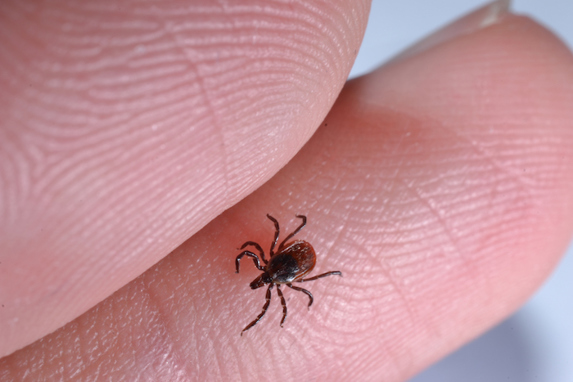
Lyme disease is transmitted to humans through the bite of infected black-legged ticks, commonly known as deer ticks. These ticks are prevalent in wooded and grassy areas, particularly in the northeastern and north-central regions of the United States. The bacterium Borrelia burgdorferi resides in the tick’s gut and is transferred to humans during feeding. (What You Need to Know About the Stages of Lyme Disease)


🔴 Appearance: The “Bull’s-Eye” Rash

Erythema migrans typically manifests as a red, expanding rash that often exhibits central clearing, giving it a characteristic “bull’s-eye” or target-like appearance. However, the rash can vary in presentation: (Lyme disease. Borrelia burgdorferi infection – DermNet)

  • Classic Bull’s-Eye: A red outer ring with central clearing.

  • Uniformly Red Lesion: A solid red patch without central clearing.

  • Multiple Lesions: In some cases, multiple EM rashes may appear, indicating disseminated infection.

The rash is usually not itchy or painful but may feel warm to the touch. It commonly appears at the site of the tick bite. (Lyme disease, [PDF] The Many Forms of Lyme Disease Rashes (Erythema Migrans) | CDC)

lyme disease bulls eye rash (source: bbc)


⏳ Timing: Appears 7–14 Days After a Tick Bite

Erythema migrans typically develops between 7 to 14 days after a tick bite, though the onset can range from 3 to 30 days. The rash expands gradually over several days and can reach up to 12 inches (30 cm) or more in diameter. Early recognition of EM is vital, as it allows for prompt treatment and reduces the risk of complications. ([PDF] The Many Forms of Lyme Disease Rashes (Erythema Migrans) | CDC, The Spectrum of Erythema Migrans in Early Lyme Disease)


⚕️ Treatment: Doxycycline or Amoxicillin

Early-stage Lyme disease, indicated by the presence of erythema migrans, is effectively treated with antibiotics. The choice of antibiotic depends on the patient’s age, pregnancy status, and other factors: (What You Need to Know About the Stages of Lyme Disease)

  • Doxycycline: 100 mg twice daily for 10–21 days; not recommended for pregnant women or children under 8 years old.

  • Amoxicillin: 500 mg three times daily for 14–21 days; suitable for pregnant women and young children.

Early treatment usually leads to a full recovery. Delays in treatment can result in the spread of the infection to joints, the heart, and the nervous system.


🧠 Additional Symptoms to Watch For

In addition to the rash, early Lyme disease may present with flu-like symptoms:

If left untreated, the infection can progress to more severe stages, leading to complications such as arthritis, neurological disorders, and cardiac issues.


🛡️ Prevention Tips

Preventing tick bites is the most effective way to avoid Lyme disease: (Lyme disease)

  • Wear long sleeves and pants when in wooded or grassy areas.

  • Use insect repellents containing DEET on skin and permethrin on clothing.

  • Perform thorough tick checks after outdoor activities.

  • Shower soon after being outdoors to wash off unattached ticks.

  • Promptly remove any attached ticks with fine-tipped tweezers.


📷 Visual Reference

For images illustrating the various presentations of erythema migrans, please refer to the Centers for Disease Control and Prevention (CDC) Lyme Disease Rashes page. These images provide valuable visual references to aid in the recognition of this early sign of Lyme disease. (Lyme Disease Rashes – CDC, The Spectrum of Erythema Migrans in Early Lyme Disease)


Early detection and treatment of erythema migrans are crucial in preventing the progression of Lyme disease. If you suspect a tick bite or notice a suspicious rash, consult a healthcare provider promptly.

Lek lagnu explained (acute mountain sickness) लेक लाग्नु भनेको के हो?

Lek Lagnu: Understanding HAPE and HACE at High Altitudes

Lek Lagnu
Table of Contents(toc)

Lek lagnu (लेक लाग्नु) is a common term in Nepali, referring to the life-threatening effects people can experience at high altitudes. While it can describe general altitude sickness, medically it often points to two severe conditions: High-Altitude Pulmonary Edema (HAPE) and High-Altitude Cerebral Edema (HACE). Both are emergencies that require immediate attention.

What is HAPE (High-Altitude Pulmonary Edema)?

HAPE is a condition where fluid collects in the lungs, making it extremely difficult to breathe. It usually occurs above 2,500 meters (8,200 feet), but it can happen at lower altitudes if a person ascends too quickly.

Symptoms of HAPE:

  • Difficulty breathing, even while resting

  • Severe coughing, sometimes with frothy or blood-tinged sputum

  • Chest tightness or congestion

  • Extreme fatigue and weakness

  • Blue or gray lips and fingernails (due to lack of oxygen)

Why does HAPE happen?
At high altitudes, the lower oxygen pressure causes the blood vessels in the lungs to constrict. In some people, this leads to leakage of fluid into the air spaces of the lungs, making breathing almost impossible.


What is HACE (High-Altitude Cerebral Edema)?

HACE is even more serious and involves swelling of the brain due to lack of oxygen. It typically happens at altitudes above 3,000 meters (about 10,000 feet) but can occur lower if ascent is too rapid.

Symptoms of HACE:

  • Severe headache that does not improve with painkillers

  • Loss of coordination (walking unsteadily)

  • Confusion, irritability, or hallucinations

  • Drowsiness that can progress to unconsciousness

  • Seizures in extreme cases

Why does HACE happen?
Reduced oxygen at high elevations causes brain blood vessels to leak fluid, leading to dangerous swelling inside the skull.


Key Differences between HAPE and HACE

Feature HAPE HACE
Main organ affected Lungs Brain
Main symptoms Breathlessness, cough Headache, confusion, poor coordination
Speed of onset Gradual but can worsen rapidly Often sudden and severe
Risk Can lead to respiratory failure Can lead to coma and death

How to Prevent Lek Lagnu (HAPE and HACE)

  • Ascend slowly: No more than 300–500 meters per day once above 3,000 meters.

  • Acclimatize properly: Rest every few days to adjust to the altitude.

  • Stay hydrated: But avoid alcohol and sleeping pills.

  • Recognize early symptoms: Never ignore headaches, breathing problems, or confusion at high altitude.

  • Descend immediately: The best and fastest treatment for HAPE and HACE is to move to a lower altitude as quickly as possible.

  • Oxygen and medication: Supplemental oxygen, and medicines like nifedipine (for HAPE) or dexamethasone (for HACE), can save lives if available.


Conclusion

Lek lagnu is not just a minor inconvenience; it can be deadly if it progresses to HAPE or HACE. Anyone trekking, climbing, or traveling to high-altitude areas like the Himalayas must be aware of the risks and take preventive measures seriously. Quick recognition, proper acclimatization, and immediate descent are the best defenses against these life-threatening conditions.

Face to Pubis delivery : What are the risk factors for it?

Medical Notes: Face to Pubis delivery : What are the risk factors for it?


Table of Contents(toc)

Which type of pelvis is associated with an increased incidence of face-to-pubis delivery?

a. Gynecoid pelvis
b. Anthropoid pelvis ✅ (Correct Answer)
c. Android pelvis
d. Platypelloid pelvis

Answer: b. Anthropoid pelvis


Solution:

Face-to-pubis delivery is most commonly associated with the Anthropoid pelvis.


Types of Pelvis:

1. Gynecoid Pelvis

  • Normal female pelvis

  • Most common type

  • Transverse diameter > Anteroposterior (AP) diameter

2. Anthropoid Pelvis

  • AP diameter > Transverse diameter

  • Face-to-pubis delivery is common

3. Android Pelvis

  • Male-type or wedge-shaped pelvis

  • All diameters reduced

  • Delayed engagement

  • Deep transverse arrest

4. Platypelloid Pelvis

  • Flat pelvis type

  • Transverse diameter > AP diameter

  • Least common type

  • Shortest diameter of pelvic inlet = Obstetric conjugate


Additional Important Points:

  • Most important diameter during labor: Interspinal diameter (of the pelvic outlet)

  • Shortest diameter of the fetal skull: Bimastoid diameter

  • Largest diameter of the fetal skull: Mento-vertical diameter

AFP Notes and MCQ (past questions)

AFP Notes and MCQ (past questions)


Table of Contents(toc)

Increase in Alpha-fetoprotein (AFP) is seen in:

a. Hepatoblastoma ✅ (Correct Answer)
b. Neuroblastoma
c. Thymoma
d. Angiosarcoma

Answer: a. Hepatoblastoma


Solution:

  • Alpha-fetoprotein (AFP) is a glycoprotein synthesized by the fetal yolk sac, fetal gastrointestinal tract, and fetal liver.

  • AFP concentration increases steadily until about 13 weeks of gestation (peak concentration in fetal plasma) and then gradually declines.

  • Peak maternal serum AFP occurs at 30–32 weeks of pregnancy.


Causes of Increased AFP:

1. Liver tumors:

  • Hepatoblastoma

  • Hepatocellular carcinoma

2. Germ cell tumors:

  • Yolk sac tumor (also known as Endodermal sinus tumor)

3. Others:

  • Neuroblastoma (Note: Can be associated but less specific compared to hepatoblastoma)


Causes of Increased Maternal Serum AFP (MSAFP):

Mnemonic: TAF-AFP

  • T: Thin pregnancy

  • A: Anencephaly

  • F: Fetal anomalies (e.g., open neural tube defects, abdominal wall defects)

Detailed list:

  • Miscalculation of gestational age (most common cause)

  • Open Neural Tube Defects (NTDs):

    • Anencephaly

    • Encephalocele

    • Spina bifida

  • Abdominal wall defects:

    • Gastroschisis

    • Omphalocele

  • Upper GI obstructions

  • Renal anomalies

  • Cystic hygroma

  • Pilonidal sinus

  • Ectodermal dysplasia

  • Aplasia cutis

  • Cystic adenomatoid malformation of the lungs

  • Multiple gestations


Causes of Decreased Amniotic Fluid AFP (AF-AFP):

  • Hydatidiform mole

  • Trisomy 21 (Down syndrome)

  • Trisomy 18 (Edwards syndrome)

  • Trisomy 13 (Patau syndrome)

  • Thin pregnancy

  • Misdated pregnancy

  • Missed abortion

Notes on Rheumatoid Arthritis for Medical Students in Short

Rheumatoid Arthritis

Table of Contents(toc)


Pathological Change

  • In Rheumatoid Arthritis (RA), the synovium becomes edematous (↑ fluid content, ↓ viscosity), leading to:

    • Thickening, then hypertrophy, and finally

    • Pannus formationhallmark of disease involving fibroblasts and small blood vessels.


General Characteristics

  • RA is a non-suppurative chronic disease.

  • Symmetrical inflammation of peripheral joints with progressive destruction of periarticular structures.

  • Associated with HLA Class II genes: HLA-DR, HLA-DQ.


Most Common Joints Affected

  • MCP of index finger > Wrist > PIP > MTP > Knee, Ankle, Shoulder, Elbow.

  • DIP joints spared (DIP joints are involved in Osteoarthritis, not RA).


Important Autoantibodies

  • Most specific: Anti-CCP antibodies.

  • Rheumatoid factor (RF): IgM antibodies directed against Fc portion of IgG.


Common Complications

  • Tendon rupture: Extensor digitorum communis (most common).

  • Eye complication: Dry eye (Sicca syndrome) — seen in ~38%.

  • Lung complication: Interstitial Lung Disease (ILD).


Characteristic Deformities

  • Z-deviation of hand:

    • Radial deviation at the wrist.

    • Ulnar deviation of fingers.

  • Swan neck deformity: Hyperextension of PIP, flexion of DIP.

  • Hill’s hiker’s thumb:

    • Extension at 1st IP joint.

    • Flexion at 1st MCP joint.

    • Loss of thumb mobility and pinch.

  • Hammer toes.


X-ray Findings

  • Juxta-articular osteopenia.

  • Bone erosions.

  • ↓ Joint space due to cartilage loss.


Syndromic Associations

  • Felty’s syndrome: Chronic RA + Splenomegaly + Neutropenia (<1500 cells/mm³).

  • Caplan’s syndrome: Pulmonary nodules + Pneumoconiosis in RA patients.


Treatment

  • First-line (DOC): Methotrexate (DMARD).

  • Best analgesic: Naproxen.

  • Biologics:

    • TNF inhibitors: Etanercept, Infliximab, Adalimumab.

    • Rituximab (anti-CD20 monoclonal antibody).


MCQ

Q. Which structure in the joint is affected earliest in Rheumatoid Arthritis?

a. Capsule
b. Articular cartilage
c. Synovium
d. Subchondral bone

Does hypothyroidism increase LDL Cholesterol, Here is New Fact about Your heart and thyroid?

Hypothyroidism and lipid profiyare closely related. Here’s ansito your question:

Yes, hypothyroidism can increase LDL (low-density lipoprotein) cholesterol levels.

Here’s why:

Thyroid hormones (mainly T3) help regulate lipid metabolism.
In hypothyroidism, low thyroid hormone levels lead to reduced LDL receptor activity in the liver.
This decreases the clearance of LDL from the bloodstream, causing elevated LDL levels.
It may also lead to increased total cholesterol and triglycerides, particularly in overt hypothyroidism.
Even subclinical hypothyroidism (normal T3/T4 but elevated TSH) can mildly increase LDL cholesterol.

Clinical relevance: 

In patients with high LDL or dyslipidemia, checking thyroid function is recommended, as treating hypothyroidism often improves lipid profiles.

antiemetic medications that can be used for nausea and vomiting in pregnancy (NVP)

Here’s a list of antiemetic medications that can be used for nausea and vomiting in pregnancy (NVP), typically in order of preference and safety:

First-line

1. Pyridoxine (Vitamin B6)
2. Doxylamine + Pyridoxine (e.g., Diclegis, Bonjesta) – FDA-approved combo for NVP

Second-line

3. Promethazine – Antihistamine with sedative effects
4. Dimenhydrinate – Antihistamine, often used for motion sickness
5. Diphenhydramine – Antihistamine, also helps with sleep
6. Meclizine – Another antihistamine safe in pregnancy

Third-line

7. Metoclopramide – Prokinetic agent; can cause extrapyramidal side effects
8. Ondansetron (Zofran) – Commonly used, some controversy over first trimester use but still widely prescribed

Others (used cautiously or in severe cases)

9. Prochlorperazine – Dopamine antagonist
10. Chlorpromazine – Older phenothiazine; more side effects
11. Trimethobenzamide – Less commonly used
Always tailor treatment to severity (mild, moderate, severe/Hyperemesis Gravidarum), and consider hydration/nutrition support if severe.
Exit mobile version