EoNNS vs LoNNS : A detailed Comparison For MD Pediatrics

Early-Onset Neonatal Sepsis (EONNS)

Table of Contents(toc)
eonns vs lonns

Early-Onset Neonatal Sepsis refers to systemic infection occurring within the first 72 hours of life (some definitions extend up to 7 days in term neonates). It is a medical emergency characterized by a rapid progression from nonspecific signs to septic shock, multi-organ dysfunction, and death if not promptly treated.

The pathogenesis is primarily linked to vertical transmission of microorganisms from mother to infant, either intrauterine (transplacental hematogenous spread) or intrapartum (ascending infection from the genital tract during labor or delivery). Infection often develops after rupture of membranes, especially when prolonged (>18 hours), or in the setting of maternal fever, chorioamnionitis, or Group B Streptococcus (GBS) colonization.

Globally, EONNS remains a significant contributor to neonatal morbidity and mortality, particularly in low- and middle-income countries, where rates are higher due to limited access to intrapartum prophylaxis, delays in recognition, and suboptimal infection control during delivery. Mortality is highest in very low birth weight (VLBW) and preterm infants, where the immature immune system and compromised skin/mucosal barriers amplify vulnerability.

The microbiological profile varies by region. In high-income settings, GBS and Escherichia coli dominate, whereas in many developing countries, Gram-negative bacilli such as Klebsiella pneumoniae are increasingly prevalent. Importantly, EONNS often presents with respiratory distress, apnea, temperature instability, and lethargy, sometimes within minutes of birth.

Prompt diagnosis relies on high clinical suspicion, early blood cultures, and sepsis screening, followed by empiric antibiotic therapy (usually ampicillin plus gentamicin) while awaiting culture confirmation. Prevention strategies — especially maternal GBS screening and intrapartum antibiotic prophylaxis — have markedly reduced incidence in settings where implemented.


Late-Onset Neonatal Sepsis (LONNS)

Late-Onset Neonatal Sepsis refers to systemic infection occurring after 72 hours of life (or after 7 days in some term-based definitions) up to 28 days of age in term infants, and up to 44 weeks corrected gestational age in preterm infants. Unlike EONNS, its etiology is dominated by horizontal transmission of pathogens, often acquired in the hospital environment (nosocomial) or from community contacts after discharge.

LONNS frequently affects preterm and critically ill neonates in the neonatal intensive care unit (NICU), where prolonged hospitalization, mechanical ventilation, invasive procedures, and parenteral nutrition predispose to infection. Biofilm-forming organisms such as coagulase-negative staphylococci (CONS) exploit indwelling central venous catheters, while Gram-negative bacilli and fungi such as Candida spp. cause severe systemic illness, especially in extremely low birth weight (ELBW) infants.

Clinically, LONNS may have a more insidious onset than EONNS, often manifesting as apnea/bradycardia spells, feeding intolerance, abdominal distension, or subtle changes in behavior or perfusion. However, fulminant septic shock can occur, particularly in S. aureus, Klebsiella, or Pseudomonas infections. Meningitis is proportionally more common in LONNS due to delayed recognition and sustained bacteremia.

The microbial spectrum varies with hospital ecology, antibiotic use patterns, and infection control practices. In resource-limited settings, multidrug-resistant Gram-negative pathogens are a major concern, complicating empiric therapy. Common empiric regimens include vancomycin plus an aminoglycoside or ceftazidime/meropenem, tailored to local antibiograms.

Prevention of LONNS hinges on rigorous infection control measures: meticulous hand hygiene, bundle-based catheter care, minimizing unnecessary invasive devices, strict aseptic preparation of parenteral nutrition, and antimicrobial stewardship. While mortality in term infants is lower than in EONNS, LONNS remains a major cause of prolonged NICU stay, chronic lung disease, neurodevelopmental impairment, and death in preterm survivors.


Comparison Table – EONNS vs LONNS

Feature Early-Onset Neonatal Sepsis (EONNS) Late-Onset Neonatal Sepsis (LONNS)
Definition Sepsis occurring within ≤72 hours of birth (some use ≤7 days in term, ≤72h in preterm) Sepsis occurring after 72 hours (some use >7 days in term, >72h in preterm)
Primary Source of Infection Vertical transmission from mother (intrauterine or intrapartum) Horizontal transmission from environment, caregivers, or nosocomial sources
Mode of Transmission Ascending infection after rupture of membranes, transplacental spread, exposure during passage through birth canal Direct contact with infected personnel, contaminated equipment, invasive procedures
Common Risk Factors – Maternal chorioamnionitis- Prolonged rupture of membranes (>18 h)- Maternal fever during labor- Preterm birth- GBS colonization- Low Apgar score – Prolonged NICU stay- Indwelling central lines- Mechanical ventilation- Total parenteral nutrition (TPN)- Surgery- Cross-infection in NICU
Typical Pathogens Term: Group B Streptococcus (GBS), E. coli, Listeria monocytogenes, Klebsiella, EnterococcusPreterm/NICU: Gram-negative bacilli (GNB), GBS Gram-positive: Coagulase-negative staphylococci (CONS), S. aureusGram-negative: Klebsiella, E. coli, Pseudomonas, EnterobacterFungal: Candida spp. (esp. in VLBW on TPN)
Clinical Presentation Rapid onset within first hours–days: respiratory distress, apnea, temperature instability, poor perfusion, hypotension, lethargy, seizures More indolent onset: apnea/bradycardia spells, feeding intolerance, abdominal distension, lethargy, temperature instability, sepsis signs
CSF Findings (if meningitis) Often presents concurrently with sepsis; E. coli, GBS common More frequent with CONS, S. aureus, Candida; may follow prolonged bacteremia
Diagnosis Blood culture before antibiotics, CBC, CRP/PCT, chest X-ray, LP (if stable) Same work-up; consider line cultures, urine culture (rare in EONNS but important in LONNS)
Empiric Antibiotics Ampicillin + Gentamicin (covers GBS, Listeria, Gram-negatives) Vancomycin (for MRSA/CONS) + Gentamicin or Ceftazidime/Meropenem (GNB coverage; local antibiogram guided)
Prognosis High mortality & morbidity if not promptly treated; increased risk of neurodevelopmental impairment in survivors Lower acute mortality in term babies but significant morbidity in preterm/VLBW; risk of prolonged hospitalization
Prevention – Maternal GBS screening & intrapartum prophylaxis- Aseptic delivery- Prompt management of PROM & maternal infections – Strict hand hygiene- Minimal handling- Limiting invasive procedures- Bundle care for central lines & ventilation

Notes on Early & Late Onset Neonatal Sepsis

1. Definition

  • Neonatal sepsis: Clinical syndrome of systemic illness accompanied by bacteremia in the first 28 days of life.

  • EONNS: ≤72 hours (some guidelines use ≤7 days in term).

  • LONNS: >72 hours (or >7 days in term) up to 28 days (in preterm, up to 44 weeks corrected age).


2. Pathophysiology

  • EONNS:

    • Infection is acquired intrauterine (transplacental hematogenous spread) or intrapartum (ascending infection from vagina after rupture of membranes).

    • Pathogens invade amniotic fluid → fetus aspirates/swallow infected fluid → hematogenous spread.

  • LONNS:

    • Mainly nosocomial or community-acquired after birth.

    • Immature neonatal immune system + invasive devices = high susceptibility.

    • Biofilm-forming organisms (e.g., CONS) on catheters are key in pathogenesis.


3. Risk Factors

EONNS:

  • PROM >18 hrs

  • Maternal fever during labor (>38°C)

  • Chorioamnionitis

  • GBS colonization without prophylaxis

  • Preterm (<37 wks)

  • Meconium-stained liquor

  • Low Apgar (<6 at 5 min)

LONNS:

  • Prolonged NICU stay

  • Invasive devices: ET tubes, central lines

  • Surgery, necrotizing enterocolitis

  • Poor infection control

  • Broad-spectrum antibiotic exposure


4. Microbiology

  • EONNS (classic teaching):

    • GBS (Streptococcus agalactiae) – most common in term

    • E. coli – more common in preterm, high mortality

    • Listeria monocytogenes – rare but important in unpasteurized dairy exposure

    • Others: Klebsiella, Enterococcus

  • LONNS:

    • CONS – esp. in VLBW with catheters

    • S. aureus (MRSA possible)

    • Gram-negatives: Klebsiella, Pseudomonas, Acinetobacter

    • Candida albicans / C. parapsilosis


5. Clinical Features

  • Non-specific signs — must have high suspicion.

  • EONNS often presents with:

    • Respiratory distress (pneumonia common)

    • Apnea, cyanosis

    • Poor feeding, lethargy

    • Hypotension, poor perfusion

    • Seizures

  • LONNS:

    • Feeding intolerance, abdominal distension

    • Apnea/bradycardia spells

    • Temperature instability

    • Signs of meningitis or NEC


6. Investigations

  • Blood culture (gold standard)

  • CBC: leukopenia/leukocytosis, thrombocytopenia

  • CRP, procalcitonin (serial trends helpful)

  • CSF analysis & culture (unless unstable)

  • Chest X-ray if respiratory distress

  • In LONNS: line tip cultures, urine cultures


7. Management

Empirical therapy:

  • EONNS: Ampicillin + Gentamicin
    (Cefotaxime can replace gentamicin if meningitis suspected & renal issues, but avoid routine use due to resistance)

  • LONNS: Vancomycin + Aminoglycoside / Antipseudomonal β-lactam
    (Meropenem in multi-drug resistant GNB suspicion; guided by antibiogram)

Supportive care:

  • Maintain oxygenation & perfusion

  • Correct hypoglycemia

  • Treat coagulopathy

  • Restrict fluid in shock


8. Prognosis

  • EONNS mortality: 5–50% (higher in preterm, GNB infections)

  • LONNS: Mortality lower in term, but significant in VLBW; survivors risk bronchopulmonary dysplasia, neurodevelopmental delay.


9. Prevention

  • EONNS: Maternal GBS screening (35–37 weeks), intrapartum antibiotics, clean delivery, timely rupture-to-delivery interval.

  • LONNS: Hand hygiene, equipment sterilization, catheter bundles, antimicrobial stewardship.

Medical Officer Loksewa Model Questions 2082

Medical Officer – Lok Sewa Aayog (Public Service Commission)

Position: मेडिकल अधिकृत (Medical Officer)
Grade: Eighth Level
Service: Nepal Health Service – General Health Services Group


Exam Overview

The Eighth Level Open Competitive Examination for the Medical Officer position in the General Health Services Group is conducted in two phases:

  1. First Phase – Written Examination

    • Full Marks: 200

    • Pass Marks: 40% in each paper

    • Language: Nepali, English, or both

    • Papers:

      • Paper I: General Health Services (MCQs) – 100 Marks

      • Paper II: General Health Services (Subjective) – 100 Marks

  2. Second Phase – Group Test & Interview

    • Full Marks: 40 (10 for Group Discussion, 30 for Interview)


First Phase – Written Examination

Paper I: General Health Services (MCQs)

  • Marks: 100

  • Duration: 1 hr 15 min

  • Negative Marking: 20% deduction for each wrong answer; no deduction for unanswered questions

  • No calculators allowed

Paper II: General Health Services (Subjective)

  • Marks: 100

  • Duration: 3 hrs

  • Questions may be a single 10-mark question, multi-part questions, or short notes.

  • Separate answer booklets for each section must be used.


Second Phase – Group Test & Interview

Group Discussion

  • Marks: 10

  • Duration: 30 minutes

  • Format: Leaderless Group Discussion on a given topic

  • Includes turn-by-turn discussion and an individual presentation.

  • Evaluation Committee:

    • PSC Member – Chairperson

    • PSC Member – Member

    • Psychologist – Member

    • Subject Expert – Member

Interview

  • Marks: 30


Vacancy Fulfillment

  • Open Competition: 55% of total posts

  • Reserved Quotas (45%):

    • Women – 33%

    • Indigenous/Janajati – 27%

    • Madhesi – 22%

    • Dalit – 9%

    • Persons with Disabilities – 5%

    • Candidates from Backward Regions – 4%


Eligibility

Education

  • MBBS or equivalent from a recognized institution.

Age Limit

  • Minimum: 21 years

  • Maximum: 45 years (special provision under Health Service Group)

  • No age limit for permanent government employees.


Syllabus Summary

The syllabus covers General Health Services topics across multiple medical disciplines.
Both Paper I (MCQ) and Paper II (Subjective) will use the same syllabus.


Section A – General Medicine (30 Marks)

  • Respiratory Diseases (e.g., Acute Bronchitis, COPD, TB, SARS, Bird Flu)

  • Cardiovascular Diseases (e.g., Rheumatic Fever, IHD, Myocardial Infarction)

  • Gastrointestinal Diseases (e.g., Peptic Ulcer, Cirrhosis, Hepatitis)

  • Blood & Lymphoreticular Disorders (e.g., Anaemia, Leukemia)

  • Neurological Disorders (e.g., Stroke, Epilepsy, Meningitis)

  • Endocrine & Metabolic Disorders (e.g., Diabetes, Thyroid Disorders)

  • Joint & Collagen Disorders (e.g., RA, Osteoarthritis, SLE)

  • Renal Diseases (e.g., UTI, Renal Failure, Kidney Transplant)

  • Tropical Diseases (e.g., Malaria, Cholera, Leprosy)

  • Psychiatry (e.g., Anxiety, Depression, Substance Abuse)

  • Dermatology & STDs

  • Pharmacology (drug actions, poison management, special prescribing)

  • Emergency Medicine (acute care, trauma, shock management)


Section B – Surgery, Ophthalmology, ENT, Dental, Orthopedics, Anesthesiology, Pathology (30 Marks)

  • General Surgery (e.g., Hernia, Burns, Gallstones)

  • Ophthalmology (e.g., Cataract, Glaucoma, Trachoma)

  • ENT (e.g., Otitis Media, Sinusitis, Tonsillitis)

  • Dental (e.g., Caries, Oral Cancer)

  • Orthopedics & Joint Diseases

  • Anesthesiology & Emergency Care

  • Pathology (lab interpretation, disease pathology)


Section C – Obstetrics & Gynecology, Pediatrics (20 Marks)

  • Antenatal, Natal, Postnatal Care

  • Pregnancy Complications (e.g., Eclampsia, Obstructed Labour)

  • Childhood Diseases (e.g., ARI, Measles, Malnutrition)


Section D – Community Medicine & Forensic Medicine (20 Marks)

  • Demography, Sociology, Epidemiology, Health Education

  • Nutrition & Health

  • RH, EPI, IMCI, School Health, Occupational Health

  • Forensic Medicine & Jurisprudence (legal aspects, post-mortem, ethics)

  • Health-related Acts & Policies


Past Question Examples

MCQs:

  1. Quadrant for myringotomy in acute otitis media – D) Posterioinferior

  2. First imaging in acute abdomen – A) Plain X-ray Abdomen

  3. All true about pressure sores except – C) Caused by injury

  4. Ringer lactate contains all except – C) Bicarbonate

  5. Live vaccines are used for – C) Mumps, Measles, Rubella

  6. In HIV infection, transmission can occur via breast milk – C) True

Subjective Samples:

  • Describe full form of HIV and AIDS, and routes of transmission.

  • Management of epistaxis in a primary health care centre.

  • Steps to reduce maternal mortality in Nepal.

Group Discussion Topics (Examples):

  • Energy Crisis

  • Poverty Reduction

  • Health Insurance

  • Food Security

  • Brain Drain

Here’s How to Convert Regular ORS into ReSoMal (How to Prepare ReSoMal from Standard WHO ORS for Severe Malnutrition)

Introduction

Severe acute malnutrition (SAM) complicates fluid and electrolyte balance, necessitating a specialized rehydration solution. ReSoMal—short for Rehydration Solution for Malnutrition—has lower sodium and higher potassium, plus added minerals like magnesium, zinc, and copper, making it safer for rehydration in SAM cases. It must be administered under medical supervision in therapeutic centers and is not for general use or for children with cholera.

Composition of WHO low osmolarity ORS

ComponentAmount per Liter (g)Concentration (mmol/L)Osmolarity Contribution (mOsm/L)
Sodium chloride2.6 gNa⁺ 75 mmol Cl⁻ 65 mmol75 + 65 = 140
Glucose anhydrous13.5 g75 mmol75
Potassium chloride1.5 gK⁺ 20 mmol Cl⁻ 20 mmol20 + 20 = 40
Trisodium citrate dihydrate2.9 gCitrate³⁻ 10 mmol Na⁺ 30 mmol10 + 30 = 40
Total Osmolarity21.5 g245 mOsm/L

WHO low osmolarity ORS


Step-by-Step Guide: Preparing ReSoMal from Regular WHO ORS

Ingredients Needed (per 2 liters):

  • Boiled & cooled water: 2 liters

  • 1 packet of WHO low-osmolar ORS (approx. 1-liter packet)

  • Sucrose (table sugar): 50 g

  • Concentrated electrolyte/mineral solution: 40 ml (optional; else use potassium chloride stock)


Preparation Instructions:

  1. Mix the Water & ORS Packet
    Dissolve one WHO low-osmolar ORS packet in ~2 liters of clean, cooled water.

  2. Add Sugar
    Stir in 50 g of sucrose (about 2 heaped tablespoons) to increase energy and glucose content.

  3. Add Mineral Solution (if available)

    • Ideally, add 40 ml of electrolyte/mineral solution—it contains potassium, magnesium, zinc, copper, and other trace minerals.

    • If unavailable, substitute with 45 ml of potassium chloride (KCl) stock—prepared by dissolving 100 g KCl in 1 liter of water.

  4. Administer with Caution

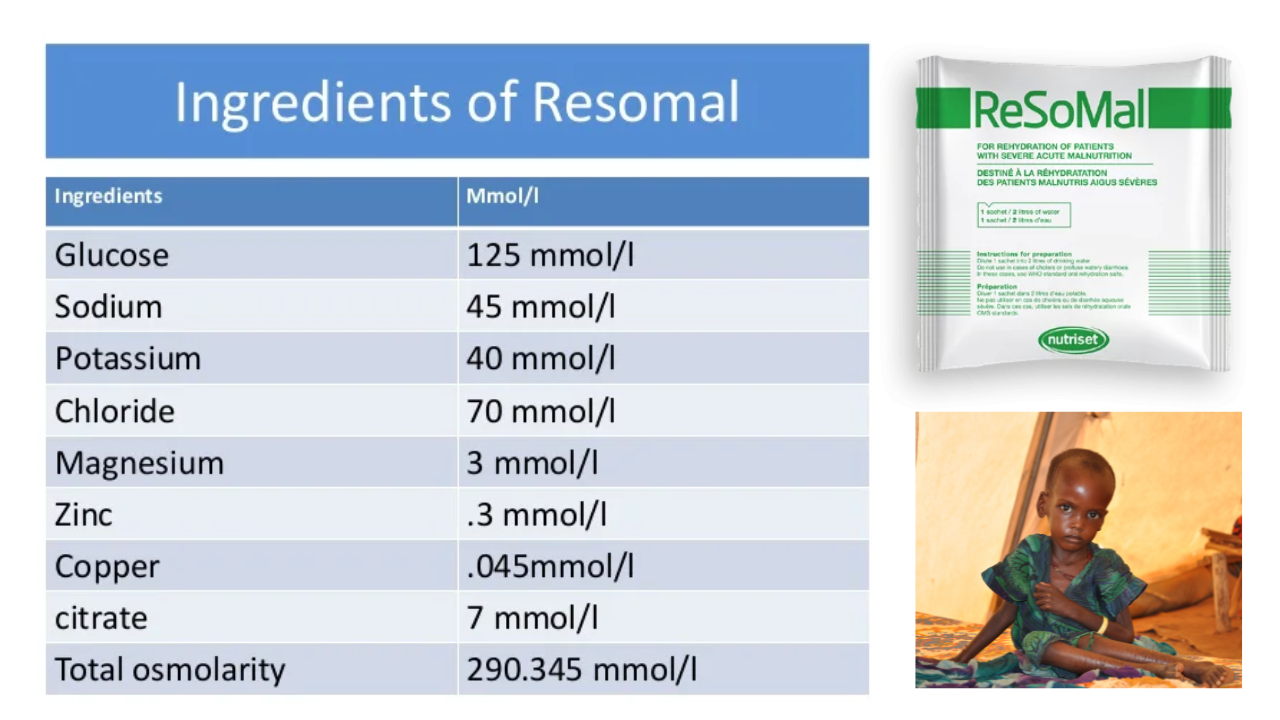
    • ReSoMal contains approximately 45 mmol sodium, 40 mmol potassium, and 3 mmol magnesium per liter.

    • Follow medical protocols: typical administration is around 5–10 ml per kg per hour, depending on the child’s condition.

    • Monitor closely for signs of overhydration—rapid weight gain, elevated respiratory or pulse rates, or peripheral edema—and pause treatment if they appear.


Why not use regular ORS?

  • Standard ORS has higher sodium and insufficient potassium for SAM, potentially risking fluid overload and undercorrected hypokalemia.

  • ReSoMal is tailored to reduce these risks—but it may still cause hyponatremia, so careful monitoring is essential.

  • It’s contraindicated in cases of cholera or profuse watery diarrhea, where standard WHO ORS is recommended instead.


Composition of ReSoMal (WHO formulation for severe malnutrition)

Component Amount per Liter (g) Concentration (mmol/L) Osmolarity Contribution (mOsm/L)
Sodium chloride 1.5 g Na⁺ 45 mmol Cl⁻ 37 mmol 45 + 37 = 82
Glucose anhydrous 25 g 139 mmol 139
Potassium chloride 3.5 g K⁺ 40 mmol Cl⁻ 40 mmol 40 + 40 = 80
Magnesium chloride 0.3 g Mg²⁺ 3 mmol Cl⁻ 6 mmol 3 + 6 = 9
Zinc acetate 0.03 g Zn²⁺ 0.3 mmol 0.3
Copper sulphate 0.003 g Cu²⁺ 0.05 mmol 0.05
Trisodium citrate dihydrate 0.6 g Citrate³⁻ 7 mmol Na⁺ 21 mmol 7 + 21 = 28
Total Osmolarity 300 mOsm/L

WHO recommended ReSoMal

Summary Table

ItemDetails
PurposeRehydration for children with severe acute malnutrition (SAM)
Base IngredientsWHO ORS packet, water, sugar, optional electrolyte solution
Substitution OptionUse KCl stock if mineral blend isn’t available
AdministrationSlow and monitored—5-10 ml/kg/hour or as per protocol
Key WarningsNot for cholera; risk of overhydration and hyponatremia

Summary and Conclusion

ReSoMal is a life-saving adaptation of ORS for malnourished children—but it’s delicate medicine. Always follow WHO protocols and local medical guidelines, and never administer without proper training and monitoring.

Erbs palsy possible MCQ and answer explained

Erbs palsy possible MCQ and answer explained

The image provided shows a newborn child with a characteristic position of the right upper limb. 

The arm appears to be adducted and internally rotated at the shoulder, with the forearm extended and pronated. This posture is suggestive of a birth-related brachial plexus injury.

Considering the typical clinical presentations of the options provided:

Klumpke’s paralysis: 

This affects the lower roots of the brachial plexus (C8-T1), leading to weakness or paralysis of the forearm and hand muscles, often presenting with a claw hand deformity. It doesn’t match the position seen in the image.

Erb’s palsy: 

This is an injury to the upper roots of the brachial plexus (C5-C6, and sometimes C7), which typically presents with the arm hanging by the side and rotated medially, with the forearm extended and pronated – a position known as “waiter’s tip.” 
This condition closely matches the posture seen in the image.

Long thoracic nerve palsy: 

This would primarily affect the serratus anterior muscle, leading to “winged scapula” but wouldn’t cause the arm positioning depicted in the image.

Thoracic outlet syndrome: 

This is highly unlikely in a newborn, as it generally results from compression of the brachial plexus or subclavian vessels in the area between the base of the neck and the armpit, seen in older patients.

Given the posture of the arm and the typical presentation of these conditions, Erb’s palsy

(B) is the most likely diagnosis. 

This condition is commonly associated with birth trauma, particularly in deliveries involving shoulder dystocia

Conn Disease vs Primary Adrenal Insufficiency Explained

Cushing Syndrome (Excess Cortisol)

Understanding Hormonal Disorders and Electrolyte Imbalances

Certain endocrine disorders can significantly alter the balance of sodium (Na⁺) and potassium (K⁺) in the body, leading to characteristic clinical presentations. Here, we examine three important conditions—Conn’s disease, Addison’s disease, and Cushing syndrome—and their effects on electrolyte regulation.

Q. Which of the following conditions is most likely to present with increased sodium (↑ Na⁺) and decreased potassium (↓ K⁺)?

a) Addison’s disease

b) Conn’s disease

c) Cushing syndrome

d) All of the aboveConn’s Disease (Primary Hyperaldosteronism)

Conn’s disease is caused by excessive secretion of aldosterone, a hormone that promotes sodium reabsorption and potassium excretion in the kidneys. This hormonal excess leads to:

  • ↑ Na⁺ (hypernatremia) due to sodium retention

  • ↓ K⁺ (hypokalemia) due to increased potassium loss

  • Resulting clinical features: hypertension and muscle weakness from hypokalemia

Because both increased sodium and decreased potassium occur, Conn’s disease perfectly fits the profile for this electrolyte change.

conn disease

Addison’s Disease (Primary Adrenal Insufficiency)

Addison’s disease is characterized by insufficient production of both aldosterone and cortisol. This deficiency results in:

  • ↓ Na⁺ (hyponatremia) due to reduced sodium reabsorption

  • ↑ K⁺ (hyperkalemia) due to impaired potassium excretion

  • Associated symptoms: low blood pressure, fatigue, and skin hyperpigmentation

Since sodium is low and potassium is high, Addison’s disease does not match the criteria for increased Na⁺ and decreased K⁺.

adrenal insufficiency

Cushing Syndrome (Excess Cortisol)

Cushing syndrome is caused by prolonged exposure to elevated cortisol levels. While cortisol primarily affects glucose metabolism, it can have mineralocorticoid-like effects in certain situations, leading to:

  • Mild sodium retention

  • Hypertension

  • Potassium levels typically remain normal, unless there is marked mineralocorticoid activity (as seen in ectopic ACTH production)

Cushing Syndrome (Excess Cortisol)

Thus, Cushing syndrome generally does not cause the significant hypokalemia seen in Conn’s disease.


Summary: Who Fits the Criteria?

The combination of increased sodium (↑ Na⁺) and decreased potassium (↓ K⁺) is a hallmark of Conn’s disease. Addison’s disease produces the opposite electrolyte pattern, and Cushing syndrome rarely causes a significant drop in potassium unless in special cases.

Correct answer: b) Conn’s disease

Condition Hormone Change Sodium (Na⁺) Potassium (K⁺) Blood Pressure Key Notes
Conn’s Disease (Primary Hyperaldosteronism) ↑ Aldosterone ↑ (Retention) ↓ (Excretion) ↑ (Hypertension) Classic ↑ Na⁺ + ↓ K⁺ pattern
Addison’s Disease (Primary Adrenal Insufficiency) ↓ Aldosterone & ↓ Cortisol ↓ (Loss) ↑ (Retention) ↓ (Hypotension) Opposite pattern to Conn’s
Cushing Syndrome (Excess Cortisol) ↑ Cortisol ↑ (Mild retention) Usually Normal (↓ only if excess mineralocorticoid effect) ↑ (Hypertension) Hypokalemia uncommon unless ectopic ACTH

Some Important signs and Names in Medical sciences

Important signs and Names in Medical sciences

Table of Contents (toc)
contrast findings and names

Here are some important signs and names in medical science grouped by domain.

Medical Imaging / Pathology Descriptions

  • Bird beak appearance – tapering of the distal esophagus (achalasia)

  • Ground-glass opacity – hazy lung opacity resembling frosted glass

  • Onion-skin appearance – concentric layering seen in some bone lesions or vessel walls

  • Honeycomb lung – clustered cystic air spaces in lung fibrosis

  • Double bubble sign – two adjacent fluid-filled structures on abdominal imaging (duodenal atresia)

  • Sunburst appearance – radiating spicules from a central lesion (osteosarcoma)

  • Apple core lesion – constricted, irregular narrowing of the colon (colon cancer)

  • Popcorn calcification – coarse, lobulated calcifications (pulmonary hamartoma)

  • Eggshell calcification – thin rim of calcification around lymph nodes

  • String sign – thin stream of contrast through a narrowed bowel segment (Crohn’s disease)


Microscopy / Lab Descriptions

  • Spaghetti and meatballs appearance – Malassezia yeast and hyphae mix on KOH prep

  • Starry-sky appearance – lymph node histology in Burkitt lymphoma

  • Owl’s eye appearance – CMV-infected cells

  • Coffee bean nuclei – groove-like nuclear indentations in ovarian granulosa cells

  • Crushed glass appearance – cytoplasm in certain hepatitis cases


Dermatology / Physical Exam

  • Butterfly rash – malar rash in lupus erythematosus

  • Cobblestone mucosa – mucosal swelling pattern (Crohn’s disease)

  • Strawberry tongue – erythematous tongue with enlarged papillae (scarlet fever, Kawasaki disease)

  • Target lesion – concentric rings as in erythema multiforme

  • Auspitz sign – pinpoint bleeding spots when psoriasis scales are removed

Important Points in Renal System

Important Point for Diagnosis of Renal pathologies

Cross section of kidney

Urinary Findings & Associated Diseases

S/No. Disease Key Finding in Urine
1 Acute Pyelonephritis WBC casts in urine
2 Acute Cystitis WBCs in urine
3 Glomerulonephritis RBC casts in urine
4 Bladder Carcinoma RBCs in urine
5 Chronic End-stage Renal Disease Waxy casts

Glomerular Diseases & Key Findings

S/No. Disease Key Finding
1 IgA Nephropathy (Berger’s Disease) Cola or tea-colored urine
2 Type-1 MPGN, SLE Nephritis Mesangial electron-dense deposit
3 Type-2 MPGN Intramembranous deposit
4 Goodpasture Syndrome Anti-GBM antibody
5 Post-streptococcal GN Sub-epithelial humps
6 Membranous Glomerulopathy Sub-epithelial deposit
7 Minimal Change Disease Effacement of foot processes of podocytes
8 Goodpasture Syndrome Hemoptysis + Hematuria
9 Alport Syndrome Deafness + Hematuria
10 Wegener’s Granulomatosis Sinusitis + Hemoptysis + Hematuria

High-Yield Nephrology Points

  • IgA Nephropathy (Berger’s Disease) → Most common cause of nephritic syndrome

  • Focal Segmental Glomerulosclerosis (FSGS) → Most common cause of nephrotic syndrome in adults

  • Minimal Change Disease → Most common cause of nephrotic syndrome in children

General High-Yield Nephrology Facts

  • IgA Nephropathy (Berger’s disease) → Most common cause of nephritic syndrome worldwide.
  • Post-streptococcal glomerulonephritis → Most common cause of nephritic syndrome in children.
  • Minimal Change Disease (MCD) → Most common cause of nephrotic syndrome in children; responds dramatically to steroids.
  • Focal Segmental Glomerulosclerosis (FSGS) → Most common cause of nephrotic syndrome in adults (especially in African descent and HIV patients).
  • Membranous Nephropathy → Most common cause of nephrotic syndrome in white adults; associated with HBV, HCV, SLE, malignancy.
  • Diabetic Nephropathy → Most common cause of end-stage renal disease in developed countries.
  • Amyloidosis → Nephrotic-range proteinuria; Congo red positive, apple-green birefringence.

Characteristic Urinary Cast Associations

  • RBC casts → Glomerulonephritis, vasculitis.
  • WBC casts → Pyelonephritis, interstitial nephritis.
  • Granular (muddy brown) casts → Acute tubular necrosis (ATN).
  • Waxy casts → Chronic kidney disease, ESRD.
  • Fatty casts (Maltese cross appearance) → Nephrotic syndrome.
  • Hyaline casts → Nonspecific; can be normal in dehydration or exercise.

Classic Triads & Syndromic Associations

  • Goodpasture Syndrome → Hemoptysis + Hematuria + Anti-GBM antibodies.
  • Alport Syndrome → Hematuria + Sensorineural deafness + Ocular defects; “basket-weave” GBM on EM.
  • Wegener’s (Granulomatosis with polyangiitis) → Sinusitis + Hemoptysis + Hematuria; c-ANCA positive.
  • Microscopic Polyangiitis → Hemoptysis + Hematuria; p-ANCA positive; no granulomas.

Special Histopathology & EM Findings

  • Minimal Change Disease → Effacement of podocyte foot processes.
  • FSGS → Segmental sclerosis & hyalinosis.
  • Membranous Nephropathy → Spike-and-dome appearance on silver stain; subepithelial deposits.
  • Post-streptococcal GN → Lumpy-bumpy (granular) deposits; subepithelial humps.
  • MPGN Type 1 → Subendothelial deposits; tram-track GBM splitting.
  • MPGN Type 2 (Dense Deposit Disease) → Intramembranous dense deposits.
  • Lupus Nephritis → Wire-loop capillaries; full-house immunofluorescence (IgG, IgA, IgM, C3, C1q).

Other Must-Know Nephrology Facts

  • Hyperkalemia in CKD is often worsened by ACE inhibitors, ARBs, potassium-sparing diuretics, and NSAIDs.
  • Nephrotic syndrome → Hypercoagulable state due to loss of antithrombin III in urine.
  • Nephritic syndrome → Usually due to immune-mediated GBM damage with inflammation.
  • RPGN (Crescentic GN) → Rapidly progressive renal failure; crescents on light microscopy; poor prognosis without aggressive therapy.
  • ADPKD → Associated with berry aneurysms, hepatic cysts, and mitral valve prolapse.
  • ARPKD → Associated with Potter sequence and congenital hepatic fibrosis.

Sebaceous cyst MCQ and important points

MCQ For Discussion on Sebaceous cyst

A cystic swelling with a punctum is likely to be:

a. Lipoma

b. Dermoid

c. Neurofibroma

d. Sebaceous cyst

Answer: d


Solution

  • A cystic swelling with a punctum is a sebaceous cyst.


Classification of Cysts

A. Congenital

  • Dermoids

  • Thyroglossal cysts

  • Urachal cysts

B. Acquired

  • Retention cysts → Sebaceous cysts, Bartholin cysts, parotid/breast cysts, ranula

  • Distention cysts → Colloid goiter, ovarian cysts, lymph cysts

  • Exudation cysts → Hydrocele

C. False cysts (no epithelial lining)

  • Pseudocyst of pancreas

  • Hematoma

  • Plunging ranula


Notes on Ranula

  • Ranula: Retention cyst due to obstruction of salivary glands

  • Plunging ranula: Extravasation cyst due to obstruction and rupture of sublingual salivary glands

sebaceous cyst

Swellings that are brilliantly transilluminant

  • Ranula

  • Cystic hygroma & lymph cyst

  • Primary hydrocele

  • Epididymal cyst

  • Meningocele


Swellings that are cross-fluctuant

  • Psoas abscess

  • Bilocular hydrocele

  • Plunging ranula

  • Compound ganglion of palm

Anesthetic Agents of Choice in Different Conditions

General anesthesia choices and Contraindications in Several Conditions

Selecting appropriate anesthetic agents is crucial for optimizing patient outcomes and minimizing risks. Below is a list of preferred anesthetic agents for various medical conditions, along with contraindications associated with specific diseases. This information is based on current medical guidelines and literature.

General Anesthesia

Anesthetic Agents of Choice in Different Conditions:

  1. General Anesthesia:

    • Propofol: Commonly used for induction and maintenance due to its rapid onset and short duration.
      Etomidate: Preferred in patients with cardiovascular instability because it has minimal effects on heart function.

    • Ketamine: Suitable for patients at risk of hypotension and bronchospasm, as it maintains airway reflexes and has analgesic properties.

  2. Procedural Sedation and Analgesia (PSA):
  • Midazolam: Used for its anxiolytic and amnestic effects; often combined with analgesics like fentanyl.
  • Dexmedetomidine: Provides sedation with minimal respiratory depression, beneficial in specific procedural settings.
  • Total Intravenous Anesthesia (TIVA):
    • Propofol: Commonly used due to its favorable recovery profile and antiemetic properties.
  • Local Anesthesia:

    • Lidocaine: Widely used for minor surgical procedures and dental work.
    • Bupivacaine: Preferred for longer-duration anesthesia, such as in epidural blocks.
  • Regional Anesthesia:

    • Epidural Block: Commonly used for labor pain management and surgeries involving the pelvis and lower limbs.
      Spinal Block: Often utilized for cesarean sections and lower abdominal surgeries.

  • Contraindications of Anesthetic Agents in Various Diseases:

      1. Propofol:
        1. Cardiac Disease: May cause hypotension; use with caution in patients with compromised cardiac function.
      1. Etomidate:
        1. Adrenal Insufficiency: Can suppress adrenal steroidogenesis; avoid in patients with known adrenal insufficiency.
      2. Ketamine:
        1. Elevated Intracranial Pressure: May increase intracranial pressure; use with caution in patients with head injuries.
        2. Schizophrenia: Can exacerbate psychotic symptoms; contraindicated in patients with schizophrenia
      3. Midazolam:
        1. Severe Respiratory Depression: Can further depress respiration; avoid in patients with severe respiratory insufficiency.
      4. Local Anesthetics (e.g., Lidocaine, Bupivacaine):
        1. Allergy to Local Anesthetics: True allergic reactions are rare but possible; avoid in patients with known allergies to specific local anesthetics.
        2. Methemoglobinemia: Agents like prilocaine can induce methemoglobinemia; avoid in patients with this condition.
      5. Epidural and Spinal Anesthesia:
        1. Coagulopathy: Increased risk of hematoma formation; contraindicated in patients with bleeding disorders.
        2. Severe Hypovolemia: Can lead to cardiovascular collapse; avoid in patients with significant hypovolemia.

    10 steps of management of Malnutrition: Complications, Assessment, and Prevention

    Malnutrition: Complications, Assessment, and Prevention

    Malnutrition is a serious public health concern affecting individuals of all ages, particularly children in low-resource settings. It can lead to both acute and chronic complications, impacting survival, growth, and overall health.

    Acute Complications of Malnutrition

    A helpful mnemonic for remembering the main acute complications is “Shieldeded”:

    1. Sugar deficiency / Hypoglycemia – Low blood sugar levels can lead to lethargy, seizures, and even coma.
    2. Hypothermia – Impaired thermoregulation increases vulnerability to cold stress.
    3. Infection – Reduced immunity predisposes to frequent and severe infections.
    4. Electrolyte disorder – Commonly includes imbalances in sodium, potassium, and magnesium.
    5. Dehydration – Often due to diarrhea or inadequate fluid intake.
    6. Deficiency of vitamins and minerals – Leads to a range of specific deficiency syndromes (e.g., anemia, rickets, night blindness).

    Next we will discuss 10 essential steps in the management of malnutrition (Severe Acute Malnutrition – SAM) based on standard WHO guidelines.


    Management of Malnutrition (SAM) – 10 Steps

    StepManagementKey ActionsTimeline
    1Treat/Prevent HypoglycemiaGive glucose immediately, start frequent feedsImmediately (within first hours)
    2Treat/Prevent HypothermiaKeep child warm, kangaroo careImmediately & ongoing (first 24 hrs)
    3Treat/Prevent DehydrationUse ReSoMal, careful rehydrationFirst 24 hours
    4Correct Electrolyte ImbalanceGive potassium, magnesium, restrict sodiumFirst 1–2 days
    5Treat InfectionsStart broad-spectrum antibioticsImmediately (Day 1)
    6Correct Micronutrient DeficienciesVitamin A, zinc, folate (avoid iron initially)Day 1 onward
    7Start Cautious FeedingBegin F-75 diet (stabilization phase)First 2–7 days
    8Achieve Catch-up GrowthSwitch to F-100 or RUTFAfter stabilization (Day 7+)
    9Provide Sensory StimulationPlay therapy, emotional careThroughout treatment
    10Prepare for Follow-upNutrition education, immunization, monitoringBefore discharge & after recovery


    Chronic Complications of Malnutrition

    Untreated or prolonged malnutrition can result in chronic health problems:

    1. Pseudotumour cerebri – Raised intracranial pressure without a brain tumor, causing headaches and visual disturbances.
    2. Nutritional recovery syndrome / Refeeding syndrome – Metabolic complications following rapid nutritional rehabilitation.
    3. Khan syndrome / Encephalitis-like syndrome – Neurological presentation resembling brain infection.

    Nutritional Assessment

    A complete nutritional assessment includes:

    • Anthropometry – Measurement of weight, height, mid-upper arm circumference (MUAC), and growth charts.
    • Biochemical markers – Blood tests to assess nutrient levels and detect deficiencies.
    • Clinical evaluation – Physical examination for signs of malnutrition.
    • Dietary evaluation – Analysis of food intake patterns and adequacy.
    • Epidemiological assessment – Community-based data to identify at-risk populations.

    Prevention of Malnutrition: GOBIFFF Strategy

    The GOBIFFF approach is widely promoted for prevention:

    • G – Growth monitoring
    • O – Oral rehydration solution (ORS) use
    • B – Breastfeeding promotion
    • I – Immunization coverage
    • F – Family planning
    • F – Female education
    • F – Feeding improvement (appropriate complementary feeding)

    Follow-up in Malnutrition

    Monitoring recovery is crucial for preventing relapse:

    • Initial follow-up: At 2 weeks, 1 month, and 3 months after starting treatment.
    • Long-term follow-up: Every 3 months thereafter until the Z-score is greater than –1.

    Assessment of Physical Growth Schedule

    • Monthly for children under 1 year
    • Every 2 months for ages 1–2 years
    • Every 3 months for ages 3–5 years

    Conclusion

    Malnutrition remains preventable through early detection, community education, and targeted interventions. A combination of clinical vigilance and public health measures can ensure healthier growth and development in children worldwide.

    Exit mobile version