Episodic (Viral) Wheeze vs. Multiple Trigger Wheeze 10 Differences and Similarities

Episodic (Viral) Wheeze vs. Multiple Trigger Wheeze

A Clinically Oriented Review for the Practicing Pediatrician

Based on Nelson Textbook of Pediatrics (21st ed.) | Kendig’s Disorders of the Respiratory Tract in Children (9th ed.) | AAP & IAP-NAPCON Official Resources

1. Introduction

Wheezing in preschool children (0–5 years) is one of the most common reasons for pediatric consultation and hospital admission worldwide. It is now well established that ‘preschool wheeze’ is not a single disease but a heterogeneous group of phenotypes with distinct pathophysiology, natural history, and responses to therapy. The two most clinically useful and validated phenotypes—recognized in both the Nelson Textbook of Pediatrics and major international guidelines—are:

  • Episodic (Viral) Wheeze (EVW): wheezing episodes triggered exclusively by viral respiratory infections, with complete resolution between episodes.
  • Multiple Trigger Wheeze (MTW): wheezing triggered by multiple stimuli including viruses, aeroallergens, exercise, cold air, tobacco smoke, and emotional stimuli, with symptoms also occurring between discrete episodes.

This classification, initially proposed by Brand et al. and incorporated into the PRACTALL Consensus Report (2008) of the European Academy of Allergy and Clinical Immunology (EAACI) and the American Academy of Allergy, Asthma and Immunology (AAAAI), is now endorsed by the American Academy of Pediatrics (AAP) and the Indian Academy of Pediatrics (IAP) / National Asthma Consensus Group (NACG).

2. Epidemiology

According to Nelson Textbook of Pediatrics (21st edition, Chapter 169: Wheezing in Infants and Children), approximately 30–40% of all children will experience at least one wheezing episode in the first three years of life, yet fewer than one-third of these will develop persistent asthma. Data from the Tucson Children’s Respiratory Study (TCRS), cited prominently in Nelson, delineates three early wheezing trajectories:

  • Transient early wheezers: viral-triggered, remit by age 6; low atopic burden.
  • Non-atopic wheezers (EVW phenotype): episode-only wheeze; best aligned with EVW.
  • IgE-associated persistent wheezers (MTW/Asthma phenotype): atopic sensitization, family history, persistent into school age.

The IAP NAPCON 2019 Consensus Statement on Childhood Asthma notes that in South Asian children, including India and Nepal, the prevalence of preschool wheeze is significant, often complicated by high pollution exposure and early sensitization to house dust mite and cockroach allergens, features that shift the phenotype toward MTW.

3. Pathophysiology

3.1 Episodic (Viral) Wheeze

As described in Nelson (Chapter 169) and Kendig’s Disorders of the Respiratory Tract in Children (9th edition, Chapter 38), EVW is predominantly mediated by:

  • Rhinovirus (RV) and respiratory syncytial virus (RSV) — the principal triggers in children <3 years.
  • Neutrophilic airway inflammation: transient bronchial inflammation during the acute episode, with restoration of normal airway architecture between episodes. Unlike classical asthma, eosinophilic infiltration is typically absent or minimal.
  • Small airway mechanics: infants have a high ratio of airway resistance due to anatomically smaller caliber airways, making them more susceptible to luminal obstruction from viral-induced mucosal edema and secretions.
  • Immune dysregulation: reduced interferon-γ (IFN-γ) and impaired Th1 responses to RV have been demonstrated, contributing to prolonged viral shedding and exaggerated bronchospasm.
  • No persistent structural remodeling: between episodes, lung function is typically normal and there is no evidence of airway remodeling or eosinophilic inflammation.

3.2 Multiple Trigger Wheeze

MTW pathophysiology, as detailed in both Nelson and Kendig’s, resembles that of classic atopic asthma:

  • Eosinophilic airway inflammation: persistent even during asymptomatic intervals, with elevated fractional exhaled nitric oxide (FeNO).
  • Th2-skewed immune response: elevated IgE, IL-4, IL-5, IL-13; mast cell and eosinophil activation with allergen exposure.
  • Airway hyperresponsiveness (AHR): demonstrable on methacholine or exercise challenge, and persisting between symptomatic episodes.
  • Early sensitization: specific IgE to house dust mite (Dermatophagoides pteronyssinus), cockroach, Alternaria, or other regional allergens is frequently demonstrable by age 2–3 years.
  • Structural remodeling: subepithelial fibrosis and smooth muscle hypertrophy develop over time if left inadequately treated.

4. Clinical Features and Diagnosis

4.1 History

Nelson (21st ed., Chapter 169) and AAP Clinical Practice Guidelines for Asthma (2020 Update) recommend a detailed history focusing on:

  • Trigger identification: exclusive viral triggers (EVW) vs. multiple triggers including allergens, exercise, cold air, irritants (MTW).
  • Inter-episodic symptoms: nocturnal cough, exercise-induced wheeze, or persistent cough between viral episodes strongly suggests MTW.
  • Atopic comorbidities: personal history of eczema, allergic rhinitis; food allergy.
  • Family history: parental asthma/atopy increases the Asthma Predictive Index (API) score, supporting MTW/asthma phenotype.
  • Environmental history: tobacco smoke exposure, cooking fuel, pet ownership, damp housing — relevant especially per IAP guidelines for South Asian settings.

4.2 Asthma Predictive Index (API)

The modified API (mAPI), described in Nelson and endorsed by the AAP, is a validated tool to identify preschool wheezers likely to develop persistent asthma (MTW phenotype). A positive mAPI in a child with ≥3 wheezing episodes in the past year has a positive predictive value of ~80% for asthma at school age.

Major criteria: (1) Parental asthma; (2) Physician-diagnosed atopic dermatitis; (3) Aeroallergen sensitization.

Minor criteria: (1) Food allergen sensitization; (2) ≥4% peripheral eosinophilia; (3) Wheezing apart from colds.

A positive API (1 major OR 2 minor) in a high-frequency wheezer predicts MTW/asthma phenotype and guides more aggressive preventive therapy.

4.3 Physical Examination

Physical findings are largely similar during acute episodes in both phenotypes. However, clinicians should look for:

  • Stigmata of atopy (eczema, infraorbital shiners, allergic salute, nasal polyps) — favoring MTW.
  • Digital clubbing, persistent hyperinflation, failure to thrive — suggest alternative diagnoses (cystic fibrosis, primary ciliary dyskinesia, structural airway anomalies).
  • Normal examination between episodes — expected in EVW; persistent wheeze or hyperinflation between episodes raises suspicion for MTW or alternative pathology.

4.4 Investigations

Kendig’s (9th ed., Chapter 38) and AAP Guidelines recommend the following investigations based on clinical context:

  • Spirometry (≥5–6 years): reversible airflow obstruction (post-bronchodilator FEV1 improvement ≥12%) supports MTW/asthma; may be normal in EVW.
  • Skin prick testing / Specific IgE: aeroallergen sensitization supports MTW phenotype; recommended in children with positive mAPI or recurrent MTW.
  • Complete blood count: peripheral eosinophilia (≥4%) is a minor API criterion.
  • Chest radiograph: to exclude structural anomalies, foreign body, or consolidation; not routinely needed for wheeze per AAP guidelines.
  • FeNO measurement: elevated (>25 ppb) supports eosinophilic airway inflammation (MTW/asthma); not universally available but referenced in Nelson and Kendig’s.
  • Bronchoscopy / BAL: reserved for diagnostically challenging cases; mentioned in Kendig’s for evaluation of structural/anatomic causes of wheeze.

5. Comparative Overview: EVW vs. MTW

Table 1 summarizes the key distinguishing features of the two preschool wheeze phenotypes.

Table 1. Episodic Viral Wheeze vs. Multiple Trigger Wheeze — Comparative Features

FeatureEpisodic Viral Wheeze (EVW)Multiple Trigger Wheeze (MTW)
Trigger patternOnly viral URTIs; symptom-free between episodesViral + aeroallergens, exercise, cold air, smoke; persistent/interval symptoms
Typical agePredominantly <3 years (preschool)Any preschool age; more likely to persist into school age
Atopic featuresUsually absent; non-atopic phenotypeOften present: eczema, allergic rhinitis, sensitization
Family historyLess prominentPositive asthma/atopy family history common
Lung function (interval)Normal between episodesMay show airflow limitation between episodes
Airway inflammationPredominantly neutrophilic; transientEosinophilic; chronic even between episodes
Response to ICSLimited/inconsistent benefit in trialsBetter response; ICS often indicated
LABA benefitNot establishedMay be considered as add-on (age-appropriate)
MontelukastModest benefit in some studies (episodic use)Regular use may help; part of step-up therapy
PrognosisMany remit by school ageHigher risk of persisting asthma

Source: Nelson Textbook of Pediatrics 21e (Chapter 169); Kendig’s 9e (Chapter 38); Brand et al., PRACTALL Consensus Report 2008; AAP; IAP-NAPCON 2019.

6. Differential Diagnosis

Both Nelson and Kendig’s emphasize that preschool wheeze is not always asthma or EVW/MTW. The following should be actively excluded:

  • Cystic Fibrosis (CF): failure to thrive, steatorrhoea, digital clubbing, neonatal jaundice, positive sweat chloride test.
  • Primary Ciliary Dyskinesia (PCD): daily productive cough from birth, situs inversus (in ~50%), bronchiectasis on imaging.
  • Tracheobronchomalacia: monophasic wheeze from birth, worsens with agitation/feeding, may improve in prone position.
  • Foreign body aspiration: sudden onset, unilateral wheeze, history of aspiration event.
  • Vascular ring/sling: persistent stridor/wheeze, dysphagia, abnormal barium swallow or CT angiography.
  • Gastroesophageal Reflux Disease (GERD): feeding-associated symptoms, laryngeal findings; however, causality with wheeze is debated.
  • Immune deficiency: recurrent infections beyond wheeze, failure to thrive, lymphopenia.
  • Congenital heart disease: cardiac murmur, differential cyanosis, abnormal echocardiogram.

7. Management

7.1 Acute Episode Management (Both Phenotypes)

Per AAP Clinical Practice Guidelines (2020) and Nelson (Chapter 169), acute management is phenotype-independent and follows standard bronchodilator therapy:

  • Short-Acting Beta-2 Agonists (SABA): salbutamol (albuterol) 2.5–5 mg via nebulizer, or 2–4 puffs via spacer and face mask every 20 minutes for 3 doses in severe episodes. First-line therapy for all preschool wheeze.
  • Ipratropium bromide: may be added for moderate-to-severe exacerbations; reduces hospitalization when combined with salbutamol.
  • Systemic corticosteroids: oral prednisolone (1–2 mg/kg/day, max 40 mg, for 3–5 days) for moderate-to-severe exacerbations. Per the AAP, short courses do not significantly affect adrenal function or growth in children.
  • Supplemental oxygen: titrate to maintain SpO2 ≥94% (AAP target); SpO2 ≥95% per IAP-NAPCON 2019.
  • Hospitalization criteria: SpO2 <92% on room air, severe respiratory distress (HR >60/min in infants), inability to maintain oral feeds, poor response to initial bronchodilators.

7.2 Preventive/Controller Therapy

This is where the phenotype distinction critically guides management:

7.2.1 Episodic (Viral) Wheeze

Per Nelson, Kendig’s, and AAP Guidelines:

  • Continuous ICS: NOT routinely recommended for EVW. Multiple RCTs (including the PEAK and MIST trials cited in Nelson) show no significant reduction in episode frequency or severity with continuous low-dose ICS in non-atopic preschool wheezers.
  • Intermittent/episodic ICS: high-dose ICS at the onset of a viral URTI (e.g., budesonide 400 mcg/day or fluticasone 200 mcg/day for 7–10 days) may reduce episode severity in selected children, though evidence remains inconsistent across trials.
  • Montelukast: episodic use at onset of wheeze shows modest benefit in some studies (Bisgaard et al., NEJM, cited in Nelson); may be considered for children with 3 or more episodes per year.
  • Bronchodilator reliever therapy: salbutamol as needed during episodes. Continuous reliever use between episodes is not indicated in pure EVW.
  • Avoidance: passive smoking cessation, hand hygiene, daycare modifications to reduce viral exposure.

7.2.2 Multiple Trigger Wheeze

Per Nelson, Kendig’s, AAP (2020), and IAP-NAPCON (2019):

  • Low-dose ICS: first-line preventer therapy. Budesonide 100–200 mcg/day or fluticasone propionate 100 mcg/day (BDP-equivalent). Initiate when diagnosis of MTW/persistent asthma is established.
  • Montelukast: may be used as an alternative to ICS in mild MTW or as add-on therapy in moderate MTW. IAP-NAPCON recognizes its role given high house dust mite sensitization in the South Asian context.
  • Medium-dose ICS: step up to 200–400 mcg/day (budesonide equivalent) if low-dose ICS fails to achieve symptom control after 6–8 weeks.
  • LABA addition: for children ≥5 years with inadequate control on medium-dose ICS, salmeterol or formoterol can be added. Not approved or recommended for children <4 years as monotherapy.
  • Allergen avoidance: mattress/pillow encasements, HEPA filtration, pet removal — strongly recommended by AAP and IAP for sensitized children with MTW.
  • Allergen Immunotherapy (AIT): subcutaneous or sublingual AIT for house dust mite-sensitized children with MTW/asthma is recommended in international guidelines and endorsed in IAP-NAPCON for appropriate candidates ≥5 years.
  • Omalizumab: anti-IgE therapy; approved for moderate-to-severe persistent allergic asthma in children ≥6 years; referenced in Nelson and AAP guidelines for refractory MTW/asthma with high IgE and allergen sensitization.

7.3 Step-Therapy Summary

Table 2. Stepwise Treatment Approach for EVW and MTW

StepEVW ManagementMTW Management
AcuteSABA (salbutamol) via spacer/nebulizer; oral prednisolone for moderate-severeSABA; oral/systemic corticosteroids; consider early ICS step-up
PreventerNot routinely indicated; trial ICS only if frequent/severe episodes (≥3/year)Low-dose ICS (e.g., budesonide 100–200 mcg/day) as first-line preventer
Step-upEpisodic ICS at onset of URTI (intermittent therapy); montelukast episodic useIncrease ICS dose; add montelukast or LABA (≥5 yr); consider specialist referral
MonitoringSymptom diary; reassess trigger pattern at each visitSpirometry (if age-appropriate); allergy testing; adherence review

Adapted from: Nelson Textbook of Pediatrics 21e; AAP Clinical Practice Guidelines (2020); IAP-NAPCON Consensus Statement 2019.

7.4 Delivery Devices

Per AAP and IAP-NAPCON recommendations:

  • 0–3 years: pMDI + valved spacer with face mask (preferred); nebulizer is an acceptable alternative.
  • 3–5 years: pMDI + valved spacer with mouthpiece; child should be able to maintain a seal.
  • ≥6 years: pMDI + spacer or dry powder inhaler (DPI); spirometry-guided device selection.

Nebulizers are not superior to pMDI+spacer for acute bronchodilation and carry infection transmission risk in healthcare settings. Both AAP and IAP recommend prioritizing spacer-based delivery.

8. Monitoring and Follow-Up

Nelson, AAP (2020 Expert Panel Report 3 Update), and IAP-NAPCON recommend the following monitoring framework:

  1. Review diagnosis every 3–6 months: re-evaluate whether phenotype has shifted from EVW to MTW as the child grows.
  2. Assess symptom control using validated tools: \Childhood Asthma Control Test (C-ACT) for children ≥4 years; parent-report tools for younger children.
  3. Spirometry when developmentally feasible (≥5 years): monitor FEV1, FVC, and FEV1/FVC ratio at each visit.
  4. Reassess trigger profile at each visit: new aeroallergen sensitization, school exposures, change in environment.
  5. Monitor growth: height and weight percentile; ICS at low doses does not significantly affect final adult height per Nelson; monitor with medium-to-high doses.
  6. Adherence and inhaler technique: check at every visit; poor technique is the most common cause of apparent treatment failure per AAP.
  7. Consider step-down: if well-controlled for ≥3 months, cautiously step down therapy, reassessing trigger pattern.

9. Prognosis and Natural History

The TCRS and birth cohort studies cited in Nelson provide the most robust data on prognosis:

  • EVW (Transient wheeze): ~60% of preschool wheezers remit by 6 years of age. These children, corresponding to the EVW phenotype, generally have normal lung function at school age. The absence of atopic sensitization, normal lung function between episodes, and non-positive API predict favorable outcome.
  • MTW (Persistent/Asthma phenotype): ~40% of preschool wheezers continue to wheeze at school age. Risk factors for persistence include: positive mAPI, maternal asthma, early sensitization to aeroallergens, frequent episodes in the first 3 years, male sex, and exposure to high-dose indoor allergens.
  • Lung function trajectory: Lung function deficits, if present at age 6 years in the MTW group, tend to track into adult life and are associated with increased risk of COPD in adulthood (“early origins of adult lung disease” concept, cited in Nelson and Kendig’s).
  • South Asian context (IAP): earlier sensitization to perennial allergens (HDM, cockroach), higher pollution burden, and lower vitamin D levels may confer worse outcomes in the MTW phenotype in Indian children, as noted in IAP-NAPCON 2019.

10. Special Clinical Situations

10.1 The “Overlap” Child

Many children present with features of both EVW and MTW, especially between ages 2–4 years. Nelson recommends using the mAPI as a practical decision aid in such cases. If the mAPI is positive, treat as MTW (initiate regular ICS); if negative, manage as EVW (episodic/as-needed therapy).

10.2 Very Young Infants (<12 months)

Wheezing in infants under 12 months is most commonly due to bronchiolitis (RSV) and should not be classified as EVW or MTW. Per AAP Clinical Practice Guideline for the Diagnosis, Management, and Prevention of Bronchiolitis (2014, reaffirmed 2020), bronchodilators are not recommended for infants with bronchiolitis. ICS and systemic steroids are similarly not recommended in this age group for acute bronchiolitis.

10.3 COVID-19 and Respiratory Viruses

The AAP has issued guidance noting that SARS-CoV-2 infection in young children may trigger wheezing episodes similar to other viral URTI triggers in EVW. Standard asthma action plans should include COVID-19 as a potential EVW trigger; ICS should not be stopped during COVID-19 illness in MTW/asthma patients.

10.4 Vaccination

Both AAP and IAP recommend annual influenza vaccination for all children with recurrent wheezing (EVW or MTW), as influenza is a significant trigger for severe exacerbations. Pneumococcal vaccination per national immunization schedules is also recommended.

11. Parent and Caregiver Education

AAP and IAP emphasize that education is a cornerstone of management:

  • Provide written Asthma Action Plan (AAP template available at healthychildren.org) for all children with recurrent wheeze.
  • Educate on symptom recognition: early signs of exacerbation (nocturnal cough, reduced exercise tolerance, increased rescue inhaler use).
  • Inhaler technique training at every visit; video demonstrations and teach-back methods are recommended by AAP.
  • Environmental control counseling: tobacco smoke, allergen avoidance, mold reduction, pet dander management.
  • Address caregiver anxiety: explain phenotype, natural history, and that EVW does not inevitably become asthma.
  • Emphasize adherence to preventive therapy in MTW: parents often reduce ICS doses prematurely when symptoms improve.

12. Key Clinical Takeaways

  • Phenotype matters: Distinguish EVW from MTW at every clinical encounter; this distinction drives preventive therapy decisions.
  • mAPI guides therapy: A positive mAPI in a high-frequency preschool wheezer indicates MTW/asthma phenotype and justifies early ICS therapy.
  • ICS is not universal: Continuous ICS is not recommended for pure EVW; reserve for MTW or EVW with frequent/severe episodes.
  • Trigger profile shapes management: Allergen sensitization testing is indicated when MTW is suspected; AIT may be indicated in sensitized children ≥5 years.
  • Phenotypes are dynamic: Reassess at every visit; EVW may evolve to MTW as atopic sensitization develops.
  • Guideline resources: Use AAP (healthychildren.org, aappublications.org) and IAP-NAPCON (iapindia.org) official resources for updated local guidance.
  • Exclude mimics: Always consider structural, infectious, and congenital causes of recurrent wheeze, especially in children <12 months or with atypical features.

References

Primary Textbook References:

  1. Kliegman RM, St. Geme JW, Blum NJ, et al. Nelson Textbook of Pediatrics, 21st Edition. Philadelphia: Elsevier; 2020. Chapter 169: Wheezing in Infants and Young Children; Chapter 170: Asthma.
  2. Wilmott RW, Deterding R, Li A, et al. Kendig’s Disorders of the Respiratory Tract in Children, 9th Edition. Philadelphia: Elsevier; 2019. Chapter 38: Wheezing in Infancy and Early Childhood; Chapter 39: Asthma in the Pediatric Patient.

AAP Official Resources:

  1. American Academy of Pediatrics. Clinical Practice Guideline for the Diagnosis, Evaluation, and Management of Childhood Asthma. Pediatrics. 2020;145(3):e20193432. Available at: https://publications.aap.org
  2. American Academy of Pediatrics. Clinical Practice Guideline: The Diagnosis, Management, and Prevention of Bronchiolitis. Pediatrics. 2014;134(5):e1474-e1502. Reaffirmed 2020. Available at: https://publications.aap.org
  3. American Academy of Pediatrics. Asthma Action Plan templates and parent education resources. HealthyChildren.org. Available at: https://www.healthychildren.org

IAP Official Resources:

  • Indian Academy of Pediatrics, National Asthma Consensus Group (NAPCON). IAP-NAPCON Consensus Statement on Childhood Asthma 2019. Indian Pediatrics. 2020;57(1):42–58. Available at: https://www.indianpediatrics.net
  • Indian Academy of Pediatrics. IAP Standard Treatment Guidelines: Bronchial Asthma in Children. 2022. Available at: https://www.iapindia.org

Landmark Studies and Consensus Documents (cited in Nelson/Kendig’s):

  • Brand PL, Baraldi E, Bisgaard H, et al. Definition, assessment and treatment of wheezing disorders in preschool children: an evidence-based approach. European Respiratory Journal. 2008;32(4):1096–1110. [PRACTALL Consensus Report, cited in Nelson 21e and Kendig’s 9e]
  • Martinez FD, Wright AL, Taussig LM, et al. Asthma and wheezing in the first six years of life: The Group Health Medical Associates. New England Journal of Medicine. 1995;332(3):133–138. [Tucson Children’s Respiratory Study, cited in Nelson 21e]
  • National Asthma Education and Prevention Program (NAEPP). Expert Panel Report 3 (EPR-3): Guidelines for the Diagnosis and Management of Asthma. National Heart, Lung, and Blood Institute (NHLBI). 2007 (Updated 2020). Available at: https://www.nhlbi.nih.gov
  • Global Initiative for Asthma (GINA). Difficult-to-Treat and Severe Asthma in Adolescent and Adult Patients: A GINA Pocket Guide. 2023. [Referenced in Nelson and Kendig’s for management framework]

Splenomegaly Full Note for Internal Medicine and Pediatrics

Splenomegaly – Clinicals and Differentials

Table of Contents(toc)
splenomeglay illustration

Definition

Splenomegaly is enlargement of the spleen beyond its normal size (normally not palpable below the left costal margin).

  • Normal weight: ~150–200 g

  • Normal length: ~11 cm

  • Massive splenomegaly: Spleen palpable below the umbilicus or crossing the midline.


Anatomy & Physiology Summary

  • Functions: Filtration of old RBCs, immune surveillance, hematopoiesis (fetal), platelet and RBC reservoir.

  • Normal spleen not palpable; becomes palpable when enlarged ≥2–3×.


Classification of Splenomegaly

Type Spleen size Examples
Mild (2–3 cm) Slight enlargement Viral infections, hemolysis
Moderate (3–8 cm) Reaches midway to umbilicus Malaria, portal hypertension
Massive (>8 cm / crosses midline) Large spleen CML, myelofibrosis, Kala-azar

Pathophysiology / Mechanisms

  1. Increased workload (reticuloendothelial hyperplasia)
    → Infections, hemolysis

  2. Congestive (venous pooling)
    → Portal hypertension, splenic vein thrombosis

  3. Infiltrative / Neoplastic
    → Leukemia, lymphoma, storage diseases

  4. Immune / Inflammatory
    → SLE, rheumatoid arthritis (Felty’s syndrome)

  5. Extramedullary hematopoiesis
    → Myelofibrosis, severe thalassemia


Causes / Differential Diagnosis of Splenomegaly

1. Infective Causes

  • Acute infections:

    • Infective mononucleosis (EBV)

    • Viral hepatitis

    • Typhoid fever

    • Infective endocarditis

    • Sepsis (esp. in children)

  • Chronic infections:

    • Malaria

    • Kala-azar (Visceral leishmaniasis)

    • Tuberculosis

    • Schistosomiasis

    • Brucellosis


2. Hematological Causes

  • Hemolytic anemias

    • Thalassemia major/intermedia

    • Hereditary spherocytosis

    • Sickle cell disease (early phase)

    • Autoimmune hemolytic anemia

  • Leukemias & Lymphomas

    • Chronic myeloid leukemia (CML) → massive splenomegaly

    • Chronic lymphocytic leukemia (CLL)

    • Hairy cell leukemia

    • Hodgkin / Non-Hodgkin lymphoma

  • Myeloproliferative / Myelofibrotic disorders


3. Congestive / Portal Causes

  • Portal hypertension (cirrhosis, extrahepatic portal vein obstruction)

  • Splenic vein thrombosis

  • Right heart failure, constrictive pericarditis


4. Storage / Infiltrative Disorders

  • Gaucher’s disease

  • Niemann–Pick disease

  • Amyloidosis

  • Sarcoidosis


5. Autoimmune / Inflammatory

  • Systemic lupus erythematosus (SLE)

  • Rheumatoid arthritis (Felty’s syndrome)

  • Autoimmune hepatitis


6. Miscellaneous / Rare

  • Cysts, abscess, hydatid disease

  • Primary splenic tumor (hemangioma, angiosarcoma)

  • Secondary metastasis (rare)


Massive Splenomegaly (Mnemonic: CHAMPS)

  • C – Chronic myeloid leukemia

  • H – Hairy cell leukemia

  • A – Agnogenic myeloid metaplasia (myelofibrosis)

  • M – Malaria (chronic)

  • P – Portal hypertension / Kala-azar

  • S – Storage diseases (Gaucher, Niemann-Pick)

massive splenomegaly in CT scan

Clinical Features

  • Fullness or dragging sensation in LUQ

  • Early satiety

  • Pain due to infarction or capsule stretch

  • Hypersplenism → Anemia, leukopenia, thrombocytopenia

  • Palpable firm or hard spleen below costal margin


Investigations

  • CBC & Peripheral smear: cytopenias, abnormal cells

  • LFT, RFT

  • Viral markers (EBV, hepatitis, HIV)

  • Bone marrow examination

  • Ultrasound / CT abdomen: spleen size, portal system, lymphadenopathy

  • Serology: malaria, kala-azar (rk39), brucella

  • Liver biopsy / portal venography if portal cause suspected


Complications

  • Hypersplenism → cytopenias

  • Splenic rupture (trauma or spontaneously in infections)

  • Splenic infarction

  • Portal hypertension


Management

  • Treat underlying cause (infection, hematologic disorder, etc.)

  • Avoid trauma / contact sports

  • Splenectomy – indicated in:

    • Hypersplenism with cytopenias unresponsive to therapy

    • Hereditary spherocytosis

    • Immune thrombocytopenic purpura (refractory)

    • Splenic abscess, cyst, rupture

  • Vaccinations before splenectomy: Pneumococcal, Hib, Meningococcal


Key Examination Tips

  • Always examine in right lateral position

  • Start palpation from right iliac fossa towards LUQ

  • Note size, consistency, tenderness, notching, relation to costal margin


Summary Table

Mechanism Common Causes
Infective Malaria, Kala-azar, EBV
Hemolytic Thalassemia, HS, AIHA
Neoplastic CML, Lymphoma
Congestive Cirrhosis, Portal HTN
Storage Gaucher, Niemann-Pick
Autoimmune SLE, Felty’s
Miscellaneous Cyst, Abscess

Steroid Dosing in Nephrotic Syndrome (Prednisolone and Prednisone dose in Nephrotic Syndrome) and clinical scenarois

MD-Level Note: Steroid Dosing in Nephrotic Syndrome

Table of Contents(toc)
Here is MD level Note on Dose of Steroids in Nephrotic Syndrome.
checking oedema in nephrotic syndrome


1. Standard (First Episode) Nephrotic Syndrome

Guideline Reference:

Dose:

Prednisolone 2 mg/kg/day (maximum 60 mg/day) for 6 weeks, followed by
1.5 mg/kg on alternate days (maximum 40 mg) for next 6 weeks.

Rationale:

Practical Example 1:

A 20 kg child presents with first episode NS.

  • Daily dose: 2 mg/kg = 40 mg daily × 6 weeks.

  • Then alternate-day: 1.5 mg/kg = 30 mg on alternate days × 6 weeks.

  • Total course: 12 weeks.

Avoid: tapering below alternate day dose before completion of 12 weeks — increases relapse.


2. Relapsing Nephrotic Syndrome

a. Infrequent Relapser

  • <2 relapses in 6 months or <3 in 1 year.

Dose:

Prednisolone 2 mg/kg/day until remission (urine protein nil/trace × 3 days),
then 1.5 mg/kg on alternate days for 4 weeks, then stop.

Example:
Child relapses after 5 months remission → give daily 2 mg/kg till protein nil ×3 days → shift to 1.5 mg/kg AD ×4 weeks → stop.


b. Frequent Relapser

  • ≥2 relapses in 6 months or ≥4 in 12 months.

Dose:
Same as above for each relapse, but consider tapering or steroid-sparing agent.

Maintenance (if steroid-only used):

Alternate day 0.5–0.7 mg/kg prednisolone for 3–6 months.

Example:
If child relapses every 2 months — after inducing remission, maintain on 0.5 mg/kg AD for 6 months to break cycle.


c. Steroid-Dependent Nephrotic Syndrome (SDNS)

  • Relapse during tapering or within 2 weeks of stopping steroids.

Strategy 1: Low-dose alternate-day steroids

Maintain remission with 0.3–0.5 mg/kg AD for 6–12 months.

Strategy 2: Add steroid-sparing agent

Cyclophosphamide, levamisole, MMF, or calcineurin inhibitor depending on toxicity and previous exposure.

Example:
A 7-year-old develops relapse each time dose falls below 0.5 mg/kg AD → maintain at 0.5 mg/kg AD × 6 months; if Cushingoid, add levamisole.


d. Steroid-Resistant Nephrotic Syndrome (SRNS)

  • No remission after 6 weeks of daily 2 mg/kg prednisolone.

Confirm compliance, dose accuracy, and rule out secondary NS before labeling SRNS.

Protocol:

Continue same dose for total 6–8 weeks before biopsy and calcineurin inhibitor introduction.

Example:
A 6-year-old on pred 2 mg/kg × 6 weeks still 3+ protein — if compliance ensured, classify as SRNS, proceed to biopsy.


3. Partial Responders or Slow Responders

If urine protein reduces but not nil after 6 weeks →
continue full dose 2 mg/kg/day for additional 2 weeks before deciding resistance.


4. Relapse While on Alternate-Day Therapy

Switch to 2 mg/kg/day until remission × 3 days,
then back to alternate-day baseline dose for 4 weeks.


5. Relapse While on Daily Steroid (e.g., during infection)

Do not increase dose; continue same daily dose until infection settles.
After remission, taper normally.


6. Special Scenarios

a. Grossly Edematous Child

  • Use IV methylprednisolone (10–15 mg/kg/day × 3 days) if poor oral absorption suspected, then switch to oral 2 mg/kg/day.

  • Confirm no hypovolemia before diuretics.

b. Infantile Nephrotic Syndrome (<1 yr)

  • Usually genetic; steroid trial limited: 2 mg/kg/day × 6 weeks, but if no response by 4 weeks, stop (to avoid toxicity).

c. Secondary NS (e.g., lupus, infection-related)

  • Dosing guided by underlying disease.

  • Lupus NS: 2 mg/kg/day (max 60 mg) × 4 weeks + taper; or IV methylpred pulses.


7. Tapering Protocols – Practical Pearls

Avoid abrupt stop:

Always taper after alternate-day phase, not during daily phase.

Example – Extended taper for high-risk relapser:

After 6+6 weeks:

  • Reduce to 1 mg/kg AD × 2 weeks

  • Then 0.5 mg/kg AD × 2 weeks

  • Then stop.

Taper traps:

Mistake Consequence
Stopping abruptly after remission Rapid relapse
Reducing to daily low-dose steroid Loss of HPA rhythm
Using every 3rd day dosing Relapse risk ↑

8. Toxicity Prevention

Complication Prevention
Cushingoid features Prefer alternate-day dosing after remission
Growth retardation AD dosing, Vitamin D & calcium
Infections Live vaccines contraindicated during high-dose
Hypertension Salt restriction, monitor BP weekly
Cataract Yearly ophthalmic review

9. Transition to Steroid-Sparing Agents (for practice)

Indication Next Step
≥2 toxic relapses or dependence Levamisole 2.5 mg/kg AD
SDNS with toxicity Cyclophosphamide 2 mg/kg/day × 12 weeks
FRNS with poor tolerance MMF 600 mg/m² BD
Calcineurin inhibitor use Tacrolimus 0.05–0.1 mg/kg/day in 2 doses

10. Practical MD-Level Scenarios & Solutions

Clinical Scenario Correct Steroid Plan Explanation
Relapse during alternate-day 0.5 mg/kg Switch to 2 mg/kg/day until remission; resume baseline dose 4 weeks AD dose insufficient; needs induction again
3rd relapse in 3 months, cushingoid Induce remission, then add levamisole; maintain on 0.3 mg/kg AD To reduce toxicity
First episode remission after 4 weeks Continue daily to complete 6 weeks; then AD 6 weeks Early remission doesn’t mean early taper
Proteinuria returns within 7 days of stopping steroids Steroid-dependent → restart 2 mg/kg/day → maintain 0.5 mg/kg AD × 6 months Defines dependence
SRNS after 8 weeks Proceed biopsy, add tacrolimus + low-dose pred 0.5 mg/kg AD Steroid resistance confirmed
Child unable to take orally due to vomiting IV methylpred 10 mg/kg/day × 3 days → switch to oral Ensures systemic delivery
Child develops varicella while on 2 mg/kg/day Stop steroids temporarily; IV acyclovir; restart after lesion crusting Prevent fatal dissemination

11. Key Pharmacologic Notes


12. Reference Sources

  1. Kliegman RM, Nelson Textbook of Pediatrics, 22nd ed., Elsevier, 2023.

  2. KDIGO Glomerular Diseases Guideline, 2021.

  3. Indian Pediatrics Nephrology Group, Consensus Statement on Management of Nephrotic Syndrome, 2021.

  4. IPNA Clinical Practice Recommendations for Idiopathic NS, 2020.

  5. Avner ED et al., Pediatric Nephrology, 8th ed. (RPS, 2022).

Bronchiolitis vs Pneumonia — How to Tell 2 of Them Apart (and What Else It Could Be)

Table of Contents(toc)

When a young child comes in with cough, difficulty breathing, and fever, one of the most important — and sometimes confusing — clinical questions is:

Is this bronchiolitis, pneumonia, or something else entirely?

1. Age and Season — The First Clues

According to Nelson, bronchiolitis is primarily a disease of infants, typically below 2 years of age, with the peak incidence between 2–6 months. It usually appears during the winter and early spring months, corresponding to RSV season.

Pneumonia, on the other hand, can occur in all age groups. Viral pneumonias are more common in infants and preschoolers, while bacterial pneumonias increase with age. There’s no strict seasonal restriction, though viral etiologies may peak in winter.


2. Etiology — The Culprit Behind It

  • Bronchiolitis:
    Caused most commonly by Respiratory Syncytial Virus (RSV) — responsible for the majority of cases in infants. Other causes include parainfluenza, influenza, human metapneumovirus, and adenovirus.

  • Pneumonia:

    • Viral — RSV, influenza, parainfluenza, adenovirus.

    • BacterialStreptococcus pneumoniae, Haemophilus influenzae, Staphylococcus aureus, and Mycoplasma pneumoniae (in older children).

In short, RSV = bronchiolitis, while bacterial pathogens = pneumonia is a good starting point, though overlap exists.


3. Pathophysiology — Where the Problem Lies

Nelson emphasizes that the site of pathology differentiates the two:

  • Bronchiolitis: Inflammation and edema of small airways (bronchioles) → obstruction → air trapping, atelectasis, and wheeze.

  • Pneumonia: Involves alveoli → consolidation, impaired gas exchange, and reduced compliance.

So, in bronchiolitis, the problem is in airflow, whereas in pneumonia, it’s in oxygen exchange.


4. Clinical Features — The Real Diagnostic Key

Feature Bronchiolitis Pneumonia
Age <2 years (especially infants) All ages
Onset Gradual, following coryzal symptoms Sudden or gradual, depending on cause
Fever Low-grade or absent Often high (especially bacterial)
Cough Prominent, paroxysmal Productive or dry
Wheeze Characteristic; diffuse Usually absent (except in viral)
Crepitations Fine, diffuse, bilateral Localized (lobar) or diffuse (interstitial)
Respiratory rate Elevated, often >60/min in infants Elevated; tachypnea proportional to severity
Feeding difficulty Common due to distress May occur if severe
Oxygen saturation May be low due to air trapping Often low due to consolidation

In bronchiolitis, wheezing and hyperinflation dominate; in pneumonia, crackles and focal findings dominate.


5. Chest X-ray — Helpful but Not Always Diagnostic

Nelson advises that radiologic findings should not be used in isolation to differentiate.
However, classic patterns help:

  • Bronchiolitis: Hyperinflated lungs, flattened diaphragm, peribronchial thickening, patchy atelectasis — no focal consolidation.

  • Pneumonia: Lobar or segmental consolidation, air bronchograms, or patchy infiltrates.


6. Response to Therapy

Another practical clue from Nelson:

  • Bronchiolitis: Poor response to antibiotics; supportive care is the mainstay (hydration, oxygen if hypoxemic).

  • Pneumonia: Marked improvement with appropriate antibiotics if bacterial.


7. Common Differentials (Nelson Mentions)

Nelson lists several conditions that mimic bronchiolitis or pneumonia:

  1. Asthma (viral-induced wheeze):

    • Often recurrent episodes.

    • Family/personal history of atopy or asthma.

    • Responds well to bronchodilators, unlike classic bronchiolitis.

  2. Pertussis:

    • Paroxysmal cough, inspiratory “whoop,” vomiting after coughing.

    • Minimal wheeze, may have leukocytosis with lymphocytosis.

  3. Foreign Body Aspiration:

    • Sudden onset, unilateral decreased air entry, localized hyperinflation or collapse.

  4. Congestive Heart Failure:

    • Tachypnea, hepatomegaly, but no true wheezing unless pulmonary edema present.

    • Cardiomegaly on chest X-ray.

  5. Aspiration Pneumonitis / GER-related:

    • History of vomiting, feeding difficulty, neurological disease.

    • Recurrent or persistent infiltrates in dependent lung areas.


8. Management Overview (as per Nelson)

  • Bronchiolitis:

    • Supportive: Oxygen, hydration, nasal suctioning.

    • Avoid routine bronchodilators, steroids, antibiotics.

    • Hospitalization: If severe distress, apnea, poor feeding, or SpO₂ < 90%.

  • Pneumonia:

    • Empiric antibiotics based on age and likely pathogen.

    • Supportive care: Oxygen, fluids, antipyretics.


9. Key Takeaway from Nelson

“Bronchiolitis should be suspected in infants with their first episode of wheezing following a viral prodrome, whereas pneumonia should be suspected in the presence of fever, focal crackles, and signs of consolidation.”

In practice, overlap exists — especially when viral pneumonia blurs the line — but understanding age, pattern, and auscultatory findings helps steer the diagnosis right.


10. Summary Table

Parameter Bronchiolitis Pneumonia
Site Bronchioles Alveoli
Age <2 years All ages
Etiology RSV (most common) Bacterial or viral
Fever Mild or absent Usually high
Wheeze Prominent Usually absent
Cough Paroxysmal Productive/dry
CXR Hyperinflation Consolidation
Treatment Supportive Antibiotics (if bacterial)

References

  • Nelson Textbook of Pediatrics, 21st Edition, Chapters 390 (Bronchiolitis) and 391 (Pneumonia).

  • Nelson Essentials of Pediatrics, 9th Edition, Section: Respiratory Disorders in Children.

Umbilical Vein Catheterization (UVC) Notes

Umbilical Vein Catheterization (UVC) Notes for Medical students and Graduates

Table of Contents(toc)
a child with umbilical vein catheter insitu cc by 4 wikimedia


Here in this note we will discuss key points in UVC most commonly asked in exams and useful practiacally.

Purpose:

  • For vascular access in neonates (especially preterm or critically ill).

  • Used for fluid, blood, medication administration, exchange transfusion, and central venous pressure (CVP) monitoring.


Indications

  • Emergency vascular access in neonates

  • Exchange transfusion

  • Administration of IV fluids, parenteral nutrition, inotropes, or antibiotics

  • Blood sampling or transfusion

  • Monitoring of central venous pressure


Contraindications

  • Omphalitis or periumbilical infection

  • Peritonitis

  • Necrotizing enterocolitis (NEC)

  • Umbilical or portal vein thrombosis

  • Imperforate or absent umbilical vein


Anatomical Background

  • Umbilical vein: single, large, thin-walled vessel at 12 o’clock position in the umbilical stump.

  • Leads to left portal vein → ductus venosus → inferior vena cava.

  • Two smaller umbilical arteries at 4 and 8 o’clock positions.


Equipment

  • Sterile gloves, drapes, antiseptic solution

  • Umbilical catheter (3.5 Fr for <1.5 kg, 5 Fr for >1.5 kg)

  • Sterile scissors, forceps, and sutures

  • 3-way stopcock and syringes

  • Normal saline for flush

  • Adhesive tape and umbilical tie

  • Sterile dressing


Procedure Steps

1. Preparation

  • Maintain aseptic technique.

  • Place baby under radiant warmer.

  • Monitor heart rate, SpO₂, and temperature.

  • Restrain limbs gently.

2. Identify Vessels

  • Clean umbilical stump with antiseptic.

  • Trim cord to ~1–2 cm from skin margin.

  • Identify one large thin-walled umbilical vein (12 o’clock) and two smaller thick-walled arteries (4 and 8 o’clock).

3. Catheter Measurement

  • Measure insertion length:

    • Formula (Shukla’s):
      [
      Length (cm) = (3 × weight [kg]) + 9 text{ cm (for term)}
      ]
      or
      [
      Length (cm) = (1.5 × birthweight [kg]) + 5.6 text{ cm (for preterm)}
      ]

    • Aim: tip at IVC–right atrial junction (high position).

4. Catheter Insertion

  • Tie umbilical tape loosely at the base of the cord.

  • Gently dilate the vein with forceps.

  • Insert catheter filled with saline (to prevent air embolism).

  • Advance slowly until free blood return is obtained.

  • For emergency use, low position (2–4 cm) acceptable until radiographic confirmation.

5. Confirmation of Position

  • Aspirate blood freely (should not be pulsatile).

  • X-ray (AP chest–abdomen) to confirm tip location:

    • High position: at T8–T9 (just above diaphragm).

    • Low position: at L3–L4 (below liver).

6. Secure Catheter

  • Tie umbilical tape firmly around cord.

  • Apply sterile dressing and tape catheter to abdomen.

  • Connect to infusion system with 3-way stopcock.

7. Documentation

  • Record catheter size, insertion length, date/time, and tip level on X-ray.


Complications

Early:

  • Malposition → hepatic or portal vein perforation

  • Air embolism

  • Arrhythmia

  • Bleeding or hematoma

  • Infection (omphalitis, sepsis)

Late:

  • Thrombosis or embolism

  • Portal hypertension

  • Hepatic necrosis

  • Catheter-related bloodstream infection


Prevention and Care

  • Strict asepsis

  • Confirm tip location before infusion of irritants

  • Daily check for signs of infection or leakage

  • Remove within 7–10 days (preferably <5 days)


Radiologic Tip Positions

Position Level (Vertebral) Comments
High T8–T9 (above diaphragm) Preferred for infusion; tip at IVC–RA junction
Low L3–L4 (below liver) Temporary/emergency; risk of hepatic injury if advanced

Key Notes

  • Never use arterial catheter for IV infusion — risk of gut necrosis.

  • Flush catheter with saline to confirm patency before use.

  • If resistance is met → stop and recheck direction; never force insertion.

  • In case of doubt, remove and reattempt under sterile precautions.

Below is the video for umbilical vein catheterization guide.

Routine Care of a Newborn (normal and abnormal) and how to document the findings and procedures

Routine Care of a Newborn

Table of Contents(toc)


1. Immediate Care at Birth

  • APGAR Score (at 1 & 5 min)

    • Appearance (color)

    • Pulse (HR)

    • Grimace (reflex irritability)

    • Activity (tone)

    • Respiration

  • Drying and preventing hypothermia (warm, dry, stimulate)

  • Clear airway only if obstruction/secretions present (avoid routine suctioning)

  • Delayed cord clamping: 30–60 sec if no contraindication


2. Routine Care in the First Hour (“Golden Hour”)

  • Thermal protection

    • Skin-to-skin contact with mother

    • Warm environment, cap, blanket

  • Airway, Breathing, Circulation (ABC)

    • HR >100, regular breathing, pink → continue routine care

    • HR <100, apnea, gasping → initiate resuscitation

  • Early Initiation of Breastfeeding

    • Within first hour (promotes bonding, colostrum feeding)

  • Vitamin K injection

    • 1 mg IM (0.5 mg in <1500 g babies)

  • Eye prophylaxis

    • Erythromycin 0.5% or tetracycline 1% ointment to prevent ophthalmia neonatorum


3. Ongoing Care in First 24–48 Hours

  • Monitoring

    • Vitals: Temp, HR, RR every few hours

    • Urine and stool passage

    • Feeding adequacy (suck, swallow, satiety cues)

  • Immunization

    • BCG, OPV-0, Hepatitis B (within 24 hrs as per national schedule)

  • Anthropometry

    • Birth weight, length, head circumference

  • Cord Care

    • Keep dry and clean, no antiseptic unless high-risk setting

  • Parental Counselling

    • Breastfeeding techniques, hygiene, danger signs


4. Routine Screening

  • Metabolic / Endocrine

    • Hypoglycemia: esp. in preterm, IUGR, diabetic mother’s baby

    • Newborn screening (where available): congenital hypothyroidism, G6PD deficiency, PKU, CAH

  • Jaundice

    • Clinical assessment, TcB or TSB if risk factors present

  • Hearing Screening (OAE/ABR)

  • Pulse Oximetry screening for congenital heart disease


5. Abnormal / At-Risk Newborns

(Routine care + specific interventions)

Preterm (<37 weeks)

  • Risk: hypothermia, hypoglycemia, apnea, sepsis

  • Care:

    • Kangaroo mother care / incubator

    • Strict thermal regulation

    • Early and frequent feeding (NG tube if <34 wks)

    • Respiratory monitoring (CPAP if distress)

Low Birth Weight (<2500 g)

  • Extra attention to:

    • Feeding support

    • Hypoglycemia prevention

    • Infection prevention (hand hygiene, minimal handling)

Asphyxiated newborn

  • Routine → Resuscitation protocol (NRP)

    • Ventilation (bag & mask) if HR <100

    • Chest compressions if HR <60 despite ventilation

    • Consider medications (epinephrine) if persistent

Infant of Diabetic Mother (IDM)

  • Early feeding within 30 min

  • Monitor glucose (first 2 hrs then 6–8 hrly)

  • Risk: hypoglycemia, hypocalcemia, polycythemia

Meconium-stained liquor

  • If vigorous: routine care

  • If non-vigorous: clear airway, positive pressure ventilation if needed

Sepsis risk (PROM >18 hrs, maternal fever, foul-smelling liquor)

  • Close monitoring for danger signs

  • Sepsis screen (CBC, CRP, cultures)

  • Start empirical antibiotics if symptomatic

Jaundice (early or severe)

  • Identify risk factors (ABO/Rh incompatibility, G6PD, sepsis)

  • Phototherapy or exchange transfusion as indicated


6. Danger Signs in Newborns (must educate parents)

  • Poor feeding / not able to suck

  • Lethargy / unconsciousness

  • Seizures

  • Fast breathing (>60/min) or severe chest indrawing

  • Fever / hypothermia

  • Jaundice in first 24 hrs or severe/progressive

  • Bleeding from any site


7. Summary Table – Routine vs Abnormal Newborn Care

Step Normal Routine Care Abnormal / At-Risk Adjustments
Thermal protection Skin-to-skin, warm room Incubator/KMC for preterm, strict monitoring
Feeding Early breastfeeding, exclusive NG feeds in preterm, early glucose monitoring in IDM
Vitamin K & Eye care Universal Same, no change
Immunization Birth vaccines Delay only if critically ill
Monitoring Vitals, urine, stool Add glucose, Ca++, sepsis screen as indicated
Screening Jaundice, hearing, CHD Expanded metabolic panels in high-risk
Resuscitation Rarely needed Asphyxia: follow NRP

Key Point:

Routine newborn care aims at thermal protection, early feeding, infection prevention, and parental education. For abnormal newborns, routine care continues but with added monitoring, supportive interventions, and early detection of complications.

Clinical Note – Routine Newborn Care

Date / Time: _________

Name: Baby of _________

Sex: Male / Female

Age: ___ hours / days

Gestation: ___ weeks (Term / Preterm)

Birth Weight: ______ g

Delivery: Normal vaginal / LSCS / Instrumental

Apgar: ___ at 1 min, ___ at 5 min


Review of Systems / Examination

  • General: Alert, active / lethargic / irritable

  • Color: Pink / jaundiced / cyanosed / pale

  • Cry: Normal / weak / absent

  • Vital Signs:

    • Temp: ___ °C

    • HR: ___ /min

    • RR: ___ /min

    • SpO₂: ___ %

  • Anthropometry: Weight ___ g, Length ___ cm, HC ___ cm

  • Respiratory: Clear / retractions / grunting / nasal flaring

  • Cardiovascular: Normal S1, S2 / murmurs

  • Abdomen: Soft, liver/spleen not palpable / distension

  • Cord: Clean / oozing / foul smelling

  • Genitalia: Normal male / female; anomalies?

  • CNS: Tone, reflexes (Moro, rooting, sucking) present / absent


Procedures Done

  • Airway cleared, baby dried and kept warm

  • Skin-to-skin contact initiated

  • Delayed cord clamping performed (___ sec)

  • Vitamin K 1 mg IM given

  • Eye prophylaxis (erythromycin ointment) applied

  • Immunization: BCG / OPV-0 / Hep B given

  • Feeding initiated: Breastfed within 1 hr (Yes / No)

  • Anthropometry recorded

  • Cord care provided


Review & Plan

  • Baby stable / unstable

  • Feeding well / requires NG tube feeding

  • Passed urine and meconium (Yes / No)

  • Screening planned:

    • Blood glucose (if preterm, IDM, LBW)

    • TcB/TSB for jaundice monitoring

    • Pulse oximetry (CHD screening)

  • Monitoring: Vitals 4-hourly, urine/stool output

  • Parental counselling done on:

    • Exclusive breastfeeding

    • Cord care & hygiene

    • Danger signs explained


If Abnormal Findings (add here as needed)

  • Preterm: incubator/KMC initiated

  • Asphyxia: Resuscitation per NRP (document steps, duration, outcome)

  • Jaundice: TcB ___, Phototherapy started

  • Sepsis risk: Sepsis screen sent, antibiotics started

  • Hypoglycemia: Blood sugar ___ mg/dl, managed with feeding / IV glucose


Signature / Name / Designation


Please provide feedback on above. If you see any error contact me directly or comment down below.

Raised Intracranial Pressure (ICP) : Pathophysiology, diagnosis, treatment and complications

Raised Intracranial Pressure (ICP)

1. Introduction and Definitions

  • Definition: Abnormally high pressure within the rigid, non-compliant skull cavity.

  • Normal ICP Range: to (Supine adult). Pressures are generally considered pathological and require intervention.

  • The Monro-Kellie Doctrine: States that the total volume within the cranial vault is fixed and is comprised of three components:

    • Brain Parenchyma ()

    • Cerebrospinal Fluid (CSF) ()

    • Intracranial Blood ()

  • Compensation: An increase in the volume of one component must be offset by a decrease in one or both of the other components to maintain a stable ICP.

    • Initial compensation primarily involves displacement of CSF into the spinal subarachnoid space and compression of cerebral veins.

2. Pathophysiology and Mechanisms

  • Pressure-Volume Curve (Compliance):

    • High Compliance (Initial Phase): Small increases in volume cause minimal change in ICP (flat part of the curve) due to compensatory mechanisms.

    • Low Compliance (Decompensation): Once compensation is exhausted, the curve becomes steep; a small increase in volume causes an exponential increase in ICP.

  • Cerebral Perfusion Pressure (CPP): The net pressure gradient causing blood flow to the brain. Maintenance is critical for preventing secondary brain injury.

    • Formula: (Mean Arterial Pressure minus Intracranial Pressure).

    • Goal: Maintain typically . If increases, decreases, leading to ischemia.

  • Causes of Raised ICP:

    • Mass Lesions: Tumors (primary/metastatic), hematomas (epidural, subdural, intracerebral), cerebral abscesses.

    • Cerebral Edema:

      • Vasogenic: Breakdown of the blood-brain barrier (e.g., tumors, infection, trauma).

      • Cytotoxic: Cellular swelling due to ischemia (e.g., stroke, hypoxia, DKA).

    • Hydrocephalus: Impaired CSF flow or absorption (e.g., subarachnoid hemorrhage, meningitis, obstruction of the aqueduct of Sylvius).

    • Increased CBV: Hypercapnia ( retention causes vasodilation), venous outflow obstruction (e.g., jugular vein thrombosis, position).

    • Idiopathic: Pseudotumor Cerebri (Idiopathic Intracranial Hypertension).

3. Clinical Features

Stage

Signs and Symptoms

Key Findings

Early / Compensated

Mild headache, worse in the morning or with strain (Valsalva). Transient visual obscurations. Nausea/vomiting (may be projectile).

Diplopia (CN VI palsy). Papilledema (optic disc swelling – may be late sign).

Late / Decompensated

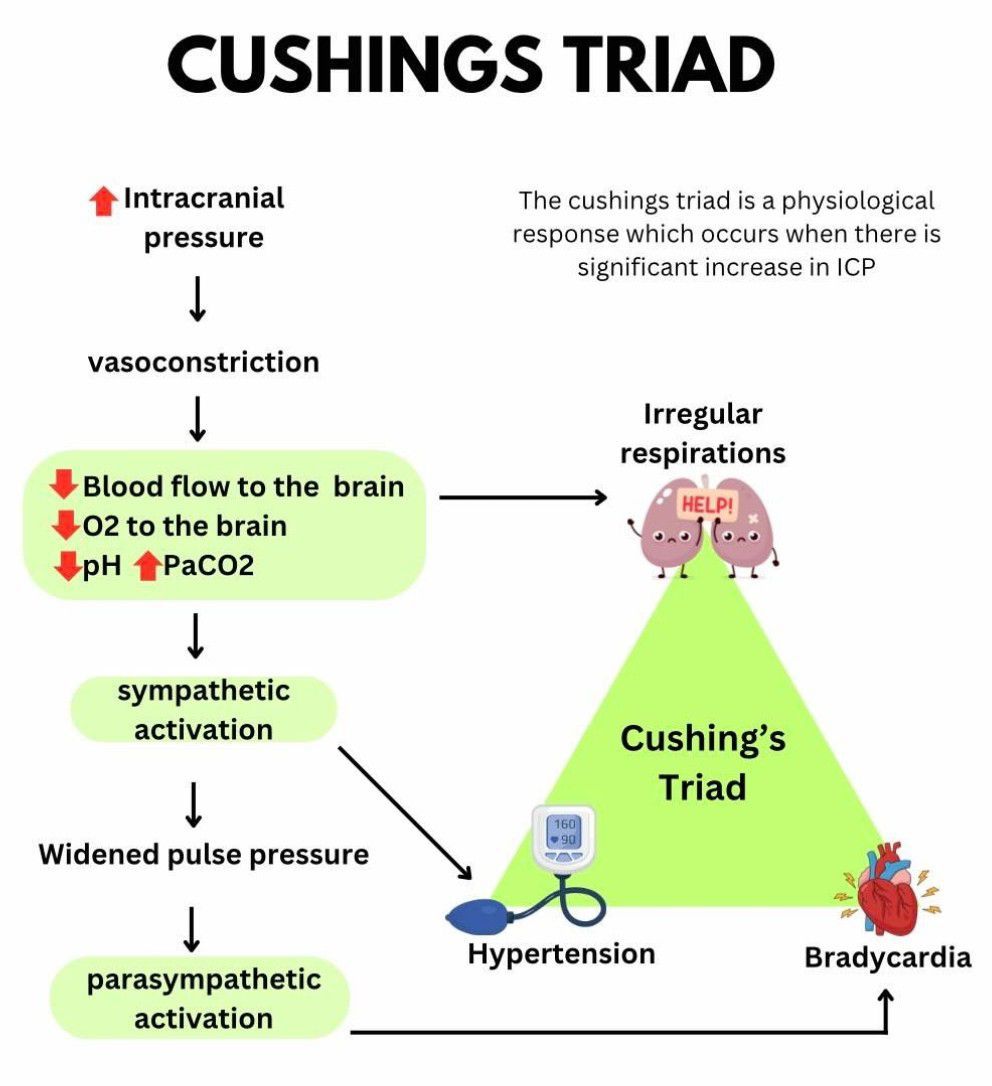
Cushing’s Triad: 1. Hypertension (often widening pulse pressure). 2. Bradycardia. 3. Irregular respirations.

Decline in Glasgow Coma Scale (GCS). Fixed, dilated pupils (Uncal herniation). Posturing (decorticate or decerebrate).

4. Diagnosis and Monitoring

  • Neuroimaging (Initial):

    • CT/MRI: Essential to identify underlying cause (mass lesion, hemorrhage, edema, hydrocephalus) and signs of herniation.

    • Warning: Lumbar Puncture (LP) is ABSOLUTELY CONTRAINDICATED in the presence of a known or suspected mass lesion or signs of herniation, as it can precipitate transtentorial or tonsillar herniation.

  • ICP Monitoring (Gold Standard):

    • External Ventricular Drain (EVD): Provides continuous ICP measurement, allows sampling of CSF, and permits therapeutic drainage of CSF to lower ICP.

    • Fiber Optic Transducers: Devices placed in the parenchyma or subdural space.

5. Management (Tiered Approach)

The primary goal is to maintain and .

Tier 0: General and Supportive Measures

  • Positioning: Head of bed elevation to degrees (promotes venous outflow).

  • Vitals: Maintain Normothermia (fever increases metabolism and ICP). Treat pain and agitation (sedation/analgesia).

  • Hemodynamics: Maintain normovolemia and (to support ).

Tier 1: First-Line Therapies

  • CSF Drainage: If an EVD is in place, initiate continuous or intermittent CSF drainage.

  • Hyperosmolar Therapy: Creates an osmotic gradient to draw water out of the brain parenchyma into the intravascular space.

    • Mannitol ( to IV bolus): Requires intact blood-brain barrier (BBB) and maintenance of serum osmolarity .

    • Hypertonic Saline (e.g., or ): Draws fluid from brain, increases , and avoids the rebound ICP effect sometimes seen with Mannitol.

Tier 2: Second-Line Therapies (If ICP remains

)

  • Ventilation: Controlled, transient hyperventilation (Target ). Causes cerebral vasoconstriction, rapidly reducing and . Use cautiously as it can cause ischemia.

  • Diuresis: Repeat hyperosmolar therapy.

Tier 3: Third-Line Therapies (Refractory ICP)

  • Barbiturate Coma (e.g., Pentobarbital): Decreases cerebral metabolic rate and (powerful vasoconstrictor). Requires continuous monitoring and full support.

  • Decompressive Craniectomy: Surgical removal of a portion of the skull to allow the edematous brain to swell outward, physically reducing pressure.

  • Hypothermia: Induced mild hypothermia (Controversial; used in select, severe cases).

6. Complications

  • Cerebral Herniation: Life-threatening displacement of brain tissue due to severe pressure gradient.

  • Uncal Herniation: Medial temporal lobe (uncus) through the tentorial notch. Causes ipsilateral fixed and dilated pupil (CN III compression) and contralateral hemiparesis.

  • Tonsillar Herniation: Cerebellar tonsils through the foramen magnum. Compresses the brainstem, leading to cardiorespiratory arrest.

  • Secondary Brain Injury: Ischemia and infarction caused by critically low .

  • Central Diabetes Insipidus/SIADH/Cerebral Salt Wasting: Endocrine/electrolyte disturbances often associated with severe brain injury.


Variable difficulty level Questions for Medical Students and Paramedics

Variable difficulty 120 Multiple-Choice Questions (MCQs) to practice now(High yeild)

Table of Contents(toc)


Set 1 (Initial 20 Questions)

  1. Question: Which of the following is the most common cause of acute bronchitis?

    • A) Bacterial infection

    • B) Viral infection

    • C) Allergens

    • D) Smoking

    • Answer: B) Viral infection


  1. Question: What is the most likely complication of untreated hypertension (high blood pressure)?

    • A) Stroke

    • B) Asthma

    • C) Acute Glomerulonephritis

    • D) Tuberculosis

    • Answer: A) Stroke


  1. Question: A 50-year-old male presents with chest pain, sweating, and pain radiating to the left arm. What is the most probable diagnosis?

    • A) Angina

    • B) Myocardial Infarction (Heart Attack)

    • C) Pericarditis

    • D) Aortic Dissection

    • Answer: B) Myocardial Infarction


  1. Question: Which of the following is a common side effect of thiazide diuretics (water pills) used to manage hypertension?

    • A) Hyperkalemia (High Potassium)

    • B) Hypokalemia (Low Potassium)

    • C) Hypercalcemia (High Calcium)

    • D) Hyponatremia (Low Sodium)

    • Answer: B) Hypokalemia


  1. Question: Which of the following conditions is most associated with iron deficiency anemia?

    • A) Sickle Cell Anemia

    • B) Hemophilia

    • C) Chronic Blood Loss

    • D) Leukemia

    • Answer: C) Chronic Blood Loss


  1. Question: Which of the following is NOT a symptom of Parkinson’s disease?

    • A) Tremors

    • B) Bradykinesia (Slow movement)

    • C) Hyperreflexia (Overactive reflexes)

    • D) Muscle Rigidity

    • Answer: C) Hyperreflexia


  1. Question: A 45-year-old woman presents with unexplained weight gain, fatigue, and cold intolerance. She is diagnosed with hypothyroidism. What is the most likely cause?

    • A) Autoimmune thyroiditis (Hashimoto’s disease)

    • B) Graves’ disease

    • C) Thyroid cancer

    • D) Hyperparathyroidism

    • Answer: A) Autoimmune thyroiditis


  1. Question: Which of the following is the first-line treatment for acute gout (a sudden, painful attack)?

    • A) Allopurinol

    • B) Colchicine

    • C) NSAIDs (Nonsteroidal Anti-inflammatory Drugs)

    • D) Steroids

    • Answer: C) NSAIDs


  1. Question: A patient presents with fever, cough, and weight loss. A chest X-ray shows cavitary lesions in the upper lobes of the lungs. What is the most likely diagnosis?

    • A) Pneumonia

    • B) Tuberculosis (TB)

    • C) Bronchial Carcinoma (Lung Cancer)

    • D) Chronic Bronchitis

    • Answer: B) Tuberculosis


  1. Question: Which of the following is the hallmark (primary indicator) of diabetic ketoacidosis (DKA)?

    • A) Hyperglycemia (High blood sugar)

    • B) Metabolic Alkalosis

    • C) Hypercalcemia

    • D) Hypoglycemia (Low blood sugar)

    • Answer: A) Hyperglycemia


  1. Question: What is the most common presenting symptom of a cerebrovascular accident (CVA), commonly known as a stroke?

    • A) Seizure

    • B) Sudden headache

    • C) Sudden loss of vision

    • D) Sudden weakness or paralysis

    • Answer: D) Sudden weakness or paralysis


  1. Question: Which of the following is a major risk factor for developing ischemic heart disease (IHD)?

    • A) Hypothyroidism

    • B) Hyperthyroidism

    • C) Hyperlipidemia (High cholesterol/fats in blood)

    • D) Anemia

    • Answer: C) Hyperlipidemia


  1. Question: Which of the following is the most common cause of peptic ulcer disease?

    • A) NSAIDs (medication)

    • B) Stress

    • C) H. pylori infection

    • D) Alcohol consumption

    • Answer: C) H. pylori infection


  1. Question: A 40-year-old female presents with abdominal pain, jaundice (yellowing skin), and swelling in the abdomen (ascites). What is the most likely diagnosis?

    • A) Acute Hepatitis

    • B) Cirrhosis

    • C) Pancreatitis

    • D) Gallstones

    • Answer: B) Cirrhosis


  1. Question: What is the first-line medical treatment for hyperthyroidism (overactive thyroid) in the setting of Graves’ disease?

    • A) Radioactive iodine

    • B) Methimazole

    • C) Propylthiouracil (PTU)

    • D) Beta-blockers

    • Answer: B) Methimazole


  1. Question: What is the primary cause of chronic obstructive pulmonary disease (COPD)?

    • A) Air pollution

    • B) Tobacco smoking

    • C) Occupational exposure

    • D) Genetic factors

    • Answer: B) Tobacco smoking


  1. Question: Which of the following is a primary prevention strategy for colorectal cancer?

    • A) Screening for blood in stool

    • B) High-fiber diet

    • C) Chemotherapy

    • D) Surgical resection

    • Answer: B) High-fiber diet


  1. Question: What is the most common pathogen (germ) causing bacterial pneumonia in children?

    • A) Streptococcus pneumoniae

    • B) Haemophilus influenzae

    • C) Mycoplasma pneumoniae

    • D) Staphylococcus aureus

    • Answer: A) Streptococcus pneumoniae


  1. Question: Which of the following types of chronic viral hepatitis is a major cause of cirrhosis in adults?

    • A) Hepatitis A

    • B) Hepatitis B

    • C) Hepatitis C

    • D) Hepatitis E

    • Answer: C) Hepatitis C


  1. Question: What is a typical presentation of someone suffering from a myocardial infarction (heart attack)?

    • A) Sudden onset of shortness of breath

    • B) Persistent chest pain radiating to the left arm

    • C) Pain in the upper abdomen

    • D) Severe headache and blurred vision

    • Answer: B) Persistent chest pain radiating to the left arm


Set 2 (Questions 21–40)

  1. Question: Which of the following is a common complication of tuberculosis (TB)?

    • A) Pneumothorax (Collapsed lung)

    • B) Lung Abscess

    • C) Asthma

    • D) Pneumonia

    • Answer: B) Lung Abscess


  1. Question: A patient presents with fatigue, pallor, and tachycardia (rapid heart rate). Laboratory tests reveal microcytic anemia (small red blood cells). What is the most likely cause?

    • A) Vitamin B12 deficiency

    • B) Iron deficiency

    • C) Folate deficiency

    • D) Sickle cell anemia

    • Answer: B) Iron deficiency


  1. Question: What is the first-line treatment for anaphylaxis (a severe, life-threatening allergic reaction)?

    • A) Antihistamines

    • B) Intravenous fluids

    • C) Epinephrine

    • D) Corticosteroids

    • Answer: C) Epinephrine


  1. Question: Which of the following is the most common cause of acute renal (kidney) failure in hospitalized patients?

    • A) Pre-renal causes (e.g., severe dehydration or low blood flow)

    • B) Post-renal causes (e.g., obstruction)

    • C) Intrinsic renal causes (damage to the kidney itself)

    • D) Diabetes mellitus

    • Answer: A) Pre-renal causes


  1. Question: A 65-year-old male presents with shortness of breath, orthopnea (difficulty breathing when lying flat), and peripheral edema (swelling in the legs). What is the most likely diagnosis?

    • A) Chronic obstructive pulmonary disease

    • B) Congestive heart failure

    • C) Asthma

    • D) Pulmonary embolism

    • Answer: B) Congestive heart failure


  1. Question: What is the hallmark (primary indicator) of metabolic syndrome?

    • A) Hypotension

    • B) Hyperglycemia (High blood sugar)

    • C) Hyperkalemia

    • D) Hyperlipidemia

    • Answer: B) Hyperglycemia


  1. Question: Which of the following conditions is most commonly associated with polycythemia vera (a blood cancer characterized by too many red blood cells)?

    • A) Leukemia

    • B) Hypertension

    • C) Splenomegaly (Enlarged spleen)

    • D) Atrial fibrillation

    • Answer: C) Splenomegaly


  1. Question: A 3-year-old child presents with a barking cough and stridor (high-pitched breathing sound). What is the most likely diagnosis?

    • A) Epiglottitis

    • B) Croup

    • C) Bronchiolitis

    • D) Pneumonia

    • Answer: B) Croup


  1. Question: What is the most likely diagnosis for a patient presenting with a “butterfly” rash, joint pain, and a positive antinuclear antibody (ANA)?

    • A) Rheumatoid arthritis

    • B) Systemic lupus erythematosus (SLE)

    • C) Osteoarthritis

    • D) Ankylosing spondylitis

    • Answer: B) Systemic lupus erythematosus


  1. Question: Which of the following is a major risk factor for deep vein thrombosis (DVT)?

    • A) Smoking

    • B) Hypothyroidism

    • C) Physical inactivity (Immobility)

    • D) Hypercalcemia

    • Answer: C) Physical inactivity


  1. Question: A 60-year-old female presents with sudden onset of weakness in the right arm and leg. She has a history of hypertension. What is the most likely diagnosis?

    • A) Seizure

    • B) Stroke (Cerebrovascular accident)

    • C) Peripheral artery disease

    • D) Hypoglycemia

    • Answer: B) Stroke


  1. Question: What is the first-line medication treatment for major depressive disorder?

    • A) Cognitive Behavioral Therapy (CBT)

    • B) Electroconvulsive Therapy (ECT)

    • C) Selective Serotonin Reuptake Inhibitors (SSRIs)

    • D) Antipsychotic medications

    • Answer: C) Selective Serotonin Reuptake Inhibitors (SSRIs)


  1. Question: What is the most common pathogen responsible for bacterial meningitis in adults?

    • A) Neisseria meningitidis

    • B) Streptococcus pneumoniae

    • C) Haemophilus influenzae

    • D) Listeria monocytogenes

    • Answer: B) Streptococcus pneumoniae


  1. Question: What is the most common cause of acute pancreatitis (inflammation of the pancreas)?

    • A) Viral infections

    • B) Gallstones

    • C) Alcohol consumption

    • D) Autoimmune diseases

    • Answer: B) Gallstones


  1. Question: A 45-year-old woman with a history of rheumatoid arthritis presents with dry mouth, dry eyes, and difficulty swallowing. What is the most likely diagnosis?

    • A) Systemic lupus erythematosus

    • B) Sjogren’s syndrome

    • C) Osteoarthritis

    • D) Scleroderma

    • Answer: B) Sjogren’s syndrome


  1. Question: Which of the following is NOT a cause of liver cirrhosis?

    • A) Chronic hepatitis B infection

    • B) Chronic alcoholism

    • C) Non-alcoholic fatty liver disease

    • D) Cholelithiasis (Gallstones)

    • Answer: D) Cholelithiasis


  1. Question: A 40-year-old male presents with pain in his lower back and reduced range of motion. X-ray shows vertebral collapse. What is the most likely infectious diagnosis in a setting of bone and joint issues?

    • A) Osteoarthritis

    • B) Rheumatoid arthritis

    • C) Tuberculosis of the spine (Pott’s disease)

    • D) Compression fracture

    • Answer: C) Tuberculosis of the spine


  1. Question: A child presents with a persistent cough, wheezing, and chest tightness, which improve with bronchodilators. What is the most likely diagnosis?

    • A) Bronchitis

    • B) Asthma

    • C) Pneumonia

    • D) Tuberculosis

    • Answer: B) Asthma


  1. Question: A patient presents with a painful, swollen joint, especially in the big toe. What is the most likely diagnosis?

    • A) Rheumatoid arthritis

    • B) Gout

    • C) Osteoarthritis

    • D) Septic arthritis

    • Answer: B) Gout


  1. Question: Which of the following is a common side effect of long-term corticosteroid use?

    • A) Osteoporosis

    • B) Hypertension

    • C) Hyperglycemia

    • D) All of the above

    • Answer: D) All of the above


Set 3 (Questions 41–60)

  1. Question: What is the first-line medication treatment for an acute exacerbation (sudden worsening) of Chronic Obstructive Pulmonary Disease (COPD)?

    • A) Antibiotics

    • B) Oxygen therapy

    • C) Bronchodilators

    • D) Steroids

    • Answer: C) Bronchodilators


  1. Question: A 55-year-old male presents with a history of chest pain, sweating, and nausea. The ECG shows ST elevation. What is the most likely diagnosis?

    • A) Acute myocardial infarction (STEMI)

    • B) Angina

    • C) Aortic dissection

    • D) Pulmonary embolism

    • Answer: A) Acute myocardial infarction


  1. Question: Which of the following is a common microvascular (small blood vessel) complication of diabetes mellitus?

    • A) Stroke

    • B) Cataracts

    • C) Retinopathy (Damage to the eyes)

    • D) Osteoarthritis

    • Answer: C) Retinopathy


  1. Question: What is the most common cause of bacterial pneumonia in adults?

    • A) Streptococcus pneumoniae

    • B) Staphylococcus aureus

    • C) Haemophilus influenzae

    • D) Mycoplasma pneumoniae

    • Answer: A) Streptococcus pneumoniae


  1. Question: Which of the following is a characteristic feature of rheumatoid arthritis?

    • A) Pain and swelling in large joints

    • B) Joint deformities in small joints of hands and feet

    • C) Pain in weight-bearing joints

    • D) Absence of morning stiffness

    • Answer: B) Joint deformities in small joints of hands and feet


  1. Question: A patient presents with weakness, muscle cramps, and ECG changes of peaked T waves. What is the most likely diagnosis?

    • A) Hyperkalemia (High potassium)

    • B) Hypokalemia (Low potassium)

    • C) Hypercalcemia

    • D) Hypocalcemia

    • Answer: A) Hyperkalemia


  1. Question: A 30-year-old woman presents with a butterfly-shaped rash on her face, photosensitivity (sensitivity to light), and joint pain. What is the most likely diagnosis?

    • A) Systemic lupus erythematosus (SLE)

    • B) Rheumatoid arthritis

    • C) Dermatomyositis

    • D) Psoriasis

    • Answer: A) Systemic lupus erythematosus


  1. Question: A 45-year-old male with a history of alcohol abuse presents with jaundice, ascites (abdominal fluid), and spider angiomata (spider veins). What is the most likely diagnosis?

    • A) Hepatitis B

    • B) Hepatic cirrhosis

    • C) Pancreatitis

    • D) Non-alcoholic fatty liver disease

    • Answer: B) Hepatic cirrhosis


  1. Question: What is the most appropriate initial treatment for status epilepticus (a prolonged seizure or multiple seizures without recovery)?

    • A) Oral anticonvulsants

    • B) IV diazepam or lorazepam (Benzodiazepines)

    • C) IV fluids

    • D) Intramuscular phenytoin

    • Answer: B) IV diazepam or lorazepam


  1. Question: A 5-year-old child presents with a history of fever, painful swollen joints, and a rash. This constellation of symptoms after a throat infection suggests which diagnosis?

    • A) Rheumatic fever

    • B) Kawasaki disease

    • C) Systemic lupus erythematosus

    • D) Chickenpox

    • Answer: A) Rheumatic fever


  1. Question: Which of the following is a common cause of acute glomerulonephritis (kidney inflammation) in children following a throat or skin infection?

    • A) Staphylococcus aureus

    • B) Escherichia coli

    • C) Group A Streptococcus (Post-streptococcal glomerulonephritis)

    • D) Pseudomonas aeruginosa

    • Answer: C) Group A Streptococcus


  1. Question: What is the most common presentation of a myocardial infarction (heart attack) in a diabetic patient?

    • A) Severe chest pain

    • B) Shortness of breath

    • C) Asymptomatic or mild symptoms (Silent MI)

    • D) Nausea and vomiting

    • Answer: C) Asymptomatic or mild symptoms


  1. Question: A 35-year-old woman presents with abdominal pain, weight loss, and a palpable mass in her abdomen. What is a serious malignancy that should be considered?

    • A) Ovarian cyst

    • B) Colorectal carcinoma (Colon cancer)

    • C) Irritable bowel syndrome

    • D) Acute pancreatitis

    • Answer: B) Colorectal carcinoma


  1. Question: A patient presents with complaints of a new mole that is Asymmetrical, with irregular Borders, has multiple Colors, and a large Diameter (ABCDE rule). What is the most likely diagnosis?

    • A) Squamous cell carcinoma

    • B) Melanoma

    • C) Basal cell carcinoma

    • D) Seborrheic keratosis

    • Answer: B) Melanoma


  1. Question: A patient presents with a painful red eye and blurred vision after trauma. The slit-lamp exam reveals hypopyon (pus in the anterior chamber). What is the most likely diagnosis?

    • A) Conjunctivitis

    • B) Corneal ulcer

    • C) Acute angle-closure glaucoma

    • D) Uveitis (Inflammation of the middle layer of the eye)

    • Answer: D) Uveitis


  1. Question: Which of the following is a typical feature of asthma?

    • A) Unilateral chest pain

    • B) Wheezing and shortness of breath

    • C) Cyanosis and edema

    • D) Hemoptysis (Coughing up blood)

    • Answer: B) Wheezing and shortness of breath


  1. Question: Which of the following is the treatment of choice for a patient with acute cholecystitis (inflammation of the gallbladder)?

    • A) Antibiotics alone

    • B) Surgery (cholecystectomy)

    • C) Endoscopic retrograde cholangiopancreatography (ERCP)

    • D) Percutaneous drainage

    • Answer: B) Surgery (cholecystectomy)


  1. Question: A 25-year-old female presents with fever, headache, and a stiff neck. The CSF analysis shows an elevated white blood cell count, low glucose, and high protein. What is the most likely diagnosis?

    • A) Viral meningitis

    • B) Bacterial meningitis

    • C) Tuberculous meningitis

    • D) Fungal meningitis

    • Answer: B) Bacterial meningitis


  1. Question: A 50-year-old male presents with jaundice, pruritus (itching), and dark-colored urine. His liver function tests show elevated bilirubin and alkaline phosphatase. What is the most likely diagnosis, indicating bile flow obstruction?

    • A) Acute hepatitis

    • B) Hepatic cirrhosis

    • C) Cholelithiasis

    • D) Cholestasis (Impaired bile flow)

    • Answer: D) Cholestasis


  1. Question: A patient presents with sudden onset of severe, colicky abdominal pain, bloating, and constipation. On examination, there is absent bowel sounds. What is the most likely diagnosis?

    • A) Acute pancreatitis

    • B) Intestinal obstruction

    • C) Irritable bowel syndrome

    • D) Appendicitis

    • Answer: B) Intestinal obstruction


Set 4 (Questions 61–80, Higher Difficulty)

  1. Question: Which of the following is the most common cause of secondary hypertension (high blood pressure caused by another condition) in young adults?

    • A) Pheochromocytoma

    • B) Renal parenchymal disease (Kidney tissue disease)

    • C) Coarctation of the aorta

    • D) Hyperaldosteronism

    • Answer: B) Renal parenchymal disease


  1. Question: A patient with chronic obstructive pulmonary disease (COPD) presents with a productive cough, shortness of breath, and a barrel chest (emphysema type). Which of the following physical examination findings would you expect?

    • A) Decreased tactile fremitus

    • B) Increased tactile fremitus

    • C) Decreased resonance on percussion

    • D) Hyperresonance on percussion

    • Answer: D) Hyperresonance on percussion


  1. Question: The characteristic “bamboo spine” appearance on X-ray, due to fusion of vertebrae, is associated with which of the following diseases?

    • A) Rheumatoid arthritis

    • B) Ankylosing spondylitis

    • C) Osteoarthritis

    • D) Psoriatic arthritis

    • Answer: B) Ankylosing spondylitis


  1. Question: Which of the following is the first-line treatment for a patient with acute pancreatitis (inflammation of the pancreas)?

    • A) Intravenous fluids

    • B) Antibiotics

    • C) Surgical resection

    • D) Insulin therapy

    • Answer: A) Intravenous fluids


  1. Question: A 40-year-old male presents with a history of fever, night sweats, and weight loss. Chest X-ray shows a cavitary lesion in the upper lobe of the lung. Which of the following is the most likely diagnosis?

    • A) Pulmonary tuberculosis

    • B) Lung cancer

    • C) Histoplasmosis

    • D) Pneumocystis pneumonia

    • Answer: A) Pulmonary tuberculosis


  1. Question: What is the most common and life-threatening complication of deep vein thrombosis (DVT)?

    • A) Pulmonary embolism

    • B) Stroke

    • C) Myocardial infarction

    • D) Renal failure

    • Answer: A) Pulmonary embolism


  1. Question: In a patient with suspected bacterial meningitis, which of the following is the most appropriate initial step after drawing blood cultures but before a lumbar puncture, if there are no signs of increased intracranial pressure?

    • A) CT scan of the brain

    • B) Blood cultures

    • C) Lumbar puncture for cerebrospinal fluid analysis

    • D) Administer broad-spectrum antibiotics

    • Answer: C) Lumbar puncture for cerebrospinal fluid analysis (Note: In practice, antibiotics are often given immediately after cultures if LP is delayed by CT scan.)


  1. Question: Which of the following is the hallmark finding of nephrotic syndrome?

    • A) Hematuria

    • B) Proteinuria greater than 3.5 g/day

    • C) Hypertension

    • D) Hyperkalemia

    • Answer: B) Proteinuria greater than 3.5 g/day


  1. Question: A 28-year-old woman presents with amenorrhea (absence of periods), hirsutism (excess hair), and obesity. She also has acne and irregular periods. The most likely diagnosis is:

    • A) Polycystic ovary syndrome (PCOS)

    • B) Primary ovarian insufficiency

    • C) Hyperprolactinemia

    • D) Pituitary adenoma

    • Answer: A) Polycystic ovary syndrome (PCOS)


  1. Question: The most common presenting symptom of acute myocardial infarction (heart attack) is:

    • A) Palpitations

    • B) Chest pain

    • C) Shortness of breath

    • D) Nausea and vomiting

    • Answer: B) Chest pain


  1. Question: Which of the following is the characteristic microscopic finding in Guillain-Barré syndrome (an acute paralytic illness)?

    • A) Wallerian degeneration

    • B) Axonal swelling

    • C) Demyelination of peripheral nerves

    • D) Gliosis

    • Answer: C) Demyelination of peripheral nerves


  1. Question: Which of the following medications is commonly used as the initial, long-term anti-thyroid drug in the management of hyperthyroidism due to Graves’ disease?

    • A) Methimazole

    • B) Levothyroxine

    • C) Propylthiouracil

    • D) Iodine 131

    • Answer: A) Methimazole


  1. Question: A patient presents with difficulty swallowing, hoarseness of voice, and a hard, non-mobile thyroid nodule. The most likely, and most aggressive, diagnosis is:

    • A) Benign thyroid adenoma

    • B) Subacute thyroiditis

    • C) Papillary thyroid carcinoma (Most common thyroid cancer type)

    • D) Hashimoto’s thyroiditis

    • Answer: C) Papillary thyroid carcinoma


  1. Question: What is the most common site for an acute ischemic cerebrovascular accident (stroke)?

    • A) Middle cerebral artery

    • B) Anterior cerebral artery

    • C) Posterior cerebral artery

    • D) Vertebral artery

    • Answer: A) Middle cerebral artery


  1. Question: Which of the following blood tests is the most sensitive screening tool for diagnosing systemic lupus erythematosus (SLE)?

    • A) Antinuclear antibody (ANA)

    • B) C-reactive protein (CRP)

    • C) Rheumatoid factor (RF)

    • D) Complete blood count (CBC)

    • Answer: A) Antinuclear antibody (ANA)


  1. Question: A patient with a history of alcoholism presents with the triad of confusion, ataxia (uncoordinated gait), and ophthalmoplegia (eye movement abnormalities). What is the most likely diagnosis?

    • A) Korsakoff syndrome

    • B) Wernicke encephalopathy (Thiamine deficiency)

    • C) Alcoholic hallucinosis

    • D) Alcoholic liver disease

    • Answer: B) Wernicke encephalopathy


  1. Question: Which of the following is the first-line rescue treatment for a patient with acute asthma exacerbation?

    • A) Inhaled corticosteroids

    • B) Oral corticosteroids

    • C) Beta-agonists (e.g., albuterol/salbutamol)

    • D) Theophylline

    • Answer: C) Beta-agonists (e.g., albuterol)


  1. Question: Which of the following endocrine disorders is most likely to cause both hypo- and hyperkalemia (abnormal potassium levels) over its clinical course, though often causes hypokalemia?

    • A) Primary hyperaldosteronism

    • B) Cushing’s syndrome

    • C) Pheochromocytoma

    • D) Hyperthyroidism

    • Answer: A) Primary hyperaldosteronism


  1. Question: A patient is diagnosed with tuberculosis and is started on anti-tuberculosis treatment. Which of the following is the most common, non-pathological, and easily recognizable side effect of rifampin?

    • A) Hepatotoxicity

    • B) Hemolytic anemia

    • C) Orange discoloration of urine

    • D) Nephrotoxicity

    • Answer: C) Orange discoloration of urine


  1. Question: A 55-year-old male with a history of hypertension presents with sudden, severe “thunderclap” headache, vomiting, and altered mental status. On examination, he has neck stiffness. What is the most likely hemorrhagic diagnosis?

    • A) Subarachnoid hemorrhage

    • B) Ischemic Stroke

    • C) Meningitis

    • D) Acute glaucoma

    • Answer: A) Subarachnoid hemorrhage


Set 5 (Questions 81–100, Slightly Higher Difficulty)

  1. Question: Which of the following is a common complication of chronic obstructive pulmonary disease (COPD) that indicates a failure of gas exchange?

    • A) Pulmonary embolism

    • B) Respiratory acidosis

    • C) Pleural effusion

    • D) Pneumothorax

    • Answer: B) Respiratory acidosis


  1. Question: What is the most common cause of hyperkalemia (high potassium) in patients with acute renal failure that specifically involves direct kidney damage?

    • A) Metabolic alkalosis

    • B) Severe dehydration

    • C) Renal tubular acidosis

    • D) Acute tubular necrosis (ATN)

    • Answer: D) Acute tubular necrosis


  1. Question: Which of the following is the most reliable test for definitively diagnosing active tuberculosis in a patient with a chronic cough and weight loss?

    • A) Sputum culture for Mycobacterium tuberculosis

    • B) Chest X-ray

    • C) Tuberculin skin test (PPD)

    • D) Interferon-gamma release assay (IGRA)

    • Answer: A) Sputum culture for Mycobacterium tuberculosis


  1. Question: In regions like Nepal, which of the following is a common cause of hepatocellular carcinoma (liver cancer) linked to a chronic infection?

    • A) Chronic alcohol use

    • B) Hepatitis B infection

    • C) Non-alcoholic fatty liver disease

    • D) Hemochromatosis

    • Answer: B) Hepatitis B infection


  1. Question: In a patient with acute pancreatitis, which of the following enzymes is typically elevated for the longest duration, making it a reliable diagnostic marker?

    • A) Amylase

    • B) Lipase

    • C) Alkaline phosphatase

    • D) Alanine aminotransferase (ALT)

    • Answer: B) Lipase


  1. Question: Which of the following is a known, life-threatening complication of untreated hyperthyroidism?

    • A) Myxedema coma

    • B) Graves’ disease (The cause, not complication)

    • C) Thyroid storm

    • D) Cushing’s syndrome

    • Answer: C) Thyroid storm


  1. Question: Which of the following medications is a rescue inhaler used to treat acute asthma exacerbation?

    • A) Long-acting beta-agonist (LABA)

    • B) Inhaled corticosteroids (ICS)

    • C) Short-acting beta-agonist (SABA)

    • D) Leukotriene receptor antagonists

    • Answer: C) Short-acting beta-agonist


  1. Question: Which of the following is the most important first-line medication in the immediate management of a patient with an acute myocardial infarction (heart attack)?

    • A) Thrombolytic therapy

    • B) Angiotensin-converting enzyme inhibitors

    • C) Antiplatelet agents (Aspirin)

    • D) Beta-blockers

    • Answer: C) Antiplatelet agents (Specifically Aspirin)


  1. Question: Which of the following is a highly specific characteristic feature of Systemic Lupus Erythematosus (SLE)?

    • A) Joint pain without swelling

    • B) Butterfly-shaped rash across the cheeks and nose (Malar rash)

    • C) Raynaud’s phenomenon

    • D) Elevated liver enzymes

    • Answer: B) Butterfly-shaped rash across the cheeks and nose


  1. Question: In a patient with chronic heart failure, which of the following is the most common cause of right-sided heart failure?

    • A) Left ventricular failure (Most common in modern countries)

    • B) Pulmonary hypertension (Can be a cause, but LVF is the most common precursor)

    • C) Coronary artery disease

    • D) Aortic valve stenosis

    • Answer: A) Left ventricular failure


  1. Question: Which of the following is the classic characteristic feature of Guillain-Barré syndrome (an autoimmune disorder of the peripheral nervous system)?

    • A) Ascending paralysis (Starting in the feet and moving up)

    • B) Reflex hyperactivity (Hyporeflexia/areflexia is typical)

    • C) Muscle weakness of the upper limbs only

    • D) Presence of Babinski sign

    • Answer: A) Ascending paralysis


  1. Question: Which of the following is the preferred initial diagnostic test for a patient with suspected acute stroke to differentiate between ischemic and hemorrhagic causes?

    • A) MRI of the brain

    • B) CT scan of the brain without contrast

    • C) Cerebral angiography

    • D) Electroencephalogram (EEG)

    • Answer: B) CT scan of the brain without contrast


  1. Question: Which of the following is the most common type of primary carcinoma (cancer) in the lungs, particularly in non-smokers and women?

    • A) Small cell lung cancer

    • B) Squamous cell carcinoma

    • C) Adenocarcinoma

    • D) Large cell carcinoma

    • Answer: C) Adenocarcinoma


  1. Question: Which of the following is a typical clinical feature of acute appendicitis?

    • A) Severe right upper quadrant pain

    • B) Periumbilical pain that shifts to the right lower quadrant

    • C) Left lower quadrant tenderness

    • D) Pain with deep inspiration

    • Answer: B) Periumbilical pain that shifts to the right lower quadrant


  1. Question: What is the primary cause of the elevated intracranial pressure in a patient with severe traumatic brain injury?

    • A) Cerebral edema (Swelling of the brain tissue)

    • B) Subdural hematoma

    • C) Epidural hematoma

    • D) Brain herniation

    • Answer: A) Cerebral edema


  1. Question: Which of the following is a characteristic feature of Cushing’s syndrome (excess cortisol)?

    • A) Hypotension

    • B) Hypoglycemia

    • C) Weight gain with central obesity (Truncal obesity)

    • D) Hyperkalemia

    • Answer: C) Weight gain with central obesity


  1. Question: What is the most common cause of bacterial meningitis in adults, specifically in community-acquired cases?

    • A) Streptococcus pneumoniae

    • B) Neisseria meningitidis

    • C) Haemophilus influenzae

    • D) Listeria monocytogenes

    • Answer: A) Streptococcus pneumoniae


  1. Question: What is the most common type of anemia globally and in developing countries like Nepal?

    • A) Pernicious anemia

    • B) Iron-deficiency anemia

    • C) Sickle cell anemia

    • D) Thalassemia

    • Answer: B) Iron-deficiency anemia


  1. Question: Which of the following is a long-term complication of untreated acute glomerulonephritis?

    • A) Chronic renal failure

    • B) Nephrotic syndrome

    • C) Renal tubular acidosis

    • D) Hypertension

    • Answer: A) Chronic renal failure


  1. Question: Which of the following is the most common cause of upper gastrointestinal bleeding?

    * A) Peptic ulcer disease

    * B) Esophageal varices

    * C) Gastritis

    * D) Mallory-Weiss tear

    * Answer: A) Peptic ulcer disease


Set 6 (Questions 101–120, Highest Difficulty)

  1. Question: A patient presents with sudden onset of hemiparesis (one-sided weakness), aphasia (speech difficulty), and a CT scan shows a well-defined dark area (infarct) in the middle cerebral artery territory. Which of the following is the most likely diagnosis?

    * A) Cerebral venous thrombosis

    * B) Cerebrovascular accident (Ischemic Stroke)

    * C) Meningitis

    * D) Encephalitis

    * Answer: B) Cerebrovascular accident


  1. Question: Which of the following is the complete hallmark sign of diabetic ketoacidosis (DKA)?

    * A) Hyperkalemia

    * B) Hypoglycemia

    * C) Hyperglycemia with metabolic acidosis

    * D) Hyponatremia

    * Answer: C) Hyperglycemia with metabolic acidosis


  1. Question: In a patient with rheumatoid arthritis, which of the following findings is most characteristic of the earliest stages on X-ray?

    * A) Joint space narrowing

    * B) Bone sclerosis

    * C) Subchondral cysts

    * D) Osteophytes

    * Answer: A) Joint space narrowing


  1. Question: Which of the following is a common, specific, and unique feature of Graves’ disease (Hyperthyroidism)?

    * A) Hypothyroidism

    * B) Pretibial myxedema (Skin thickening on the shins)

    * C) Goiter without exophthalmos

    * D) Weight gain

    * Answer: B) Pretibial myxedema


  1. Question: A 45-year-old man presents with worsening shortness of breath, crackles (rales) on chest auscultation, and edema. His ECG shows signs of left ventricular hypertrophy. What is the most likely diagnosis?

    * A) Acute myocardial infarction

    * B) Chronic obstructive pulmonary disease

    * C) Congestive heart failure

    * D) Pulmonary embolism

    * Answer: C) Congestive heart failure


  1. Question: Which of the following is a key, highly sensitive diagnostic criterion for a diagnosis of systemic lupus erythematosus (SLE)?

    * A) Positive antinuclear antibodies (ANA)

    * B) Hyperkalemia

    * C) Decreased creatinine clearance

    * D) Absence of malar rash

    * Answer: A) Positive antinuclear antibodies (ANA)


  1. Question: What is the most appropriate initial medication for a patient in status epilepticus (prolonged or repeated seizures)?

    * A) Intravenous diazepam

    * B) Intravenous phenytoin

    * C) Intravenous lorazepam

    * D) Oral carbamazepine

    * Answer: C) Intravenous lorazepam (Often preferred over diazepam due to longer duration of action)


  1. Question: What is the most appropriate management for a patient with acute bacterial meningitis after obtaining blood cultures and immediately following a confirmed or highly suspected diagnosis?

    * A) Intravenous acyclovir

    * B) Intravenous antibiotics targeting Streptococcus pneumoniae (Initial broad-spectrum is often used, but S. pneumoniae is the primary target)

    * C) Oral antivirals

    * D) Supportive care with corticosteroids

    * Answer: B) Intravenous antibiotics targeting Streptococcus pneumoniae


  1. Question: What is the most likely cause of an isolated elevated ALT (alanine aminotransferase) level in a patient with a history of chronic alcohol consumption, where the AST:ALT ratio is typically greater than 2:1?

    * A) Hepatitis B

    * B) Hepatitis C

    * C) Alcoholic liver disease

    * D) Non-alcoholic fatty liver disease

    * Answer: C) Alcoholic liver disease


  1. Question: Which of the following is the most common organism responsible for causing hospital-acquired pneumonia (HAP), particularly in critically ill patients?

    * A) Streptococcus pneumoniae

    * B) Haemophilus influenzae

    * C) Methicillin-resistant Staphylococcus aureus (MRSA)

    * D) Mycoplasma pneumoniae

    * Answer: C) Methicillin-resistant Staphylococcus aureus (MRSA)


  1. Question: In a patient with iron-deficiency anemia, which of the following is the most likely laboratory finding that directly indicates low iron stores?

    * A) Increased serum ferritin

    * B) Decreased serum iron

    * C) Increased serum vitamin B12

    * D) Elevated mean corpuscular volume (MCV)

    * Answer: B) Decreased serum iron


  1. Question: In a patient with an acute myocardial infarction, which of the following is the most important first step in management upon presentation?

    * A) Intravenous morphine

    * B) Oxygen therapy

    * C) Aspirin administration (Immediate antiplatelet therapy)

    * D) Thrombolysis

    * Answer: C) Aspirin administration


  1. Question: Which of the following is the best indicator of proteinuria, and thus the best indicator of kidney damage, in a patient with nephrotic syndrome?

    * A) Serum creatinine

    * B) Urinary albumin-to-creatinine ratio

    * C) Serum potassium levels

    * D) Blood urea nitrogen (BUN)

    * Answer: B) Urinary albumin-to-creatinine ratio


  1. Question: Which of the following is most commonly associated with a sudden onset of pleuritic chest pain (pain with breathing), dyspnea (shortness of breath), and an elevated D-dimer level?

    * A) Acute myocardial infarction

    * B) Pulmonary embolism

    * C) Pneumonia

    * D) Tuberculosis

    * Answer: B) Pulmonary embolism


  1. Question: Which of the following is a characteristic feature of Parkinson’s disease?

    * A) Hyperreflexia

    * B) Resting tremor

    * C) Muscle weakness

    * D) Visual hallucinations

    * Answer: B) Resting tremor


  1. Question: A 50-year-old woman presents with dysphagia (difficulty swallowing), regurgitation, and weight loss. Endoscopy reveals a tumor in the lower esophagus. What is the most likely malignant diagnosis?

    * A) Achalasia

    * B) Gastroesophageal reflux disease (GERD)

    * C) Esophageal carcinoma

    * D) Esophageal varices

    * Answer: C) Esophageal carcinoma


  1. Question: Which of the following is a major local complication of acute pancreatitis that can present weeks later?

    * A) Peritonitis

    * B) Pancreatic pseudocyst

    * C) Hepatic encephalopathy

    * D) Gastrointestinal bleeding

    * Answer: B) Pancreatic pseudocyst


  1. Question: In a patient with established hypertension and persistent proteinuria (protein in the urine), which of the following is the most likely long-term renal complication?

    * A) Glomerulonephritis

    * B) Chronic kidney disease

    * C) Nephrotic syndrome

    * D) Nephritic syndrome

    * Answer: B) Chronic kidney disease


  1. Question: What is the most common cause of acute viral hepatitis in Nepal?

    * A) Hepatitis A virus

    * B) Hepatitis B virus

    * C) Hepatitis C virus

    * D) Hepatitis E virus

    * Answer: D) Hepatitis E virus (The user’s previous set suggested Hepatitis A, but D is more regionally relevant for a water-borne epidemic)


  1. Question: A patient presents with a history of fever, malaise, and a characteristic butterfly-shaped rash on the face. What is the most likely systemic autoimmune diagnosis?

    * A) Rheumatoid arthritis

    * B) Systemic lupus erythematosus

    * C) Dermatomyositis

    * D) Sjogren’s syndrome

    * Answer: B) Systemic lupus erythematosus

Physiology of Taste Buds: A note for medical students and Pathology

How Does the Tongue Detect Taste? A Deep Dive into the Science of Flavor

Table of Contents(toc)
taste buds

Whether you’re savoring a spicy curry or cringing at a bitter cough syrup, your tongue is constantly at work—analyzing every molecule that lands on it. But how does this muscular organ decode the complex language of flavor?

Let’s take a closer look at gustation, the sense of taste, and break down the physiology and neurobiology behind it. Whether you’re a curious foodie or a budding medical student, this one’s for you.


First Things First: What Is Taste?

Taste is one of the five classical senses and refers specifically to the chemical detection of molecules by taste receptor cells (TRCs). These cells are organized within taste buds, which are found primarily on the tongue, but also on the soft palate, epiglottis, pharynx, and upper esophagus.

Gustation is distinct from flavor, which is a combination of taste, smell, texture, temperature, and even pain (think chili peppers).


The Anatomy of Taste

Taste Papillae: Where It All Begins

Your tongue isn’t smooth—it’s covered in small structures called papillae, some of which contain taste buds:

Papilla Type Location Taste Buds Present?
Fungiform Tip and sides of the tongue Yes
Foliate Lateral posterior tongue Yes
Circumvallate Back of the tongue (in a V-shape) Yes (numerous)
Filiform Most numerous, all over tongue No (tactile only)

Each taste bud contains 50–100 taste receptor cells, which have microvilli that project into a taste pore to sample the surrounding saliva.


The Five Basic Tastes

The human tongue can detect five primary taste modalities:

  1. Sweet – Sugars and some amino acids

  2. Salty – Sodium and other cations

  3. Sour – Protons (H⁺ ions from acids)

  4. Bitter – Often alkaloids (many toxic)

  5. Umami – Glutamate and certain nucleotides

Contrary to popular belief, there is no “taste map” where each taste is confined to a specific region of the tongue; all taste buds can detect all five tastes to varying degrees.


The Molecular Mechanisms of Taste Detection

Here’s where things get a little more technical—perfect for those in medical training.

1. Ion Channels (for Salty & Sour)

  • Salty: Primarily mediated by epithelial sodium channels (ENaC). Sodium ions enter TRCs, depolarizing the cell.

  • Sour: Detected via proton-sensitive channels, such as PKD2L1 or via blocking potassium channels, leading to depolarization.

2. G Protein–Coupled Receptors (GPCRs) (for Sweet, Umami, Bitter)

  • Sweet: Detected by a heterodimer of T1R2 + T1R3.

  • Umami: Sensed via T1R1 + T1R3 heterodimer.

  • Bitter: Recognized by a diverse family of T2R receptors (about 25 different subtypes).

These GPCRs activate a signaling cascade:

  1. Activation of gustducin (a taste-specific G protein)

  2. Increase in intracellular IP₃ and Ca²⁺

  3. Opening of TRPM5 channels

  4. Depolarization of the cell

  5. Neurotransmitter release (ATP, serotonin, etc.)


Neural Pathways: From Tongue to Brain

Taste information is carried to the brain via three cranial nerves:

Cranial Nerve Region Innervated
VII (Facial) Anterior 2/3 of tongue (via chorda tympani)
IX (Glossopharyngeal) Posterior 1/3 of tongue
X (Vagus) Epiglottis and pharynx

These afferent fibers synapse in the nucleus of the solitary tract (NST) in the medulla. From there, signals are relayed to the thalamus, and finally to the gustatory cortex in the insula and frontal operculum.


Additional Modulators: More Than Just Taste Buds

  • Olfaction: A huge contributor to flavor. Without it, most foods would taste flat (as anyone with a cold can attest).

  • Trigeminal Nerve (CN V): Detects texture, temperature, and chemical irritants (like capsaicin or menthol).

  • Saliva: Dissolves tastants and helps transport them into taste pores.


Clinical Pearls: Taste in Medicine

  • Ageusia = complete loss of taste (rare)

  • Hypogeusia = decreased taste sensitivity

  • Dysgeusia = distorted taste perception (e.g., metallic taste)

Common causes:

  • Medications (e.g., ACE inhibitors, chemotherapy)

  • Zinc deficiency

  • Post-viral changes (including COVID-19)

  • Neurological injury (e.g., Bell’s palsy)


Final Thoughts

Your tongue is more than just a tool for enjoying food—it’s a chemically sophisticated sensory organ that plays a crucial role in nutrition, health, and even survival. For medical students, understanding the cellular and neural mechanisms of taste isn’t just fascinating—it’s foundational for diagnosing and managing a wide range of clinical conditions.

Short Notes on Intraocular Pressure IOP (update 2025)

Understanding Eye Pressure (Intraocular Pressure, IOP)

Table of Contents(toc)
Intraocular Pressure, IOP


Your eyes, just like the rest of your body, have a natural pressure that helps keep them healthy and working properly. This is called intraocular pressure (IOP), which refers to the fluid pressure inside the eye.

What Is a Normal Eye Pressure?

Normal eye pressure typically ranges between 10 and 21 millimeters of mercury (mmHg). This balance is maintained by a steady flow of fluid inside the eye, known as the aqueous humor, which continuously enters and drains out.

How Is Eye Pressure Measured?

During a routine eye exam, your eye doctor will measure IOP using a special test. This check is quick and painless, but very important for monitoring eye health.

When Eye Pressure Is Too High

If your eye pressure is consistently above 21 mmHg, it’s called ocular hypertension. While this doesn’t always cause vision problems right away, it does increase the risk of developing glaucoma, a serious eye condition that can damage the optic nerve.

Daily Fluctuations

Eye pressure isn’t always constant. It can change throughout the day, often being higher in the morning. That’s why regular monitoring is important if you’re at risk.

Why It Matters

Keeping eye pressure within the normal range is key to protecting your vision. Regular eye exams help catch problems early and reduce the risk of conditions like glaucoma.


Summary

  • Definition: The fluid pressure within the eye, measured in millimeters of mercury (mmHg).

  • Normal Range: 10–21 mmHg. Maintained by balanced production and drainage of aqueous humor.

  • Assessment: Routinely measured during ophthalmic examinations.

  • Clinical Considerations:

    • Ocular Hypertension: IOP >21 mmHg; associated with increased risk of glaucoma.

    • Diurnal Variation: IOP may fluctuate, often peaking in the morning hours.

  • Significance: Maintaining IOP within normal limits is essential for preserving optic nerve integrity and preventing glaucomatous damage.

Exit mobile version