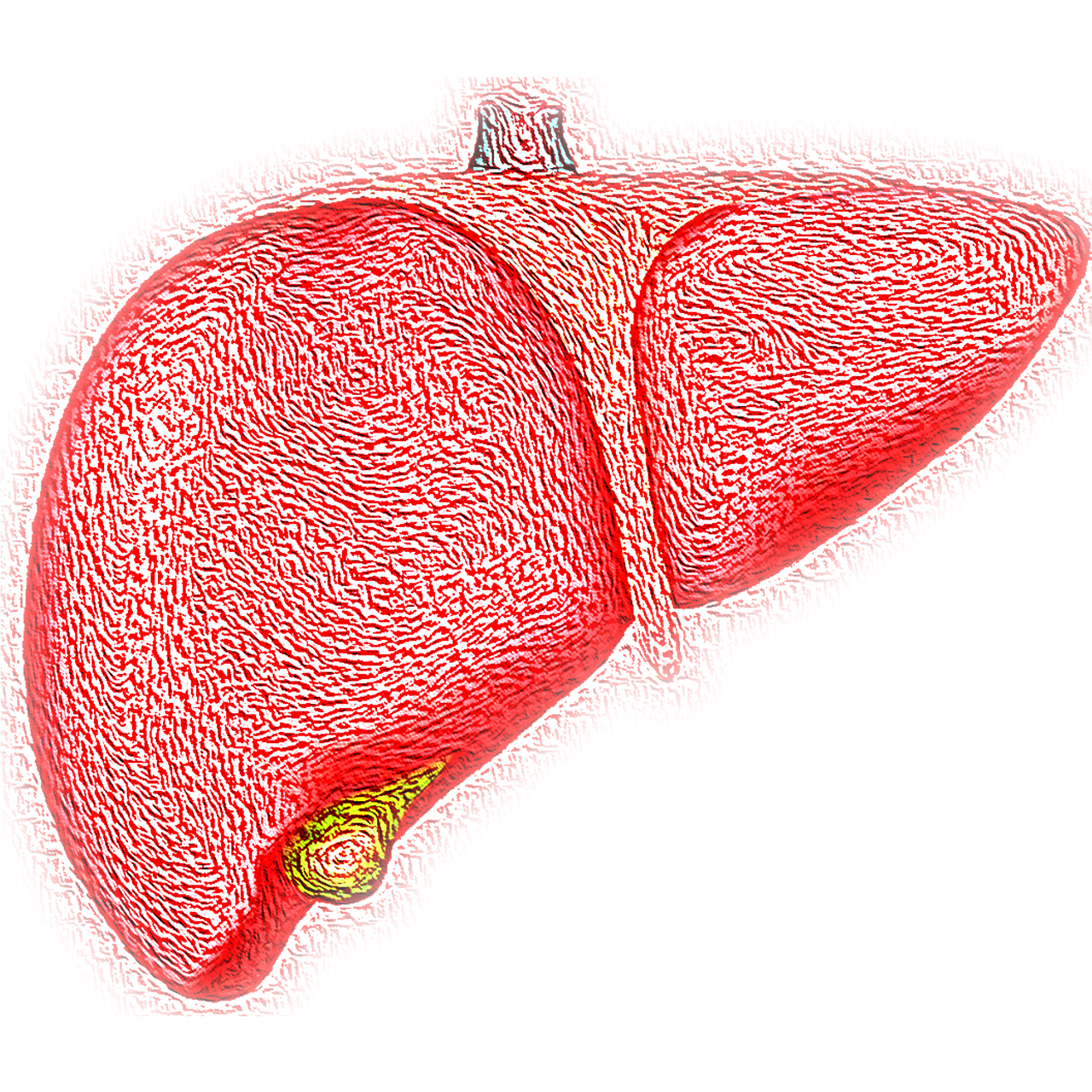
Alcohol and alcoholic liver Disease notes medical students. Fattty liver disease, liver cirrhosis NHPC, NNC and NMC

Alcohol and Alcoholic Liver Disease Notes: A Guide for Medical Students : NHPC, NNC and NMC

Table of Contents (toc)

Introduction

Alcohol consumption is a widespread social activity, but its excessive use has profound implications for human health, particularly the liver. The liver, as the central organ for detoxification, is especially vulnerable to the toxic effects of alcohol. Alcoholic liver disease (ALD) encompasses a spectrum of disorders, including fatty liver disease, alcoholic hepatitis, and liver cirrhosis. This article aims to provide medical students with a comprehensive overview of ALD.

Alcohol Metabolism and Liver Vulnerability

When alcohol is consumed, it is primarily metabolized in the liver through the following pathways:

  1. Alcohol dehydrogenase (ADH): Converts ethanol to acetaldehyde, a highly toxic compound.
  2. Aldehyde dehydrogenase (ALDH): Converts acetaldehyde to acetate, which is further metabolized into water and carbon dioxide.
  3. Microsomal ethanol oxidizing system (MEOS): Involved during chronic alcohol use, leading to increased oxidative stress.

These processes generate free radicals and promote inflammation, both of which damage hepatocytes over time.


Fatty Liver Disease (Alcoholic Steatosis)

Definition: Fatty liver disease is the earliest and most reversible stage of ALD, characterized by excessive fat accumulation within hepatocytes.

Pathophysiology:

  • Alcohol increases lipogenesis and reduces fatty acid oxidation.
  • Impaired secretion of very low-density lipoproteins (VLDL) exacerbates fat accumulation.

Clinical Features:

  • Often asymptomatic.
  • Some patients may report fatigue, malaise, or mild right upper quadrant discomfort.

Diagnosis:

  • Laboratory Tests: Mild elevation of liver enzymes (AST > ALT, usually < 300 IU/L).
  • Imaging: Ultrasound shows hyperechoic liver (“bright liver”).
  • Liver Biopsy: Confirms diagnosis if needed.

Management:

  • Complete abstinence from alcohol.
  • Nutritional support and management of coexisting conditions like obesity.

Alcoholic Hepatitis

Definition: An acute inflammatory condition of the liver due to prolonged heavy alcohol consumption.

Pathophysiology:

  • Persistent alcohol use triggers cytokine release (e.g., TNF-α, IL-6), leading to hepatocyte necrosis.
  • Inflammation exacerbates oxidative stress and fibrosis.

Clinical Features:

  • Symptoms: Jaundice, fever, anorexia, weight loss, and right upper quadrant pain.
  • Signs: Hepatomegaly, ascites, encephalopathy in severe cases.

Diagnosis:

  • Laboratory Tests:
    • Elevated liver enzymes (AST > ALT, typically in a ratio of ~2:1).
    • Elevated bilirubin and prolonged prothrombin time.
  • Imaging: Excludes other causes of liver disease.
  • Liver Biopsy: May show ballooned hepatocytes, Mallory-Denk bodies, and neutrophilic infiltration.

Management:

  • Alcohol Abstinence: Essential for prognosis improvement.
  • Nutritional Therapy: High-protein, calorie-dense diet.
  • Medications: Corticosteroids or pentoxifylline in severe cases.

Liver Cirrhosis

Definition: End-stage liver disease characterized by irreversible fibrosis and regenerative nodules.

Pathophysiology:

  • Chronic inflammation and hepatocyte injury lead to excessive collagen deposition and distortion of normal liver architecture.

Clinical Features:

  • Symptoms: Fatigue, jaundice, pruritus, abdominal distension.
  • Signs: Spider angiomas, palmar erythema, gynecomastia, splenomegaly, and ascites.
  • Complications: Portal hypertension, variceal bleeding, hepatic encephalopathy, hepatocellular carcinoma.

Diagnosis:

  • Laboratory Tests: Decreased albumin, elevated bilirubin, prolonged prothrombin time.
  • Imaging: Ultrasound or CT showing nodular liver.
  • Transient Elastography (FibroScan): Assesses liver stiffness.
  • Liver Biopsy: Confirms diagnosis if required.

Management:

  • Alcohol Abstinence: Prevents further progression.
  • Management of Complications:
    • Beta-blockers for variceal bleeding prophylaxis.
    • Diuretics and paracentesis for ascites.
    • Lactulose for hepatic encephalopathy.
  • Liver Transplantation: Definitive treatment for decompensated cirrhosis.

Preventive Strategies

  • Public Health Initiatives: Raising awareness about safe alcohol consumption limits.
  • Screening and Early Intervention: Routine liver function tests in at-risk populations.
  • Lifestyle Modification: Encouraging healthy diet, exercise, and abstinence from alcohol.

Conclusion

Alcoholic liver disease is a major cause of morbidity and mortality worldwide. Early recognition and intervention are crucial in preventing progression from reversible fatty liver to irreversible cirrhosis. As future medical professionals, understanding ALD’s pathophysiology, clinical features, and management is essential for providing comprehensive patient care and promoting liver health.

Download the Syllabus for Licensing Examination of B.Sc. MLT/ BMLT 2025

Download the Syllabus for Licensing Examination of
B.Sc. MLT/ BMLT
2025

(toc) Table of Contents

Nepal Health Professional Council

Bansbari, Kathmandu


Table of Contents

S.N. Topic Marks
1 Medical Microbiology 20%
2 Clinical Biochemistry 20%
3 Hematology & Blood Banking 20%
4 Histocytopathology 15%
5 Human Anatomy and Physiology 10%
6 Health Policy & Health System of Nepal 5%
7 Research Methodology and Biostatistics 5%
8 Clinical Pharmacology 3%
9 NHPC and Code of Ethics 2%
Total 100%

1. Medical Microbiology

1.1 Bacteriology

  1. Historical background, scope, importance, branches, and applications of microbiology.
  2. Safety measures, infection control practices, and biomedical waste disposal.
  3. Importance and applications of sterilization and disinfection.
  4. Composition, preparation, storage, uses, types, and quality control of culture media.
  5. Techniques and applications of different staining procedures.
  6. Antimicrobial drugs, their modes of action, antimicrobial susceptibility tests, drug resistance evaluation, and detection.
  7. Organization, management, and quality control of microbiology laboratories for district and zonal hospitals.
  8. Collection, transport, preservation, and processing of different clinical specimens for aerobic, microaerophilic, and anaerobic culture.
  9. Taxonomy, morphology, metabolism, cultural characteristics, pathogenesis, laboratory diagnosis, prevention, and control of clinically important bacteria:
    • Aerobic and anaerobic Gram-positive cocci
    • Gram-negative cocci
    • Aerobic and anaerobic Gram-negative bacilli
    • Gram-positive bacilli
    • Other Gram-variable bacteria
  10. Epidemiology, transmission, pathogenesis, laboratory diagnosis, prevention, and control of systemic infectious diseases.
  11. Investigation and control of community outbreaks and hospital-associated outbreaks, including epidemiological markers.
  12. Care, handling, and use of laboratory animals in microbiological investigations.
  13. Rapid diagnosis of infectious diseases using conventional and molecular techniques.

1.2 Parasitology

  1. Taxonomy, classification, morphology, life cycle, pathogenesis, laboratory diagnosis, prevention, and control of Protozoal and Helminthic parasites.
  2. Collection and preservation of clinical specimens for parasitic investigations.
  3. Urine routine analysis and special tests.
  4. Semen analysis and interpretation.
  5. Stool analysis using various techniques.
  6. Parasitic culture and egg-counting techniques.
  7. Blood parasites and their laboratory diagnosis.

1.3 Virology

  1. Morphology, taxonomy, replication, culture techniques, pathogenesis, laboratory diagnosis, prevention, and control of clinically important viruses.
  2. Virus culture techniques:
    • Biological host
    • Embryonated egg inoculation
    • Cell culture
  3. Emerging and re-emerging viruses.
  4. Development, standardization, and use of vaccines and antisera.

1.4 Mycology

  1. Taxonomy, classification, morphology, cultural characteristics, pathogenesis, laboratory diagnosis, prevention, and control of clinically important yeasts and molds.
  2. Mycological procedures for identifying molds and yeasts.

1.5 Immunology

  1. Structure, organization, function, and disorders of the human immune system.
  2. Principles, procedures, and applications of immunological techniques.

2. Clinical Biochemistry

2.1 Fundamentals of Biochemistry

  1. Glasswares: Types, uses, and cleaning methods.
  2. Chemical kinetics and reaction mechanisms.
  3. Acid-base homeostasis, buffers, and blood gas analysis.
  4. Analytical methods and instrumentation.
  5. Enzymes and their classification.
  6. Safety measures in biochemistry laboratories.
  7. Quality management of biochemistry laboratories.

2.2 Nutritional Biochemistry

  1. Structure, classification, and biological significance of carbohydrates, proteins/amino acids, lipids, and nucleic acids.
  2. Synthesis, function, and measurement of vitamins and minerals.

2.3 Metabolism

  1. Carbohydrate metabolism: Glycolysis, Glycogenesis, Glycogenolysis, Pentose phosphate pathway, Krebs cycle, Gluconeogenesis.
  2. Protein metabolism: Transamination, deamination, urea cycle, nitrogen balance, creatinine formation.
  3. Lipid metabolism: Alpha, beta, gamma oxidation, ketosis, and ketone body formation.
  4. Nucleotide metabolism: Purine and pyrimidine biosynthesis and regulation.
  5. Inborn errors of metabolism.

2.4 Organ Function Tests

  1. Liver, cardiac, pancreas, renal, and gastric function tests.
  2. Biochemistry of different body fluids.

2.5 Endocrinology

  1. Synthesis, functions, and metabolic disorders of hormones.
  2. Laboratory measurement of hormones using different methods.

2.6 Molecular Biology

  1. Basics of cellular and molecular biology.
  2. Cancer biology and tumor markers.
  3. Recent advances in clinical biochemistry.

3. Hematology and Transfusion Medicine

  1. Blood collection techniques.
  2. Hematopoietic system and blood composition.
  3. Hemoglobin synthesis, structure, and composition.
  4. Anemia: Definition, classification, and laboratory approaches for diagnosis.
  5. Leukemia: Definition, classification, and laboratory diagnosis.
  6. Routine hematological tests: Hemoglobin estimation, total RBC/WBC count, platelet count, etc.
  7. Special hematological tests: Plasma hemoglobin, Antihuman globulin test, etc.
  8. Routine and special stains for blood and bone marrow smears.
  9. Principles and applications of flow cytometry and Coulter counters.
  10. Hemoparasites and laboratory diagnosis.
  11. Hemostasis and fibrinolysis.
  12. Transfusion medicine and blood banking techniques.

4. Histopathology and Cytopathology

  1. Basic and systemic pathology.
  2. Preparation of fixatives and tissue processing.
  3. Microtomy techniques and error handling.
  4. FNAC and fluid cytology.
  5. Preparation of histological and cytological stains.
  6. Immunohistochemistry and immunofluorescence.

5. Human Anatomy and Physiology

  1. Organization and structure of human cells, tissues, organs, and systems.
  2. Endocrinology and hormone regulation.
  3. Mechanism of organ system regulation.

6. Health Policy and Health System of Nepal

  1. Overview of health systems and policies in Nepal.
  2. Evolution of health services and laboratory services in Nepal.
  3. National Health Policy and health service delivery mechanisms.
  4. National health programs and major health sector partners.

7. Research Methodology and Biostatistics

  1. Description of research types and tools.
  2. Central tendency and dispersion measures.
  3. Correlation and regression analysis.
  4. Sampling theories and hypothesis testing.

8. Pharmacology

  1. Basics of pharmacokinetics and pharmacodynamics.
  2. Drugs affecting renal, liver, lipid, and blood glucose parameters.
  3. Overview of antimicrobials.

9. NHPC and Code of Ethics

  1. Ethical codes for medical laboratory professionals.
  2. Duties of registered practitioners.
  3. Medico-legal procedures and laboratory tests.

Thank you!

Red eye cause and treatment in Nepali- Eye Flu: रातो आखाँ हुने कारण र उपचार नेपालीमा २०२५

What is Eye Flu?
How to treat Eye Flu?

Table of Contents (toc)

Introduction


Before moving to eye flu also called viral conjunctivitis, lets know what are
the causes of Red eye.
Here is the list of causes of red eye:
  1. Infection of eyelid (blepheritis)
  2. Infection of conjunctiva (conjunctivitis)
  3. Bleeding in conjunctiva (white part)
  1. Various things may cause this condition
  • Episcleritis
  • Scleritis
  • Iridocuclitis
  • Glaucoma
  • Corneal (window) abrasion / trauma
  • Keratitis (inflammation of cornea)
  • Endophthalmitis
  • Panophthalmitis
  • Orbial cellulitis
  • Allergy and irritant exposure
  • Out of these causes, Viral conjunctivitis is recently spreading in Nepal and
    India and has become the topic of discussion.
    Now lets talk about eye flu or conjunctivitis.
    Eye flu

    What is Conjunctivitis?

    Conjunctivitis means inflammation of Conjunctiva. 
    Conjunctival inflammation characterized by hyperemia associated with
    discharge that may be watery, mucoid, mucopurulent or purulent.
    Conjuntivitis can have various symptoms as listed below.

    Symptoms of eye infection (conjunctivitis)

    1. Discomfort in eye
    2. Foreign body sensation
    3. Discharge from eye
    • Watery
    • Mucus like
    • Pus like
  • Matted sticky eyelids  and lid margins
  • Difficulty opening eye in morning with discharge and sticky lids
  • Blurring of visionBlurring of vision (cannot see well)
  • Photophobia (pain or discomfort in light especially bright)
  • Colored halos
  • – आँखामा असहजता  
    – आँखामा विदेशी बस्तुको अनुभूति  
    – आँखाबाट बगेको पदार्थ  
    – पानीजस्तो  
    – म्युकसजस्तो  
    – पोजजस्तो (मलजस्तो)  
    – टाँसिने र चिप्लो पल्क र पल्कका किनारहरू  
    – बिहान आँखाको पल्क खोल्न गाह्रो हुने, डिस्चार्ज र टाँसिने पल्कसहित  
    – दृष्टि धमिलो हुने (राम्ररी देख्न नसक्ने)  
    – प्रकाश–डर (विशेष गरी तेज प्रकाशमा दुखाइ वा असहजता)  
    – रङ्गिन घेरा (आँखामा रङ्गीन घेरा देखिने)  

    Signs of Conjunctivitis / Signs of eye flu

    1. Red conjunctiva , fiery red eye
    2. Chemosis (swelling of conjunctiva)
    3. Hemorrhages (small bleeding)
    4. Flakes of discharge
    5. Matted or sticky cilia or hair
    6. Edematous eyelids

    What causes red eye, eye flu or conjunctivitis

    1. Infective
    1. Bacterial
    2. Viral
    3. Fungal
    4. Chlamydial
  • Allergic (Not infection)
    1. Atopic
    2. Vernal
    3. Contact
  • Cicatricial (Not infection)
    1. Pemphigoid
    2. SJS
  • Toxic or chemical (Not infection)
    1. Due to harmful irritant chemicals
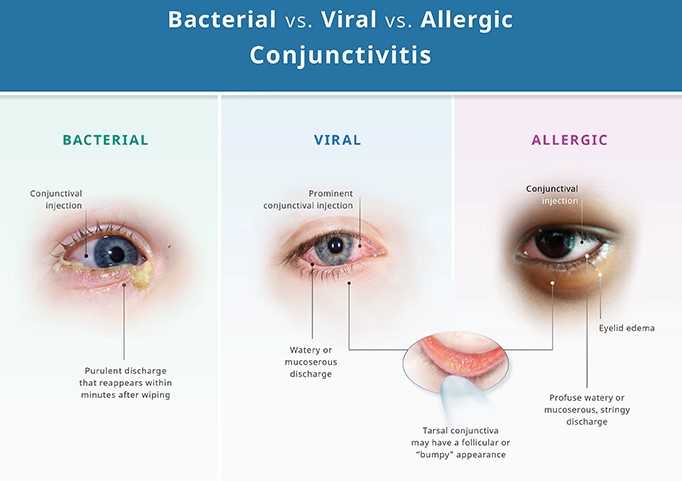
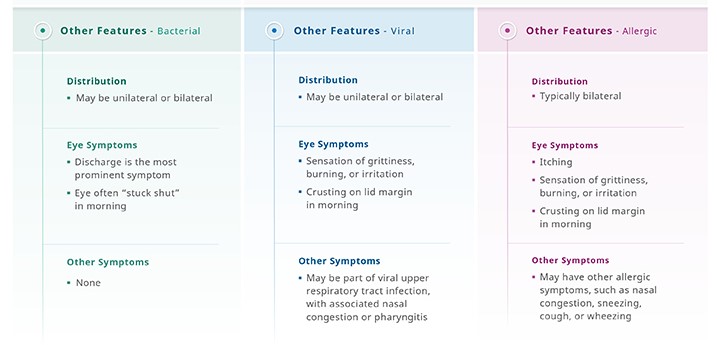
    bacterial vs viral vs allergic conjunctivitis

    – संक्रामक  
      – ब्याक्टेरियल  
      – भाइरल  
      – फंगल  
      – क्ल्यामाइडियल  
    – एलर्जिक (संक्रमण होइन)  
      – एटोपिक  
      – भर्नल  
      – सम्पर्कजन्य  
    – सिक्राट्रिसियल (संक्रमण होइन)  
      – पेम्फिगोइड  
      – एसजेएस (स्टीभेन्स-जोन्सन सिन्ड्रोम)  
    – विषाक्त वा रासायनिक (संक्रमण होइन)  
      – हानिकारक उत्तेजक रसायनहरूको कारण  

    Names of the bacteria that can cause eye fly or conjunctivitis?

    1. S aureus
    2. S epidermidis
    3. Strep pneumoniae
    4. Strep pyogens
    5. H influenzae
    6. N gonorrhoeae
    7. N meningitidis

    Names of the viruses that can cause eye fly or conjunctivitis?

    1. Adenovirus
    2. HSV
    3. Pox virus
    4. Myxovirus
    5. Paramyxovirus
    6. Arbovirus

      Causes of eye infection eye flu / Risk factors

      1. Poor hygiene
      2. Flies
      3. Lack of clean water
      4. Hot climate
      5. Not handwashing properly
      6. Close contact with people with innfection without proper care
      7. Not washing hands and face time to time
      8. Immune compromised state
      • खराब सरसफाइ
      • झिंगा
      • सफा पानीको अभाव
      • तातो मौसम
      • हात राम्रोसँग नधुने
      • संक्रमण भएका व्यक्तिहरूसँग उचित हेरचाह बिना नजिकको सम्पर्क
      • समय समयमा हात र मुख नधुने
      • कमजोर प्रतिरक्षा अवस्था

      How to know bacterial vs viral vs allergic conjunctivitis

      Continue reading Red eye cause and treatment in Nepali- Eye Flu: रातो आखाँ हुने कारण र उपचार नेपालीमा २०२५

      MCQs related to diarrhea and dehydration For Nursing and HA 2025

      Multiple-choice questions (MCQs) related to diarrhea and dehydration NNC and NHPC

      Table of contents (toc)

      ANSWERS TO DIARRHEA AND DEHYDRATION MCQ

      Question 1: What is the primary cause of diarrhea?

      A) Excessive water intake

      B) Viral or bacterial infections

      C) Overconsumption of fiber

      D) Lack of physical exercise

      Continue reading MCQs related to diarrhea and dehydration For Nursing and HA 2025

      Major Challanges of Postabortion Care (PAC) In Nepal 2025: What, when and why?

      A Closer Look at Postabortion Care (PAC) in Nepal Explained

      Table of Contents (toc)

      Introduction

      In recent years, Nepal has made significant strides in women’s healthcare, particularly in the realm of reproductive rights and services. One crucial aspect of this progress is the implementation of comprehensive Postabortion Care (PAC) services. PAC is not only a medical procedure; it represents a commitment to ensuring the physical, emotional, and psychological well-being of women who have undergone an abortion. In this article, we will delve into the key components of PAC in Nepal, its significance, challenges, and the ongoing efforts to provide quality care to women across the nation.

      You can read abour safe abortion service in family welfare divion website here.

      Understanding Postabortion Care (PAC)

      Postabortion Care (PAC) refers to a range of services designed to address the healthcare needs of women who have undergone an abortion, whether spontaneous or induced. The goal of PAC is to prevent complications, provide treatment if complications arise, and offer emotional support during a critical time in a woman’s life.

      Components of PAC in Nepal

      • Medical Care: 

      PAC involves providing medical attention to manage any complications that may arise after an abortion. Trained healthcare providers offer treatment for incomplete abortions, infection prevention, and managing excessive bleeding.

      • Contraceptive Counseling and Services: 

      Nepal recognizes the importance of family planning and ensures that women receive comprehensive contraceptive counseling and services as part of PAC. This empowers women to make informed choices about their reproductive health and prevents future unintended pregnancies.

      • Emotional Support: 

      Dealing with an abortion can be emotionally challenging for many women. PAC services in Nepal emphasize the provision of emotional support, including counseling and information about coping strategies.

      • Education and Awareness: 

      A significant aspect of PAC in Nepal is educating women about safe abortion practices and raising awareness about available healthcare services. This knowledge empowers women to make informed decisions and seek help promptly if needed.

      Dealing with an abortion can be emotionally challenging for many women. PAC services in Nepal emphasize the provision of emotional support, including counseling and information about coping strategies.

      Significance of PAC in Nepal

      PAC plays a pivotal role in safeguarding women’s health and rights in Nepal:

      • Reducing Maternal Mortality: 

      By addressing post-abortion complications, PAC contributes to a significant reduction in maternal mortality rates, ensuring women’s well-being and promoting healthy futures.

      • Empowering Women: 

      PAC empowers women to take charge of their reproductive health and make decisions that align with their life goals. Access to safe abortion and comprehensive care supports women’s autonomy.

      Preventing Unsafe Abortions: Providing safe and legal PAC services helps deter women from resorting to unsafe and illegal abortion methods, thereby protecting their health and lives.

      Challenges and Ongoing Efforts

      While Nepal has made substantial progress in PAC, challenges persist:

      Stigma and Cultural Barriers: 

      Stigma associated with abortion and cultural norms can hinder women from seeking PAC services. Continued awareness campaigns are crucial to combat these challenges.

      Geographical Accessibility: 

      Rural and remote areas may lack access to quality PAC services. Initiatives to expand healthcare infrastructure and training for healthcare providers are ongoing.

      Legal and Policy Framework: 

      Despite a progressive legal framework, gaps in policy implementation can hinder access to PAC. Advocacy for policy reform and rigorous enforcement is vital.

      Conclusion

      Postabortion Care (PAC) in Nepal stands as a testament to the nation’s commitment to women’s reproductive health and rights. Through comprehensive medical care, emotional support, education, and awareness, PAC is not only preventing complications but also empowering women to make informed choices. While challenges remain, the ongoing efforts to enhance accessibility, reduce stigma, and strengthen policy implementation signify Nepal’s determination to prioritize the well-being of its women. As we look ahead, it is imperative to continue supporting and advocating for robust PAC services that truly empower women and create a healthier, more equitable society.

      Read Comprehensive abortion care (CAC) here

      छारेरोग नेपालीमा Epilepsy: Chharerog bhaneko ke ho?

      Epilepsy: Chharerog bhaneko ke ho? Nepali ma छारेरोग नेपालीमा  

      (Toc) Table of Contents

      Introduction : छारेरोग (Epilepsy): कारण, लक्षण, उपचार र सावधानी

      छारेरोग, जसलाई एपिलेप्सी पनि भनिन्छ, मस्तिष्कको असामान्य विद्युतिय क्रियाकलापले उत्पन्न हुने एक तंत्रिका रोग हो। यस रोगका कारण व्यक्तिलाई अनियन्त्रित छारे उठ्ने समस्या हुन्छ। नेपालमा यो रोगबारे चेतना कम भएकाले मानिसहरूले यसलाई सही तरिकाले बुझ्न र समयमै उपचार गर्न पाएका छैनन्। यस लेखमा हामी छारेरोगका कारण, लक्षण, उपचार, र सावधानीबारे जानकारी दिन्छौं।

      Chharerog in English

      छारेरोगलाई अंग्रेजीमा Epilepsy or Seizure Disorder  भनिन्छ।

      छारेरोग के हो?

      छारेरोग एक दीर्घकालीन स्वास्थ्य समस्या हो, जसमा मस्तिष्कको विद्युतीय क्रियाकलापमा असन्तुलन आउने गर्छ। यसले व्यक्तिलाई एक्कासी छारे उठ्ने वा बेहोश हुने स्थिति निम्त्याउँछ। यो रोगले जीवनको गुणस्तरमा असर गर्न सक्छ, तर सही उपचारले यसलाई नियन्त्रणमा राख्न सम्भव छ।

      छारेरोगका कारणहरू

      छारेरोगका केही मुख्य कारणहरू निम्नानुसार छन्:
      • जन्मजात समस्या: गर्भावस्थामा मस्तिष्कको विकासमा आउने समस्याले छारेरोगको जोखिम बढाउन सक्छ।
      • मस्तिष्कको चोटपटक: दुर्घटनामा मस्तिष्कमा चोट लाग्दा वा मस्तिष्क सर्जरीपछि पनि छारेरोगको सम्भावना हुन्छ।
      • मस्तिष्कको संक्रमण: मेनिन्जाइटिस र इन्सेफेलाइटिसजस्ता मस्तिष्क संक्रमणले तंत्रिका प्रणालीमा असर पुर्याउन सक्छ।
      • अनुवांशिक कारण: परिवारमा छारेरोगको इतिहास हुने व्यक्तिमा यो रोगको सम्भावना बढी हुन्छ।

      छारेरोगका लक्षणहरू

      छारेरोगका लक्षणहरू व्यक्ति अनुसार फरक हुन सक्छन्। प्रमुख लक्षणहरूमा निम्न समावेश छन्:
      • शरीरको कुनै अंगमा अनियन्त्रित थर्कन
      • एकै ठाउँमा घुरेर हेर्ने
      • अचेत वा बेहोस हुने
      • कुनै शब्द नबोल्न पाउने वा बोल्ने क्रममा अवरोध हुन सक्ने
      • एक्कासी डराउनु वा चिच्याउनु
      छारेरोगका यी लक्षणहरू बारम्बार देखिएमा तुरुन्तै चिकित्सकको सल्लाह लिनुपर्छ।

      छारेरोगको उपचार

      छारेरोगको उपचारका लागि केही प्रमाणित विधिहरू छन्:
      • औषधि: चिकित्सकले दिने औषधिले मस्तिष्कको असामान्य विद्युतिय गतिविधिलाई नियन्त्रणमा राख्न मद्दत गर्छ। नियमित औषधि सेवनले छारे आउने सम्भावना घटाउँछ।
      • सर्जरी: जटिल केसमा सर्जरीबाट मस्तिष्कको समस्या भएको भाग हटाइन्छ, जसले छारेरोगलाई नियन्त्रण गर्न सकिन्छ।
      • केटो डायट: केही केसहरूमा केटो डायटले छारेरोगलाई नियन्त्रण गर्न मद्दत गरेको देखिन्छ। यसलाई अपनाउनुअघि चिकित्सकको सल्लाह लिनु आवश्यक हुन्छ।
      • विटामिन सप्लिमेन्ट्स: केही व्यक्तिहरूमा विशेष गरी भिटामिन B6 जस्ता सप्लिमेन्ट्स लाभदायक हुन सक्छन्। तर चिकित्सकको सल्लाहविना नखानुहोस्।

      छारेरोग भएका व्यक्तिका लागि सावधानी

      छारेरोग भएका व्यक्तिहरूले निम्न सावधानी अपनाउनु उपयुक्त हुन्छ:
      • औषधि नियमित सेवन गर्नुहोस्: चिकित्सकको सल्लाहबिना औषधि बन्द नगर्नुहोस्।
      • तनाव व्यवस्थापन: तनावले छारे उठ्ने सम्भावना बढाउन सक्छ, त्यसैले ध्यान र योग जस्ता अभ्यास गर्नु राम्रो हुन्छ।
      • सुरक्षित गतिविधिहरू रोज्नुहोस्: पौडी खेल्दा वा यात्रा गर्दा साथी वा परिवारसँगै रहनुहोस्।
      • मादक पदार्थबाट टाढा रहनुहोस्: यसले मस्तिष्कमा नकारात्मक असर पार्न सक्छ।
      • पर्याप्त निद्रा लिने प्रयास गर्नुहोस्: निद्रा नपुग्दा पनि छारेरोग बढ्न सक्छ।

      निष्कर्ष

      छारेरोग गम्भीर स्वास्थ्य समस्या हो तर सही जानकारी, समयमै उपचार, र उचित सावधानीबाट यसलाई राम्रोसँग नियन्त्रण गर्न सकिन्छ। नेपाली समाजमा यसबारे सचेतना फैलाउन आवश्यक छ ताकि छारेरोग भएका व्यक्तिहरूले सही उपचार पाउन सकून् र जीवनमा सुधार ल्याउन सकून्।
      स्वास्थ्यको लागि सचेत रहनुहोस्, चिकित्सकको सल्लाह लिनुहोस्, र आवश्यक जानकारी समाजमा फैलाउनुहोस्।

      SUAAHARA II program- suaahara 2 program Nepal

      What is suaahara ii program? know about suaahara program run by NTAG

      Table of Contents(toc)

      Innroduction of Suaahara program

      The Suaahara II program is a government initiative in Nepal aimed at improving the nutritional status of mothers and children. Launched in 2018 and implemented by the Ministry of Health and Population with support from various international organizations, the program focuses on enhancing maternal and child health, reducing malnutrition, and promoting healthy dietary practices.
      Suaahara II works through a community-based approach, engaging local health workers and volunteers to educate families about nutrition, hygiene, and health services. It targets pregnant women, lactating mothers, and children under five, providing them with essential information and support to ensure better health outcomes.
      By addressing various factors influencing nutrition, such as dietary diversity, sanitation, and healthcare access, Suaahara II aims to create sustainable improvements in the health and well-being of the most vulnerable populations in Nepal. The program also emphasizes the importance of community participation and the involvement of various stakeholders to maximize its impact.
      Suaahara ii program is run by donation from the USAID

      PARTNERS of suaahara ii:

      • Government of Nepal – Specifically, the Ministry of Health and Population.
      • USAID (United States Agency for International Development) – The main donor agency supporting the program.
      • Helen Keller International (HKI) – Focuses on nutrition and health.
      • Save the Children – Works on improving health and nutrition outcomes for children and families.
      • World Food Program (WFP) – Supports food assistance and nutrition interventions.
      • CARE Nepal – Engages in community-based health and nutrition programs.
      • Nepal Red Cross Society – Involved in community health initiatives.
      • Local Government Bodies – Collaborate on implementing health programs at the community level.
      • Various NGOs and Community-Based Organizations – Work alongside the program to reach target populations.

      Prime partner of suaahara ii:

      Helen Keller International is the Prime partner of suaahara ii in nepal. It has been working with the suaahara program now with its full potential.

      Consortium partner of suaahara ii:

      CARE, FHI 360, NTAG, DBI Equal Access, ENPHO, VDRC are the Consortium partner of suaahara ii.

      suaahara ii program

      Suaahara program is implemented PROGRAM in the fllowing districts:

      42 districts

      • Arghakhachi
      • Baglung
      • Baitadi
      • Banke
      • Bardiya
      • Bhojpur
      • Dang
      • Darchula
      • Dhading
      • Gorkha
      • Gulmi
      • Jajarkot
      • Kapilvastu
      • Lamjung
      • Myagdi
      • Nuwakot
      • Palpa
      • Panchthar
      • Rolpa
      • Rukum East
      • Rukum West
      • Sankhuwasabha
      • Sindhupalchok
      • Solukhumbu
      • Taplejung

      NTAG’S AREAS OF INTERVENTIONS

      Nutrition suaahara ii

      As a consortium partner, NTAG has primary role to conduct training and capacity building to improve the maternal, infant and young child nutrition (MIYCN) related behaviors at household level.

      PROGRAM DURATION SUAAHARA II

      June 2016 – March 2023

      STATUS SUAAHARA II

      Ongoing 

      PROGRAM OVERVIEW SUAAHARA II

      Nepal has made significant progress to reduce maternal and child mortality by implementing strategic programs. However, malnutrition rates in is remain high. Nepal is one of the most undernourished countries in the world. In Nepal, 36 percent of children under five years of age are stunted, 10 percent suffer from wasting, and 27 percent are underweight. In addition, 40.8% women of reproductive age and 52.7% children under five are anemic.

      SUAAHARA PROGRAM

      The SUAAHARA II “Good Nutrition” project, funded by U.S. Agency for International Development (USAID), designed and implemented after successful completion of SUAAHARA I. Suaahara I successfully reached more than 625,000 households with its integrated nutrition programming. Suaahara II is also dedicated to improving the health and nutrition of more than 1.5 million mothers and their children in the 1000 days’ period from conception until a child reaches 2 years of age. Beyond nutrition sensitive interventions, Suaahara II also focused on multi sectorial coordination among equity, gender, social inclusion, behavior change and good governance to meet the goals of the project
      SUAAHARA II primarily focused on 1000 days mothers and their family which period is recognized as a crucial timeframe during which nutritional interventions have optimal impact on child growth and development. This program will cover all households in 40 of the 75 districts of Nepal.

      PROGRAM OBJECTIVES OF SUAAHARA II:

      • To improve the household nutrition and health behaviors.
      • To increase the use of quality nutrition and health services by women and children.
      • To improve access to diverse and nutrient rich food by women and children.
      • To accelerate roll-out of the multi sectoral nutrition plan (MSNP) through strengthened local governance.

      follow the link to read similar articles

      Source:
      https://www.ntag.org.np/suaahara-ii/

      7 Compelling Reasons to Choose USA as Your Study Destination Abroad

       7 Compelling Reasons to Choose USA as Your Study Destination Abroad

      Table of Contents(toc)

      It might be a good idea to study abroad in the United States (USA) if you’re planning to do so. International students from all over the world flock to the USA because of its world-renowned education system and endless growth opportunities. Here are seven reasons why choosing the USA for your study abroad destination could be a transformative decision.

      Diverse Range of High-Quality Academic Programs


      More than 4,000 universities and colleges in the USA offer undergraduate, graduate, and doctoral programs in virtually every field. From arts and humanities to STEM subjects, the USA’s higher education system can cater to any academic preference. American universities also consistently rank high in global rankings, proving their commitment to quality.

      International student

      Research and Innovation Opportunities

      International students have the chance to get involved in cutting-edge research and innovation in the USA. There are a lot of universities that have innovative facilities and invite students to participate in groundbreaking research. This hands-on experience can be invaluable in furthering your academic career and making an impact on a global scale.

      Career Opportunities and Internships

      It can make a huge difference to your career prospects to study in the USA. Due to its strong economy, the USA has a lot of multinational companies and startups, so there are a lot of internships and jobs. Universities often have career services that help students find internships, co-ops, and part-time job opportunities in their field of interest.

      Cultural Diversity

      The USA is a melting pot of cultures, allowing international students to experience a multicultural environment firsthand. This exposure not only enriches the study abroad experience but also helps develop a global perspective, a trait highly valued by employers worldwide.

      Universities in the USA have diverse student populations and frequently organize cultural events, promoting inclusivity and understanding among students.

      Support for International Students

      International students get a lot of help adjusting to a new educational system and culture at American universities. You can get support from English language courses to academic writing workshops to counseling services. Using these resources makes the transition smoother and enhances the study abroad experience.

      Flexibility in Education System

      One of the unique aspects of the USA’s education system is its flexibility. Students can often choose their major and minor subjects, tailor their course load according to their convenience, and even switch universities if required. 

      Additionally, programs like double majors, minors, and electives allow students to explore a variety of interests alongside their main course of study.

      Broadened Perspectives and Personal Growth

      Lastly, studying in the USA can be an opportunity for immense personal growth. Living independently, navigating a new cultural landscape, and meeting people from diverse backgrounds can help students develop valuable life skills. 

      Studying abroad often leads to increased self-confidence, improved problem-solving abilities, and heightened cultural awareness—skills that serve students well beyond their academic careers.

      Conclusion

      If you’re looking for a study abroad destination, the USA is a great choice. You’ll get a top-notch education, get to know different cultures, participate in groundbreaking research, and advance your career. Students in the USA get an education that goes beyond academics, ensuring that they leave with lifelong memories, experiences, and skills.

      Why is Human chorionic gonadotropin (hCG) done for Pregnancy tests?

      Human chorionic gonadotropin – The basis of pregnancy tests and Clinical
      implications

      a pregnant woman

      Table of Contents (toc)

      When is hCG first detectable?

       Detection of human chorionic gonadotropin (hCG) in blood or urine is the
      basis of all pregnancy tests

      hCG is secreted into the maternal circulation after implantation, which may
      occur as early as 6 days after ovulation but typically occurs 8 to 10 days
      after ovulation 

      When Does Ovulation Occur

      Ovulation occurs around day 14 of a 28-day menstrual cycle.

      This is the earliest that hCG can be detected with a standard serum hCG test.
      However, the ovulation-to-implantation interval has been observed to vary by
      up to six days in naturally conceived pregnancies.

      What delayes pregnancy test to come positive?

      Late implantation delays
      the time to a positive pregnancy test and has been associated with an
      increased risk of pregnancy loss.

      In a study of females with normal menstrual cycles who were attempting to
      conceive, the median hCG concentration on the first day of expected but missed
      menses (ie, approximately 4 weeks of gestation) was 239 milli-international
      units/mL in serum and 49 milli-international units/mL in a spot urine, but
      there was a wide range among individuals.

      The range of hCG values was narrower in a study of over 4400 females who
      conceived by in vitro fertilization, underwent embryo transfer two to three
      days after egg retrieval, and had at least one viable embryo at 8 weeks of
      gestation: the median hCG concentration on day 12 after embryo transfer/day 16
      after ovulation (ie, approximately 4 weeks of gestation) was 118
      milli-international units/mL (interquartile range 98 milli-international
      units/mL).

      Some common symptoms of pregnancy:

      • Missed Period: One of the earliest signs, especially if you have regular menstrual cycles.
      • Nausea and Vomiting: Often referred to as “morning sickness,” this can occur at any time of day.
      • Breast Changes: Tenderness, swelling, or darkening of the areolas.
      • Fatigue: Increased tiredness and a need for more sleep.
      • Frequent Urination: An increase in urination due to hormonal changes and pressure on the bladder.
      • Food Cravings or Aversions: Changes in taste preferences or aversion to certain foods.
      • Mood Swings: Emotional fluctuations due to hormonal changes.
      • Bloating: A feeling of fullness or swelling in the abdomen.

      Signs of pregnancy list out for medical students

      Presumptive Signs

      • Missed Period
      • Nausea and Vomiting
      • Breast Changes
      • Fatigue
      • Frequent Urination
      • Food Cravings or Aversions
      • Mood Swings
      • Bloating

      Probable Signs

      • Positive Home Pregnancy Test
      • Uterine Enlargement
      • Chadwick’s Sign (bluish discoloration of cervix)
      • Hegar’s Sign (softening of the uterus)
      • Fetal Heartbeat Detected by Doppler

      Positive Signs

      • Visualization of Fetus on Ultrasound
      • Detection of Fetal Heartbeat via Ultrasound
      • Blood Tests Confirming hCG Levels

      How does hCG level change across pregnancy 

      The hCG concentration doubles every 29 to 53 hours during the first 30 days
      after implantation of a viable, intrauterine pregnancy; a slower rise is
      suggestive of an abnormal pregnancy (eg, ectopic, early embryonic death).

      positive pregnancytest results

      The hCG concentration

      The hCG concentration peaks at 8 to 10 weeks of gestation, averaging 60,000 to
      90,000 milli-international units/mL at that time, but again, the range of
      normal is quite wide (5000 to 150,000 milli-international units/mL or more).

      Thus, hCG levels are not useful for estimating gestational age, except in the
      first one to three weeks postconception

      After 8 to 10 weeks of gestation, hCG levels decline, reaching a median
      concentration of approximately 12,000 milli-international units/mL at 20
      weeks, again with a wide range of normal: 2000 to 50,000 milli-international
      units/mL or more.

      hCG concentration stays relatively constant from approximately the 20th week
      until term.

      Variation in hCG Level

      The factors accounting for the wide variation in interindividual hCG levels
      have not been studied extensively in accurately dated pregnancies; maternal
      weight accounts for some of the variation throughout pregnancy.

      In some cases, an unrecognized vanishing twin affects the hCG level.

      {
      “@context”: “https://schema.org”,
      “@type”: “FAQPage”,
      “mainEntity”: [{
      “@type”: “Question”,
      “name”: “When is hCG first detectable?”,
      “acceptedAnswer”: {
      “@type”: “Answer”,
      “text”: “hCG is secreted into the maternal circulation after implantation, which may occur as early as 6 days after ovulation but typically occurs 8 to 10 days after ovulation (ovulation occurs around day 14 of a 28-day menstrual cycle)”
      }
      },{
      “@type”: “Question”,
      “name”: “How does hCG level change across pregnancy”,
      “acceptedAnswer”: {
      “@type”: “Answer”,
      “text”: “The hCG concentration doubles every 29 to 53 hours during the first 30 days after implantation of a viable, intrauterine pregnancy”
      }
      }]
      }

      MCQs in dentistry 2024 : Most important questions

      Multiple-choice questions (MCQs) in dentistry for dental hygienists and medical students:

      Table of Contenets(toc)

      LINK TO ANSWERS

      1. What is the primary purpose of dental prophylaxis?

         a) Tooth extraction

         b) Teeth whitening

         c) Preventive dental cleaning

         d) Orthodontic treatment

      2. Which of the following oral conditions is primarily caused by bacterial plaque accumulation?

         a) Dental caries (cavities)

         b) Bruxism (teeth grinding)

         c) Dental fluorosis

         d) Enamel hypoplasia

      3. What is the recommended technique for brushing a patient’s teeth with gingival recession?

         a) Horizontal scrubbing

         b) Vertical scrubbing

         c) Circular scrubbing

         d) Modified Bass technique

      4. Which dental instrument is commonly used for removing calculus deposits from the crowns of teeth?

         a) Dental mirror

         b) Periodontal probe

         c) Scaler

         d) Dental excavator

      5. Which of the following is a risk factor for developing periodontal disease?

         a) Frequent fluoride use

         b) Overbrushing with a hard-bristle toothbrush

         c) Regular dental check-ups

         d) Adequate saliva production

      Please comment the asnwer below.

      If tou have any quereies let us know. 

      LINK TO ANSWERS

      Exit mobile version