

Anesthetic Agents of Choice & Contraindications

-
Ketamine: Preferred in bronchial asthma due to its potent bronchodilator effect.
Continue reading Anesthetic Agents of Choice & Contraindications
Ketamine: Preferred in bronchial asthma due to its potent bronchodilator effect.
Continue reading Anesthetic Agents of Choice & Contraindications
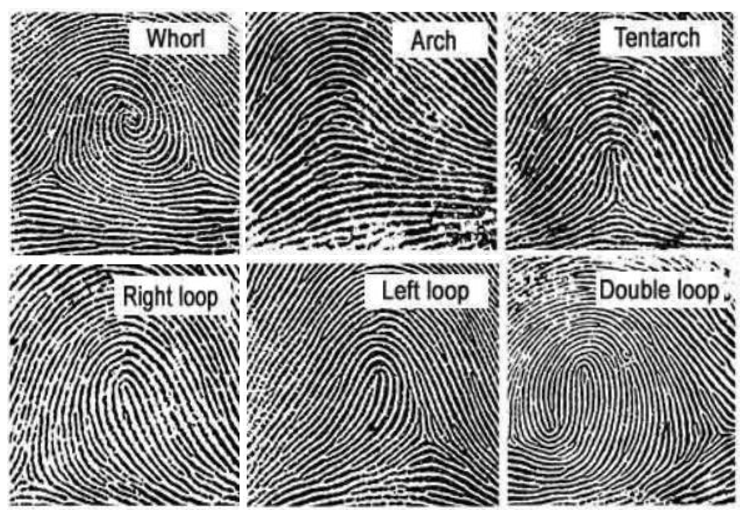
✅ The most common fingerprint pattern: Loops (67%) > Whorls > Arches > Composite.
✅ Loops are the most frequent, followed by whorls, arches, and composite patterns.
📍 First Fingerprinting Bureau in the World: Established in Kolkata, India (1897).
🔹 Best identification system to date (with dental status being the second best).
🔹 Quetelet’s Rule of Biological Variation:
🔬 Points of Comparison: Generally, 16-20 points are accepted as proof of identity.
🔬 Poroscopy: Advanced fingerprint study described by Locard (focuses on sweat pore patterns).
🖐 Which thumb impression is taken?
🖥 FINDER (Fingerprint Reader)
📌 Pigeonhole Method:

Definition: An exaggerated decrease (>10 mmHg) in systolic blood pressure during inspiration.
🔍 Seen in:
📝 Exam Tip: Pulsus paradoxus is best detected using a sphygmomanometer rather than palpation. It is a key feature of cardiac tamponade.
Definition: Regular alteration of pulse pressure with a normal rhythm (single peak per beat). Indicates left ventricular systolic dysfunction.
🔍 Seen in:
📝 Exam Tip: Pulsus alternans suggests poor left ventricular function and can be confirmed using sphygmomanometry or echocardiography.
Definition: A pulse with two distinct systolic peaks per cardiac cycle. Best felt in the carotid artery.
🔍 Seen in:
📝 Exam Tip: Bisferiens pulse is classically associated with HOCM and can be differentiated from other pulses using Doppler echocardiography.
Definition: A pulse with two palpable waves: one during systole and one during diastole.
🔍 Seen in:
📝 Exam Tip: Dicrotic pulse occurs due to an exaggerated dicrotic notch. It is often a sign of severe myocardial dysfunction.


Which one of the following drugs is absolutely contraindicated in pregnancy?
a. Chloroquine
c. Methotrexate
b. Cyclosporine
d. Pyrazinamide
_____________
Ans: ‘c’
Explanation
Methotrexate is contraindicated in pregnancy.
{
“@context”: “https://schema.org”,
“@type”: “FAQPage”,
“mainEntity”: {
“@type”: “Question”,
“name”: “Can we give metatrexate in pregnancy?”,
“acceptedAnswer”: {
“@type”: “Answer”,
“text”: “No. Methotrexate is contraindicated in pregnancy.”
}
}
}


{
“@context”: “https://schema.org”,
“@type”: “FAQPage”,
“mainEntity”: {
“@type”: “Question”,
“name”: “What is the mnemonic for remembering elements of primary health care?”,
“acceptedAnswer”: {
“@type”: “Answer”,
“text”: “ELEMENTS itself is the mnemonic to remember elements of primary health care.”
}
}
}
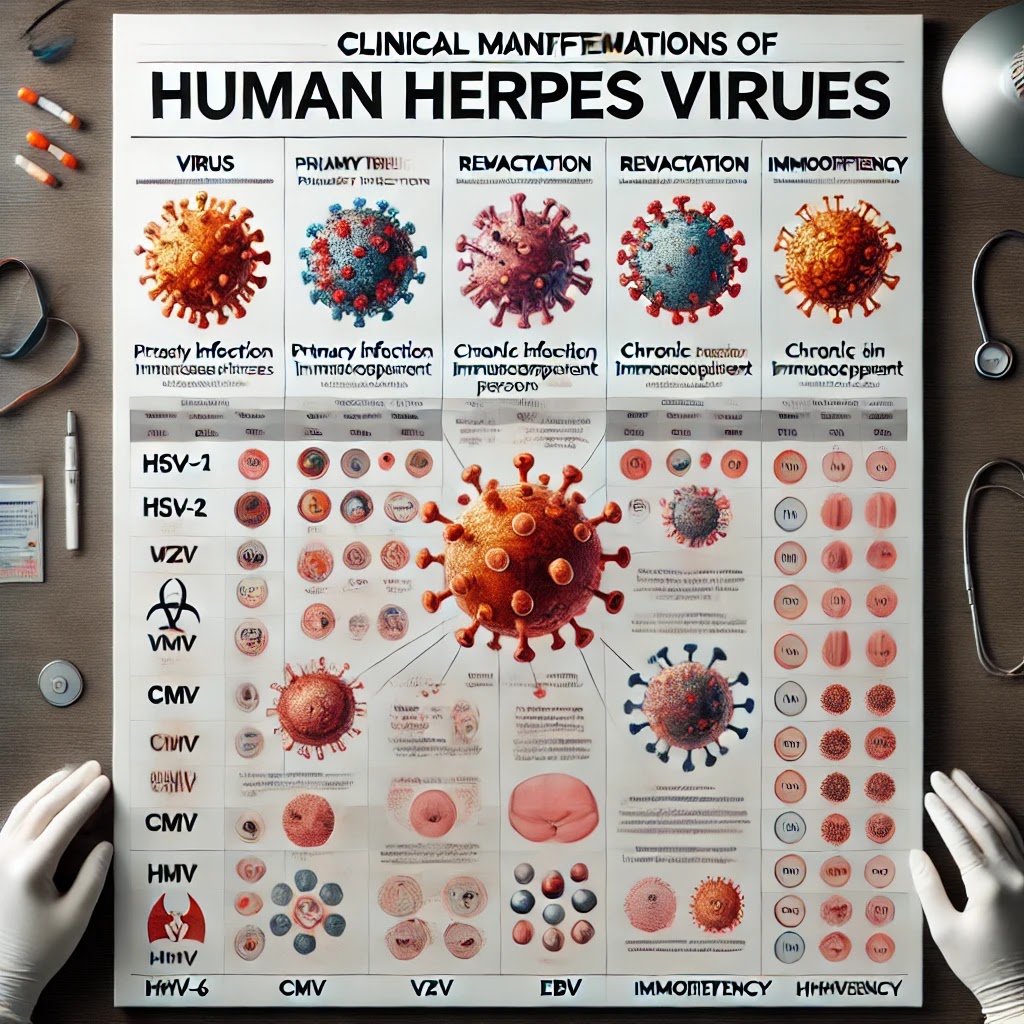
| Virus | Primary Infection | Reactivation | Chronic Infection in Immunocompetent Persons | Immunodeficiency |
|---|---|---|---|---|
| Herpes simplex virus 1 (HSV-1) | Frequently subclinical (80–90%), Oral lesions (10–20%), Congenital infection | Oral lesions, Encephalitis | None | Large mucocutaneous lesions |
| Herpes simplex virus 2 (HSV-2) | Frequently subclinical (80–90%), Genital lesions (10–20%) | Genital ulcers, Encephalitis | None | Large mucocutaneous lesions |
| Varicella-zoster virus (VZV) | Chickenpox | Shingles | None | Multisegmental shingles or severe disseminated infection |
| Cytomegalovirus (CMV) | Mononucleosis-like disease | ? | Cofactor in atherosclerosis (?) | Retinitis, Colitis, Pneumonitis, Encephalitis |
| Epstein–Barr virus (EBV) | Mononucleosis | ? | Nasopharyngeal carcinoma, Burkitt lymphoma | B-cell lymphoma, Oral hairy leukoplakia |
| Human herpes virus 6 (HHV-6) | Exanthema subitum (Roseola) | ? | Multiple sclerosis (?) | Pneumonia, Disseminated infection |
| Human herpes virus 7 (HHV-7) | Fever, Exanthema-subitum-like illness | ? | None | ? |
| Human herpes virus 8 (HHV-8) | Febrile illness | ? | ? | Multicentric Castleman disease, Kaposi sarcoma, Primary body cavity lymphoma |
Note: (?) = Not proven
Source: Differential Diagnosis in Internal Medicine – From Symptom to Diagnosis, 2007
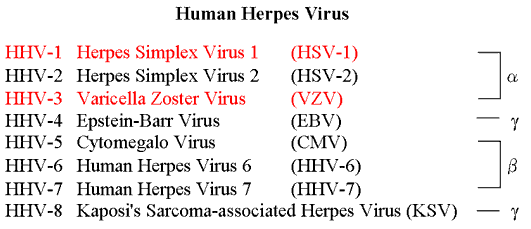
table {
width: 100%;
border-collapse: collapse;
}
th, td {
border: 1px solid black;
padding: 10px;
text-align: left;
}
th {
background-color: #f2f2f2;
}
 |
| Food |
Food adulteration is a major health concern, as it involves the addition of
harmful substances to food products, reducing their quality and making them
unsafe for consumption. Below is a table listing common food adulterations,
their sources, and their health effects.
| Food Item | Common Adulterant | Health Hazards |
|---|---|---|
| Milk | Detergent, starch, urea, synthetic milk | Digestive issues, kidney damage, food poisoning |
| Tea & Coffee | Used tea leaves colored with iron fillings | Stomach disorders, liver damage |
| Wheat & Flour | Starch, chalk powder | Indigestion, nutritional deficiency |
| Sugar | Washing soda, chalk powder | Stomach disorders, irritation in the digestive tract |
| Honey | Glucose, molasses, sugar syrup | Weight gain, diabetes risk |
| Vegetables | Malachite green (to enhance color) | Carcinogenic effects, liver damage |
| Fruits | Wax coating, carbide for ripening | Cancer risk, digestive issues |
| Pulses | Artificially polished with lead chromate | Kidney failure, cancer risk |
| Soft Drinks | Excess carbon dioxide, artificial sweeteners | Obesity, metabolic disorders |
| Ice Cream | Washing powder, synthetic milk | Gastrointestinal diseases |
| Ghee & Butter | Vanaspati, starch | Cardiovascular diseases, digestive issues |
| Pickles | Excessive salt and non-edible mineral oil | High blood pressure, digestive problems |
| Chocolates & Sweets | Non-edible synthetic dyes, aluminum foil | Liver and kidney damage, allergies |
| Meat & Fish | Formalin (used for preservation) | Highly toxic, can cause cancer |
Food adulteration can have serious health consequences. Always buy food from
trusted sources, check labels for certifications, and use simple home tests to
ensure food safety.
body {
font-family: Arial, sans-serif;
margin: 20px;
background-color: #f9f9f9;
}
table {
width: 100%;
border-collapse: collapse;
background-color: white;
box-shadow: 2px 2px 10px rgba(0, 0, 0, 0.1);
}
th, td {
border: 1px solid #ddd;
text-align: left;
padding: 10px;
}
th {
background-color: #4CAF50;
color: white;
}
tr:nth-child(even) {
background-color: #f2f2f2;
}
caption {
font-size: 1.5em;
margin-bottom: 10px;
font-weight: bold;
}
table {
width: 100%;
border-collapse: collapse;
margin-bottom: 20px;
}
th, td {
border: 1px solid black;
padding: 10px;
text-align: left;
}
th {
background-color: #f2f2f2;
}