MCQ for medical students and nhpc license examination preparation set: 4
Table of Contents(toc)
Introduction
I hope you are doing well and reading this. As you are aware, we will be using
Google Forms to administer an upcoming multiple-choice test. I’m writing to
respectfully ask that you take the test and do your best.
Why to Practice MCQ
It is quick and easy to gauge your level of subject knowledge by taking
the test using Google Forms. As many tests are now taken online, it’s also a
fantastic chance to practice test-taking techniques.
Before you begin
Before beginning the test, please be sure you read and comprehend the
instructions and to have a reliable internet connection. Please do not
hesitate to contact me for help if you run into any technical issues.
MCQ for PCL level google forms quiz mode
Cancer & Lung Disease
Most common type of cancer worldwide leading to death is:
Lung
Breast
Thyroid
Prostate
Most common preventable cause related to lung cancer:
Alcohol consumption
Pollution
Cigarette smoking
Red meat consumption
Most common variety of bronchial carcinoma:
Adenocarcinoma (30%)
Small cell (20%)
Squamous cell (35%)
Large cell (15%)
Hoarseness of voice in carcinoma of lung is due to compression of which nerve?
Vagus nerve
Recurrent laryngeal nerve (left)
Glossopharyngeal nerve
Hypoglossal nerve
A patient with a 3-month history of cough, chest pain, and hemoptysis presents with shortness of breath. X-ray shows a large left-sided effusion, and the fluid appears hemorrhagic. What is the most probable diagnosis?
Pleural TB
Pulmonary tuberculosis
Carcinoma of lung
Heart failure
Renal Diseases & Urinary System
Nephrotic range proteinuria is defined as:
1 mg in 24 hr
1 g in 24 hr
3 mg in 24 hr
3 g in 24 hr
Post-streptococcal glomerulonephritis occurs how long after a streptococcal throat infection?
1-2 weeks
2-4 weeks
6-10 weeks
After 3 months
Post-streptococcal glomerulonephritis occurs how long after a streptococcal skin infection?
1-2 weeks
2-4 weeks
6-10 weeks
After 3 months
Which group of Streptococcus is mainly responsible for PSGN?
Which feature differentiates nephrotic syndrome from nephritic syndrome?
Proteinuria
Edema
Hypertension
Deranged renal function
Which class of antihypertensive is antiproteinuric and hence useful in nephritic syndrome?
Calcium channel blockers
Beta-blockers
ACE inhibitors
Diuretics
Most common cause of nephrotic syndrome is:
Minimal change disease (90%)
Focal segmental glomerulosclerosis
Membranoproliferative glomerulonephritis
Membranous nephropathy
Which of the following is NOT a classical feature of nephrotic syndrome?
Heavy proteinuria
Hypoalbuminemia
Hypolipidemia
Lipiduria
Edema in nephrotic syndrome is due to:
Increased hydrostatic pressure
Decreased oncotic pressure in blood
Increased oncotic pressure in interstitial side
Inflammation of soft tissue
Urinary System & UTI
Average length of female urethra is:
3 cm
4 cm
5 cm
6 cm
Why is the incidence of UTI higher in females?
They are more immune-compromised
Short urethra
Presence of variety of bacteria in vulva
Lack of hygiene
Most common pathogen group causing UTI:
Fungus
Protozoans
Gram-positive bacteria
Gram-negative bacteria
Most common cause of UTI:
E. coli
Klebsiella spp
Proteus spp
Pseudomonas spp
Renal angle tenderness is positive in:
Nephritic syndrome
Pyelonephritis
Ureteric calculus
Bladder outlet obstruction
Antibiotics for UTI should be given for:
15-20 days
3-5 days
8-10 days
7-14 days
Most common composition of renal calculus:
Oxalate
Uric acid
Cystine
Triple phosphate
Staghorn calculus is:
Chemical composition of calculus
Calculus with spikes
A big calculus
Large calculus taking the shape of renal pelvis
The calculus that can be seen on X-ray (radio-opaque) is:
Oxalate
Cystine
Xanthene
Uric acid
Acute Kidney Injury (AKI) & Dialysis
Acute kidney injury is diagnosed if:
Serum creatinine increases ≥ 0.3 mg/dL from previous value
Serum creatinine increases ≥ 50% from baseline
Urine output <0.5 ml/kg/hr for >6 hrs
All of the above
RIFLE criteria is related to:
Acute kidney injury
Congestive heart failure
Stroke
Deep venous thrombosis
Which drugs are nephrotoxic?
NSAIDs
Aminoglycosides
Radio-opaque IV contrast
All of the above
Diabetes & Metabolism
Which of the following is NOT a function of insulin?
Increases glucose uptake in muscles
Increases lipolysis
Increases glycogenesis
Increases lipogenesis
Which of the following is NOT a classical symptom of diabetes mellitus?
Polyuria
Polydipsia
Polyphagia
Polymorphism
Class II obesity is defined as BMI:
25-30
30-40
30-34.9
35-39.9
Common insulin injection sites include all EXCEPT:
Periumbilical area
Lateral thighs
Upper outer arm
Flank area
Diabetic ketoacidosis (DKA) is more common in:
Gestational DM
Type 1 DM
Type 2 DM
Same in all
Normal fasting blood sugar level is:
<70 mg/dL
<100 mg/dL
<110 mg/dL
<126 mg/dL
Diagnosis of diabetes mellitus is made if:
HbA1c ≥ 6.5%
FBS ≥ 126 mg/dL
2-hour postprandial glucose ≥ 200 mg/dL
RBS ≥ 200 mg/dL with symptoms of hyperglycemia
All of the above
Which is the first-line pharmacological treatment for Type 2 Diabetes?
Metformin
Glimepiride
Acarbose
Insulin
Common side effect of metformin:
GI upset
Headache
Hypotension
Arrhythmia
Diabetes & Its Complications
Maximum daily dose of metformin is:
1000 mg
1500 mg
2000 mg
2500 mg
Which of the following is NOT true about metformin?
It is safe in pregnancy
Dose adjustment is needed in case of renal impairment
It causes hypoglycemia
Diarrhea and nausea are common symptoms
Which is an acute complication of diabetes mellitus?
Diabetic ketoacidosis (DKA)
Diabetic nephropathy
Diabetic retinopathy
Diabetic neuropathy
Which of the following is NOT a macrovascular complication of diabetes?
Coronary artery disease
Peripheral artery disease
Cerebrovascular disease
Diabetic retinopathy
Normal 2-hour postprandial (PP) blood glucose after ingestion of 75 g of glucose is (mg/dL)?
<126
<140
<180
<200
Impaired glucose tolerance is diagnosed when HbA1c is (%):
4.5 – 5.5
5.7 – 6.4
6.5 – 7.0
6.0 – 8.0
Target 2-hour postprandial (PP) blood sugar in type 2 DM patients under treatment should be:
<120 mg/dL
<140 mg/dL
<180 mg/dL
<200 mg/dL
Recommended level of exercise for a diabetic patient is:
30 minutes twice daily
60 minutes every day
30 minutes, 6 days a week
4-5 hours once weekly
In the plate model for a diabetic diet, what portion of the plate should be covered by green vegetables and fruits?
One-third
Half
Two-thirds
Three-fourths
What percentage of total calorie intake should come from carbohydrates in a diabetic patient’s diet?
<30%
<50%
40-60%
60-80%
Eye examination should be done in diabetic patients every:
3 months
6 months
Every 5 years
Annually
Target blood pressure for diabetic patients is:
<110/70 mmHg
<120/70 mmHg
<130/80 mmHg
<140/90 mmHg
Endocrinology & Insulin Therapy
Route of administration of insulin is:
Intravenous (IV)
Subcutaneous (SC)
Intramuscular (IM)
Both a and b
Common age of onset of Type 1 Diabetes is:
10-25 years
25-40 years
40 years
<10 years
Diabetic ketoacidosis (DKA) is characterized by:
Hyperglycemia
Metabolic acidosis
Ketosis
All of the above
Which of the following is NOT a common insulin injection site?
Periumbilical area
Lateral thighs
Upper outer arm
Flank area
Which of the following is NOT a function of insulin?
Increase glucose uptake in muscles
Increase lipolysis
Increase glycogenesis
Increase lipogenesis
Which of the following is NOT a classical symptom of Diabetes mellitus?
Polyuria
Polydipsia
Polyphagia
Polymorphism
Dialysis & Kidney Failure
Which of the following is NOT an indication for dialysis?
Persistent hyperkalemia
Dysnatremia
Severe metabolic acidosis
Pulmonary edema
Uremic encephalopathy
Peritoneal dialysis is superior to hemodialysis in:
Easy to perform
No expensive equipment needed
Easy to perform even in neonates
Less expensive
All of the above
Which of the following is NOT a cause of prerenal acute kidney injury (AKI)?
Hypovolemia
Congestive cardiac failure (CCF)
Diuretics
Bladder calculus
RIFLE criteria is used for assessing:
Acute kidney injury
Congestive heart failure
Stroke
Deep venous thrombosis
Which of the following drugs are nephrotoxic?
NSAIDs
Aminoglycosides
Radio-opaque IV contrast
All of the above
Obesity & Metabolic Syndrome
Class II obesity is defined as BMI:
25-30
30-40
30-34.9
35-39.9
Which of the following is the first-line pharmacological management of Type 2 Diabetes?
Metformin
Glimepiride
Acarbose
Insulin
Common side effect of metformin is:
Gastrointestinal (GI) upset
Headache
Hypotension
Arrhythmia
Which of the following is NOT a macrovascular complication of diabetes?
Coronary artery disease
Peripheral artery disease
Cerebrovascular disease
Diabetic retinopathy
In this page you Can see Micas based On latest syllabus provided by NHPC Nepal
for CMA and Physician assistant (Health assistant HA ). Please take your time
reading it.
Medecins du Monde Nepal: Enhancing Healthcare Access for Vulnerable Populations médecins du monde
Table of Contents(toc)
Before you begin
Discover the impactful work of Medecins du Monde Nepal, a non-governmental organization dedicated to providing healthcare services and support to marginalized communities.
Learn how their interventions address pressing health issues and contribute to building a healthier Nepal.
Introduction Medecins du Monde Nepal (médecins du monde):
Médecins du Monde (MdM) is a global humanitarian organization dedicated to delivering medical care to the most vulnerable populations, both internationally and within France. Its core mission is to mobilize doctors, healthcare professionals, and experts from various fields to provide vital support and expertise for its projects. MdM aims to foster collaborative partnerships with the communities it serves, promoting a close working relationship to ensure effective and compassionate healthcare delivery.
In a country like Nepal, where access to quality healthcare is a challenge, organizations like Medecins du Monde Nepal play a vital role in improving the lives of vulnerable communities. By providing essential medical services and support, they are actively contributing to the development of a healthier and more equitable nation.
The website for Médecins du Monde (MdM), an international humanitarian organization, is:
Functions of Medecins du Monde Nepal (médecins du monde):
Addressing Critical Health Challenges in Nepal by Medecins du Monde Nepal:
Medecins du Monde Nepal focuses on addressing pressing health challenges that plague the nation. From tackling infectious diseases like malaria and tuberculosis to combating malnutrition and maternal health issues, their interventions aim to alleviate the burden on communities in need.
Holistic Healthcare Interventions by Medecins du Monde Nepal:
The organization takes a comprehensive approach to healthcare, providing a range of services that include primary healthcare, emergency medical assistance, and mental health support. They operate clinics, mobile medical units, and outreach programs to reach marginalized populations in remote areas.
Medecins du Monde Nepal
Promoting Health Education and Awareness by médecins du monde:
Recognizing the importance of preventive healthcare, Medecins du Monde Nepal emphasizes health education and awareness programs. By conducting workshops, training sessions, and awareness campaigns, they empower individuals and communities with the knowledge to prevent diseases and maintain good health.
Strengthening Community Engagement in Healthcare:
Medecins du Monde Nepal strongly believes in community participation and involvement. They work closely with local communities, establishing partnerships and involving them in decision-making processes. This approach ensures that interventions are culturally appropriate, sustainable, and address the specific needs of the communities they serve.
Sustainable Impact: Medecins du Monde Nepal’s Success Stories:
Through their efforts, Medecins du Monde Nepal has achieved significant impact and transformed the lives of countless individuals. By sharing inspiring success stories of patients who have benefited from their services, the organization highlights the power of healthcare interventions in creating lasting change.
Medecins du monde job : médecins du monde
Working with this company can be gamechanging opportunity for you. For details you can check their website:
Conclusion on Medecins du Monde Nepal:
Medecins du Monde Nepal’s unwavering commitment to providing healthcare services and support to marginalized communities is commendable. Their holistic approach, community engagement strategies, and focus on preventive healthcare make them a vital ally in Nepal’s journey towards a healthier and more inclusive society. By supporting Medecins du Monde Nepal, we contribute to the well-being and empowerment of the most vulnerable populations.
Pradesh 1 Loksewa Notice 2081 is out ( Province 1 loksewa )
Pradesh 1 loksewa aayog
Pradesh 1 loksewa aayog province 1 loksewa Introduction
नेपालको संविधानको धारा २४४ मा रहेको प्रदेश लोक सेवा आयोग सम्बन्धि व्यवस्था अनुसार प्रदेश निजामती सेवा, प्रदेश प्रहरी सेवा, प्रदेश संगठित संस्था, प्रदेशको अन्य सरकारी सेवा, स्थानीय सरकारी सेवा र स्थानीय तहको संगठित संस्थाको पदमा उपयुक्त उम्मेदवार छनौटमा स्वच्छता, निष्पक्षता र योग्यता प्रणालीलाई व्यवस्थित गरी प्रदेश एवम् स्थानीय तहको सार्वजनिक प्रशासनलाई सक्षम, सुदृढ, प्रतिस्पर्धात्मक, उत्तरदायी, सेवामुखी र समावेशितालाई समेत मध्यनजर गर्दै योग्यता प्रणालीलाई अवलम्वन गर्ने उद्देश्यका साथ प्रदेश लोक सेवा आयोगको गठन भएको हो। (Source: https://psc.p1.gov.np/about/background)
Province 1 loksewa aayog website province 1 loksewa
Province 1 loksewa website is still not named after its New name “koshi pradesh”
In clocusion, province 1 loksewa has advertised vaccancy which you can apply through their website and you can take preparation class through us. Thank you for reading.
1. What is the primary purpose of dental prophylaxis?
**Answer: c) Preventive dental cleaning**
Explanation: Dental prophylaxis refers to the professional cleaning of teeth to remove dental plaque, calculus, and stains. It is a preventive measure aimed at maintaining oral health and preventing oral diseases such as cavities and gum disease.
2. Which of the following oral conditions is primarily caused by bacterial plaque accumulation?
**Answer: a) Dental caries (cavities)**
Explanation: Dental caries, commonly known as cavities or tooth decay, is primarily caused by the accumulation of bacterial plaque on the tooth surfaces. The bacteria in plaque produce acids that demineralize tooth enamel, leading to the formation of cavities.
3. What is the recommended technique for brushing a patient’s teeth with gingival recession?
**Answer: d) Modified Bass technique**
Explanation: The Modified Bass technique involves angling the toothbrush towards the gumline at a 45-degree angle and making small circular or vibrating motions. This technique is recommended for patients with gingival recession as it helps clean both the teeth and the gumline effectively.
4. Which dental instrument is commonly used for removing calculus deposits from the crowns of teeth?
**Answer: c) Scaler**
Explanation: A scaler is a dental instrument specifically designed for removing calculus deposits from the crowns of teeth. It has a pointed tip that can be used to gently remove hardened plaque (calculus) from the tooth surfaces.
5. Which of the following is a risk factor for developing periodontal disease?
**Answer: b) Overbrushing with a hard-bristle toothbrush**
Explanation: Overbrushing with a hard-bristle toothbrush can lead to trauma to the gums and enamel, potentially contributing to the development of periodontal disease. It’s important to use a soft-bristle toothbrush and practice proper brushing techniques to avoid damaging the oral tissues.
NATIONAL GUIDELINES FOR SNAKEBITE MANAGEMENT IN NEPAL
Snake
Table of Contents(toc)
Introduction
Snakebite is an important occupational hazard affecting farmers, plantation workers, herders and fishermen. Open-style habitation and the practice of sleeping on the floor also expose people to bites from nocturnal snakes, with children being at a particularly high risk. In rural Nepal, snakebite is an important public health problem.
Risk of snakebite in nepal
The agriculturally prosperous terai region with hot climate, high seasonal rainfall, lush natural vegetation, high density of rodents, rich reptiles and amphibian flora make an ideal habitat for snake to live and increase availability of marshy land to undergo hibernation. The abundance of snake and human activities, mainly agriculture, increases the man– snake encounter leading to snakebite. Nocturnal snakebite is also common in Nepal due to the sleeping habit.
NATIONAL GUIDELINES FOR SNAKEBITE MANAGEMENT IN NEPAL PDF
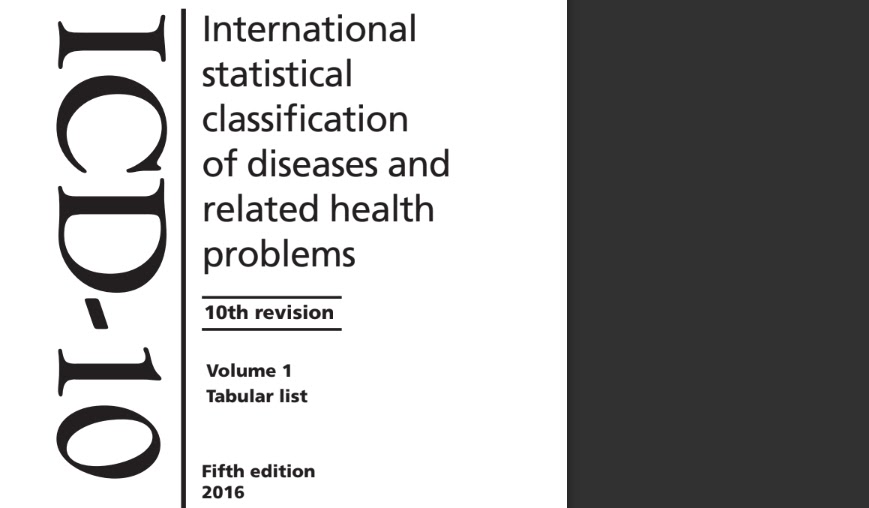
Deciphering the Complexity of ICD-10: A Comprehensive Guide to the
Cornerstone of Modern Healthcare
Table of Contents (toc)
ICD-10
Introduction:
In the intricate web of modern healthcare, where every patient encounter,
diagnosis, and treatment is meticulously documented and analyzed, the
International Classification of Diseases, 10th Revision (ICD-10) stands as a
linchpin. Far more than a simple coding system, ICD-10 is a robust framework
that underpins the entire healthcare data ecosystem, facilitating everything
from billing and reimbursement to public health surveillance and research. In
this comprehensive guide, we embark on a journey to demystify the complexity
of ICD-10, exploring its origins, structure, applications, and future
implications for the healthcare landscape.
I. Understanding ICD-10: A Historical and Conceptual Overview
A. What is ICD-10?
1. Definition and purpose.
The International Classification of Diseases, 10th Revision (ICD-10), is a
globally recognized and standardized system used for classifying diseases,
health conditions, and related phenomena. Developed by the World Health
Organization (WHO), ICD-10 serves as a comprehensive tool for organizing and
categorizing medical diagnoses and procedures. Its primary purpose is to
facilitate the systematic recording, analysis, interpretation, and comparison
of morbidity and mortality data across different populations and settings.
The key components of ICD-10 include alphanumeric codes that represent
specific diseases, conditions, and medical procedures, along with detailed
guidelines for assigning these codes accurately. This classification system
provides a standardized language for healthcare professionals, researchers,
policymakers, and administrators to communicate and exchange health
information effectively.
The primary purposes of ICD-10 are as follows:
1. Disease Classification:
ICD-10 provides a structured framework for
classifying diseases, disorders, injuries, and other health-related conditions
based on etiology, anatomy, and clinical manifestations. By organizing medical
conditions into distinct categories and subcategories, ICD-10 facilitates the
systematic documentation and analysis of health data.
2. Statistical Tracking:
ICD-10 enables the collection, aggregation, and
analysis of health statistics at local, national, and global levels. Health
organizations and government agencies use ICD-10-coded data to monitor disease
trends, track epidemiological patterns, and evaluate public health
interventions. This information is invaluable for informing health policy
decisions, resource allocation, and disease prevention efforts.
3. Reimbursement and Billing:
In many healthcare systems, ICD-10 codes play a
crucial role in reimbursement and billing processes. Health insurers,
government payers, and healthcare providers use these codes to accurately
document and bill for medical services rendered. Accurate coding is essential
for ensuring proper reimbursement, preventing fraud and abuse, and maintaining
financial integrity within the healthcare system.
4. Clinical Research and Epidemiology:
Researchers and epidemiologists rely on
ICD-10 codes to conduct studies on disease prevalence, incidence, risk
factors, and outcomes. By using standardized coding terminology, researchers
can compare data from different studies and populations, identify patterns and
associations, and generate evidence-based insights into disease etiology,
treatment effectiveness, and healthcare delivery.
In summary, the International Classification of Diseases, 10th Revision
(ICD-10), serves as a foundational tool for organizing, categorizing, and
analyzing health-related data. Its widespread adoption and use facilitate
effective communication, decision-making, and quality improvement initiatives
across the global healthcare landscape.
2. Evolution from previous revisions.
B. Historical evolution and significance.
1. Development by the World Health Organization (WHO).
2. Importance of standardization in global healthcare.
C. Global adoption and standardization.
1. Implementation across countries and healthcare
systems.
2. Harmonization efforts for consistency and
interoperability.
II. The Structure of ICD-10: Navigating the Complexity
A. Alphanumeric coding system.
1. Breakdown of the coding format.
2. Meaning and significance of each component.
B. Chapters, sections, and categories.
1. Organization of diseases and conditions.
2. Hierarchical structure for specificity and
granularity.
C. Detailed coding conventions and guidelines.
1. Instructions for code selection and assignment.
2. Tabular and index-based navigation.
III. Purpose and Applications of ICD-10: Beyond Coding and Billing
A. Disease classification and statistical tracking.
1. Role in epidemiology and disease surveillance.
2. Use in monitoring health trends and outcomes.
B. Reimbursement and billing.
1. Linkage to healthcare financing and reimbursement
systems.
2. Importance of accurate coding for revenue cycle
management.
C. Public health surveillance and research.
1. Contribution to health policy and decision-making.
2. Facilitation of clinical and population-based
research.
IV. Transition to ICD-10: Challenges, Lessons, and Benefits
A. Challenges faced during the transition.
1. Training and education requirements.
2. Technical and logistical hurdles.
B. Lessons learned from implementation.
1. Best practices and strategies for successful adoption.
2. Impact on healthcare workflows and productivity.
C. Benefits realized post-implementation.
1. Improved accuracy and specificity in coding.
2. Enhanced data quality and interoperability.
V. Advantages of ICD-10: Driving Healthcare Quality and Innovation
A. Enhanced accuracy and specificity in coding.
1. Ability to capture detailed clinical information.
2. Reduction of coding errors and inaccuracies.
B. Improved data interoperability and analytics.
1. Integration with electronic health records (EHRs) and
health information exchanges (HIEs).
2. Facilitation of data-driven decision-making and
analytics.
C. Better understanding of disease patterns and trends.
1. Identification of emerging health threats and
disparities.
2. Monitoring of healthcare interventions and outcomes.
VI. ICD-10 Coding Guidelines and Updates: Staying Current and Compliant
A. Documentation requirements for code assignment.
1. Importance of thorough clinical documentation.
2. Linkage between coding and documentation integrity.
B. Regular revisions and updates.
1. Role of WHO and national coding authorities.
2. Impact of updates on healthcare practice and policy.
C. Importance of staying informed and compliant.
1. Continuing education and professional development.
2. Compliance with coding standards and regulations.
VII. Future Trends and Innovations in Coding: Anticipating the Next Frontier
A. Integration with electronic health records (EHRs) and
artificial intelligence (AI).
1. Automation of coding processes and decision support.
2. Integration with clinical decision support systems
(CDSS).
B. Expansion of telemedicine and remote coding.
1. Implications for coding workflows and practices.
2. Challenges and opportunities in remote healthcare
delivery.
C. Potential impact of ICD-11 on the healthcare landscape.
1. Anticipated changes and enhancements.
2. Preparation and readiness for future revisions.
Conclusion:
In the ever-evolving landscape of healthcare, the role of ICD-10 cannot be
overstated. As a foundational element of healthcare data management, ICD-10
shapes the way we document, classify, and analyze diseases and health
conditions. By understanding its structure, purpose, and applications,
healthcare professionals can harness the power of ICD-10 to drive quality
improvement, innovation, and better patient outcomes. As we look to the
future, continued advancements in coding technology, coupled with the eventual
transition to ICD-11, promise to further enhance the role of coding in shaping
the healthcare landscape of tomorrow.