10 MCQs on Emergency Medicine 2025 (updated)

10 MCQs on Emergency Medicine (revised and updated)

Here are 10 multiple-choice questions (MCQs) related to emergency medicine:

1. What is the primary purpose of the ABCDE approach in emergency medicine?

   a) Assessing Blood Chemistry and Diagnostics Efficiently
   b) Addressing Broken Bones, Cuts, and Dislocations Effectively
   c) Airway, Breathing, Circulation, Disability, Exposure assessment
   d) Administering Basic Cardiopulmonary Defibrillation Exercises Continue reading 10 MCQs on Emergency Medicine 2025 (updated)

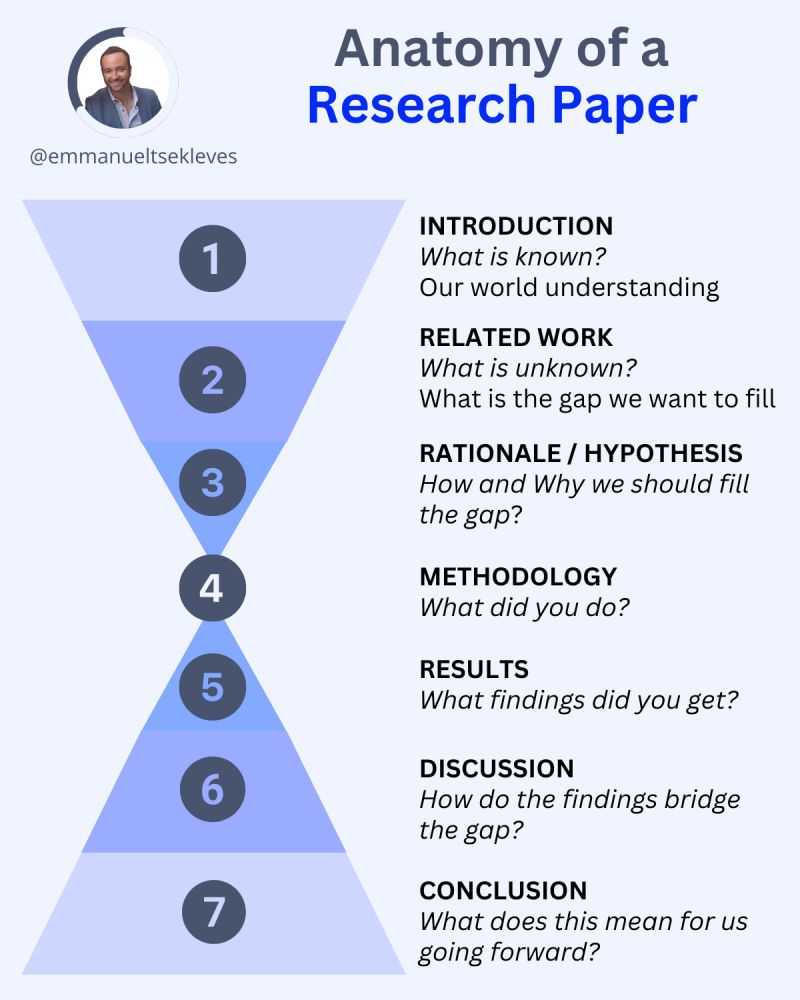
The anatomy of a research paper (explained)

The anatomy of a research paper (eazch section and its content explained)

Here is list of Parts of a Research Paper.

1. Title Page

  • Title of the paper

  • Author(s) name(s)

  • Affiliation(s)

  • Contact information

  • Date of submission

2. Abstract

  • A concise summary of the research, including background, objectives, methods, results, and conclusion (usually 150-250 words).

3. Keywords

  • A list of relevant terms to help in indexing and searching the paper.

4. Introduction

  • Background information

  • Research problem and significance

  • Objectives and research questions

  • Hypothesis (if applicable)

  • Overview of the paper

5. Literature Review

  • Summary of existing research

  • Identification of gaps in knowledge

  • Justification for the current study

6. Methodology (Materials and Methods)

  • Study design

  • Population/sample selection

  • Data collection methods

  • Tools, instruments, or techniques used

  • Statistical analysis methods

7. Results

  • Presentation of findings using text, tables, graphs, and figures

  • Statistical analysis and interpretation

8. Discussion

  • Interpretation of results

  • Comparison with previous studies

  • Implications of the findings

  • Limitations of the study

9. Conclusion

  • Summary of key findings

  • Practical applications or recommendations

  • Future research directions

10. References

  • List of all cited sources following a specific citation style (e.g., APA, MLA, Vancouver).

11. Appendices (if needed)

  • Supplementary materials such as questionnaires, raw data, additional tables, or figures.

Kawasaki disease Mnemonics

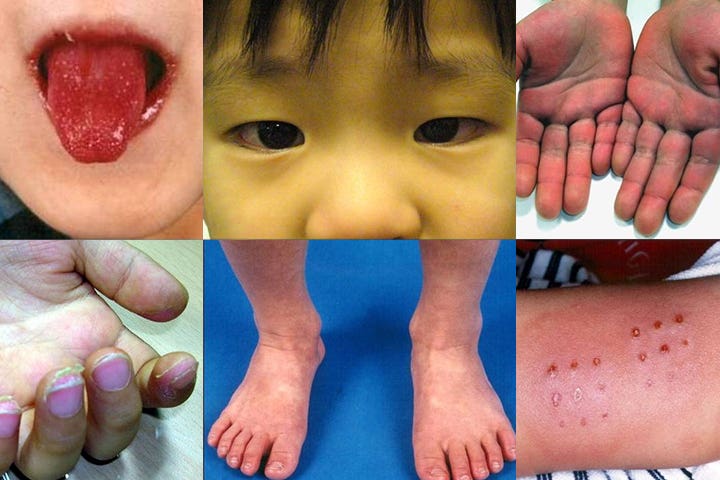
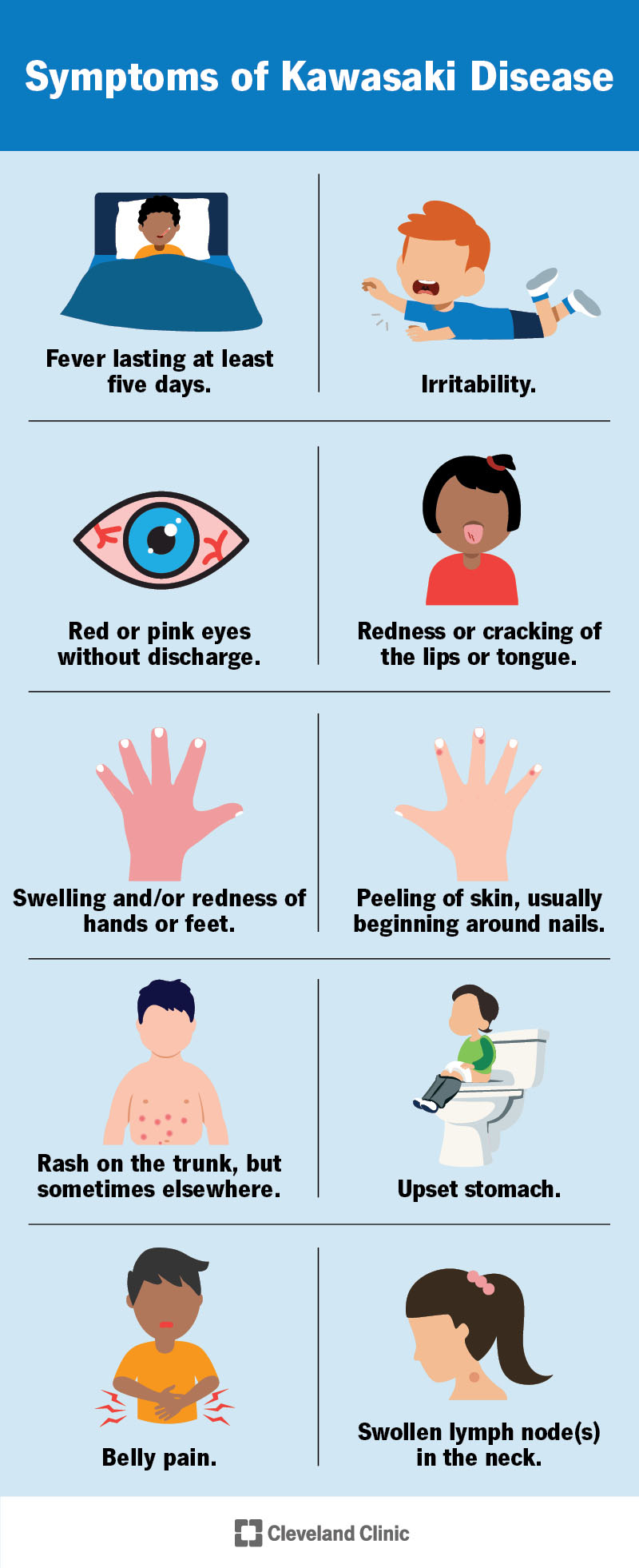
Clinical features of Kawasaki disease: CREAM:

  • C-Conjunctivitis (non-exudative); non purulent
    conjuncivits
  • R-Rash (Polymorphous non-vesicular)
  • E-Edema (or erythema of hands or feet)
  • A-Adenopathy (cervical, often unilateral and non
    suppurative)
  • M-Mucosal involvement (strawberry tongue

Important facts about Kawasaki disease

  • 80% cases occur prior to age of 5 years with peak incidence < 2
    years. 
  • Kawasaki diseaseis an Acute febrile multisystem disease of children. 
  • Prolonged fever over 5 days that isunresponsive to antibiotics is
    seen. 
  • Although the disease is generally benign & self limiting it is
    associated coronary artery aneurysm in 25% of cases. 
  • Non suppurative cervical lymphadenopathy is characteristic.
Source: cleaveland clinic

All are features of Kawasaki disease, except

a) Peak incidence at age > 5 years

b) Aneurysm of coronary
artery

c) Enlarged lymph nodes

d) Fever

Correct answer

a) Peak incidence at age > 5 years

Important Names in Epidemilogy & Epidemilogical study and their types ( and Bonus MCQ)

Important People’s Names in Epidemilogy

  • Hippocrates ← Father of modern medication introduced the concept of human
    health being closely related to environment.
  • Germ theory of disease proponed by → Louis Pasteur
  • Pioneering concept of immunization → Early Chinese physician
  • Concept of social medicine introduced by →Jules Guerin
  • Father of Indian medicine → Dhanvantari
  • Father of modern surgery → Joseph Lister
  • Father of epidemiology/modern epidemiology → John snow
  • Father of biology → Greggor A Mandal
  • Father of Modern anatomy → Vasalius
  • Father of physiology → cloud Bernard
  • Father of psychoanalysis → diamond Freud
  • Father of Homeopathy: Semeul Hahneman
  • Father of Anti -Sepsis → Joseph Lister.
  • Edward gjenner discovered small pox vaccine which was the 1st ever vaccine
    to be discovered.

MCQ: Epidemiological determinants are all except:

a. Agent factor
b. Host factor
c. Community factor
d. Environmental factor
Ans: ‘c’
Epidemiology determinants are: Agent factor, Host factor, Environment factor

Types of Epidemiological studies

Epidemiological studies may be of following types:

table {
width: 100%;
border-collapse: collapse;
}
th, td {
border: 1px solid black;
padding: 8px;
text-align: left;
}
th {
background-color: #f2f2f2;
}

Study Unit of Study
Observation Studies Descriptive Studies (Formation of Hypothesis)
– Case Reports
– Case Series
Analytic Studies (Testing of Hypothesis)
– Case-Control or Case Reference (Individual)
– Cohort or Follow-up (Individual)
– Cross-Sectional or Prevalence Study (Population, Individual)
Experimental/Intervention Studies (Testing of Hypothesis) – Randomized Controlled Clinical Trials (Patient)
– Field Trials or Community Intervention Studies (Healthy Population)
– Community Trials (Communities)
– Animal Studies

Bleeding Disorders Notes

Table of Contents(toc)


Prolonged PT (extrinsic pathway factors):

  • Inherited: Factor VII deficiency
  • Acquired: mild vitamin K deficiency, Liver disease, warfarin

Prolonged aPTT (intrinsic pathway factors):

  • Inherited: 
  • factors VIII, IX, XI deficiency; 
  • factor XII, 
  • Prekallikrein or HMW kininogen deficiency
  • Von Willebrand disease
  • Acquired: 
  • Heparin, 
  • lupus anticoagulant, 
  • acquired Von Willebrand disease

Prolonged PT and Prolonged aPTT (common pathway factors):

  • Inherited: 
  • Prothrombin (II), 
  • Fibrinogen (I),
  •  factor V and factor X deficiencies
  • Acquired: 
  • DIC, 
  • severe liver disease, 
  • severe vitamin K deficiency, 
  • Direct thrombin inhibitor – agratroban, 
  • dabigatran, 
  • Direct factor Xa inhibitor – rivaroxaban, apixaban, edoxaban,  fondaparinaux Continue reading Bleeding Disorders Notes

Important Points in Epidemiology

Question

In an epidemic, the first case come to the notice of investigator is termed as:
a. index case
c. Secondary case
b. Primary case
d. Tertiary case
Ans: ‘a’
a germ

Important Points in Epidemiology

Index case in 1st case to come to attention to investigation.

Impoortant Definitions

  • Primary case 1st case of a communicable d/s introduced into population unit which is studied (in an epidemic), which may or may not come to observer’s attention.
  • Screening time – interval between 1st clinical detection & final critical point.
  • Lead time time lag between 1st possible detection & usual time of diagnosis.
  • Serial interval – Gap in time b/t primary & secondary case (measures incubation period)
  • Generation time time interval between receipt of infection & maximum infectivity of host.
  • Latent infection during which infectious agent is not shaded or not demonstrable in blood/ tissue.

Chlorine & its compounds in sanitation (this is how hospitals kill bacteria roaming in the floor)

Table of Contents(toc)

What are the Chlorine compounds used for disinfecting and sanitation purpose?

Chlorine tab

Chlorine tabs – A single tab of 0.5 gm is sufficient to disinfect 20L of water (= 35 mg’L). Easy & cheap method to disinfect household water.
(VIMP for exams)

Chlorine gas

Chlorine gas – first choice for disinfection of large body of water.

Perchloran

Perchloran – Also k/as high testhypochloride; provides 60-70% available Cl2.

How do chlorine tablets work?

  • Oxidizing Agent: Chlorine acts as a strong oxidizer, breaking down cell membranes and disrupting essential cellular processes in microorganisms.

  • Hypochlorous Acid Formation: When added to water, chlorine forms hypochlorous acid (HOCl), which is more effective at penetrating microbial cell walls than hypochlorite ions (OCl⁻).

  • Protein Denaturation: Chlorine reacts with microbial proteins, leading to their denaturation and loss of function, which ultimately kills the microorganism.

  • Disruption of DNA & Enzymes: Chlorine damages microbial DNA and inhibits enzymatic activity, preventing replication and metabolism.

  • Broad-Spectrum Activity: Effective against bacteria, viruses, fungi, and protozoa, including pathogens like E. coli, Salmonella, and Vibrio cholerae.

  • Residue Effect: Leaves a residual disinfectant effect in treated water, preventing recontamination over time.

  • Chlorination Byproducts: Can produce disinfection byproducts (DBPs) like trihalomethanes (THMs) and haloacetic acids (HAAs), which require monitoring for safety.

  • Effective in Various Forms: Available as chlorine gas, sodium hypochlorite (liquid bleach), calcium hypochlorite (solid), and chloramine for different disinfection needs.

  • Water pH Dependency: The effectiveness depends on water pH, with optimal disinfection occurring at pH 6-7 where hypochlorous acid predominates.

  • Fast-Acting: Works quickly to kill pathogens, typically within minutes, depending on concentration and exposure time.

Chemistry of Pool or Hospital Chlorine tablets

When pool chlorine (commonly sodium hypochlorite or calcium hypochlorite) is added to water, it undergoes hydrolysis to produce hypochlorous acid (HOCl), which then dissociates to release nascent chlorine (Cl•), a highly reactive disinfectant.

Chemical Reactions for Pool Chlorine in Water

  1. For Sodium Hypochlorite (NaOCl):

    NaOCl+H2O→HOCl+NaOHNaOCl + H_2O rightarrow HOCl + NaOH

  2. For Calcium Hypochlorite (Ca(OCl)₂):

    Ca(OCl)2+2H2O→2HOCl+Ca(OH)2Ca(OCl)_2 + 2H_2O rightarrow 2HOCl + Ca(OH)_2

  3. Dissociation of Hypochlorous Acid (pH-dependent reaction):

    HOCl⇌H++OCl−HOCl rightleftharpoons H^+ + OCl^-

  4. Formation of Nascent Chlorine (Reactive Form of Chlorine):

    • In acidic to neutral conditions, hypochlorous acid undergoes further dissociation to release nascent chlorine:

    HOCl→HCl+[O]HOCl rightarrow HCl + [O]

    • The nascent oxygen ([O]) is a powerful oxidizer that destroys microbes by attacking their cell structures.

    • In water, HOCl can also directly release Cl• (chlorine radicals), contributing to its strong disinfecting power.

Possible MCQ

Percentage of chlorine available in bleaching powder is:
a. 43%
b. 20%
c. 30%
d. 33%
Ans: ‘d’

Solution

Bleaching powder (CaOCl2) contains 33% of available Cl2 if freshly prepared (most effective & cheapest way of disinfecting well).

Is ST change always an MI? Top 18 Differentials of ST elevation you must know

18 Differential diagnoses of ST elevation

Table of Contents(toc)

What is ECG?

ECG is a electrical graphical representation of cardiac electrical activity. It is plotted as voltage against time.

What is ST segment in an ECG?

ST segment (as shown in image) is the segment between S and T wave in the ECG. Its electrically in baseline with 0 mV. 
Both ST segment elevation and depression can be sign of illness or underlying cardiac pathology. 

What are causes of ST Segment elevation?

Here is a comprehensive list of differential diagnosis of ST segment elevation in ECG / EKG.
1)MI
2) Pericarditis/Myocarditis
3) Cocaine abuse, 5FU, Triptans, Ergols
4) Repolarisation abn in Children
5) Brugada
6) ICH
7) Hypothermia
8) Hyperkalemia, -calcemia
9) Takutslubo CMP
10) LV aneurysm
11) LVH
12) LBBB
13) Prinzmetal Angina
14) Post DCCV
15) Anti arrythmii IC
16) Pulmonary embolism
17) Ventricule contusion/trauma
18) Ventricular tumor

Should I get an ECG done to check ST segment elevation?

Generally if you’re young, otherwise healthy individual you do not need to check for ST segment elevation or perform an ECG evaluation. 
But if you’re adult above 40, have systemic illness like hypertension (high BP), diabetes (sugar), thyroid disorder, pulmonary Illness like asthma, COPD, chronic cough, chest pain or anything similar your health care provider or doctor may order an ECG to check condition for your heart. 
You do not specifically order or request and ECG for ST segment evaluation. It’s part of your whole ECG as 12 lead ECG. 

What is an 12 lead ECG? 

12 lead ECG is a type of ECG test most commonly done to check cardiac status. 
To perform 12 lead ecg, 10 different leads(wires) coming from an ECG machine are attached in your body i. Different locations viz. four in four lumbs, and six in anterior and left lateral side of chest (as shown in image).
From the four limb leads 3 are active leads(wires) which measure current directly while one is earthing wire. 

What is position of leads in 12 lead ECG?

Here is image showing position of leads in 12 lead ECG.

How does the knee jerk work?

Table of Contents(toc)

What is knee jerk?

  • Definition: A monosynaptic reflex that tests the integrity of the L2-L4 spinal segments and the femoral nerve.
  • Stimulus: Tapping the patellar tendon with a reflex hammer
  • Response: Contraction of the quadriceps muscle, causing leg extension at the knee.

How does knee jerk work?

Pathway:

  • Sensory input via muscle spindle (intrafusal fibers) of quadriceps.

  • Afferent impulse travels via the femoral nerve to the L2-L4 spinal cord.

  • Synapses directly with an alpha motor neuron (monosynaptic).

  • Efferent impulse sent back through the femoral nerve to the quadriceps.

  • physioogical pathway of knee jerk

What is Use of Knee Jerk in daily life?

  • Function: Maintains posture and balance, prevents knee buckling.
  • Clinical Significance:

    • Hyperreflexia → Suggests upper motor neuron (UMN) lesion.
    • Hyporeflexia/Absent reflex → Suggests lower motor neuron (LMN) lesion or peripheral nerve dysfunction.
    • Westphal’s Sign → Absence of knee jerk, seen in LMN lesions, neuropathies, or spinal cord damage.

What are Associated Conditions with abnormal Knee Jerk reflex:

  • Upper Motor Neuron (UMN) Lesions (Hyperreflexia)

    • Stroke (CVA)

    • Spinal cord injury (above L2-L4 level)

    • Multiple sclerosis (MS)

    • Amyotrophic lateral sclerosis (ALS) (UMN phase)

    • Traumatic brain injury (TBI)

    • Cerebral palsy

    • Brain tumors affecting corticospinal tract

    Lower Motor Neuron (LMN) Lesions (Hyporeflexia or Absent Reflex)

    • Peripheral neuropathy (e.g., diabetic neuropathy)

    • Guillain-Barré syndrome

    • Poliomyelitis

    • Radiculopathy (L2-L4 nerve root compression, herniated disc)

    • Amyotrophic lateral sclerosis (ALS) (LMN phase)

    • Cauda equina syndrome

    • Spinal muscular atrophy (SMA)

    • Lumbar plexopathy (e.g., trauma, diabetes, neoplastic infiltration)

Question for practice

Delayed relaxation of ankle jerk is seen in:

a. Addison’a disease
b. Hypothyroidism
c. Thyrotoxicosis
d. Diabetes mellitus
Ans: ‘b’

Explanation

Hung-up reflex refers to prolongation of deep tendon reflexes with a slow relaxation phase (as if in slow motion). Hung up reflex is typical elicited in the ankle jerk (Achilles tendon reflex) in patient with myxedema (other deep tendon reflex) in patient with myxedema may also show slow relaxation).
Brisk (Exaggerated) deep tendon reflex: Upper motor neuron lesion, Hyperthyroidism.
Absent deep tendon reflex: lower motor neuron lesion.
Pendular knee jerk: Cerebellar lesion.

MCQ 2:

A 60-year-old male presents with weakness in both lower limbs and increased knee jerk reflexes. Which of the following is the most likely cause?

A) Guillain-Barré syndrome

B) Diabetic neuropathy

C) Spinal cord injury (above L2)

D) Cauda equina syndrome

Answer:C) Spinal cord injury (above L2)

Explanation:

  • The knee jerk reflex (L2-L4) is exaggerated (hyperreflexia) in UMN lesions.

  • Spinal cord injury above L2 disrupts the descending inhibitory control from the brain, leading to increased reflexes (hyperreflexia).

  • Guillain-Barré syndrome (A) and diabetic neuropathy (B) cause LMN lesions, leading to absent or reduced reflexes (hyporeflexia).

  • Cauda equina syndrome (D) affects the lumbar and sacral nerve roots, causing flaccid paralysis and absent knee jerk reflex.

Thus, the most likely diagnosis is spinal cord injury above L2, causing bilateral weakness with hyperreflexia.

I was so scared I would GO BLIND but my doctor said THIS!

What is red eye?

Recently I had a red eyes when iI woke up in the morning.
I had fallen asleep completely well in the evening and nothing happened in the night either.
For further information, I am young healthy woman with no any illness neither taking any medication.
I eat goood food and  I have well settled family and I am living happily.
After the event I was so scared that I would go blind and  rushed to hopital emergency and this is what my doctor said about red eye.
My doctor said its not a big deal for now and sometimes this condition can occur without any reason and will go spontaneously after few days.
Subconjunctival hemorrhage may occur spontaneously or with Valsalva associated with coughing, sneezing, straining, or vomiting. The diagnosis is confirmed by normal acuity and the absence of discharge, photophobia, or foreign body sensation.
Further he said this about a red eye:
A red eye caused by bleeding, often called a subconjunctival hemorrhage, is
usually a harmless condition resulting from a broken blood vessel in the white
of the eye (sclera) and typically resolves on its own within a few weeks.

Here’s a more detailed explanation on why eye becomes suddenly red:

There are various causes of red eyes. Out of which some are emergency
conditions while others may not be that serious.

Category Painful Causes Painless Causes
Emergency Causes
  • Acute angle-closure glaucoma
  • Infectious keratitis (bacterial, viral, fungal)
  • Scleritis
  • Endophthalmitis
  • Corneal ulcer
  • Hyphema
  • Chemical burns
  • Subconjunctival hemorrhage (to rule out cause of it)
  • Episcleritis (mild cases)
Non-Emergency Causes
  • Episcleritis (moderate-severe cases)
  • Anterior uveitis (iritis)
  • Foreign body (with corneal abrasion)
  • Contact lens-related irritation
  • Blepharitis (if severe)
  • Allergic conjunctivitis
  • Dry eye syndrome
  • Pinguecula/Pterygium
  • Viral conjunctivitis
  • Bacterial conjunctivitis

What is a subconjunctival hemorrhage?

Subconjunctival Hemorrhage

  • Common in elderly (>80 years), often linked to hypertension.

  • In young (<40 years), usually due to ocular trauma or contact lens use.

  • Risk factors: coagulopathy (anticoagulation), diabetes, Valsalva (coughing, vomiting), amyloidosis, Kaposi sarcoma.

  • Can occur spontaneously during sleep.

  • Circumferential hemorrhage after blunt trauma may indicate globe rupture

Cause:

A subconjunctival hemorrhage occurs when a small blood vessel beneath the
conjunctiva (the clear membrane covering the white of the eye) ruptures.

Appearance:

large subcinjunctival hemorrhage

This causes a bright red patch on the white of the eye, which can look
alarming but is usually not serious.

Common causes:

Sneezing, coughing, straining, or even rubbing the eye too hard can cause a
blood vessel to rupture.

Other causes:

High blood pressure, certain medications (like blood thinners), and eye
injuries can also contribute.

notes in conjunctivitis


Symptoms:

The most obvious symptom is a bright red patch on the white of the eye. You
might experience a scratchy feeling on the surface of the eye, but vision,
pain, or discharge are usually not affected.

When to seek medical attention:

Recurrent hemorrhages:

If you experience repeated subconjunctival hemorrhages, it’s a good idea to
consult with a doctor to rule out any underlying conditions.

Other symptoms:

If you experience sudden vision changes, eye pain, or other concerning
symptoms along with the red eye, seek immediate medical attention.

Suspected eye injury:

If you suspect an eye injury or a foreign object in the eye, seek medical
attention.

Bleeding elsewhere:

If you notice bleeding in other parts of your body, consult with a doctor.

Treatment and Prognosis:

Most cases resolve on their own:
Subconjunctival hemorrhages typically
resolve within a few weeks without any specific treatment.

No need for treatment:

Unless there’s an underlying medical condition or eye injury, no treatment
is usually needed.

Symptom relief:

You may use artificial tears to soothe any scratchy feeling.

notes in conjunctivitis

Follow-up:

Make sure to follow up with your doctor as needed, and be sure to make and
go to all appointments.

Other causes of red eyes

Conjunctival Laceration
  • Uncommon but may signal serious ocular injury (e.g., open globe, hyphema).

  • 4% of ocular trauma cases in a large study.

  • Often work-related; linked to airbag deployment, projectiles, compressed air, paintball injuries.

Conjunctival Foreign Bodies

  • Common: sand, dirt, eyelashes, plant material, metal (welding, grinding).

  • Rarely, retained foreign bodies cause prolonged symptoms.

notes in conjunctivitis
Exit mobile version