



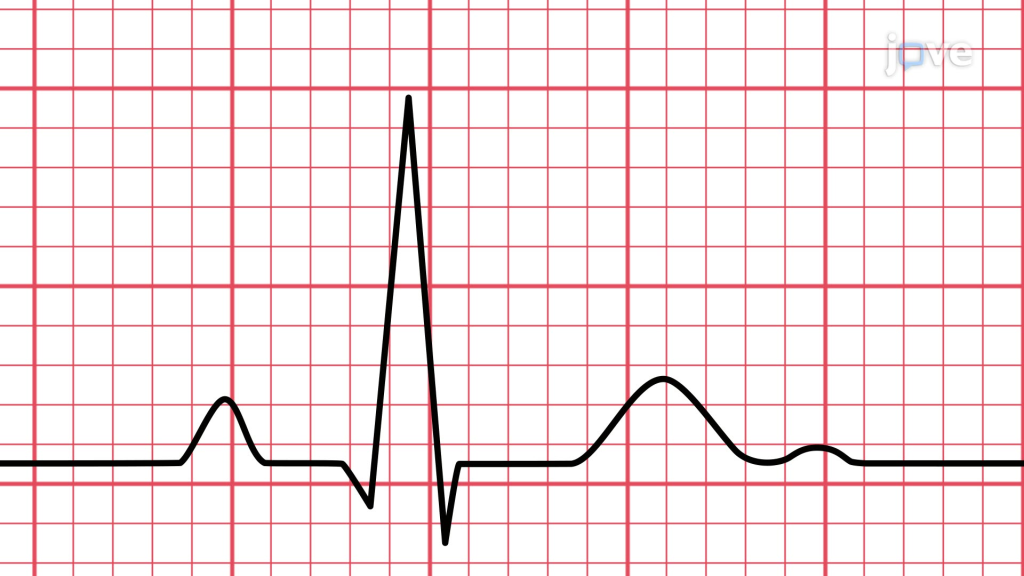
Introduction
A structured approach makes ECG interpretation systematic and reliable. A commonly used mnemonic is:
RRAHI
- R = Rhythm
- R = Rate
- A = Axis
- H = Hypertrophy
- I = Ischemia
How to Calculate Heart Rate in Regular Rhythm ECG
For a regular rhythm, use either of the following methods:
Method 1 (Big boxes)
- Take any two R waves
- Count the number of big boxes between them
- Divide 300 by that number
- The result is the heart rate
Method 2 (Small boxes)
- Take any two R waves
- Count the number of small boxes between them
- Divide 1500 by that number
- The result is the heart rate
How to Calculate Heart Rate in Irregular Rhythm ECG
For irregular rhythms, use a longer rhythm strip:
- Take 10 big boxes in the rhythm strip
- Count the number of QRS complexes (R waves) within those 10 big boxes
- Multiply that number by 30
👉 This gives the heart rate in beats per minute (bpm)
Completed Formula
Heart rate = (Number of QRS complexes in 10 big boxes) × 30
Why this works:
- 1 big box = 0.2 seconds
- 10 big boxes = 2 seconds
- 60 seconds ÷ 2 seconds = 30
So you are converting a 2-second sample into a 1-minute rate.
How to Check Rhythm of an ECG
To determine the rhythm:
- Check if R–R intervals are regular or irregular
- Look for P waves before every QRS complex
- Ensure P waves have a consistent shape
- Confirm that each P wave is followed by a QRS
Normal (Sinus Rhythm) Features:
- Regular rhythm
- One P wave before each QRS
- Normal PR interval
- Heart rate between 60–100 bpm
How to Check Axis of an ECG
Axis refers to the overall direction of electrical activity in the heart.
Basic Method (using limb leads):
- Look at Lead I and aVF
| Lead I | aVF | Axis |
|---|---|---|
| + | + | Normal axis |
| + | – | Left axis deviation |
| – | + | Right axis deviation |
| – | – | Extreme axis deviation |
Normal Axis:
- Between -30° to +90°
The electrical impulse normally:
- Starts from the right atrium
- Travels toward the left ventricle
- Occurs 60–100 times per minute
How to Identify Myocardial Ischemia on ECG
Look for these three key changes:
- ST segment changes
- Elevation → possible acute injury
- Depression → ischemia
- T wave changes
- Inversion
- Flattening
- Q waves
- May indicate previous myocardial infarction
How to Identify Hypertrophy on ECG
Hypertrophy leads to increased voltage (amplitude) on ECG.
Left Ventricular Hypertrophy (LVH)
A commonly used method:
- S wave in V1 + R wave in V5 or V6 ≥ 35 mm
Additional clues:
- Deep S waves in V1
- Tall R waves in V5/V6
- Possible left axis deviation
This completes the full ECG reading framework using the RRAHI approach, covering all essential steps: rate, rhythm, axis, hypertrophy, and ischemia.