Table of Contents

Complications:
- Macrophage Activation Syndrome (MAS):
- Life-threatening hyperinflammation
- Labs: hyperferritinemia, coagulopathy, thrombocytopenia
- May mimic MIS-C → needs aggressive immunosuppression
- Coronary Artery Abnormalities (CAA):
- Giant aneurysms → myocardial infarction, angina, sudden death
- Moderate aneurysms → may use dual antiplatelet therapy (aspirin + clopidogrel)
- Large/giant aneurysms → anticoagulation (warfarin, LMWH) + aspirin
- Acute thrombosis → thrombolytic therapy
- Rarely: aneurysm rupture
- Long-term sequelae of CAA:
- Coronary stenosis, inducible ischemia → may require CABG or catheter interventions
- Regressed aneurysms → myointimal thickening, abnormal vascular function
Prognosis:
- Majority recover fully; timely treatment reduces CAA risk to <5%
- Recurrence of acute KD: 1–3%
- Fatality: <1%
- CAA outcomes:
- ~50% regress to normal diameter within 1–2 years
- Giant aneurysms less likely to regress → higher risk thrombosis/stenosis
- Revascularization or rarely heart transplant may be needed
- Adult survival with history of giant aneurysms: ~90% at 30 years
- Children without CAA have normal long-term outcomes
- Lifestyle & preventive counseling recommended for all KD patients
FAQs
What is Kawasaki disease?
Kawasaki disease is an acute, self-limited vasculitis of medium-sized arteries, particularly the coronary arteries, occurring mainly in children under 5 years.
Key point: It is an important cause of acquired heart disease in children.
What are the classic clinical features?
The classic features are:
Fever ≥5 days
Bilateral non-purulent conjunctival injection
Oral changes: red/cracked lips, strawberry tongue
Polymorphous rash
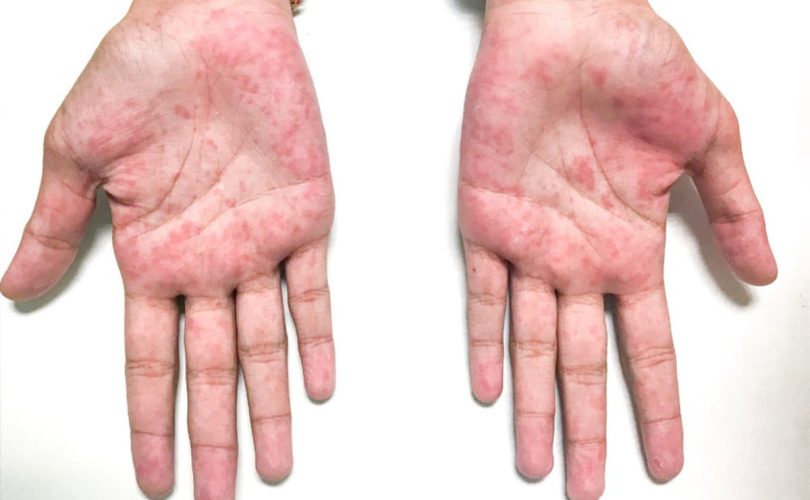
Changes in extremities: erythema/edema of hands and feet, later periungual desquamation
Cervical lymphadenopathy, usually ≥1.5 cm
Mnemonic: CRASH
Conjunctivitis
Rash
Adenopathy
Strawberry tongue
Hands/feet changes
What is the most important complication?
The major complication is coronary artery involvement, including:
Coronary artery dilatation
Coronary artery aneurysms
Myocarditis
Arrhythmias
Myocardial infarction
High-yield: Kawasaki disease is the leading cause of acquired coronary artery disease in children in many developed countries.
How is Kawasaki disease treated?
First-line treatment:
IVIG (intravenous immunoglobulin)
Aspirin
IVIG is given as 2 g/kg IV, ideally within the first 10 days of illness.
Aspirin is initially given at an anti-inflammatory dose according to local protocol, followed by a low-dose antiplatelet regimen.
Important: Early IVIG significantly reduces the risk of coronary artery aneurysms.
How is Kawasaki disease diagnosed?
Diagnosis is primarily clinical.
Classic Kawasaki disease: fever for ≥5 days plus 4 of the 5 principal clinical features.
There is no single diagnostic test.
Investigations supporting the diagnosis may include:
↑ CRP and ESR
Leukocytosis
Thrombocytosis, especially in the subacute phase
Sterile pyuria
Elevated liver enzymes
Echocardiography to assess coronary arteries