
Deciphering the Complexity of ICD-10: A Comprehensive Guide to the
Cornerstone of Modern Healthcare
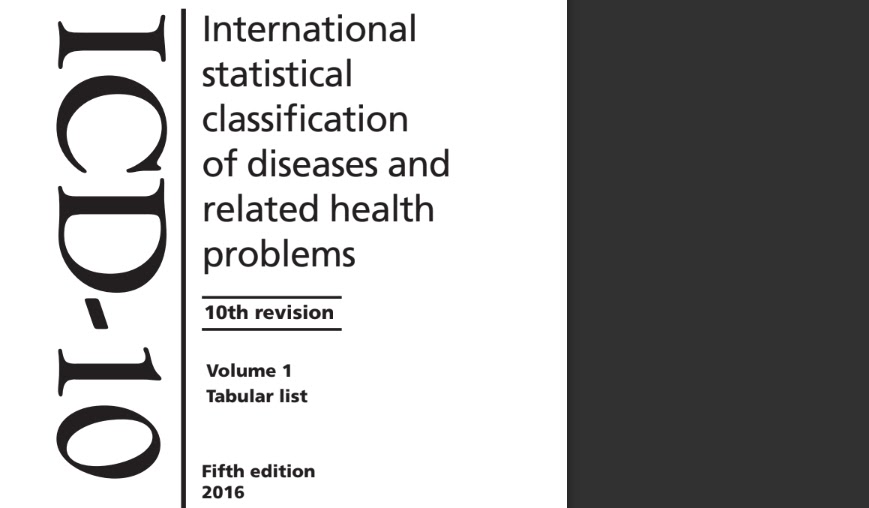 |
| ICD-10 |
Introduction:
In the intricate web of modern healthcare, where every patient encounter,
diagnosis, and treatment is meticulously documented and analyzed, the
International Classification of Diseases, 10th Revision (ICD-10) stands as a
linchpin. Far more than a simple coding system, ICD-10 is a robust framework
that underpins the entire healthcare data ecosystem, facilitating everything
from billing and reimbursement to public health surveillance and research. In
this comprehensive guide, we embark on a journey to demystify the complexity
of ICD-10, exploring its origins, structure, applications, and future
implications for the healthcare landscape.
I. Understanding ICD-10: A Historical and Conceptual Overview
A. What is ICD-10?
1. Definition and purpose.
The International Classification of Diseases, 10th Revision (ICD-10), is a
globally recognized and standardized system used for classifying diseases,
health conditions, and related phenomena. Developed by the World Health
Organization (WHO), ICD-10 serves as a comprehensive tool for organizing and
categorizing medical diagnoses and procedures. Its primary purpose is to
facilitate the systematic recording, analysis, interpretation, and comparison
of morbidity and mortality data across different populations and settings.
The key components of ICD-10 include alphanumeric codes that represent
specific diseases, conditions, and medical procedures, along with detailed
guidelines for assigning these codes accurately. This classification system
provides a standardized language for healthcare professionals, researchers,
policymakers, and administrators to communicate and exchange health
information effectively.
The primary purposes of ICD-10 are as follows:
1. Disease Classification:
ICD-10 provides a structured framework for
classifying diseases, disorders, injuries, and other health-related conditions
based on etiology, anatomy, and clinical manifestations. By organizing medical
conditions into distinct categories and subcategories, ICD-10 facilitates the
systematic documentation and analysis of health data.
2. Statistical Tracking:
ICD-10 enables the collection, aggregation, and
analysis of health statistics at local, national, and global levels. Health
organizations and government agencies use ICD-10-coded data to monitor disease
trends, track epidemiological patterns, and evaluate public health
interventions. This information is invaluable for informing health policy
decisions, resource allocation, and disease prevention efforts.
3. Reimbursement and Billing:
In many healthcare systems, ICD-10 codes play a
crucial role in reimbursement and billing processes. Health insurers,
government payers, and healthcare providers use these codes to accurately
document and bill for medical services rendered. Accurate coding is essential
for ensuring proper reimbursement, preventing fraud and abuse, and maintaining
financial integrity within the healthcare system.
4. Clinical Research and Epidemiology:
Researchers and epidemiologists rely on
ICD-10 codes to conduct studies on disease prevalence, incidence, risk
factors, and outcomes. By using standardized coding terminology, researchers
can compare data from different studies and populations, identify patterns and
associations, and generate evidence-based insights into disease etiology,
treatment effectiveness, and healthcare delivery.
In summary, the International Classification of Diseases, 10th Revision
(ICD-10), serves as a foundational tool for organizing, categorizing, and
analyzing health-related data. Its widespread adoption and use facilitate
effective communication, decision-making, and quality improvement initiatives
across the global healthcare landscape.
2. Evolution from previous revisions.
B. Historical evolution and significance.
1. Development by the World Health Organization (WHO).
2. Importance of standardization in global healthcare.
C. Global adoption and standardization.
1. Implementation across countries and healthcare
systems.
2. Harmonization efforts for consistency and
interoperability.
II. The Structure of ICD-10: Navigating the Complexity
A. Alphanumeric coding system.
1. Breakdown of the coding format.
2. Meaning and significance of each component.
B. Chapters, sections, and categories.
1. Organization of diseases and conditions.
2. Hierarchical structure for specificity and
granularity.
C. Detailed coding conventions and guidelines.
1. Instructions for code selection and assignment.
2. Tabular and index-based navigation.
III. Purpose and Applications of ICD-10: Beyond Coding and Billing
A. Disease classification and statistical tracking.
1. Role in epidemiology and disease surveillance.
2. Use in monitoring health trends and outcomes.
B. Reimbursement and billing.
1. Linkage to healthcare financing and reimbursement
systems.
2. Importance of accurate coding for revenue cycle
management.
C. Public health surveillance and research.
1. Contribution to health policy and decision-making.
2. Facilitation of clinical and population-based
research.
IV. Transition to ICD-10: Challenges, Lessons, and Benefits
A. Challenges faced during the transition.
1. Training and education requirements.
2. Technical and logistical hurdles.
B. Lessons learned from implementation.
1. Best practices and strategies for successful adoption.
2. Impact on healthcare workflows and productivity.
C. Benefits realized post-implementation.
1. Improved accuracy and specificity in coding.
2. Enhanced data quality and interoperability.
V. Advantages of ICD-10: Driving Healthcare Quality and Innovation
A. Enhanced accuracy and specificity in coding.
1. Ability to capture detailed clinical information.
2. Reduction of coding errors and inaccuracies.
B. Improved data interoperability and analytics.
1. Integration with electronic health records (EHRs) and
health information exchanges (HIEs).
2. Facilitation of data-driven decision-making and
analytics.
C. Better understanding of disease patterns and trends.
1. Identification of emerging health threats and
disparities.
2. Monitoring of healthcare interventions and outcomes.
VI. ICD-10 Coding Guidelines and Updates: Staying Current and Compliant
A. Documentation requirements for code assignment.
1. Importance of thorough clinical documentation.
2. Linkage between coding and documentation integrity.
B. Regular revisions and updates.
1. Role of WHO and national coding authorities.
2. Impact of updates on healthcare practice and policy.
C. Importance of staying informed and compliant.
1. Continuing education and professional development.
2. Compliance with coding standards and regulations.
VII. Future Trends and Innovations in Coding: Anticipating the Next Frontier
A. Integration with electronic health records (EHRs) and
artificial intelligence (AI).
1. Automation of coding processes and decision support.
2. Integration with clinical decision support systems
(CDSS).
B. Expansion of telemedicine and remote coding.
1. Implications for coding workflows and practices.
2. Challenges and opportunities in remote healthcare
delivery.
C. Potential impact of ICD-11 on the healthcare landscape.
1. Anticipated changes and enhancements.
2. Preparation and readiness for future revisions.
Conclusion:
In the ever-evolving landscape of healthcare, the role of ICD-10 cannot be
overstated. As a foundational element of healthcare data management, ICD-10
shapes the way we document, classify, and analyze diseases and health
conditions. By understanding its structure, purpose, and applications,
healthcare professionals can harness the power of ICD-10 to drive quality
improvement, innovation, and better patient outcomes. As we look to the
future, continued advancements in coding technology, coupled with the eventual
transition to ICD-11, promise to further enhance the role of coding in shaping
the healthcare landscape of tomorrow.