Anatomy of a Stethoscope? What are parts of the stethoscope? how does
stethoscope work?
A stethoscope is an essential tool for auscultation or listening to internal
sounds of an animal or human body. It can help diagnose various conditions
related to the heart, lungs, abdomen and blood vessels. A stethoscope consists
of three main parts: a chest-piece, a headset and a tubing. This is anatomy of
stethoscope (stethoscope anatomy). Stheth is occasionally referred as steth as
well.

|
| Parts of stethoscope |
Parts of stethoscope:
The chest piece:
The chest-piece is the part that contacts the patient’s body. It has a stem
that connects to the tubing and a diaphragm and/or a bell that transmits sound
waves to the earpieces. The diaphragm is a thin membrane that vibrates when
exposed to high-frequency sounds, such as heartbeats and breath sounds. The
bell is a hollow cup that resonates with low-frequency sounds, such as murmurs
and bruits. Some stethoscopes have a single-head design that can switch
between diaphragm and bell modes by applying different pressure on the
chest-piece. Others have a dual-head design that has both diaphragm and bell
on opposite sides of the chest-piece.
The headset:
The headset is the part that delivers sound to the user’s ears. It consists of
two eartubes, tension springs and eartips. The eartubes are metal rods that
are angled to fit into the user’s ear canals comfortably and securely. The
tension springs are flexible wires that allow the user to adjust the pressure
on their ears by squeezing or pulling apart the eartubes. The eartips are soft
rubber or silicone caps that seal out external noise and enhance sound
quality.
They come in different sizes and shapes to suit different
preferences.
The tubings:
The tubing is the part that connects the chest-piece to the headset.
It is made of durable material that can withstand bending and folding without
affecting sound transmission.
The length of the tubing affects how far
you can stand from your patient while auscultating.
A longer tubing may
reduce sound quality but increase mobility, while a shorter tubing may improve
sound quality but limit mobility.
How does stethoscope work?
-
A stethoscope works by converting acoustic energy into mechanical energy and
then into electrical energy. - When sound waves hit the diaphragm or bell of the
chest-piece, they cause it to vibrate. -
These vibrations are transmitted through air-filled columns in the lumen
tubing to metal springs in the eartubes. -
These springs amplify the vibrations and send them to magnets in the eartips.
These magnets generate electric currents that stimulate the user’s auditory
nerves.
stethoscope’s have tunable diaphragms as well.
Know parts of steth
Importance of stethoscope?
A stethoscope is not only an instrument for diagnosis but also an expression
of professionalism and identity for doctors and nurses. It is important to
choose one that suits your needs, preferences and budget. You should also take
care of your stethoscope by cleaning it regularly, storing it properly and
replacing worn-out parts when necessary.
Types of stethoscope?
own advantages and disadvantages. Some common types are:
Acoustic stethoscopes:
These are traditional stethoscopes that use air columns in tubes to transmit
sound waves from chest-pieces to earpieces. They are simple, inexpensive and
widely used, but they may have low sound quality, especially for low-frequency
sounds.
Electronic stethoscopes:
These are modern stethoscopes that use electronic circuits to amplify, filter
and process sound waves from chest-pieces before sending them to earpieces or
speakers. They have high sound quality, even for low-frequency sounds, but
they may be expensive, complex and require batteries.
How to wear a stethoscope
Digital stethoscopes:
waves from chest-pieces into digital signals before sending them to earpieces
or computers. They can record, display and analyze sounds using software
applications,but they may be costly, sophisticated and require compatible
devices.
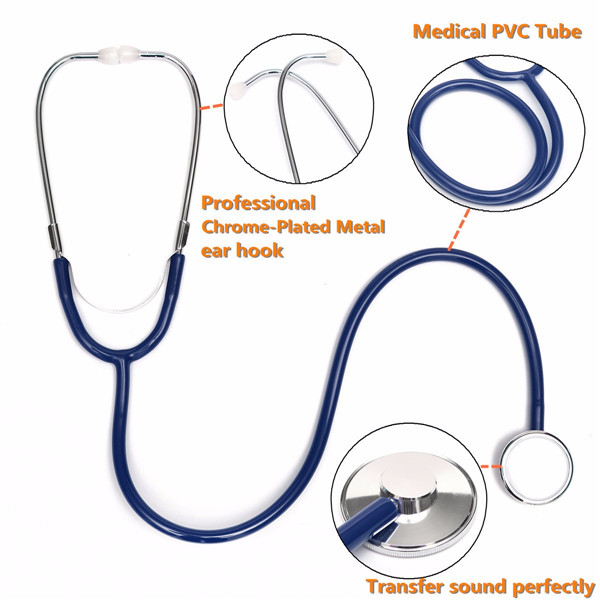
|
| Anatomy of the stethocope and physiology: different parts labelled |
Fetal stethoscopes:
heart sounds during pregnancy. They have large bells or horns that can fit
over pregnant women’s abdomens, but they may be difficult to use,
uncomfortable and inaccurate.
Doppler stethoscopes:
These are unique stethoscopes that use Doppler effect.
Manufacturers of stethoscope:
Various companies make stethoscopes including 3m littmann, fricare, mdf,
mccoy, alimed etc.
How does a stethoscope work
Use of stethoscope:
- Measure blood pressure
- Hear lung sounds
- listen to heart sounds
- listen to bruits
- listen to other sounds in body
- listen to fetal heart sounds
{
“@context”: “http://schema.org”,
“@type”: “VideoObject”,
“name”: “Pulmonary tuberculosis w Dr Chaitanya Joshi in Nepali for medical students, paramedics, HA, CMA easy”,
“description”: “Pulmonary tuberculosis by Dr Chaitanya Joshi in Nepali for medical students, paramedics, HA, CMA easy Useful for loksewa Entrance preparation License For HA, CMA, Nursing and medical students as well All my social links here https://www.linktr.ee/cjoshi visit https://www.chaitanya.com.np for more please share and sunscribe Welcome to this comprehensive video on health exam questions that you might face in Loksewa Entrance MBBS/MD/MS and PSC exams in Nepal. This video provides you with essential tips and strategies to help you prepare efficiently and excel in these competitive exams. The video covers a wide range of topics related to health, such as anatomy, physiology, pathology, pharmacology, health policy, healthcare management, and public health. We also discuss important aspects of healthcare careers, medical education, and medical profession. The video is designed to help you build a strong foundation in health science, enhance your knowledge, and improve your chances of success in medical entrance exams. Whether you are a first-time test-taker or a repeat candidate, our expert guidance will assist you in achieving your goal. In summary, this video is a one-stop-shop for all your exam preparation needs. It equips you with valuable study tips, exam strategies, and critical concepts to ace the health exam questions in Loksewa Entrance MBBS/MD/MS and PSC exams in Nepal. Additional Keywords: Medical entrance exam, study materials, healthcare, medical schools, Lok Sewa Nepal, Public Service Commission, medical admission, MBBS, MD, MS, exam tips, Nepal. At www.chaitanya.com.np, we understand that preparing for medical entrance exams can be challenging and time-consuming. That’s why we’ve designed our platform to provide you with the resources you need to prepare efficiently and effectively. Our content is curated by medical experts who have years of experience in the field and are committed to helping you succeed. Our platform offers a user-friendly interface that is easy to navigate and allows you to access content quickly and easily. Whether you’re looking for exam-related videos, study materials, or practice tests, you’ll find everything you need on our platform. We also update our content regularly to ensure that you have access to the latest information and exam trends. In addition to exam-related content, we also offer articles and videos on various health-related topics. Our resources cover a wide range of subtopics, including human anatomy, physiology, pathology, pharmacology, healthcare management, public health, and more. With our comprehensive coverage of health science topics, you’ll be able to build a strong foundation of knowledge that will help you succeed in your medical career. At www.chaitanya.com.np, we’re committed to helping you achieve your goals. That’s why we offer high-quality content, expert guidance, and practical exam strategies to help you succeed in your medical entrance exams. So, why wait? Visit our platform today and start preparing for your future in healthcare!”,
“thumbnailUrl”: “https://i.ytimg.com/vi/Ui2T4G8eyQo/default.jpg”,
“uploadDate”: “2023-03-21T19:55:46Z”,
“duration”: “PT30M37S”,
“embedUrl”: “https://www.youtube.com/embed/Ui2T4G8eyQo”,
“interactionCount”: “573”
}