Table of Contents
Introduction
While most people can easily point to their heart or stomach, the spleen remains a bit of a mystery. Tucked away in the upper left side of your abdomen, this fist-sized organ quietly performs some of the body’s most critical “housekeeping” and security tasks.
Where is it Located?
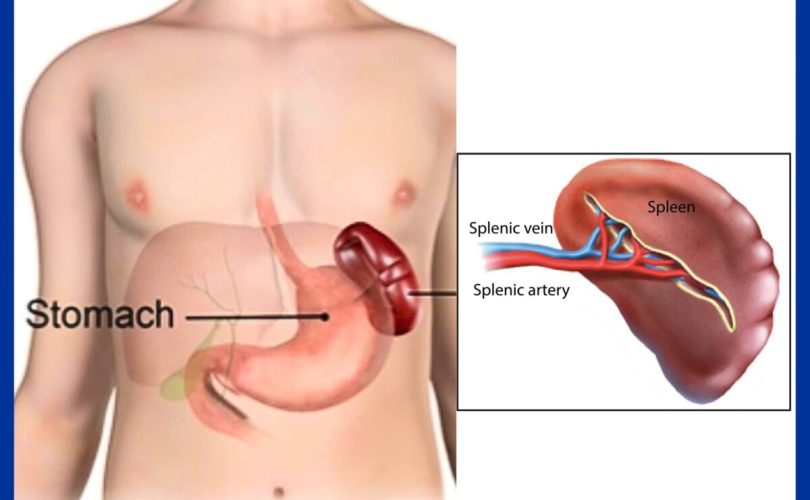
The spleen is located in the left upper quadrant of the abdomen, shielded by the 9th, 10th, and 11th ribs. It sits just below the diaphragm and behind the stomach. In a healthy adult, it is usually about the size of a small avocado or a clenched fist and cannot be felt through the skin.
What Does the Spleen Actually Do?
Think of your spleen as a multi-purpose facility that serves two primary systems: the immune system and the blood (hematologic) system.
- The Blood Filter: One of its main jobs is to act as a quality control center for your blood. As blood flows through the spleen, it identifies and removes old, malformed, or damaged red blood cells.
- Immune Surveillance: It is the largest organ in the lymphatic system. It produces and stores white blood cells (lymphocytes) and antibodies that spring into action to fight off bacteria and viruses.
- Emergency Reservoir: The spleen acts as a backup tank, storing about one-third of the body’s platelets and a significant reserve of red blood cells. In the event of severe bleeding or physical stress, the spleen can contract to squeeze this extra blood into your circulation.
- Recycling Center: When it breaks down old red blood cells, it carefully recycles the iron, sending it back to the bone marrow to help create new hemoglobin.
A Tale of Two Pulps
Inside the spleen’s tough outer capsule, there are two distinct types of tissue, each with a specific specialty:
- Red Pulp: This makes up about 80% of the organ and is responsible for the filtering and storage of blood.
- White Pulp: This tissue is part of the immune system. It produces white blood cells that produce antibodies to target specific infections.
Can You Live Without It?
Yes, you can live without a spleen—a condition known as asplenia. If the spleen is removed (a surgery called a splenectomy), other organs like the liver and bone marrow take over many of its duties. However, because the spleen is so vital for fighting certain types of bacteria, people without one are at a much higher risk for infections and must stay up-to-date on specific vaccinations.
Keeping Your Spleen Healthy
While many spleen issues are secondary to other conditions (like liver disease or certain cancers), you can support yours by:
- Preventing Injury: Wear protective gear during contact sports to avoid a ruptured spleen, which is a medical emergency.
- Hydration & Diet: Drinking plenty of water and eating nutrient-rich foods supports the lymphatic system overall.
- Infection Control: Managing infections like mononucleosis (which can cause the spleen to enlarge, or “splenomegaly”) is key to preventing long-term damage.
Spleen MCQs (NCLEX Style)
Spleen MCQs (NCLEX Style)
1. The spleen is located in:
A. Right hypochondrium
B. Left hypochondrium
C. Epigastrium
D. Umbilical region
Click to view answer
Answer: B. Left hypochondrium
Explanation: The spleen lies in the LUQ under ribs 9–11.
2. The spleen becomes palpable when enlarged to:
A. 1.5 times
B. 2 times
C. 3 times
D. 5 times
Click to view answer
Answer: C. 3 times
Explanation: Clinically palpable when significantly enlarged.
3. Most common cause of splenomegaly worldwide:
A. Leukemia
B. Malaria
C. Cirrhosis
D. TB
Click to view answer
Answer: B. Malaria
Explanation: Very common in endemic regions.
4. Most common cause of splenic rupture:
A. Infection
B. Tumor
C. Trauma
D. Congenital
Click to view answer
Answer: C. Trauma
5. The spleen develops from:
A. Endoderm
B. Mesoderm
C. Ectoderm
D. Neural crest
Click to view answer
Answer: B. Mesoderm
6. Arterial supply of spleen:
A. Hepatic artery
B. SMA
C. Splenic artery
D. IMA
Click to view answer
Answer: C. Splenic artery
7. Splenic artery arises from:
A. Aorta
B. SMA
C. Celiac trunk
D. Renal artery
Click to view answer
Answer: C. Celiac trunk
8. Spleen is attached to kidney by:
A. Gastrosplenic ligament
B. Splenorenal ligament
C. Falciform ligament
D. Coronary ligament
Click to view answer
Answer: B. Splenorenal ligament
9. Which is NOT a function of spleen?
A. RBC destruction
B. Immunity
C. Platelet storage
D. Insulin secretion
Click to view answer
Answer: D. Insulin secretion
10. Spleen stores:
A. Lymphocytes only
B. RBC only
C. Platelets and RBC
D. Plasma
Click to view answer
Answer: C. Platelets and RBC
11. Hypersplenism causes:
A. Leukocytosis
B. Pancytopenia
C. Polycythemia
D. Thrombocytosis
Click to view answer
Answer: B. Pancytopenia
12. Common indication for splenectomy:
A. Iron deficiency anemia
B. ITP
C. Diabetes
D. Hypertension
Click to view answer
Answer: B. ITP
13. Functional asplenia is seen in:
A. Thalassemia
B. Sickle cell disease
C. Leukemia
D. Hemophilia
Click to view answer
Answer: B. Sickle cell disease
14. Most serious complication after splenectomy:
A. Bleeding
B. Thrombosis
C. Infection
D. Anemia
Click to view answer
Answer: C. Infection (OPSI)
15. Most common organism in OPSI:
A. Streptococcus pneumoniae
B. E. coli
C. Pseudomonas
D. Klebsiella
Click to view answer
Answer: A. Streptococcus pneumoniae
16. Essential vaccine before splenectomy:
A. Hep B
B. Rabies
C. Pneumococcal
D. BCG
Click to view answer
Answer: C. Pneumococcal
17. Left shoulder pain in splenic injury is:
A. Murphy sign
B. Cullen sign
C. Kehr sign
D. Rovsing sign
Click to view answer
Answer: C. Kehr sign
18. Most commonly injured organ in blunt trauma:
A. Liver
B. Spleen
C. Kidney
D. Pancreas
Click to view answer
Answer: B. Spleen
19. Howell-Jolly bodies indicate:
A. Liver disease
B. Splenic dysfunction
C. Iron deficiency
D. Infection
Click to view answer
Answer: B. Splenic dysfunction
20. Massive splenomegaly is seen in:
A. Appendicitis
B. CML
C. Asthma
D. Diabetes
Click to view answer
Answer: B. CML