Table of Contents
What are vitamins?
Vitamins are types of micronutrients needed for proper growth and maintainance of health. Vitamins are found in the foods we eat daily.
How much vitamin does a person require?
Vitamins are required in very small quantity for our body. The growing a children require more amount of vitamins and minerals than adults. Adults are also required to eat sufficient amount of vitamins for maintenance of their body. Vitamins are also required to boost the immune system of our body. This helps our body to fight against different kind of communicable and non communicable disease like infection of bacteria, viruses and fungus as well as cancer and heart diseses.
Where do we get nutrients and vitamins from?
Generally if a person is eating healthy and nutritious balanced diet and he or she is not suffering from any disease then there is high chance that the person is already taking sufficient amount of nutrition and nutrients in his or her diet. But in some cases and if the person is suffering from disease or not able to eat properly then there might be nutrition defeciency.
Why do children need nutrients supplement?
Children are special population, nutrition during childhood refers to their health growth and long term health benefit. If a child suffers from nutrition deficiency in childhood the person might suffer is who life due to this. Nutrition supplement during childhood also means that the child will be healthy his whole life. Growth and development failure during his or her childhood means he/she will have problem with his/her whole life.
Does my child need nutrition supplement?
The answer to this question is not all the children may need nutrition supplement. But still there is possibility that your child might be having nutrition deficiency. If the nutrients are supplied in safe doors then there is no side effect of it. So basically there is no harm in supplementing nutrients to your child but this may benefit your child instead. Supplementing nutrition will treat the nutrition deficiency while not harming your baby. For the same reason you should provide supplement nutrition to your baby rather than not doing it. There is more benefit of providing supplement. There is high chance that you are baby might have nutrition deficiency so it should be advised to treat the nutrition deficiency.
What are the nutrition supplement that I can give to my baby?
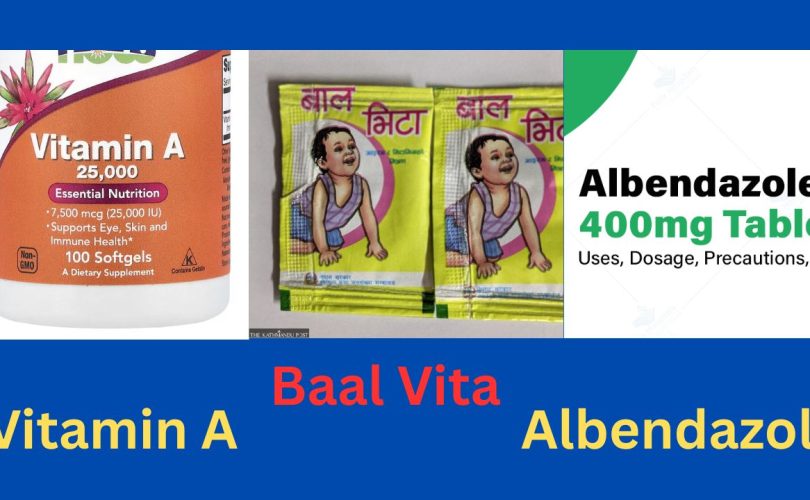
There are multiple supplementary options available for our baby. There is a famous nutrition supplement which contains 16 types of micro nutrients all in one called Balvita supplied by government of nepal for free. Special nutrients supplement required for children is vitamin A.
What is Balvita?
Balvita is a type of nutritional supplement that is designed to provide essential vitamins and minerals to support the growth and development of children. Balvita is typically recommended for children who may have nutritional deficiencies or who require additional support for healthy growth and development.
Baal Vita (also spelled Balvita) is a multiple micronutrient powder (MNP) provided to young children, primarily in Nepal, to combat malnutrition, prevent anemia, and promote healthy physical and cognitive development.
It is also called multi micronutrient powder as well.
How to feed balvita to my baby?
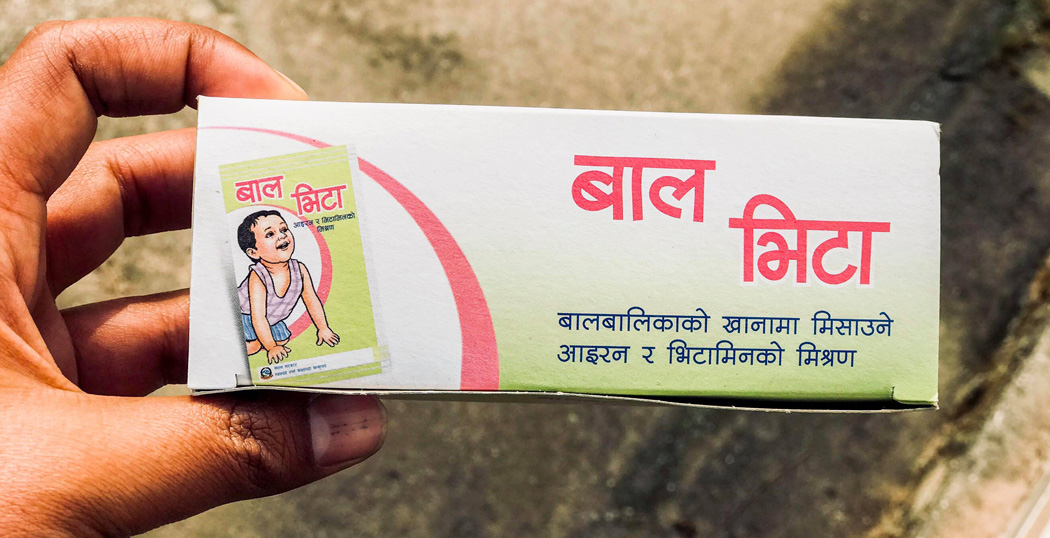
In Nepal, “Balvita” (also called Baal Vita or micronutrient powder) is usually given to babies from 6 months onward along with complementary foods. It is meant to add vitamins and minerals to homemade food. (Dr Chaitanya Joshi, MD)
Here’s the recommended way to feed it:
- Wash your hands and use a clean bowl/spoon.
- Prepare soft semi-solid food your baby already eats, such as:
- lito
- jaulo/khichdi
- mashed rice
- mashed potato or vegetables
- Open one full sachet from the pointed edge.
- Mix the entire sachet thoroughly into a small serving of food that the baby can finish in one sitting.
- Feed immediately with a spoon.
Important precautions:
- Do not mix Balvita into very hot food because heat can reduce vitamin effectiveness.
- Do not mix it into watery liquids or a feeding bottle.
- Use the whole sachet at once; do not divide it for multiple meals.
- Continue breastfeeding along with complementary feeding.
- If your baby develops vomiting, rash, diarrhea, or feeding problems, consult a pediatrician.
The Nepal nutrition program commonly provides about 60 sachets every 6 months for children aged 6–24 months.
Deworming
According to WHO the country in which there is more than 20 % of ppulation suffering from worm infestation then the country should deworm the population twice a year.
Neapal also has hugh prevalence of worm infestation and among children and the pregnant women the prevalence of infestatio nis more than one third.
It has been shown that one tablet of albendazole 400 mg or mebendazole 500 mg can kill almost all of the intestinal worms.
Nepal has decided to distribute albendazole for purpose of deworming. This tablet can kill various types of worms including Ancylostoma canium, Ancylostoma duodenale (Nectar americanus), Ascaris lumbricoids (intestinal worm), Enteribiasis (pinworm), Oesophagostomum bifurcum etc.
Mechanism of action of albendazole:
The active metabolite of albendazole is albendazole sulfoxide. It causes selective degenration if the cytoplasmic degeneration of the microtubules in intestinal and tegmental cells of intestinal helminths and larvae; glycogen is depleted, glucose uptake and cholinesterase secretion is imparired, and desecratory substance is accumulated intracellularly. ATP production decreases. This causes energy depletion and immobilization and subsequent worm death. Thus dead worm is passed down in stool.
Dose of albendazole:
Childres one year to less than 2 years -> 200 mg (1/2 tablet twice yearly
Children 2 years to 5 years -> one tablet of 400 mg twice yearly
Pregnant woman after first trimester -> one tablet of albendazole 400 mg
What is vitamin A?
Vitamin A is a micronutrient found mostly in green leafy vegetables and animal source foods like meat, eggs and dairy products.
What does vitamin a do in our body:
High dose vitamin A supplementation is done to prevent and treat many conditions among children and adults.
The dose of vitamin A in different population is summerized below
- Children 6 to under 12 months of age – one oral vitamin A dose of 100,000 IU two times per year
- Children 12 to 59 months of age – one oral vitamin A dose of 200,000 IU two times per year
- Women immediately following childbirth, or as soon as possible up to six weeks post-partum, can be given one oral dose of vitamin A 200,000 IU
- To treat complications related to deficiency- xerophthalmia etc three doses one upon diagnosis, one the following day and third dose one month later (Note: one dose: 100,000 IU for children aged 6-<12 months; 200,000 IU for children more than 12 months)
- For measles: one upon diagnosis and another the following day(Note: one dose: 100,000 IU for children aged 6-<12 months; 200,000 IU for children more than 12 months)
- Prolonged diarrhea: more than two weeks: one dose immidiately after diagnosis (Note: one dose: 100,000 IU for children aged 6-<12 months; 200,000 IU for children more than 12 months)
- Severe malnutrition: one dose immidiately after diagnosis (Note: one dose: 100,000 IU for children aged 6-<12 months; 200,000 IU for children more than 12 months)
- For pregnant women with nightblindness: 25000 IU once a week for four weeks (4 doses)
Foods that are rich in vitamin A: (mcg/100 gm)
| Food Item | Vitamin A (mcg/100gm) |
|---|---|
| Stinging nettle | 12857 |
| Colocasia leaves | 12000 |
| Coriander leaves | 6918 |
| Spinach | 5580 |
| Amaranth, tender | 5520 |
| Radish leaves | 5295 |
| Carrot | 4275 |
| Goat liver | 3030 |
| Mango | 2743 |
| Mustard leaves | 2622 |
| Fenugreek leaves | 2340 |
| Pumpkin leaves | 1940 |
| Chicken liver | 1930 |
| Bethe leaves | 1740 |
| Mustard leaves | 1520 |
| Rape leaves | 1380 |
| Pumpkin | 1160 |
| Papaya | 666 |
| Onion stalk | 595 |
| Soybean | 426 |
| Eggs | 420 |
| Lentil | 270 |
| Cabbage | 120 |