Table of Contents
MAL Blood Group · Published in Blood Journal · 2024
In 1972, a routine blood test on a pregnant woman yielded something deeply puzzling: her red blood cells were missing a surface molecule that existed on every other known human blood sample of the time. Doctors noted the anomaly, filed it away, and moved on. They had no framework to explain it.
For the next five decades, that molecular absence lingered as an open question in the world of hematology — a quiet mystery buried in the archives of transfusion medicine. Then, in 2024, a team of researchers from the United Kingdom and Israel finally cracked it, identifying an entirely new human blood group system and solving one of the field's longest-standing puzzles.
More Than Just A and B
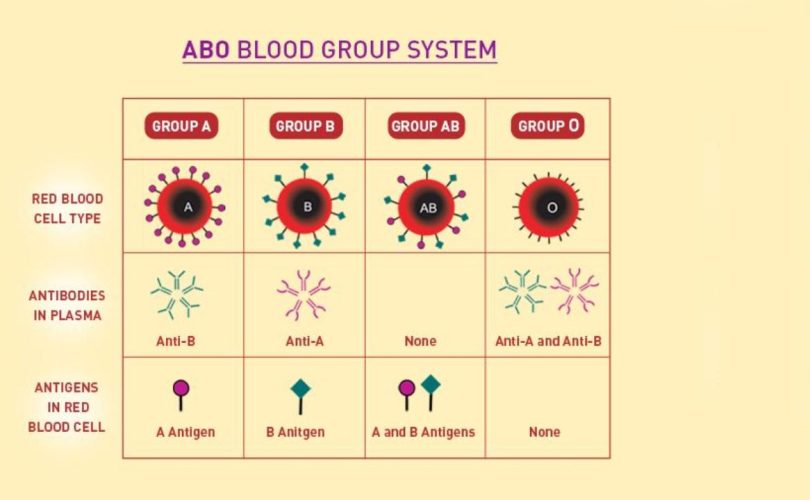
Most of us learned about blood types in school: A, B, AB, and O, with a positive or negative Rh factor tacked on. But that picture is far from complete. Human blood cells are coated in a complex landscape of proteins and sugars called antigens — and scientists use these antigen patterns to classify blood into different "group systems." The ABO and Rh systems are simply the most medically well-known of a much larger family.
To date, researchers have identified 47 such blood group systems in humans. Most of the major ones were catalogued in the early 20th century, but new systems continue to emerge — typically rare, typically tied to a small number of individuals worldwide, and typically uncovered when something goes unexpectedly wrong during a blood transfusion.
Quick Facts — Human Blood Group Systems
- Humans have 47 recognised blood group systems, not just ABO and Rh.
- Blood group systems are defined by distinct antigen molecules on the surface of red blood cells.
- Over 99.9% of people carry the AnWj antigen — meaning those without it are extraordinarily rare.
- The newly identified system is called MAL, after the myelin and lymphocyte protein that hosts the AnWj antigen.
- Patients who are AnWj-negative risk severe immune reactions if given AnWj-positive blood during a transfusion.
The AnWj Antigen — A Puzzle Without a Gene
The molecule missing from that 1972 patient's blood was eventually given a name: the AnWj antigen. Scientists confirmed that more than 99.9 percent of people carry it — making those without it extraordinarily rare. But despite decades of awareness, no one could identify the gene responsible for producing it. Without a genetic explanation, it was impossible to develop a reliable test to screen for AnWj-negative patients before transfusions — leaving those individuals vulnerable to potentially severe immune reactions if given incompatible blood.
That gap was both a scientific frustration and a genuine clinical risk. Transfusion reactions can range from mild discomfort to life-threatening organ damage. For patients whose blood type falls outside known systems, matching compatible donors is extraordinarily difficult — often relying on informal networks and a great deal of luck.
It represents a huge achievement, and the culmination of a long team effort, to finally establish this new blood group system and be able to offer the best care to rare, but important, patients.— Louise Tilley, Hematologist, NHS Blood and Transplant
The Breakthrough: The MAL Gene
The team — led by senior research scientist Louise Tilley of NHS Blood and Transplant, with colleagues from the University of Bristol and collaborators in Israel — spent nearly two decades piecing together the puzzle. Their breakthrough came when they traced the AnWj antigen to a specific protein: the myelin and lymphocyte protein, encoded by the MAL gene.
When both copies of a person's MAL gene carry mutated versions, the AnWj antigen is absent from their blood entirely. This is the inherited form of AnWj-negativity — and it is what that 1972 patient almost certainly had. Importantly, the researchers also found that in some cases, the MAL gene can be functionally suppressed by other underlying conditions, such as certain blood cancers or autoimmune disorders. This means that a newly AnWj-negative result in a patient could sometimes be a flag pointing toward a deeper, undiagnosed illness.
The study, published in Blood, the journal of the American Society of Hematology, confirmed that all AnWj-negative patients studied shared the same mutation pattern — and crucially, that no other cell abnormalities or diseases were linked to the inherited form of the condition.
A 50-Year Timeline
1972
Early 2000s
~2005 onward
2024
Why This Matters Beyond the Lab
For the handful of individuals worldwide who are AnWj-negative, this discovery is potentially life-changing. Previously, their rare blood type made surgical procedures, childbirth, or any situation requiring a transfusion a logistical and medical challenge. Identifying compatible donors without a genetic test was a matter of laborious manual screening — if it was possible at all.
Now, with the MAL gene identified, blood banks and hospitals can develop targeted genetic tests to identify AnWj-negative patients proactively — before a transfusion crisis occurs. It also allows clinicians to distinguish between patients who are AnWj-negative due to an inherited mutation (a stable, lifelong condition) and those whose MAL expression has been suppressed by illness, which may require a very different medical response.
Tilley acknowledged the difficulty of the research: "The work was difficult because the genetic cases are very rare." Rare cases, by definition, generate little data, making statistical patterns harder to detect and genetic links harder to confirm. That the team persisted across two decades speaks to both the scientific importance of the question and the very real human stakes attached to it.
The Bigger Picture: Blood Is Still Surprising Us
The MAL discovery arrives on the heels of another recent milestone. In 2022, researchers described the Er blood group system — yet another rare system affecting a small number of people globally. Together, these findings are a reminder that human biology, even in something as fundamental as blood, continues to yield surprises. Each new blood group system identified is not merely a scientific footnote; it represents a population of patients who were previously invisible to modern medicine's tools.
Understanding these rare variants matters because it builds the infrastructure for safer, more personalised transfusion medicine. It means fewer unexplained reactions, fewer desperate searches for compatible donors, and more patients receiving care that is genuinely matched to their biology.
Half a century after a pregnant woman's unusual blood sample puzzled a doctor somewhere in the world, science finally has an answer.
The MAL blood group system is now the 47th addition to our understanding of human blood — a testament to the slow, painstaking, but ultimately rewarding work of science. And for the extraordinarily rare individuals who carry this invisible distinction in their veins, it may mean the difference between a routine transfusion and a medical emergency.
Based on research published in Blood, American Society of Hematology, 2024. Research led by Louise Tilley, NHS Blood and Transplant & University of Bristol.