Table of Contents
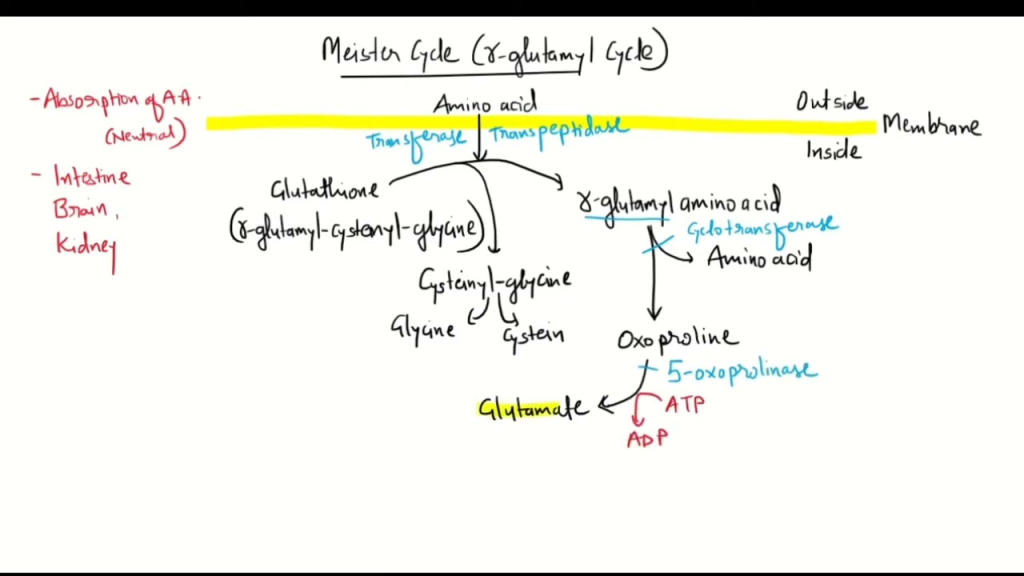
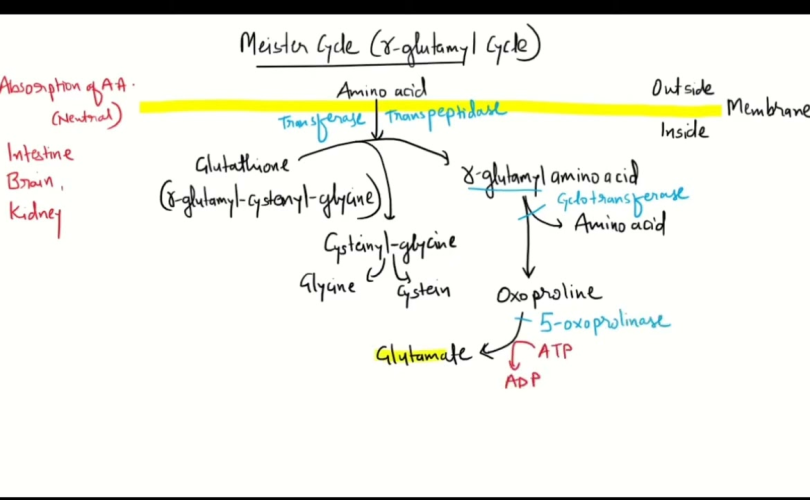
The Meister cycle, also known as the γ-glutamyl cycle, is a crucial biochemical pathway responsible for the synthesis and regulation of glutathione”a vital antioxidant that protects cells from oxidative damage and maintains redox balance. First proposed by biochemist Alton Meister, this cycle also plays a significant role in amino acid transport across cell membranes.
Key Steps of the Meister Cycle
Glutathione Synthesis:
The cycle begins with the synthesis of glutathione (GSH) from its precursor amino acids: glutamate, cysteine, and glycine. This process involves two ATP-dependent enzymatic reactions:
Glutamate combines with cysteine to form γ-glutamylcysteine, catalyzed by the enzyme glutamate-cysteine ligase.
γ-Glutamylcysteine then conjugates with glycine to produce glutathione, facilitated by glutathione synthetase.
Amino Acid Transport:
Glutathione interacts with γ-glutamyl transpeptidase (GGT) on the cell membrane, transferring its γ-glutamyl group to an amino acid, forming a γ-glutamyl-amino acid complex. This complex is transported into the cell, where it is broken down to release the free amino acid and 5-oxoproline.
5-Oxoproline Conversion: 5-Oxoproline is converted back to glutamate by the enzyme 5-oxoprolinase, allowing the cycle to continue.
The Meister Cycle Mnemonic easy
The Meister Cycle (or the γ-glutamyl cycle) is involved in amino acid transport and glutathione metabolism. A mnemonic to remember the key steps is:
“Good Teachers Always Make Great Notes”
Where each letter corresponds to a step in the cycle:
G → Glutathione (GSH)
T → γ-Glutamyl Transferase (GGT) (Transfers glutamyl group to amino acid)
A → Amino Acid Transport (Across the membrane)
M → γ-Glutamyl Cyclotransferase (Forms 5-oxoproline)
G → 5-Oxoprolinase (Converts 5-oxoproline back to glutamate)
N → New Glutathione (GSH) Formation
This mnemonic helps recall the cycle’s flow, emphasizing glutathione’s role in amino acid transport and metabolism. Let me know if you want a simpler or more detailed version!
Physiological Significance:
Antioxidant Defense: Glutathione neutralizes reactive oxygen species (ROS), protecting cells from oxidative stress.
Detoxification: It conjugates with toxic compounds, facilitating their excretion from the body.
Amino Acid Transport: The cycle assists in the uptake of amino acids into cells, essential for protein synthesis and various metabolic processes.
Disruptions in the Meister cycle can lead to decreased glutathione levels, impairing cellular defense mechanisms and increasing susceptibility to oxidative damage. Understanding this cycle is fundamental in fields like biochemistry and medicine, especially concerning diseases linked to oxidative stress and amino acid metabolism disorders.
For a visual explanation of the Meister cycle, you might find this video helpful
Disruptions in the Meister cycle, particularly in glutathione metabolism, can lead to various pathological conditions. These disorders arise due to impaired antioxidant defense, defective amino acid transport, and metabolic imbalances. Below are some key pathologies associated with the Meister cycle:
- Glutathione Deficiency Disorders
Glutathione Synthetase Deficiency: A rare autosomal recessive disorder causing severe metabolic acidosis, hemolytic anemia, and neurological symptoms due to the inability to synthesize glutathione.
5-Oxoprolinuria (Pyroglutamic Aciduria): Caused by defects in glutathione synthetase or 5-oxoprolinase, leading to excessive urinary excretion of 5-oxoproline, metabolic acidosis, and neurological impairment. - Oxidative Stress-Related Diseases
Neurodegenerative Disorders: Conditions like Parkinson disease, Alzheimers disease, and amyotrophic lateral sclerosis (ALS) are associated with decreased glutathione levels, leading to increased oxidative damage in neurons.
Cardiovascular Diseases: Oxidative stress due to glutathione imbalance contributes to atherosclerosis, hypertension, and myocardial infarction.
Cancer: Some cancers exploit glutathione metabolism to resist oxidative stress and chemotherapy, making it a target for cancer treatment strategies. - Metabolic and Genetic Disorders
Cystic Fibrosis: Patients often exhibit reduced glutathione levels in lung epithelial lining fluid, contributing to chronic inflammation and oxidative damage.
Diabetes Mellitus: Oxidative stress from glutathione depletion plays a role in insulin resistance and complications like diabetic neuropathy and nephropathy. - Liver and Kidney Diseases
Hepatic Disorders: Conditions like non-alcoholic fatty liver disease (NAFLD) and alcoholic liver disease show glutathione depletion, impairing detoxification and increasing liver damage.
Chronic Kidney Disease (CKD): Impaired glutathione metabolism in CKD contributes to oxidative stress and progression of renal dysfunction. - Drug and Toxin Sensitivity
Acetaminophen (Paracetamol) Toxicity: Overdose depletes glutathione stores, leading to hepatotoxicity. Treatment involves N-acetylcysteine (NAC), a glutathione precursor.
Heavy Metal Toxicity: Lead, mercury, and cadmium deplete glutathione, increasing cellular damage.
The Meister cycle plays a crucial role in maintaining cellular health by regulating glutathione levels. Disruptions in this cycle contribute to a wide range of diseases, from genetic disorders to age-related neurodegeneration. Understanding these associations is essential for developing targeted therapeutic interventions.