Table of Contents
Definition
Pulsus paradoxus is an exaggerated fall in systolic blood pressure (>10 mmHg) during inspiration.
Normally, systolic BP falls slightly during inspiration (<10 mmHg).
When the drop is >10 mmHg, it is called pulsus paradoxus.
Despite the name “paradoxus”, the pulse does not actually disappear; it only becomes weaker or unpalpable during inspiration.
Normal Physiology
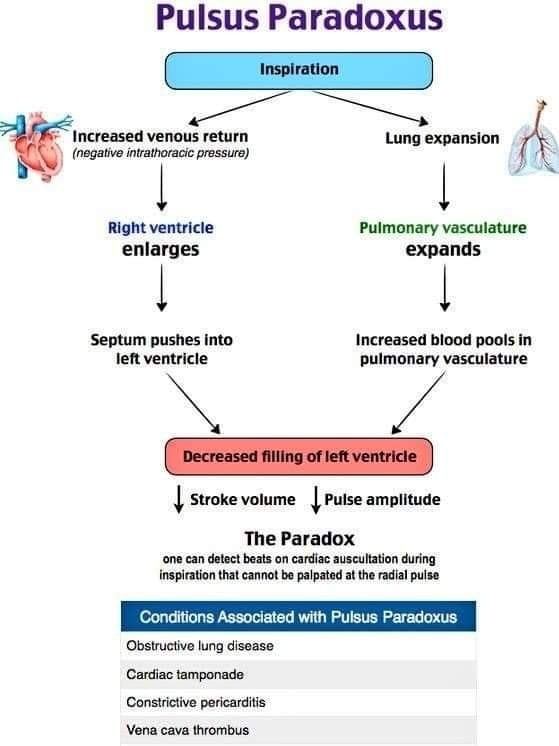
During inspiration:
- Intrathoracic pressure decreases
- Venous return to the right ventricle increases
- RV expands
- Interventricular septum shifts slightly toward the left ventricle
- LV filling decreases slightly
- Systolic BP falls by <10 mmHg
Mechanism of Pulsus Paradoxus
In certain conditions:
- Excess RV filling or external compression
- RV expansion pushes interventricular septum toward LV
- LV filling markedly decreases
- LV stroke volume falls
- Systolic BP drops >10 mmHg during inspiration

Causes of Pulsus Paradoxus
Cardiac Causes
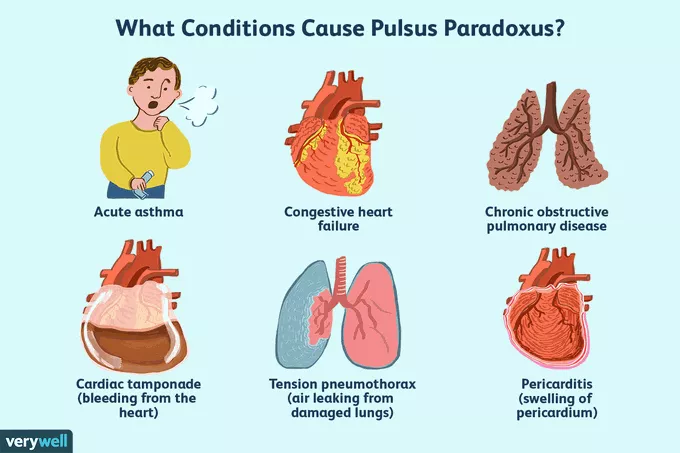
- Cardiac Tamponade (classic cause)
- Constrictive Pericarditis
- Large pericardial effusion
Respiratory Causes
- Severe Asthma
- Chronic Obstructive Pulmonary Disease exacerbation
Other Causes
- Tension Pneumothorax
- Massive pulmonary embolism
- Severe hypovolemia
- Upper airway obstruction
How to Measure Pulsus Paradoxus
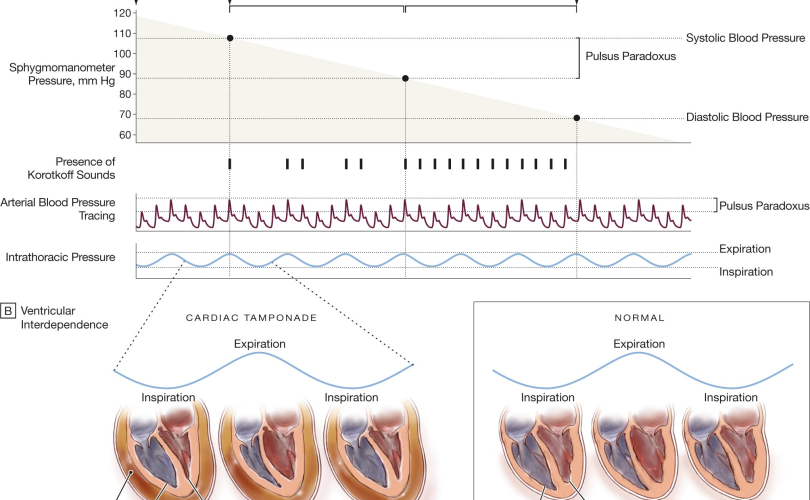
Using a sphygmomanometer:
- Inflate cuff above systolic pressure.
- Slowly deflate.
- Note two pressures:
- First pressure: Korotkoff sounds heard only during expiration
- Second pressure: Sounds heard throughout inspiration and expiration
Difference between the two = Pulsus paradoxus
Example:
- Expiration only = 120 mmHg
- Throughout respiration = 105 mmHg
Pulsus paradoxus = 15 mmHg
Clinical Significance
A pulsus paradoxus >10 mmHg suggests serious cardiopulmonary disease, especially:
- Cardiac tamponade
- Severe asthma attack
Reverse Pulsus Paradoxus
Reverse pulsus paradoxus is a rare cardiovascular finding in which systolic blood pressure increases during inspiration, opposite to the normal drop seen in typical pulsus paradoxus. It is most commonly associated with conditions that alter intrathoracic pressure dynamics or ventricular interaction, such as positive pressure ventilation, hypertrophic obstructive cardiomyopathy (HOCM), isovolumetric ventricular pacing, and sometimes aortic regurgitation.

The mechanism usually involves enhanced left ventricular filling or reduced afterload during inspiration, leading to a paradoxical rise in systolic pressure. Clinically, it is less frequently encountered than classic pulsus paradoxus and is often identified in intensive care settings where patients are mechanically ventilated. Recognition of reverse pulsus paradoxus is important because it can provide clues about underlying cardiac physiology and ventilatory influences rather than indicating conditions like cardiac tamponade, which are linked to the traditional form.

Quick Exam Definition
Pulsus paradoxus is an inspiratory fall in systolic blood pressure greater than 10 mmHg.