
Trachoma – Key Points
Introduction
-
Definition: A chronic
infectious eye disease caused by
Chlamydia trachomatis. -
Transmission: Spread
through direct contact with infected secretions, contaminated objects, and
flies. -
Symptoms: Eye redness,
irritation, discharge, photophobia, and progressive corneal scarring. -
Complications: Corneal
opacity, trichiasis (inward-growing eyelashes), and blindness. -
Epidemiology: Leading cause
of infectious blindness globally, prevalent in poor hygiene and low-income
regions.
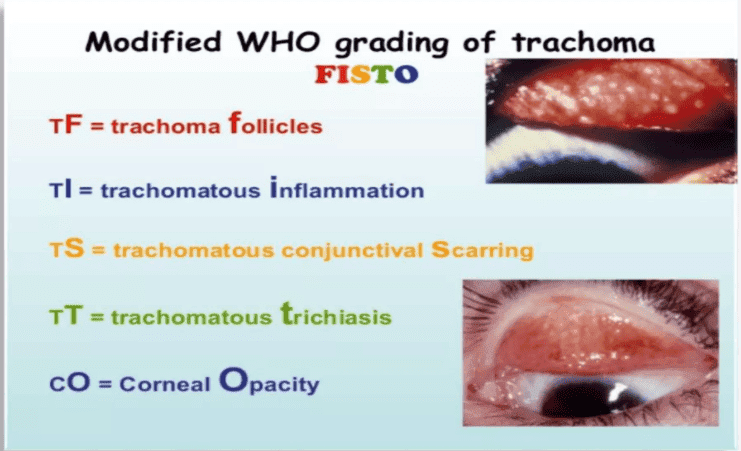
Stages of Trachoma (WHO Grading System)
-
TF (Trachomatous Inflammation – Follicular): Presence of five or more follicles (>0.5 mm) in the upper tarsal
conjunctiva. - TI (Trachomatous Inflammation – Intense): Thickened, inflamed upper tarsal conjunctiva with pronounced redness.
-
TS (Trachomatous Scarring):
Visible scarring of the tarsal conjunctiva. - TT (Trachomatous Trichiasis): Inturned eyelashes rubbing against the eyeball.
-
CO (Corneal Opacity):
Opacity leading to significant visual impairment or blindness.
SAFE Strategy for Trachoma Control
(WHO)
-
S – Surgery: For
trichiasis to prevent corneal damage. -
A – Antibiotics: To treat
active infection and reduce transmission. -
F – Facial cleanliness:
Encouraging hygiene to prevent spread. - E – Environmental improvement: Ensuring clean water supply and sanitation.
Antibiotics for Trachoma
-
Azithromycin (preferred
drug)-
Dose:
- Adults: 1 g orally, single dose
- Children: 20 mg/kg (maximum 1 g), single dose
- Duration: Single-dose treatment, repeated annually in endemic areas.
-
Dose:
-
Tetracycline (1%) ophthalmic ointment
- Dose: Apply to both eyes twice daily
- Duration: 6 weeks
-
Erythromycin
(alternative to azithromycin)-
Dose:
- Adults: 500 mg orally twice daily
- Children: 12.5 mg/kg orally four times daily
- Duration: 14 days
-
Dose:
{
“@context”: “https://schema.org”,
“@type”: “FAQPage”,
“mainEntity”: [{
“@type”: “Question”,
“name”: “What are Stages of Trachoma and mnemonic?”,
“acceptedAnswer”: {
“@type”: “Answer”,
“text”: “TF (Trachomatous Inflammation – Follicular): Presence of five or more follicles (>0.5 mm) in the upper tarsal conjunctiva.
TI (Trachomatous Inflammation – Intense): Thickened, inflamed upper tarsal conjunctiva with pronounced redness.
TS (Trachomatous Scarring): Visible scarring of the tarsal conjunctiva.
TT (Trachomatous Trichiasis): Inturned eyelashes rubbing against the eyeball.
CO (Corneal Opacity): Opacity leading to significant visual impairment or blindness.
Mnemonic is FISTO.”
}
},{
“@type”: “Question”,
“name”: “What is SAFE Strategy for Trachoma Control (WHO)?”,
“acceptedAnswer”: {
“@type”: “Answer”,
“text”: “S – Surgery: For trichiasis to prevent corneal damage.
A – Antibiotics: To treat active infection and reduce transmission.
F – Facial cleanliness: Encouraging hygiene to prevent spread.
E – Environmental improvement: Ensuring clean water supply and sanitation.”
}
},{
“@type”: “Question”,
“name”: “What are treatments of Trachoma?”,
“acceptedAnswer”: {
“@type”: “Answer”,
“text”: “Azithromycin , Tetracycline (1%) ophthalmic ointment or Erythromycin . (pls Confirm dosage and route)”
}
}]
}


